
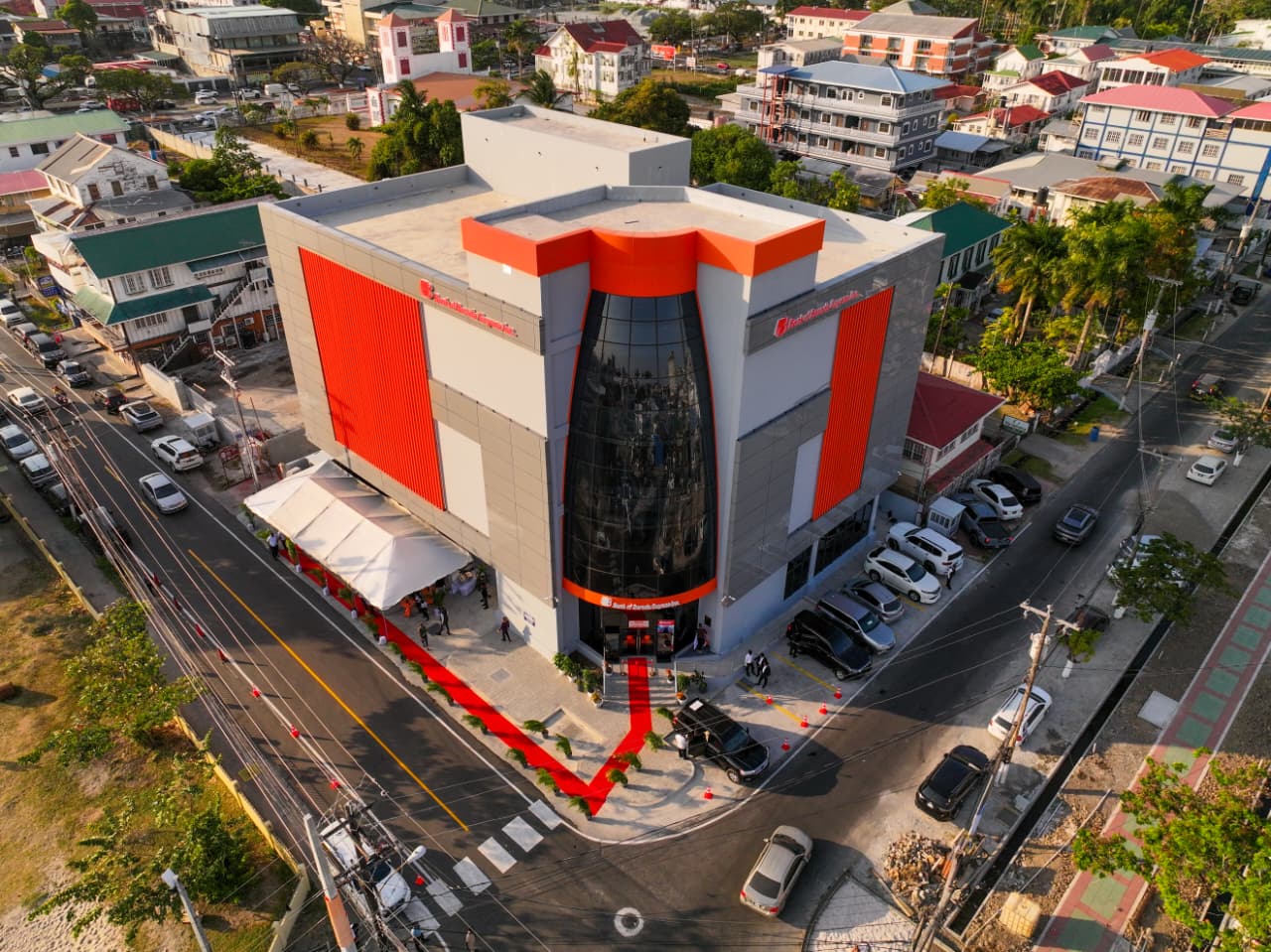
Photo: Department of Public Information, Guyana.
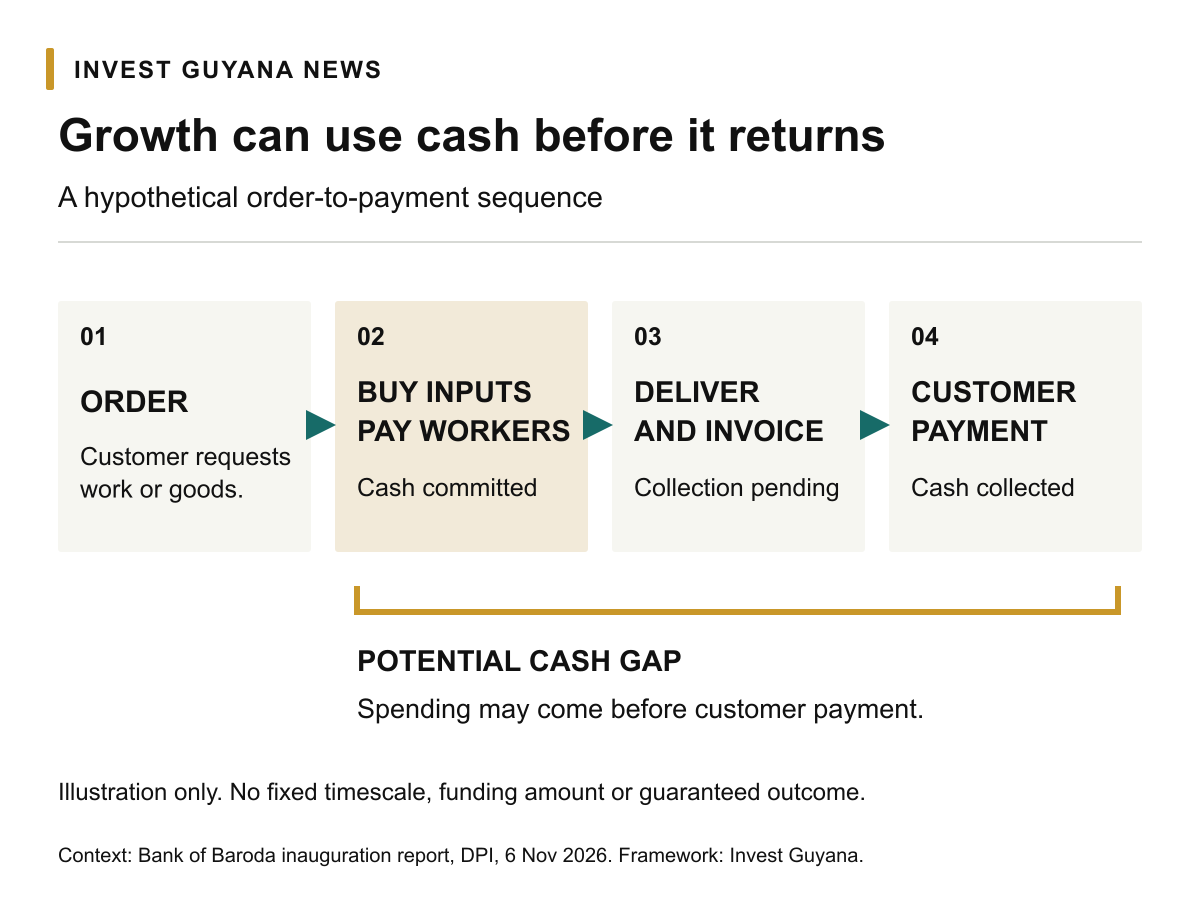
Consider a small Guyanese business offered a larger weekly order. The customer is ready, but the owner must buy materials and pay workers before the first invoice is settled. Winning the work has created an opportunity—and a financing problem that sales alone cannot solve.
That is the commercial issue behind President Irfaan Ali's latest appeal to Bank of Baroda. DPI reported on 6 November that he urged the bank to direct more capital towards local small businesses while inaugurating its new headquarters at Carmichael and Quamina Streets in Georgetown that evening.
The opening is a tangible development. The lending appeal is a policy message, not an announcement that a particular borrower has qualified for credit. Its significance for entrepreneurs will depend on the financing relationships that follow: the purpose of the money, how repayment fits the business and whether the enterprise can carry the obligation through quieter trading periods.
A new headquarters sets a wider commercial expectation
The new premises bring together the bank's Head Office and Georgetown Branch. The ceremony included a plaque unveiling and the opening of a Heritage Gallery, marking the institution's sixtieth year in Guyana. The attendance of the local managing director and the parent bank's chief executive placed the inauguration within both the Guyanese operation and its wider banking group.
These are visible signs of an institution investing in its own presence. They do not measure the amount available to a local enterprise or establish a change in lending terms. A headquarters can accommodate the work of a bank; the commercial question is how that work reaches the businesses around it.
Ali's appeal to draw more of the parent's global capital into the local market makes that distinction important. Physical investment and credit extended to businesses are different forms of commitment. The opening creates an occasion to examine both without assuming that one automatically produces the other.
For international investors, this distinction matters beyond the bank counter. A project may have capital for its own construction while smaller suppliers struggle to fund the materials, labour or transport needed to serve it. The financing of the surrounding business network can influence how much activity local enterprises are able to deliver.
Growth can make the cash gap larger
The opening example is illustrative, not a reported borrower. Imagine that the customer pays after delivery while the supplier must purchase inputs beforehand. An additional order can increase both prospective revenue and the amount of cash committed before payment arrives.
That is why a growing sales book and an adequate cash balance are different things. A business may be profitable on a completed job yet still lack funds to start the next one. Equally, a larger order may be commercially unattractive if its price does not cover delivery costs or its payment conditions expose the supplier to excessive strain.
Financing stock until a customer pays is also different from financing equipment expected to generate revenue over several years. The distinction helps explain why the form of finance matters, not just the total amount offered. Lending that fits a business's trading cycle can serve a different purpose from borrowing that merely keeps an unsustainable operation running.
More lending still has to be sound lending
A lender and an entrepreneur look at the same proposed expansion from different positions. The owner sees a chance to build a customer base or improve production. The lender must consider whether money advanced today can be repaid under the agreed terms. A workable relationship makes both perspectives visible.
A push for greater small-business lending is therefore not necessarily a push to ignore risk. It can encourage closer examination of viable enterprises whose cash needs are not well served by existing arrangements. For the bank, the opportunity is to develop a durable customer relationship; for the enterprise, it is to fund activity without taking on repayments that the business cannot sustain.
The tension is particularly relevant where a business depends on a few customers. A strong order book may justify expansion, but delayed collection can still disrupt repayment. More capital alone does not resolve the terms on which the supplier is paid.
The presidential message does not settle a bank's pricing, security requirements or approval decisions. Entrepreneurs should not interpret it as a promise of a particular rate or an automatic entitlement to funding. The practical opportunity is to build a financeable proposition, not to substitute a public speech for the terms of a credit agreement.
Local suppliers need relationships that survive the first order
Access to finance has implications for the way Guyanese businesses participate in larger commercial activity. A buyer seeking a dependable local supplier needs more than an initial quotation. The supplier must be able to maintain quality, meet the delivery timetable and absorb the ordinary interruptions of production.
Financing can support that capacity when it serves a clear purpose. It can also create pressure if an enterprise expands fixed costs for a customer whose future orders are uncertain. For a manufacturer or service provider, the distinction between a trial order and a repeat purchasing relationship is commercially important even when both come from a prominent buyer.
This makes supplier finance a relationship between more than the bank and the borrower. A buyer's ordering and payment arrangements also influence the amount the supplier must fund. International businesses seeking stronger Guyanese supply chains have a commercial interest in that relationship: reliable local delivery depends partly on whether the economics work for the enterprise doing the work.
The outcome to watch is sustainable business finance
The headquarters opening should not be judged as if it were a count of new small-business loans. The more meaningful follow-up would examine the financing actually extended, the enterprises reached and how those relationships perform over time.
Volume alone would offer an incomplete picture. A facility that allows a supplier to complete profitable repeat work has a different commercial meaning from one that funds an expansion with no dependable customer. Clear terms and realistic repayment assumptions matter to the borrower as well as the institution providing the money.
For the owner at the start of this story, the larger order remains an opportunity, not a finished success. The task is to connect customer demand, delivery capacity and the timing of cash. President Ali's appeal places small-business finance firmly in the conversation. Turning that appeal into durable enterprise growth will require lenders and borrowers to do the detailed work together.