Photo: Department of Public Information, Guyana.
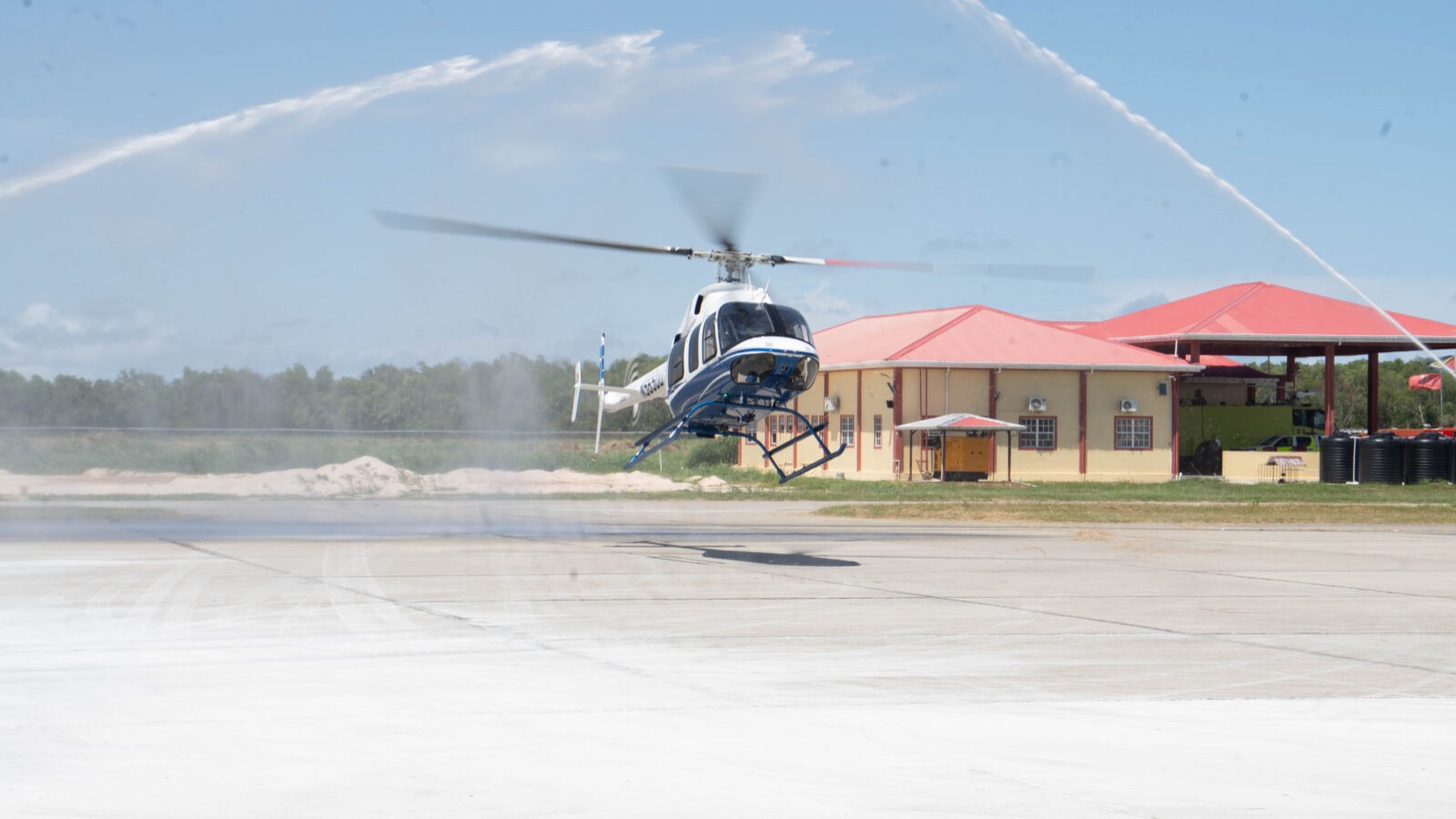
A new helicopter may be physically present in Guyana before it is commercially available to carry a paying passenger. That distinction matters as Jags Aviation adds a Bell 407 to its fleet and Guyana’s aviation industry expands into a larger, more capital-intensive market.
The Department of Public Information said the aircraft was commissioned on 2 November and valued at more than G$1 billion. It joins Jags Aviation, a member of the BK Group of Companies, at a time when Guyana has more than 110 locally registered aircraft.
The acquisition is a visible private investment in transport capacity, but it is not yet evidence of an operating expansion. Government and aviation officials said the Guyana Civil Aviation Authority still has regulatory requirements to complete before the helicopter enters full commercial service. No start date, route programme, passenger price or aircraft-specific operating base was published.
A growing domestic aviation market
The helicopter arrives within a broader expansion of Guyana’s aviation system. In September, the Office of the President reported that the national aircraft register had increased from 78 aircraft in 2020 to 109 in 2025, a 40 per cent rise. The newer DPI count of more than 110 indicates that growth has continued, although the government has not published a current register broken down by aircraft type or active commercial status.
Domestic passenger traffic also increased from 120,992 in 2020 to 267,463 in 2025, according to the September aviation update. Offshore flights rose from 3,334 to 6,833 over the same period. These government-reported figures describe an expanding market, but they do not establish how much of the growth is available to any one operator or aircraft.
This fleet-capital story sits alongside Guyana’s broader push to expand aviation market access, but the commercial tests here are different: aircraft certification, operational deployment and sustained utilisation.
Guyana’s geography helps explain why domestic aviation matters. Many hinterland communities, tourism destinations and work sites are separated from the coast by long distances, rivers and forest. Fixed-wing aircraft remain central to airstrip-based service, while helicopters can provide operational flexibility where the mission, terrain and approvals allow.
GCAA Director General Egbert Field said the Bell 407 is expected to improve passenger movement to hinterland communities and remote airstrips and support tourism expansion. Jags Aviation’s public fleet page lists one Bell 407 with seating for six passengers plus a pilot and identifies charter, scenic and executive uses. The page does not state that regulatory clearance has been completed or provide a service-launch date, route network or charter schedule.
The Bell 407 follows a wider private fleet build-out
The helicopter is not Jags Aviation’s first major fleet investment in 2026. In June, the company commissioned two Hindustan H-228 aircraft procured from Hindustan Aeronautics Limited in India. The official government release described them as 19-seat aircraft and said Jags then operated a fleet of 14 aircraft after also adding two Tecnam P2012 Travellers in 2025.
That sequence shows capital being deployed across different operating roles. The H-228s add higher-capacity fixed-wing lift for passenger, cargo and utility work from airstrips. The Bell 407 adds smaller rotary-wing capacity for missions marketed by Jags as charter, scenic and executive service. These aircraft are not interchangeable: each brings a different cost structure, payload, runway or landing-site requirement and potential customer profile.
The June figure should not be mechanically increased to produce a current fleet total. The November release calls the Bell 407 an addition but does not say whether any other aircraft has left the register or Jags’ operating fleet. The company’s current public fleet page lists 14 aircraft across eight types, including the Bell 407. The defensible conclusion is therefore that Jags has continued its fleet-modernisation programme, not that its verified fleet now contains a particular higher number.
For investors, this distinction is useful. A company may expand capability by adding a new aircraft type even when its total fleet count is unchanged. Commercial capacity depends on the mix of aircraft, their approved roles, crew and maintenance readiness, dispatch reliability and utilisation—not only the number of airframes displayed on a fleet page.
The investment signal is real, but incomplete
The reported acquisition value makes the helicopter a substantial item of private capital equipment. Minister of Public Utilities and Aviation Deodat Indar described it as part of a shift among operators from refurbished or pre-owned aircraft towards new assets.
That assessment is important, but one purchase does not by itself demonstrate an industry-wide replacement cycle. A clearer market picture would require fleet-age data, orders from other operators, financing information and evidence showing how quickly new aircraft are entering revenue service.
For Jags Aviation, the investment may widen the missions the company can consider once the aircraft is approved. The company’s own website positions the Bell 407 for charter, scenic and executive use. Potential demand could therefore come from tourism, corporate travel and businesses requiring access to interior locations. These are target market segments, not contracts or evidence that the helicopter has entered revenue service.
The commercial result will depend on utilisation. Aircraft ownership brings continuing costs for qualified crews, training, maintenance, parts, insurance, hangarage, fuel and regulatory compliance. Revenue depends on how consistently an operator can match that cost base with safe, approved and paying missions.
Commissioning is not commercial clearance
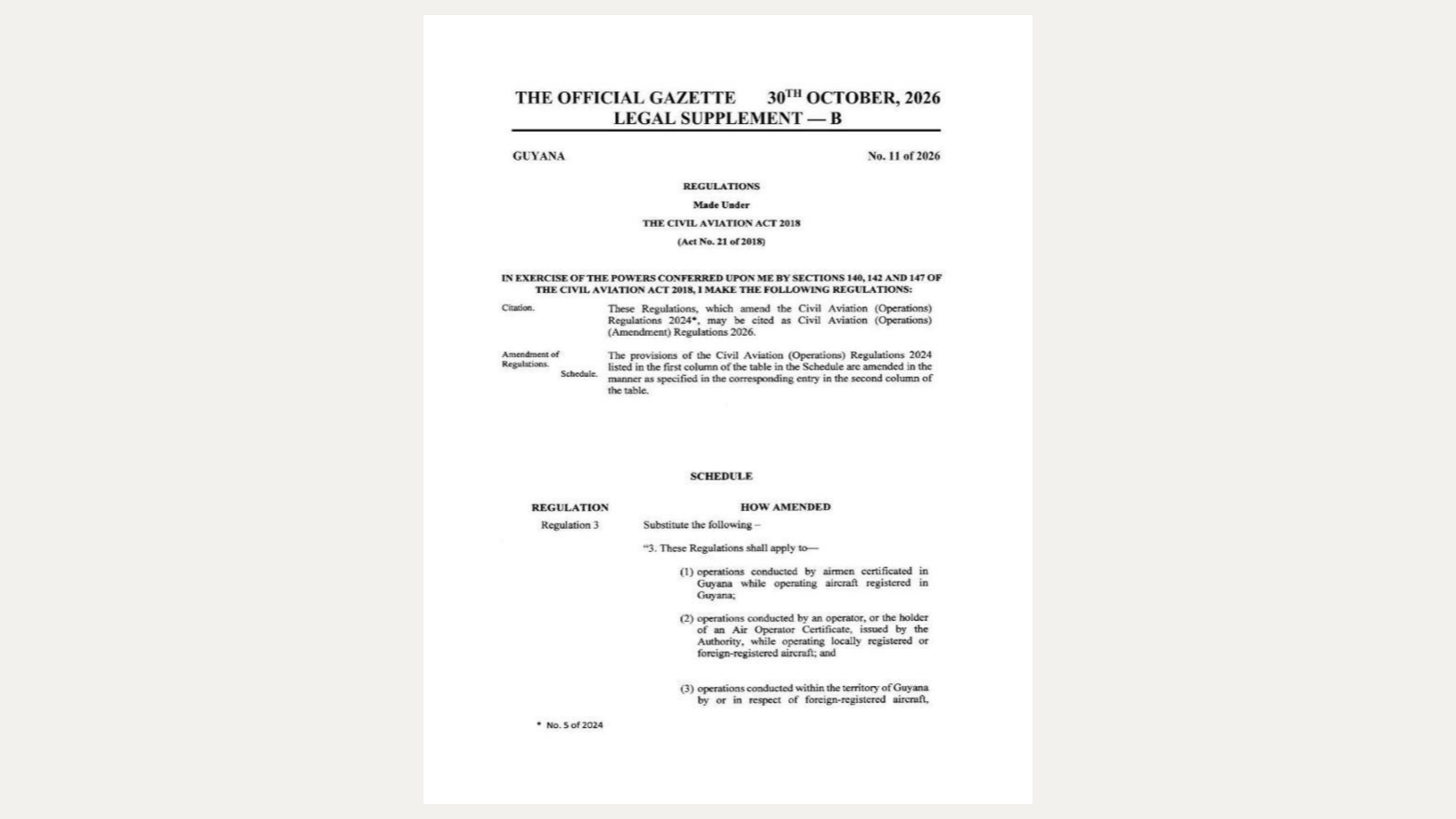
The official ceremony marked the aircraft’s addition to the fleet, but Guyana’s regulatory framework separates ownership and registration from permission to operate.
The GCAA says aircraft operating in Guyana’s airspace must be registered. It also states that an operator of a Guyana-registered aircraft cannot use it in civil operations unless the Authority has issued a certificate of airworthiness. Flight crew and maintenance personnel are subject to separate licensing requirements.
The DPI release does not identify which specific approvals remain outstanding for the Bell 407. It would therefore be inaccurate to infer that the unresolved step is limited to registration, airworthiness or any single certificate. The verified position is narrower: GCAA requirements remained to be completed before full commercial service.
That regulatory sequence protects more than the operator. Safety performance affects passengers, staff, insurers, tourism partners and the reputation of Guyana’s wider aviation market. Faster processing and rigorous oversight are not competing objectives; a credible aviation sector requires both administrative efficiency and compliance with the applicable safety standards.
What the aircraft could mean for investors and operators
Additional aviation capacity can reduce the practical friction of reaching interior locations. Tourism businesses may be able to design higher-value itineraries around shorter transfers. Project operators may gain another option for moving personnel. Hotels, lodges, ground handlers, maintenance providers and aviation suppliers can benefit when flight activity creates sustained demand around the aircraft.
None of those benefits is automatic. Helicopter services can be expensive, and demand may vary by season, project cycle and destination. Weather, landing-site suitability, operating limitations and the availability of trained personnel can affect dispatch. Investors should therefore distinguish between an aircraft acquisition, certification, the start of service and a commercially sustainable operating record.
The purchase also highlights supporting opportunities in the aviation ecosystem. A larger and more modern fleet can increase demand for technical training, maintenance capability, parts logistics, ground services, safety systems and specialised insurance. The Office of the President has already said aviation growth must be matched by stronger safety oversight, modern regulation and greater human-resource capacity.
For businesses evaluating the sector, those enabling services may be as important as the aircraft count. Capacity that cannot be maintained, crewed or regulated reliably will not deliver its full commercial value.
What remains to be confirmed
The next material milestone is GCAA confirmation that the applicable requirements have been satisfied and the aircraft may enter commercial service. Jags Aviation could then provide the details needed to understand the investment’s market effect: aircraft-specific operating base, booking arrangements, service launch, initial utilisation and whether the helicopter supplements or replaces existing fleet capacity.
The acquisition is nevertheless a meaningful signal. It places new private capital into a domestic aviation market whose passenger traffic and registered fleet have expanded substantially. The investor-grade conclusion is not that the Bell 407 has already transformed access to Guyana’s interior. It is that the asset creates additional capacity which can become commercially relevant once certification, operations and demand are established.