

The buyer had the receipt and the keys
The buyer paid a large deposit, signed an agreement and received permission to enter the property. Renovation materials were already arriving when the lender asked for evidence that ownership had transferred.
The buyer produced the deposit receipt and the agreement.
Those documents mattered, but they did not necessarily prove that the registry had changed.
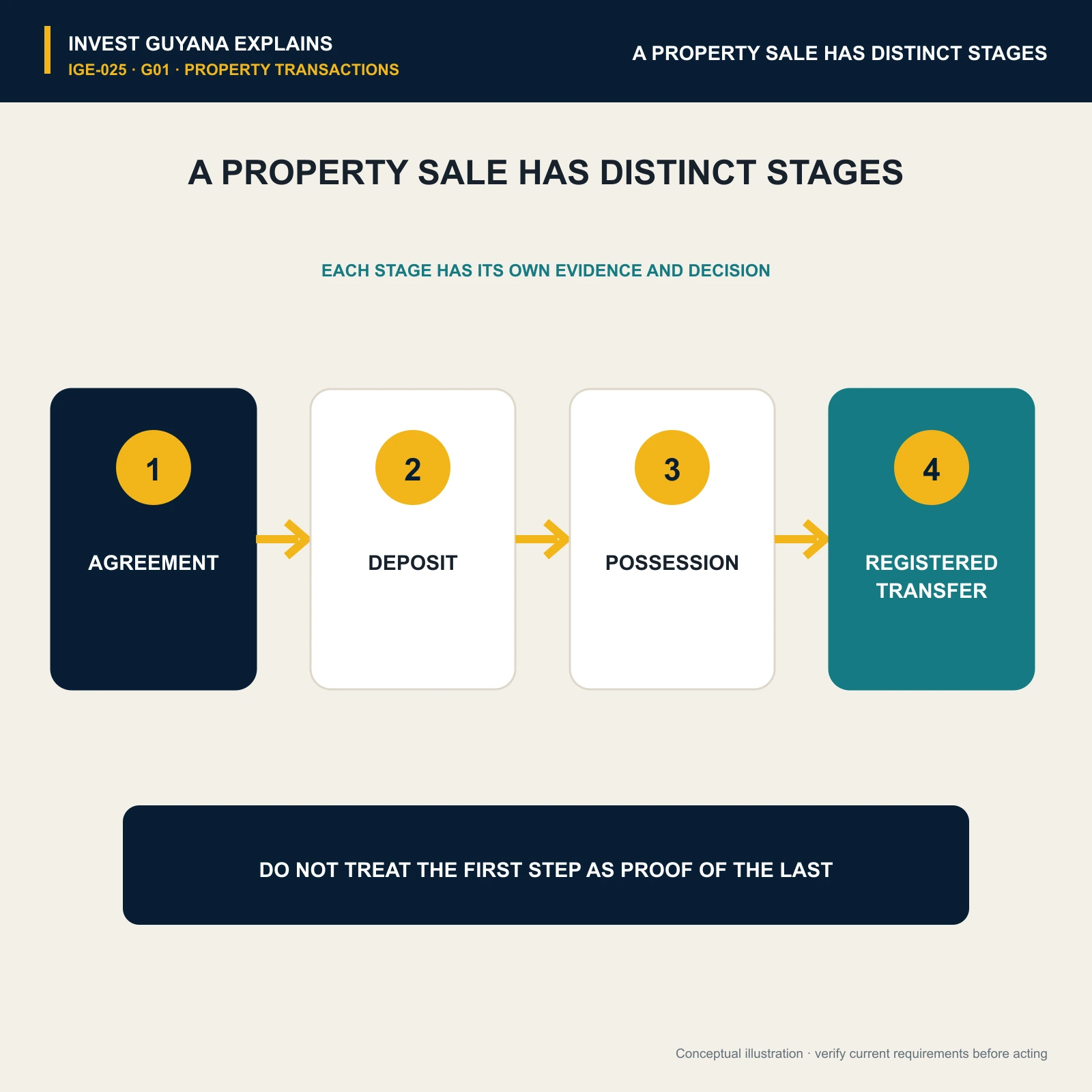
Property transactions move through several legal and practical stages. Agreement, payment, possession and registration can occur at different times and perform different jobs.
An agreement creates contractual rights and obligations
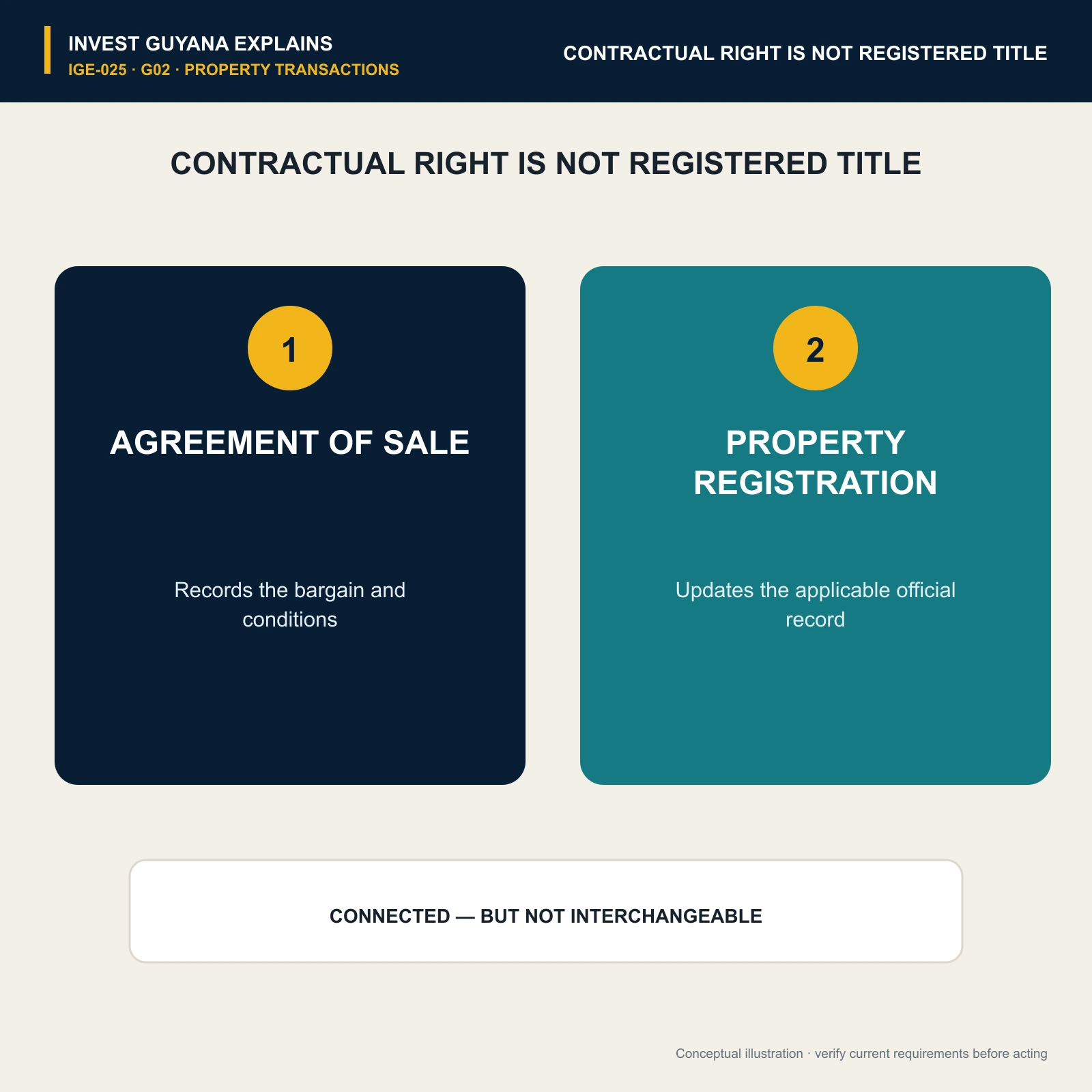
An agreement of sale records the bargain between the parties: the property, price, conditions, timing and responsibilities they have accepted.
It can give the buyer enforceable contractual rights and require the seller to complete agreed steps. It can also make the deposit subject to particular conditions if the transaction fails.
But the contract is not automatically the final registered title instrument. The applicable deeds or land-registration process still has to be completed for the legal record to reflect the transfer.
A deposit is evidence of payment, not a universal title document
A deposit can reserve the transaction, demonstrate commitment or form part of the purchase price. Its legal consequences depend on the agreement and the governing law.
The amount paid does not itself identify the land system, clear a mortgage, cure a title defect or authorise an unauthorised person to sell.
That is why the buyer’s first major payment should follow—not precede—the basic checks on the property, seller and transaction structure.
There is no universal rule that every property deposit is refundable or non-refundable. That outcome depends on the contract, facts and applicable law.
Possession is not conclusive proof of ownership
A person may occupy property as owner, tenant, licensee, caretaker, family member or purchaser awaiting completion.
Receiving keys or entering the site can be commercially important. It does not automatically establish that the registered interest has passed.
Early possession can also create practical risk. The buyer may begin work before planning approval, insure the property incorrectly or spend money while completion conditions remain outstanding.
The transfer route depends on the property system
Transported property and land-registry title do not follow identical processes. Public-land leases and CH&PA pathways introduce different approvals and records.
The transaction team must first identify the right being transferred and the authority that controls the record. The appropriate instrument, notices, searches, taxes, rates, consents and registration steps then follow that pathway.
A generic “sale deed” downloaded from another jurisdiction cannot safely replace the Guyana process applicable to the parcel.
Completion should join the money and the legal record
A well-controlled transaction coordinates several events:
- the seller can transfer the relevant right;
- the buyer can pay the balance;
- required mortgages, restrictions or consents are addressed;
- the correct transfer instrument is executed;
- the applicable taxes, rates or process requirements are handled;
- the instrument is lodged and registered through the correct authority;
- possession is delivered on the agreed basis.
The events may not all happen at the same minute, but the parties should understand how they depend on one another.

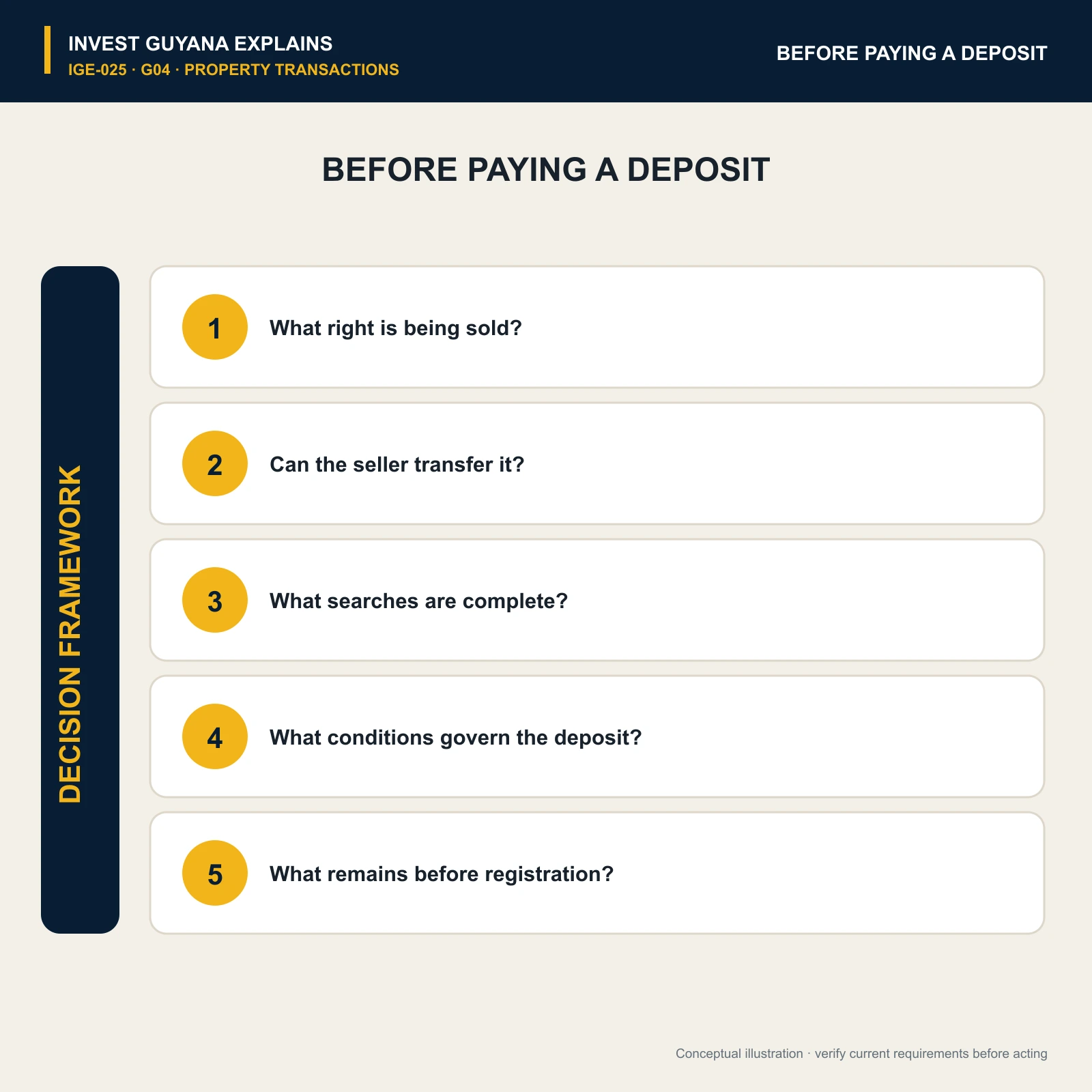
Five questions before paying a deposit
- What exact property right is being sold?
- Does the seller or representative have authority to sell it?
- What searches and parcel checks have been completed?
- What conditions govern the deposit and its return or application?
- What must happen before the applicable transfer is registered?
The investor takeaway
A property deposit can begin or secure a transaction. It does not automatically complete it.
The agreement governs the bargain. Payment performs the agreed financial obligation. Possession concerns physical control or use. Registration changes the applicable official property record.
Investors should keep those stages connected without pretending that one receipt performs all four jobs.
The next article in Invest Guyana Explains will examine mortgages, separating ownership, loan approval and registered security so financed buyers can understand what each part of the transaction actually does.