The buyer thought the bank would own the house
The loan had been approved, and the lender’s lawyer was preparing the security documents.
The buyer asked a nervous question: “If there is a mortgage, does the bank own the property until the loan is paid?”
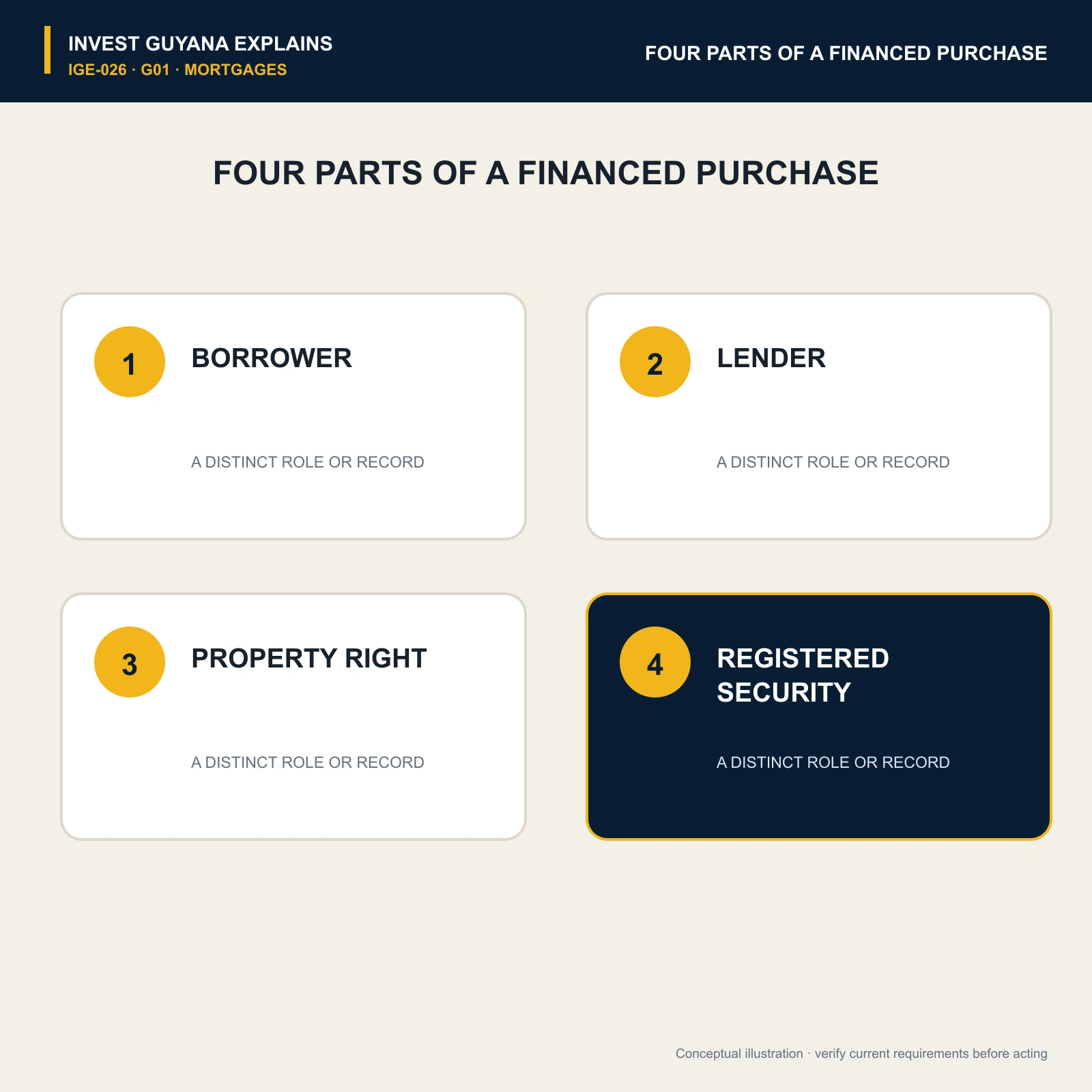
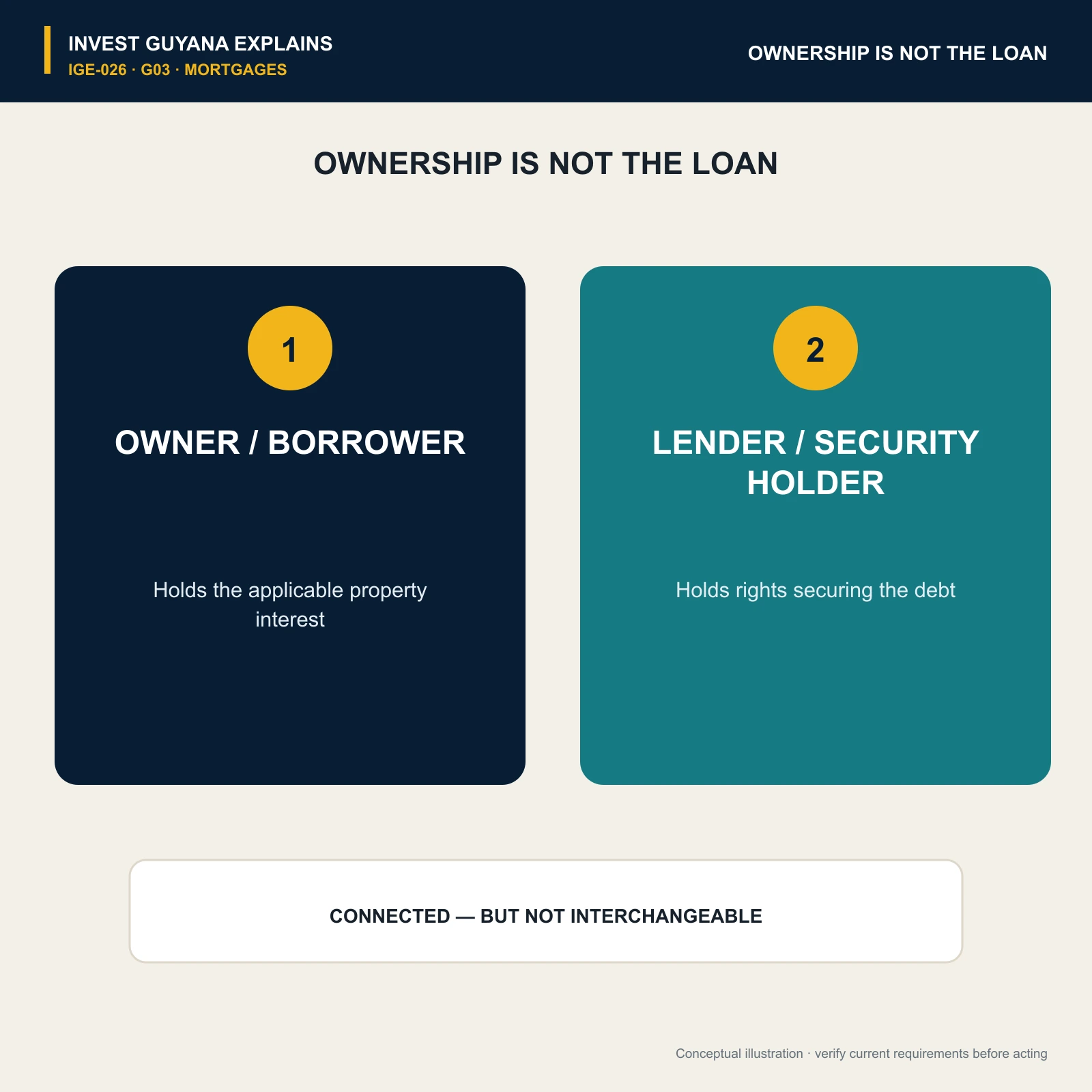
The answer requires three separate concepts—ownership, debt and security.
They are connected in a financed purchase, but they are not the same legal position.
Ownership identifies who holds the property right
Ownership depends on the applicable property system and registered record. The owner may hold transported property, a certificate of title or another recognised interest.
In a financed purchase, the buyer can become the registered owner while the lender obtains security over the property. The security protects the lender’s position if the borrower does not perform the loan obligations.
The existence of security therefore does not, by itself, convert the lender into the registered proprietor.
Loan approval is a financing decision
A lender’s approval means the lender is prepared to provide finance subject to its conditions.
The approval may depend on valuation, income, cash flow, insurance, title review, deposit, legal documentation and other requirements. It can expire or remain conditional.
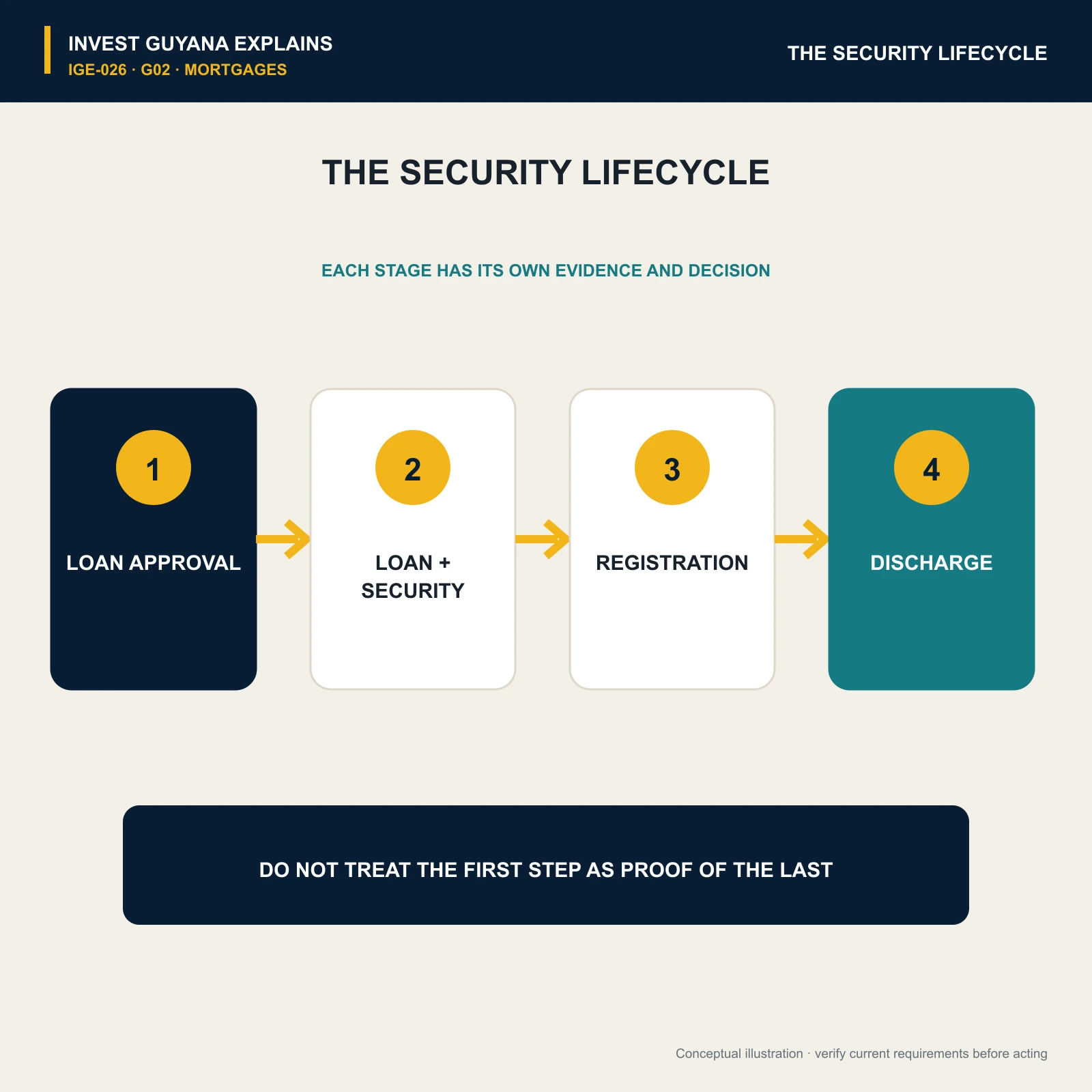
Loan approval does not prove that the seller owns the property, that the parcel is free from problems or that the transfer has been registered. Those matters must be addressed within the transaction and security process.
The mortgage is the security instrument
A mortgage or comparable registered security connects the debt to the property interest under the applicable legal pathway.
The Land Registry lists filing a mortgage among its registration services. The deeds-side process uses its own instruments and registration route. Public-land leases can also require GL&SC permission before a lease interest is mortgaged.
That last point is important: the word “property” does not erase the differences between private title and a public-land lease. The security available to the lender depends on the interest the borrower actually holds and the permissions governing it.
Registration matters
Signing a loan agreement and registering property security are separate events.
The loan agreement creates the borrower’s repayment and related obligations. The security document establishes the lender’s rights against the property, and the applicable registration step places that interest into the property-record system.
The transaction team should be able to identify which documents create the debt, which create the security and which official record confirms registration.
Paying the loan does not automatically explain the registry position
When the debt is repaid, the security should be discharged or released through the applicable process. A receipt or zero balance can prove payment without necessarily updating the registry by itself.
The owner should therefore retain both the lender’s completion evidence and the evidence that the registered security was discharged.
This is another example of a recurring principle in land administration: the financial event and the registry event are connected, but one should not be assumed to perform the other’s legal function.
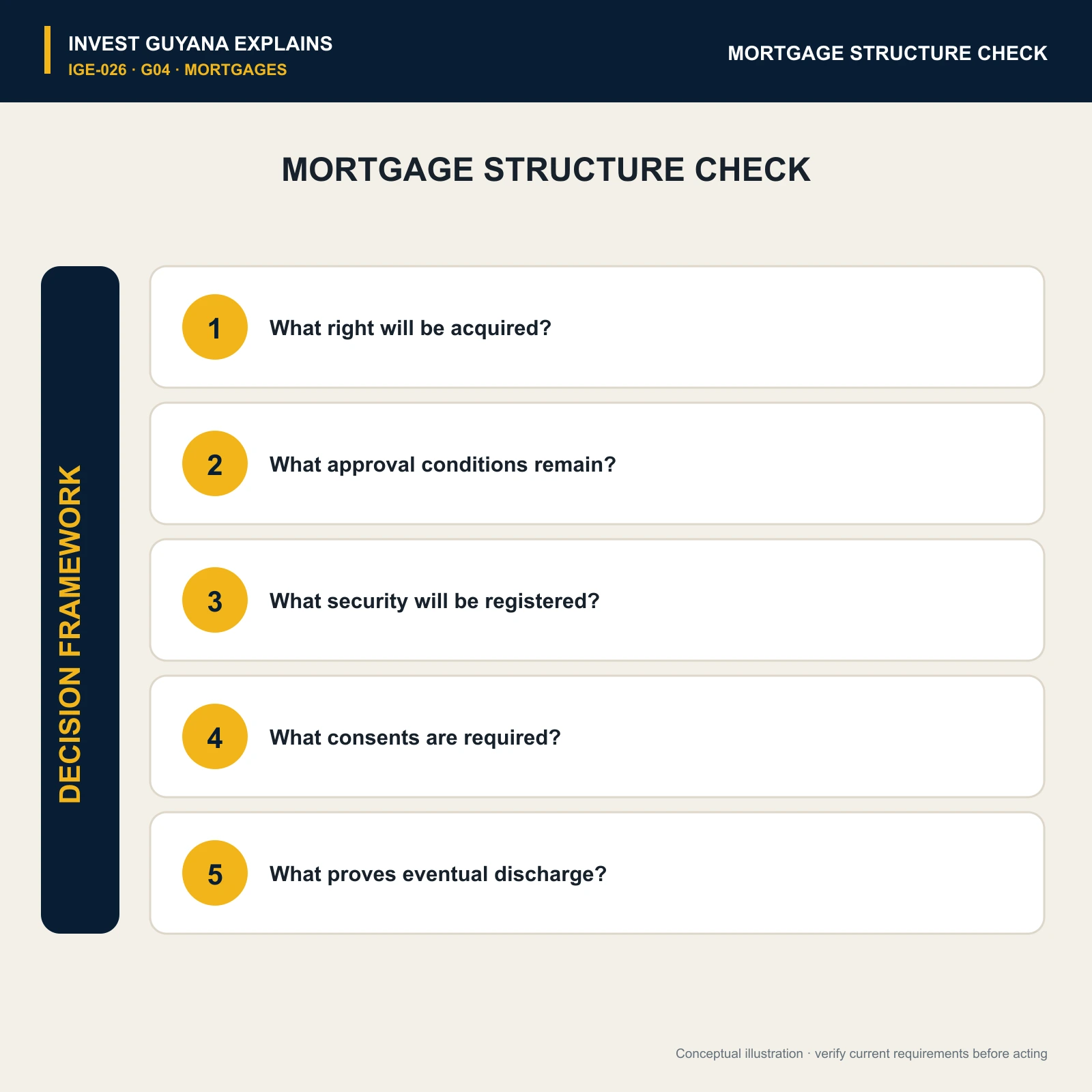
What a financed buyer should understand
- Which property right will the buyer acquire?
- What conditions remain on the lender’s approval?
- What security interest will be created and under which registry system?
- What consents are required, especially for leased public land?
- What evidence will confirm transfer, mortgage registration and eventual discharge?
The investor takeaway
The owner, borrower and lender can have different rights in the same property transaction.
Ownership identifies the holder of the property interest. The loan creates a debt. The mortgage secures that debt against the property. Registration records the relevant interest, and discharge removes the security when the applicable conditions are satisfied.
Keeping those concepts separate makes the transaction easier to evaluate and the completion records easier to verify.
The next article in Invest Guyana Explains will look at property tax, council rates and transaction charges, and why investors should not combine them into one undefined property-cost line.