

The search result was clean, but the site question remained
The buyer received a registry search and felt relieved. The named proprietor appeared in the record, and the document did not reveal the problem the buyer had feared.
The engineer then visited the site and asked whether the fence followed the legal boundary. The planning adviser asked whether the proposed use was permitted. The lawyer asked whether the person negotiating the sale had authority to bind every required party.
The registry search had answered an important question. It had not answered every question.
What a registry search is designed to show
A property search examines the records maintained within the applicable registration system.
Depending on whether the property follows the deeds-registration or land-registration pathway, the search may concern a transport, certificate of title and related registered instruments or annotations. The Land Registry publishes services for official title searches, while the Deeds Registry maintains the deeds-side record.
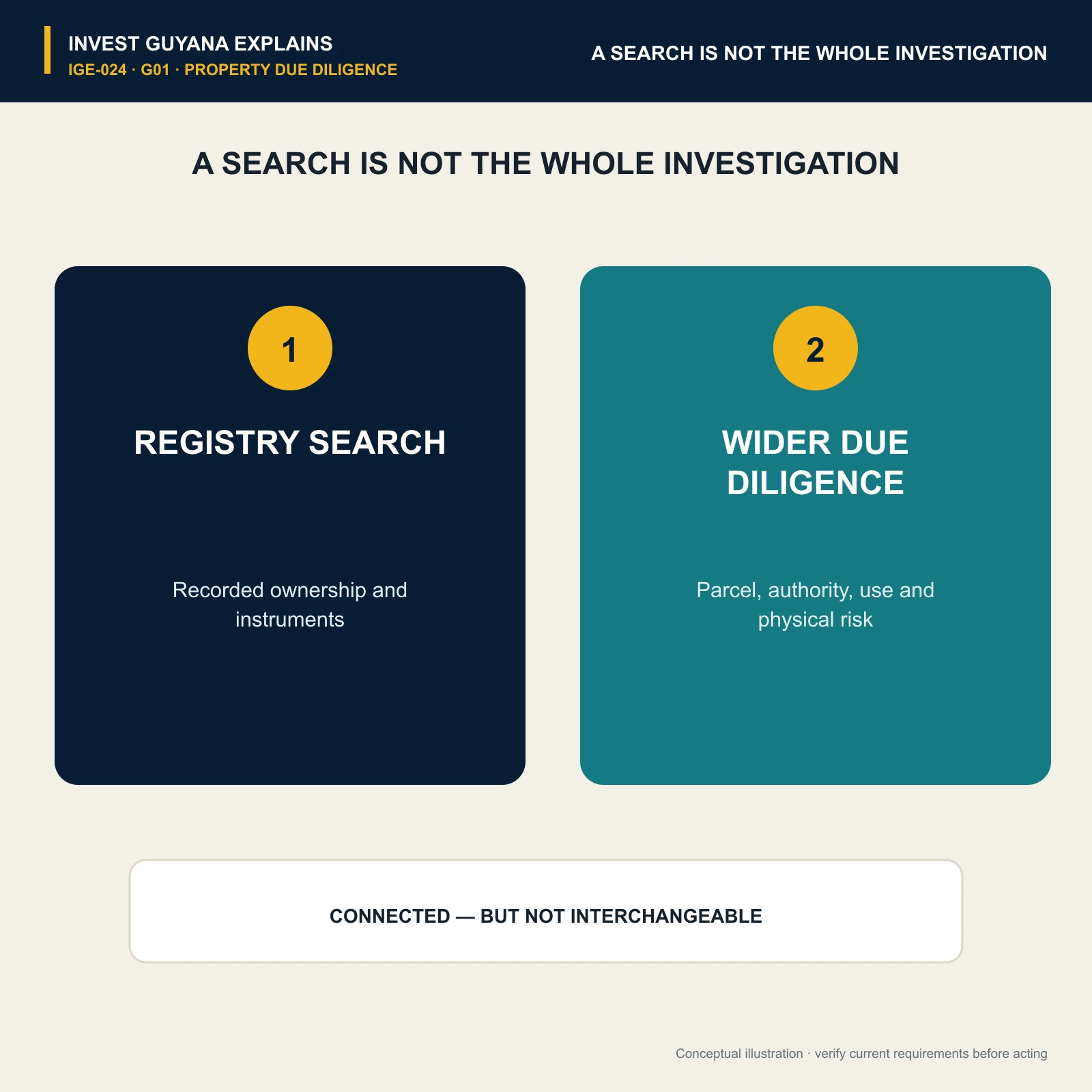
The search helps identify what the official record shows at the time and within the scope of the search. That is fundamental evidence. It is not the same as a guarantee about every physical, planning, contractual or commercial fact.
The record and the ground must refer to the same parcel
A document can be authentic and still be the wrong document for the land being shown to the buyer.
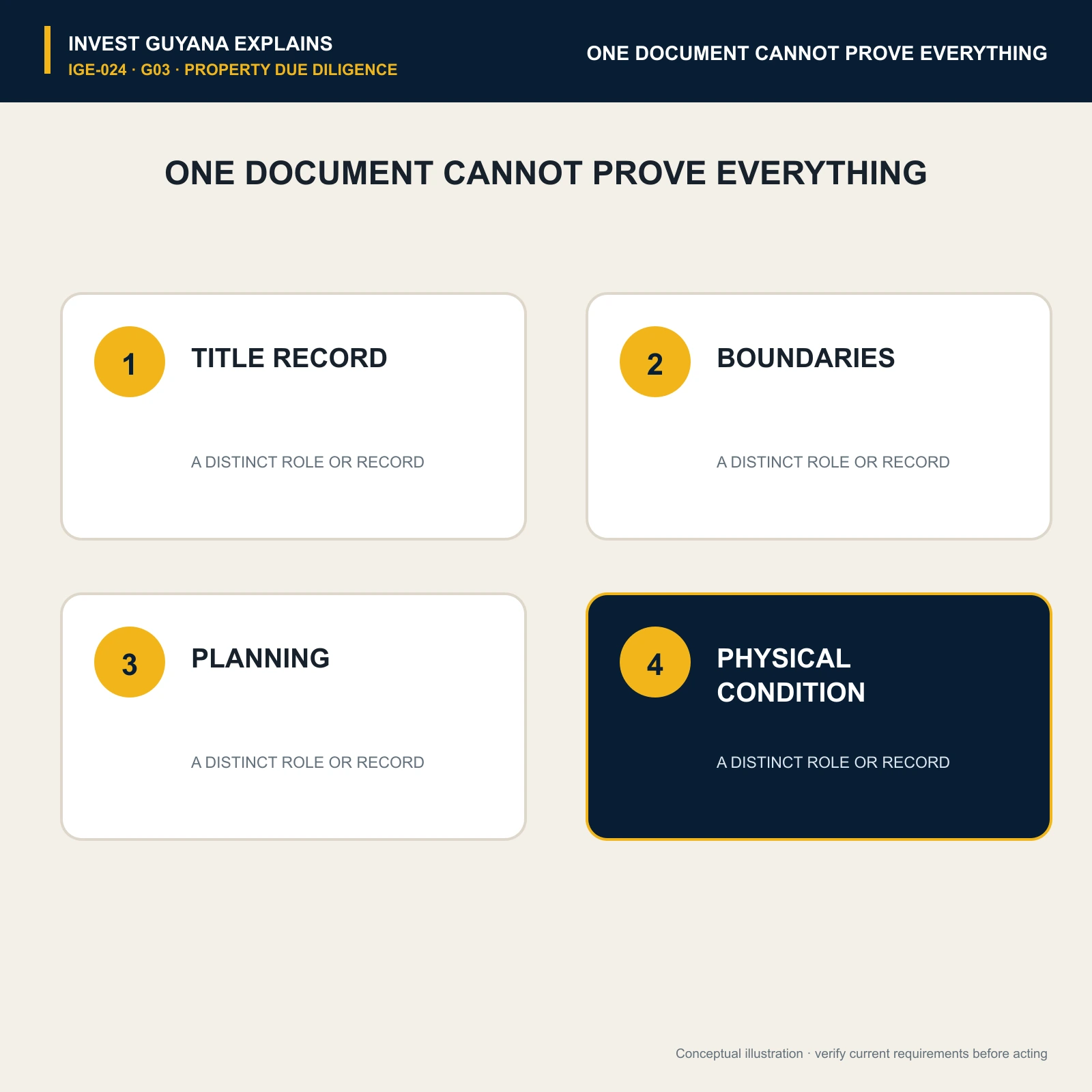
Due diligence therefore connects the legal description to the physical site. Survey plans, lot numbers, boundaries, mutations and subdivisions may matter. An occupation fence, access road or building can appear straightforward on the ground while the recorded parcel has a different shape or extent.
No buyer should infer title quality, parcel ownership or transfer completion without parcel-specific evidence. That caution should govern every property transaction.
The named owner and the person negotiating may not be the same legal actor
The person speaking for the property may be the registered owner, an attorney, company representative, executor, administrator, beneficiary, tenant or relative.
The search can help identify the recorded holder. Due diligence asks whether the person signing the agreement has the legal capacity and authority required for this transaction.
A company-owned property may require current corporate authority. Estate property may require a court grant and authorised personal representative. Joint ownership may require the participation of more than one person.

Registered interests are one part of the risk picture
Mortgages, liens, caveats, prohibitions, leases or other instruments can affect a transaction. Searches help reveal recorded interests within the applicable system.
But due diligence can also include matters that are not answered solely by the title page: planning restrictions, building approvals, access, drainage, utility availability, occupancy, tenancies, taxes and rates, environmental conditions and disputes.
The correct scope depends on the proposed use and the property. A residential buyer, hotel developer, lender and agricultural investor do not ask exactly the same questions.
A search date matters
Property records can change. A search obtained months before completion may not show an instrument filed later.
The transaction team should therefore understand when the search was conducted, what period and indices it covered, whether certified evidence is required and what final checks are appropriate before completion.
The existence of an earlier search should not become an excuse to stop monitoring the record while the transaction remains incomplete.
A useful due-diligence framework
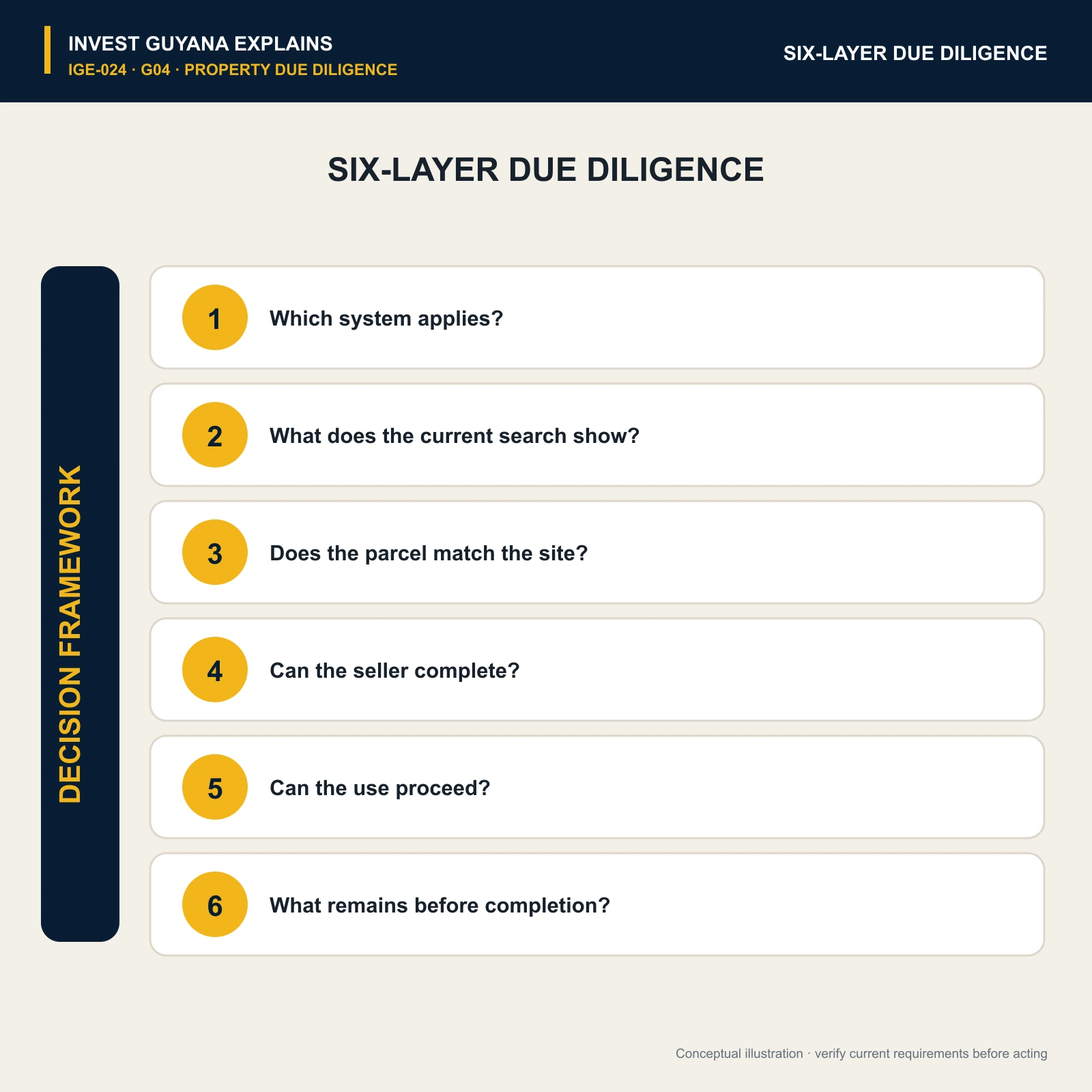
Before relying on the property, ask:
- Status: Which land and registry system applies?
- Record: What does the current official search show?
- Parcel: Does the legal description match the site and survey evidence?
- Authority: Can the proposed seller or representative legally complete the transaction?
- Use: Can the property support the intended development or occupation?
- Completion: What must occur before money, possession and registration are final?
The procedural checklist belongs in the relevant Guide and professional engagement. The Explainer’s role is to show why the layers exist.
The investor takeaway
A property search is essential evidence, not complete due diligence by itself.
It tells the investor what the applicable official record shows within the scope and date of the search. Due diligence connects that record to the parcel, the parties, the proposed use, the physical condition and the completion process.
The strongest transactions do not choose between a registry search and wider investigation. They use the search as the legal-record foundation for the rest of the work.
The next article in Invest Guyana Explains will follow the transaction from investigation to commitment, explaining why paying a deposit does not by itself transfer property ownership.