The land had been identified, the financing was taking shape and the first architectural drawings were already on the table. For the company planning a new riverside manufacturing facility in Guyana, the project finally felt ready to move from presentation slides to construction.
Then the local project adviser asked a question that changed the timetable.
“Have you started the environmental authorisation process?”
The investors knew the facility would need planning, tax and construction approvals, but they had treated environmental review as something to address after the design was complete. Their adviser explained that this was exactly why the conversation needed to happen now. Environmental approval is not a ceremonial stamp added to a finished plan. It is a process for understanding a project’s likely effects before irreversible decisions are made.
For businesses, that makes timing as important as compliance. A project may be technically sound and commercially promising, yet still face delay if environmental requirements are discovered too late. Understanding the process early allows environmental questions to shape planning while there is still time to respond to them.
Why Environmental Review Starts Early
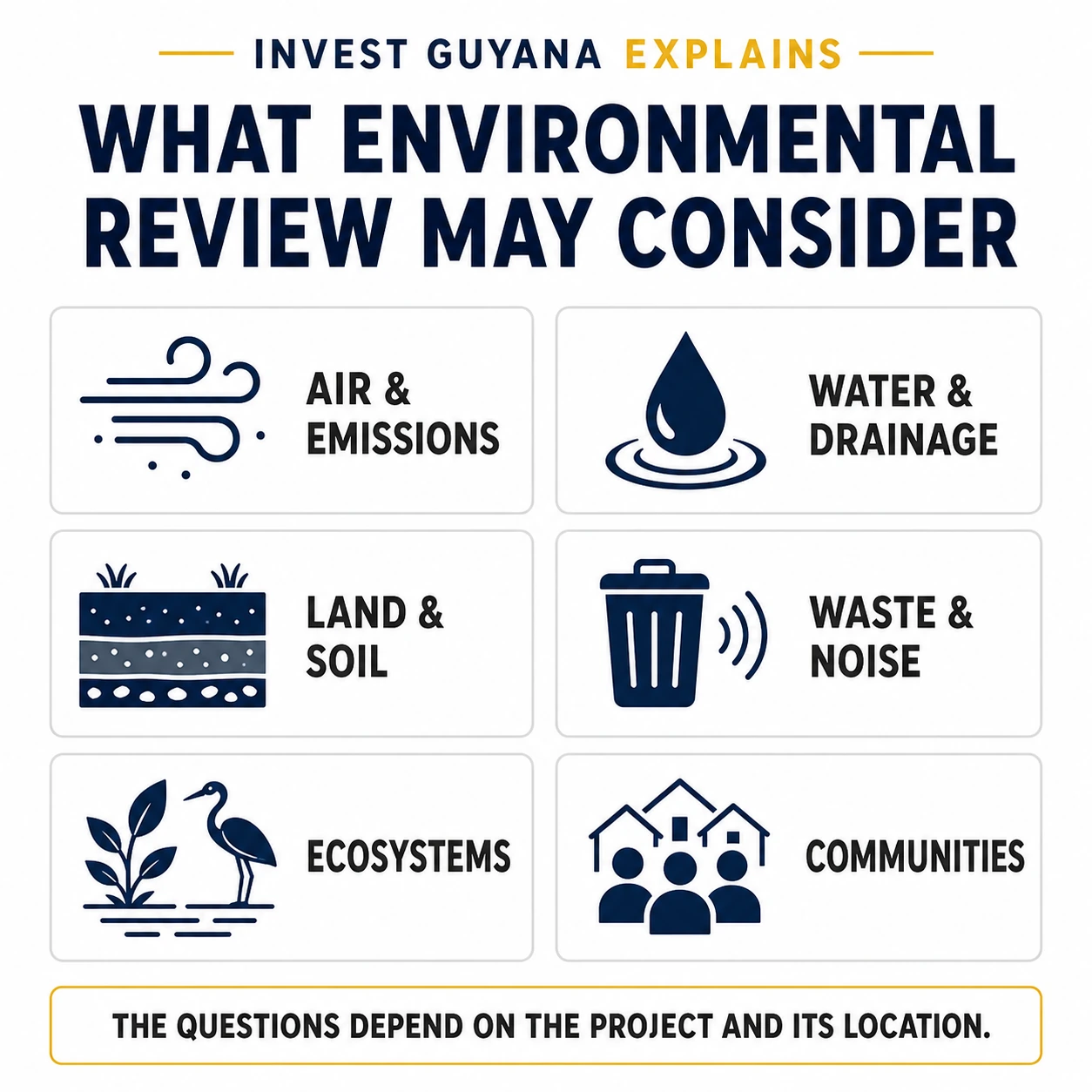
Every development changes something. A hotel may alter drainage and traffic patterns. A factory may create emissions, noise or waste. A quarry may affect land, water and nearby communities. Even a project with clear economic value can create environmental effects that must be understood and managed.
Guyana’s Environmental Protection Act provides the legal framework for assessing those effects, while the Environmental Protection Agency administers the environmental authorisation process. The Act requires applications for projects listed in its Fourth Schedule and for other projects that may significantly affect the environment. The EPA’s current process begins when a developer submits an application for an environmental permit, supported by enough information for the Agency to understand what is proposed. Environmental Protection Act 1996
That early information matters because environmental review is not limited to asking whether a project is “good” or “bad.” The more useful questions are practical: Where will it be located? What will be built? What materials will be used? How will water, waste, emissions and noise be managed? Who or what could be affected?
When developers consider those questions while a project is still flexible, the process can improve the design rather than merely judge it. A drainage system can be reconsidered, a buffer can be added or a waste-management plan can be strengthened before those changes become expensive.
Not Every Project Follows the Same Path
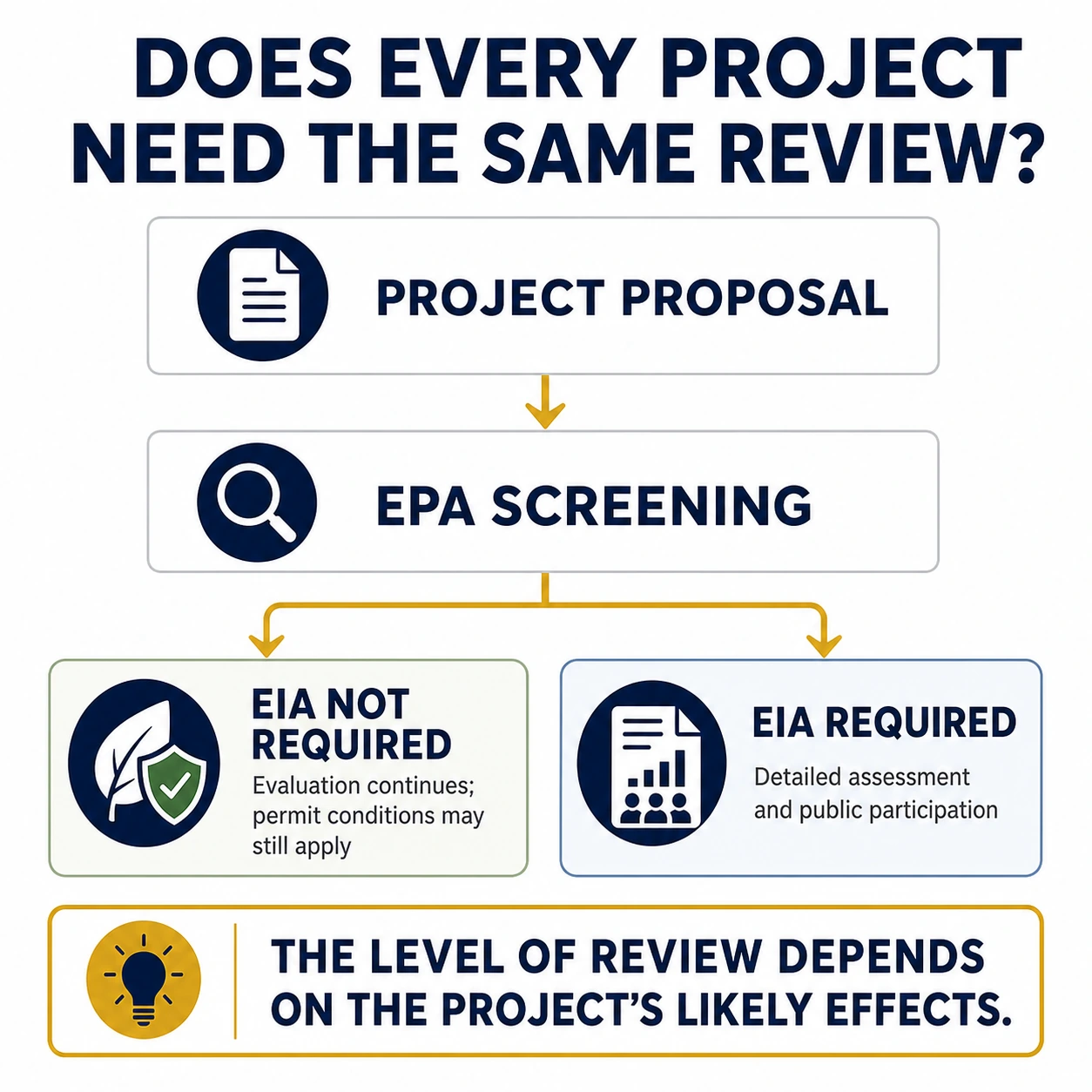
One of the most common misunderstandings is that every environmental application automatically leads to a full environmental impact assessment, usually called an EIA. That is not how the process works.
After receiving an application, the EPA screens it to determine whether the proposed project may significantly affect the environment. According to the Agency’s published guide, the screening decision identifies whether an EIA is required. If the project is unlikely to create significant effects, it may proceed without a full EIA, although it must still be evaluated and may receive an environmental permit with conditions. If significant effects are possible, the more detailed EIA route begins. EPA Environmental Authorisation Process
This distinction allows the level of review to reflect the nature, location and potential effects of the project. A modest activity in an established commercial setting does not necessarily present the same questions as a large industrial development near sensitive waterways or communities.
For investors, the practical lesson is not to predict the outcome themselves. A project team may believe its proposal is low-risk, but the screening decision belongs to the EPA. Early engagement and complete, accurate project information give the Agency a sound basis for making that determination.
What Happens When an EIA Is Required
A full EIA is a structured study of how a proposed development could affect the environment and how those effects might be avoided, reduced or managed. It gives decision-makers and the public a fuller picture before the project is approved or rejected.
The process begins by defining the scope of the assessment. This is the stage where the most important questions are identified: which environmental and social conditions require study, which alternatives should be considered and what information will be needed to evaluate the project properly.
Public input forms part of that process. The EPA’s guide states that, after notice that an EIA is required, members of the public have 28 days to submit questions and matters that should be considered. Scoping and consultation then help shape the terms and scope of the assessment. The study itself must be carried out by independent, suitably qualified persons rather than by the EPA or the developer.
Once completed, the EIA and its Environmental Impact Statement are submitted for evaluation. A notice is published, the documents enter a further public-review period and the Environmental Assessment Board considers them. The EPA then makes its decision after taking the assessment, public submissions and the Board’s recommendations into account.
The process is detailed because the decision may have long-term consequences. A credible EIA does more than describe possible harm. It examines alternatives, identifies mitigation measures and provides a basis for conditions that can be monitored if the project proceeds.
Public Participation Is Part of the Process
Developers sometimes view public consultation as a presentation that happens after the important decisions have already been made. Environmental assessment treats it differently. People living near a proposed project may understand local flooding, seasonal water movement, traffic patterns or community use of land in ways that are not immediately visible in technical drawings.
That knowledge can help identify issues early, when they are still manageable. It can also reveal where a project team has explained something poorly or where rumours are filling an information gap.
Consultation does not mean every objection automatically prevents development, nor does it replace technical analysis. Its purpose is to ensure that relevant concerns and local knowledge become part of the record considered in reaching a decision. The EPA publishes current notices, submitted EIAs and other materials through its public information channels, making disclosure an identifiable part of the authorisation system. EPA Public Notices and EIA Resources
For a well-prepared investor, this should not be treated as an obstacle. Clear engagement can strengthen project planning, reduce avoidable conflict and demonstrate that the company understands the community in which it intends to operate.
An Environmental Permit Is Not the End
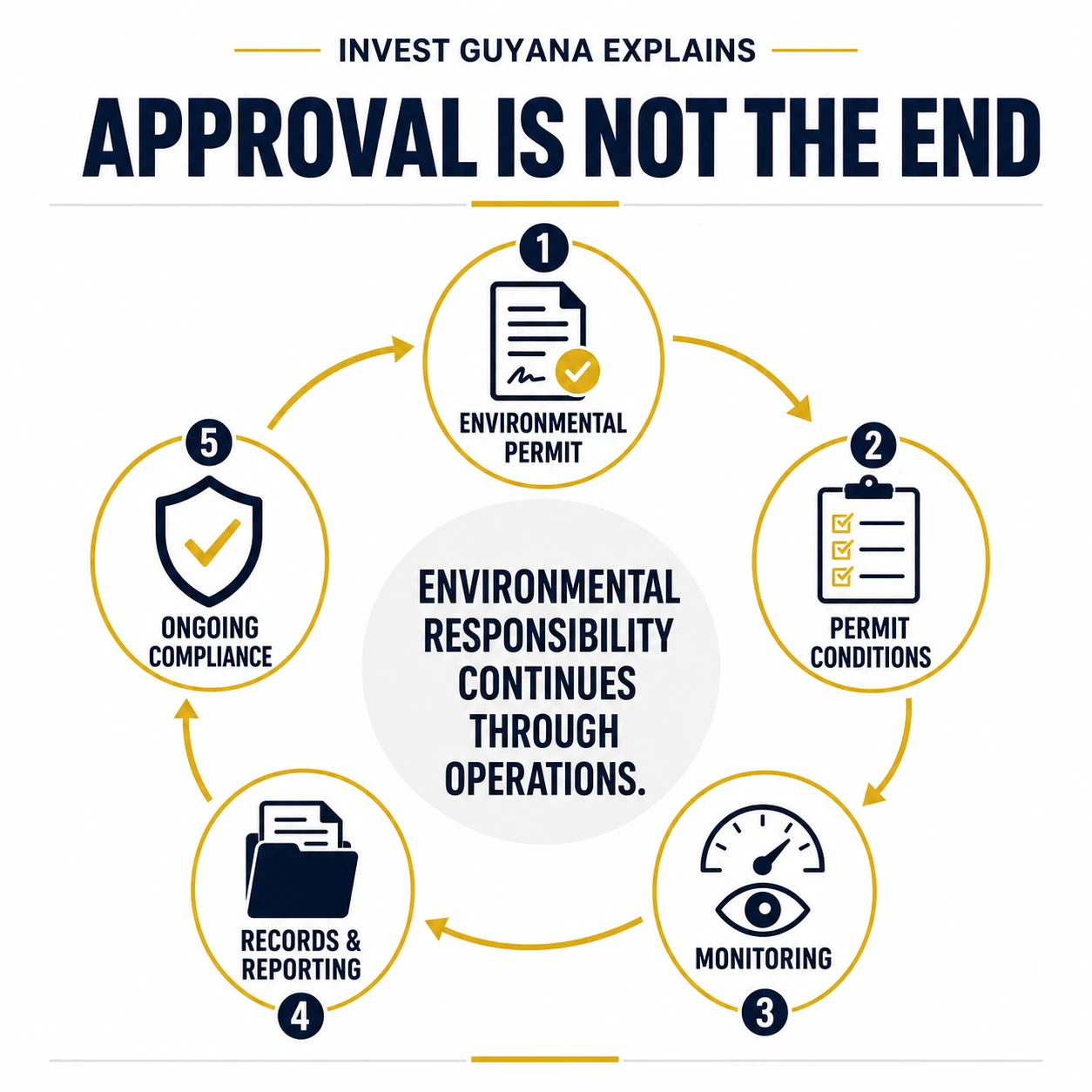
Approval is a major milestone, but it does not end the developer’s environmental responsibilities. The EPA may issue a permit subject to conditions considered necessary to protect human health and the environment. Those conditions can influence how a project is built, operated, monitored and eventually closed.
This is where environmental approval becomes part of everyday management. A company may need to follow an environmental management plan, maintain controls, monitor performance, keep records or report information in accordance with its authorisation. If the project changes materially, the business may need to determine whether the existing approval still covers the revised activity.
The practical point is simple: environmental compliance belongs inside the operating model, not in a folder that is closed when construction begins. The people responsible for engineering, procurement, operations and finance need to understand the permit conditions that affect their work.
An environmental permit also does not replace every other approval. A project may still need land, planning, sector, construction or other permissions from the relevant authorities. As earlier articles in this series have explained, different regulators oversee different aspects of the same investment.
Where Should a Business Begin?
The company planning the riverside facility eventually reorganised its project team. Environmental review moved from the end of the approval checklist to the beginning of project design.
Its first task was not to commission every possible study. It was to describe the proposal accurately: the location, scale, technology, inputs, outputs, likely emissions, waste, water use, transport requirements and surrounding environment. That information would allow the appropriate process to be identified.
The company also stopped asking only, “How long will approval take?” A better set of questions emerged. What information will the EPA need to screen the project? Could the design avoid impacts before mitigation becomes necessary? Are there communities or sensitive areas that should influence site planning? Which permit conditions could affect construction and operations?
Those questions produced a more realistic schedule and a stronger project. They also reduced the risk of designing first and discovering later that a central assumption had to change.
From Permission to Better Planning
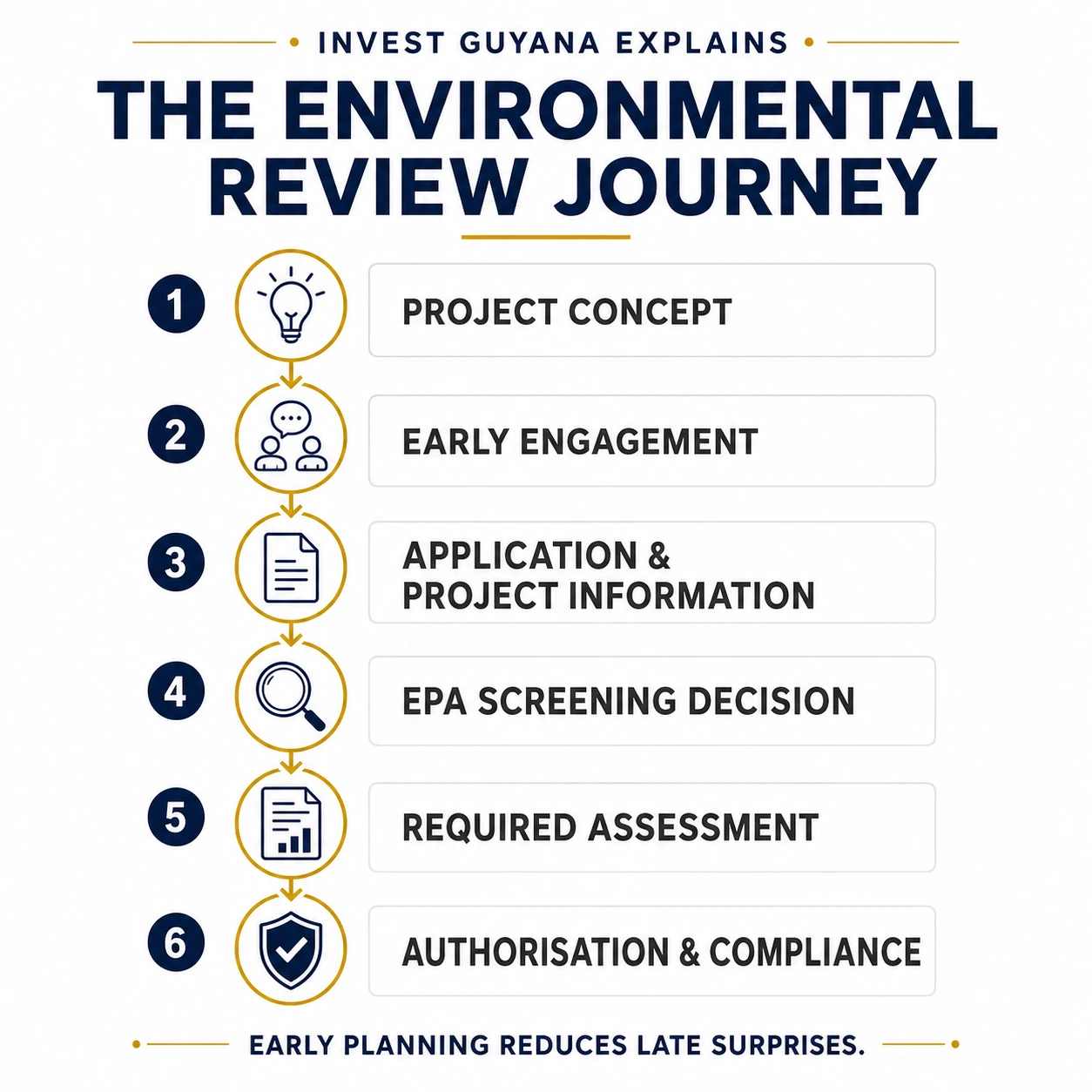
By the time the investors returned to the boardroom, they no longer viewed environmental authorisation as a final barrier between the company and construction. They understood it as a sequence: provide the project information, allow the proposal to be screened, complete the level of assessment required, engage where public participation applies and operate within the conditions of any approval.
Not every project will need the same depth of review, and not every application will lead to an EIA. What every serious developer needs is an early understanding of the project’s environmental questions and the discipline to let those questions inform planning.
That change in perspective matters. It replaces the search for a last-minute permit with something more valuable: a project designed with a clearer understanding of where it will operate, whom it may affect and what responsible performance will require after the ribbon is cut.
The next article in Invest Guyana Explains will examine another system that businesses often encounter from the outside: public procurement, and how government moves from identifying a need to selecting a supplier and managing a contract.
Editorial note: This article provides a general explanation of Guyana’s environmental authorisation system. Requirements depend on the project and current law; developers should confirm the applicable process directly with the Environmental Protection Agency and other relevant authorities.