

The customer asked one question the receipt could not answer
The supplier had recently registered for VAT. At the end of a transaction, the customer received a printed receipt showing the business name, the items purchased and the total paid.
“Is this a VAT invoice?” the customer asked.
The cashier pointed to the receipt and replied, “We are VAT registered.”
That statement did not answer the question.
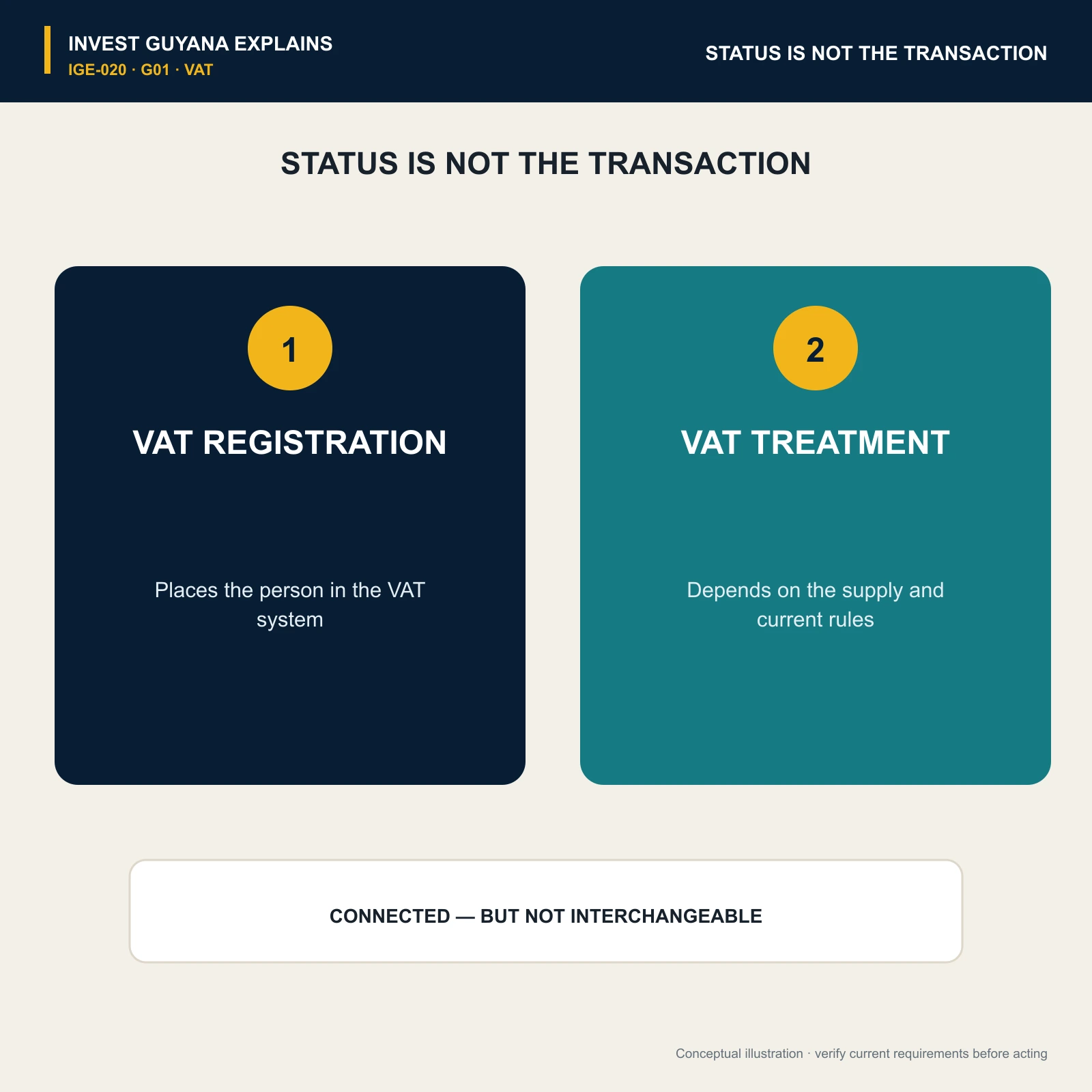
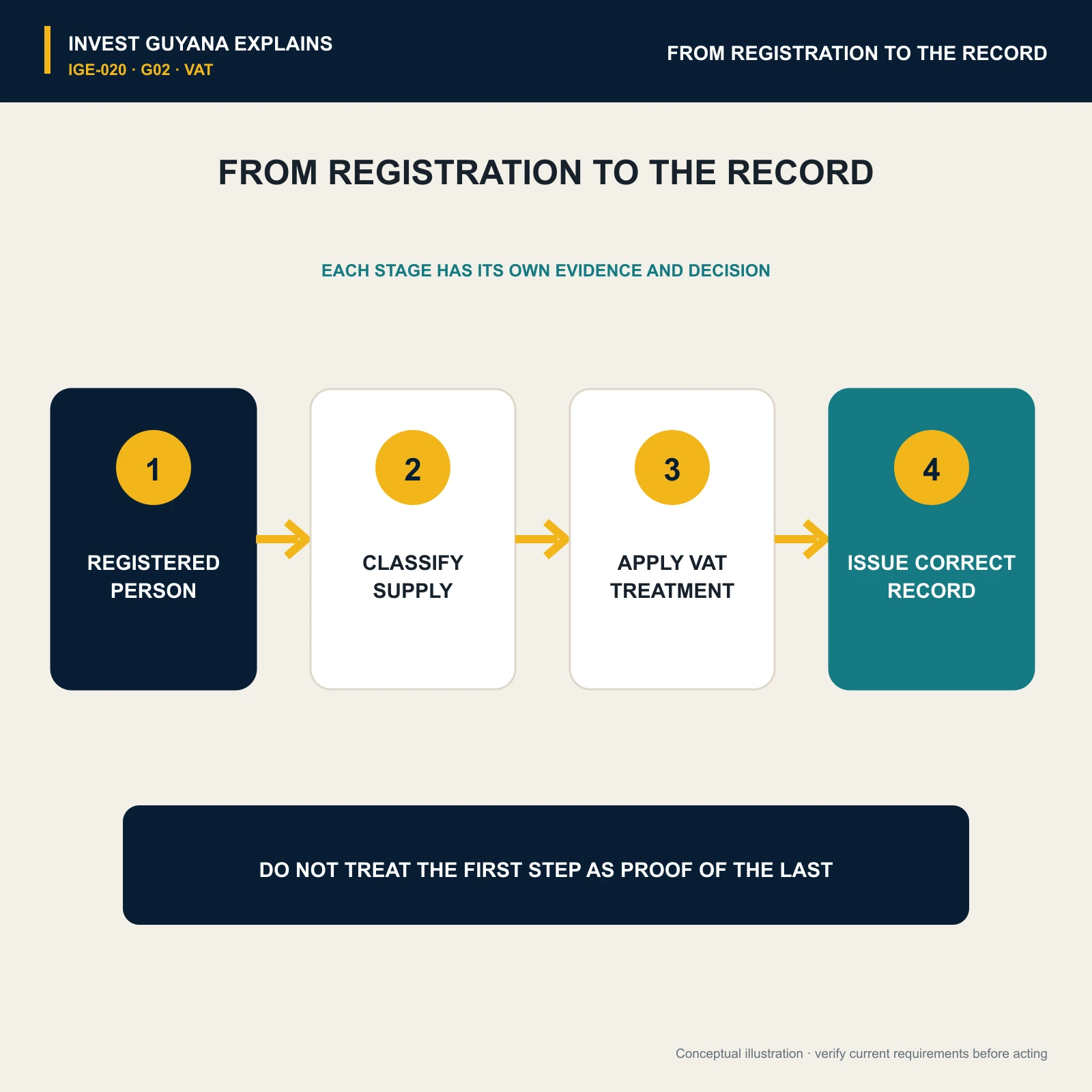
VAT registration is the status that brings a person within the value-added-tax system. A VAT invoice is a particular record issued for a transaction that the VAT rules treat in a particular way. Registration matters, but it is not the only fact that determines what should appear on the document.
Registration is about the taxpayer’s status
Guyana’s VAT system distinguishes between people who are registered and those who are not. GRA currently identifies a compulsory-registration threshold and provides both compulsory and voluntary registration routes. Businesses should confirm the current threshold, required documents and submission process before applying.
Registration allows and requires the registered person to account for VAT according to the governing rules. It creates ongoing obligations concerning returns, payments, records and invoices.
But registration does not mean that every dollar received by the business is automatically VAT. The transaction still has to be understood.
The supply matters as much as the seller
VAT treatment depends on what is being supplied, how the law classifies it and whether the registered person is acting within the VAT system for that transaction.
Some supplies may be taxable at the standard rate. Others may be zero-rated, exempt or otherwise treated under specific rules. A payment may also relate to something that should not be casually described as a taxable sale without examining the underlying transaction.
That is why a business should not simply multiply every receipt by the standard rate or add the letters “VAT” to every document.
A receipt and a VAT invoice perform different jobs
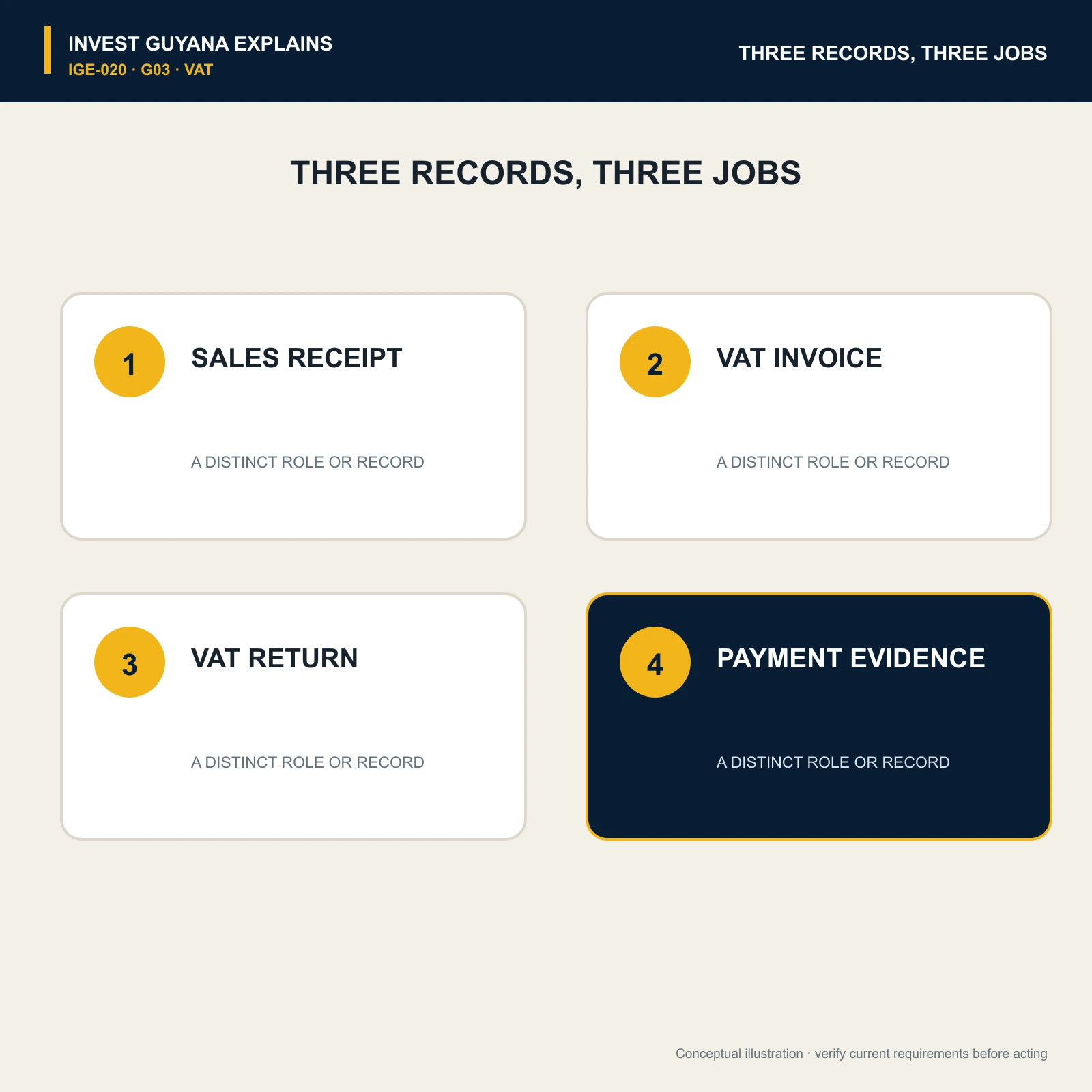
An ordinary receipt generally proves that a payment was made. It may identify the seller, the items and the total.
A VAT invoice must satisfy the applicable VAT rules. Its purpose is not only to prove payment; it communicates prescribed tax information about the supply and the registered person.
The distinction matters to the seller because invoice records support the VAT return. It matters to the customer because the document may affect whether and how the VAT is treated in the customer’s own records.
The safest principle is simple: do not decide whether a document is a VAT invoice from its paper size, its logo or the presence of a total. Examine whether it was issued by the appropriate registered person for the relevant supply and whether it contains the information required by the current rules.
Turnover is not the same as VAT collected
Business turnover measures revenue or sales according to the relevant accounting or tax context. VAT collected is an amount accounted for under the VAT system.
The figures may be connected, but they should not be treated as interchangeable. A business can have turnover that includes transactions with different VAT treatments. The total amount received from customers can include the selling price, VAT where applicable and other amounts that need to be classified correctly.
This distinction becomes important when reconciling sales records to VAT returns. A business that treats the bank deposits as the VAT base without understanding the transactions can create unexplained differences.
Registration is not a licence to charge any amount as VAT
VAT is imposed and administered under law. Registration does not give a business discretion to label an extra charge as VAT whenever it chooses.
The seller must determine whether VAT applies, use the applicable current rate or treatment, issue the correct record and report the transaction consistently. The customer should be able to see what was charged and why.
GRA currently publishes a standard VAT rate of 14 percent and a compulsory-registration threshold of GYD 15 million. Because rates, thresholds and classifications can change, businesses should confirm the current position before relying on those figures for a transaction. Exempt and zero-rated supplies must also be considered under the applicable rules.
What a business should reconcile
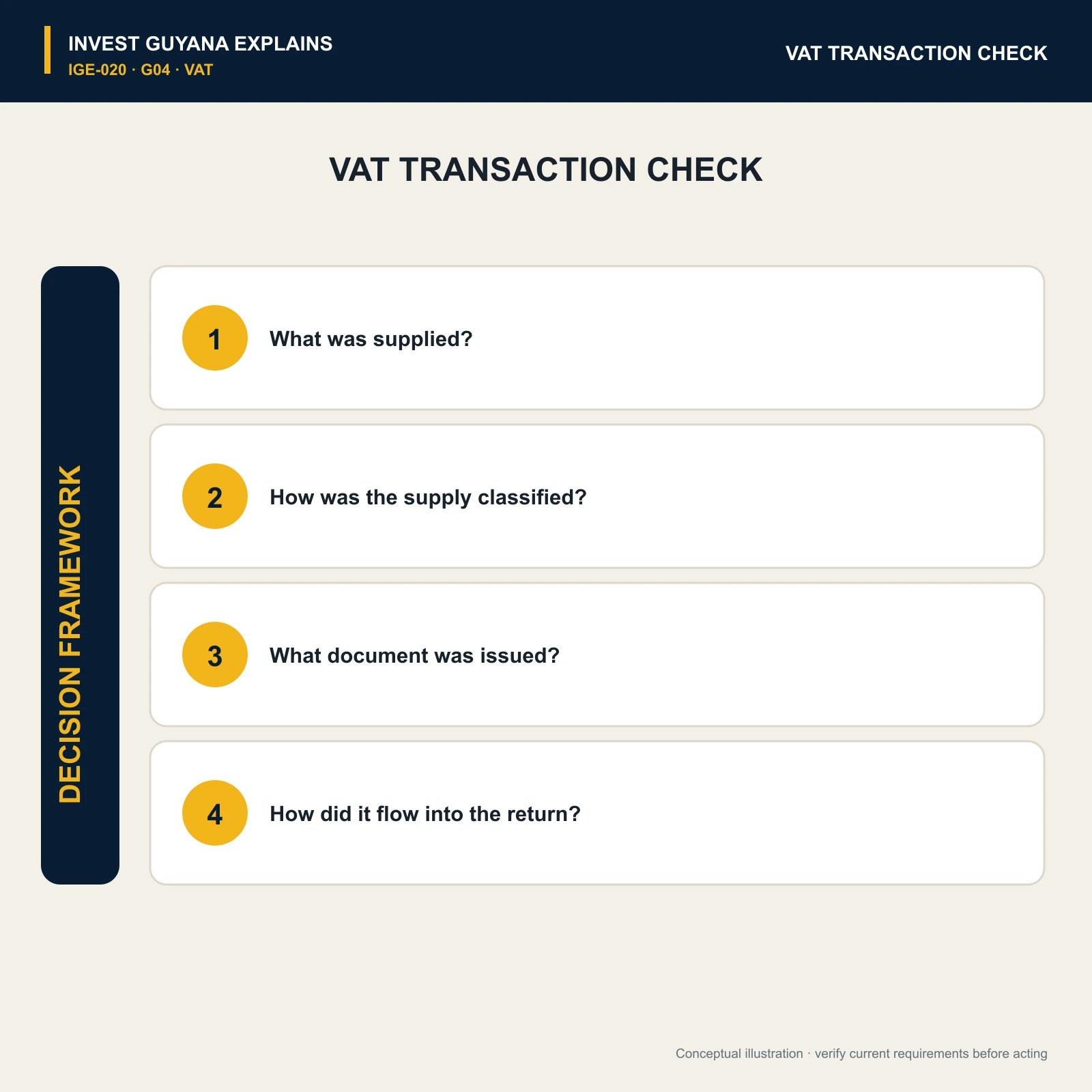
A registered business needs a line of sight from the underlying transaction to the return.
It should be able to explain:
- what was supplied;
- how the supply was classified for VAT;
- which document was issued;
- how the sale appeared in the accounting records;
- how the VAT amount flowed into the return and payment.
The full field-level invoice requirements and return process belong in current official guidance and the procedural Guide. The conceptual point is that each step must agree with the others.
The investor takeaway
VAT registration is a status. A VAT invoice is a transaction record. Turnover is a business measure. VAT collected is a tax amount.
They are connected, but they are not interchangeable.
A business that understands those distinctions is better able to price correctly, issue reliable documents, reconcile its accounts and respond when a customer, auditor or tax authority asks how a VAT amount was determined.
The next article in Invest Guyana Explains will look more closely at corporation-tax classification, and why a company’s activities and statutory category matter before a tax rate is placed in an investment model.