Photo: Department of Public Information, Guyana.
The Inter-American Development Bank is urging Guyana and its partners to build the policy, institutional and measurement systems needed to turn biodiversity commitments into credible investment, as the country prepares to convene the second Global Biodiversity Alliance conference in Georgetown.
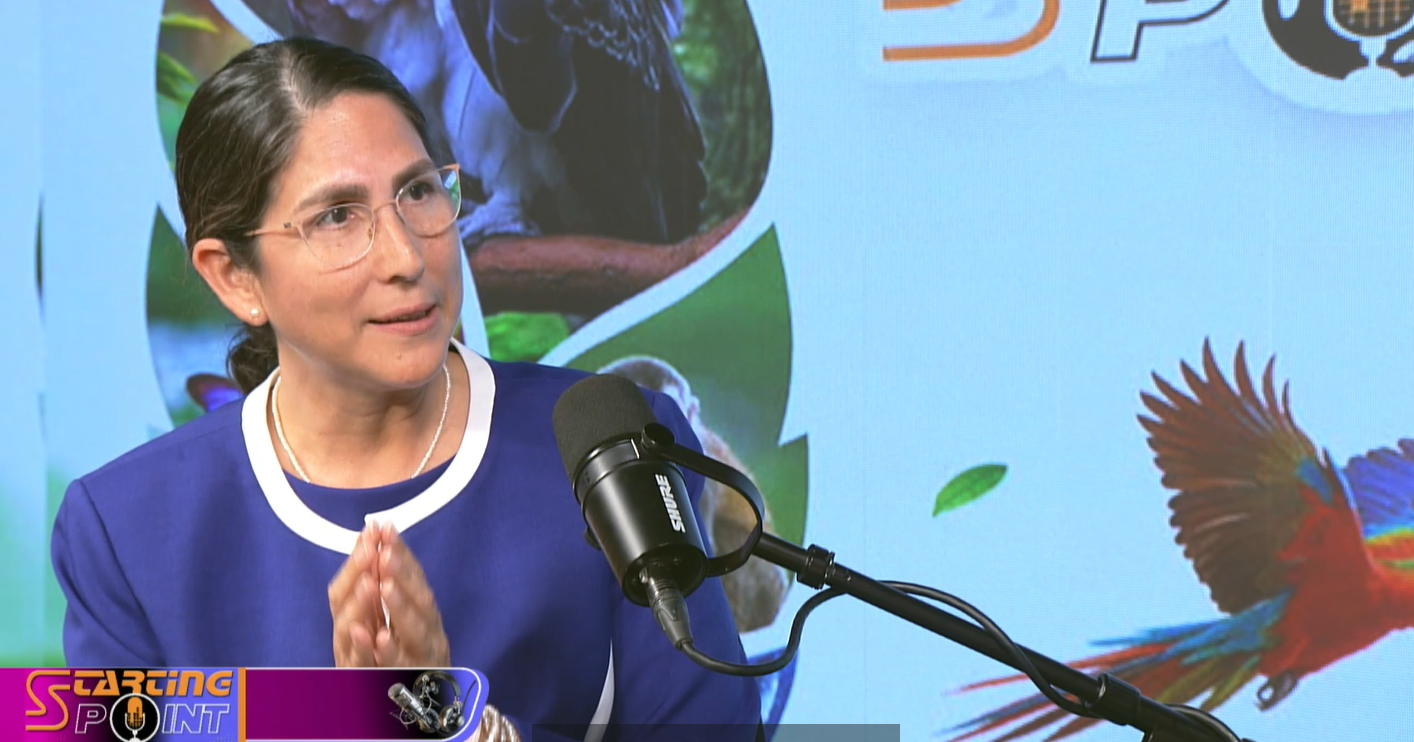
IDB Group Country Representative Lorena Solórzano Salazar said the challenge is not simply to attract more money, but to create the conditions for different financial instruments to support both biodiversity and national development priorities at scale.
That distinction is important for investors. The Global Biodiversity Alliance has grown to more than 140 members, but membership is not the same as a financial commitment. The public material reviewed by Invest Guyana does not identify a newly approved alliance fund, a security available for purchase or a guaranteed return mechanism.
The latest IDB position instead points to the work required before capital can move responsibly: clear public policy, accountable institutions, reliable environmental data, measurable outcomes and financing structures aligned with Guyana’s development objectives.
A regional financing gap creates urgency—but not automatic investability
The IDB estimates that Latin America and the Caribbean face a biodiversity-financing gap of about US$153 billion a year, equivalent to 2.1% of regional gross domestic product. The bank also says more than half of the region’s GDP depends on ecosystem services and about 19% of jobs are in nature-linked sectors.
Those figures explain why biodiversity is moving from a specialist environmental issue into mainstream economic policy. Natural systems support water, food production, energy, tourism, coastal protection and livelihoods. Degradation can therefore create fiscal, operating and supply-chain risks as well as ecological loss.
A large financing gap does not, however, create an investable project by itself. Capital providers still need to know what activity is being financed, who owns or controls the relevant rights, how environmental results will be measured, where payments will come from and how communities will participate in decisions and benefits.
Guyana-related IDB operations remain in preparation
The IDB’s public project portal lists a Guyana operation titled Biodiversity Conservation and Natural Capital Framework for Guyana’s Sustainable Development. Its stated objectives include reducing the loss and degradation of biodiversity and natural capital, incorporating those assets into national decision-making and capturing their economic value.
The project page currently shows the operation’s status as Preparation and displays no approval date. It should therefore not be described as an approved or disbursing loan on the strength of the public page reviewed for this article.
A separate IDB Lab technical-cooperation operation for the Barima-Mora Passage is also listed in preparation. Its stated objective is to develop a framework for protecting and financing the mangrove ecosystem while supporting awareness, sustainable livelihoods and green jobs among people living in or near the area.
DPI’s 27 October report says work connected with the area has combined environmental monitoring, including drone technology, with livelihood activity involving local crops and pepper production. The project record does not establish that a wider biodiversity-credit market is already operating in Guyana.
What an investable biodiversity pipeline would require
The first requirement is a credible baseline. A project needs to define the ecosystem condition before intervention and identify the result being financed—such as avoided loss, restoration, improved habitat condition or another measurable service. Metrics must be robust enough to show additional impact rather than repackage activity that would have happened anyway.
The second is governance. Investors, governments and communities need transparent rules for project approval, monitoring, data ownership, revenue distribution and remedial action if promised outcomes are not delivered. Independent verification can reduce the risk of overstated environmental claims, but verification standards and accountability arrangements must themselves be clear.
The third is a lawful and equitable treatment of rights. Biodiversity-rich landscapes may involve titled lands, customary use, protected areas, public property and community-managed resources. Project structures need to address participation, consent where applicable, access to information and benefit sharing rather than treating these matters as an afterthought.
The fourth is a reliable payment mechanism. Grants, public budgets, development-finance instruments, performance-based payments, blended finance and high-integrity nature credits serve different purposes and carry different risks. A reference to “biodiversity finance” does not tell an investor which instrument will be used or whether the expected cash flow is commercial, concessional or non-repayable.
Opportunity extends beyond financial products
Even before a mature investment market develops, building the pipeline can create demand for environmental assessment, remote sensing, mapping, data management, legal services, community engagement, conservation science, auditing and project preparation.
Guyanese firms may be able to participate in these supporting services, but opportunities will depend on actual procurement notices, project approvals and contract terms. Conference discussions or operations in preparation should not be treated as open tenders.
The IDB’s broader regional work also points to natural-capital toolkits, government-readiness assessments and guidance for high-integrity nature-credit markets. These resources may help shape Guyana’s approach, but they do not replace country-specific rules or project-level due diligence.
What investors should watch next
The Global Biodiversity Alliance conference on 30 and 31 October offers a test of whether the initiative can move from general commitment to a documented pipeline. The strongest signals would be named projects, responsible institutions, defined instruments, approval status, implementation schedules and measurable environmental and community outcomes.
Investors should also watch the IDB project pages for formal approval dates and published documents, and distinguish total project concepts from funds that have actually been approved, signed or disbursed.
Invest Guyana’s earlier summit preview examined the wider financial architecture that biodiversity projects may require. The latest IDB intervention sharpens the immediate point: Guyana’s natural assets may support new forms of finance, but investability will depend on credible rules, data, safeguards and projects—not the size of an alliance alone.