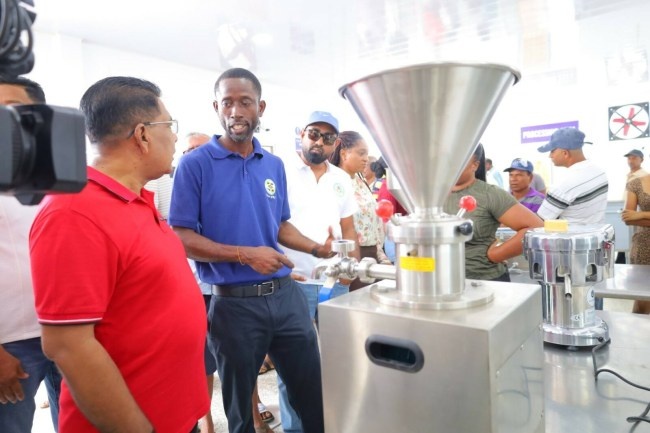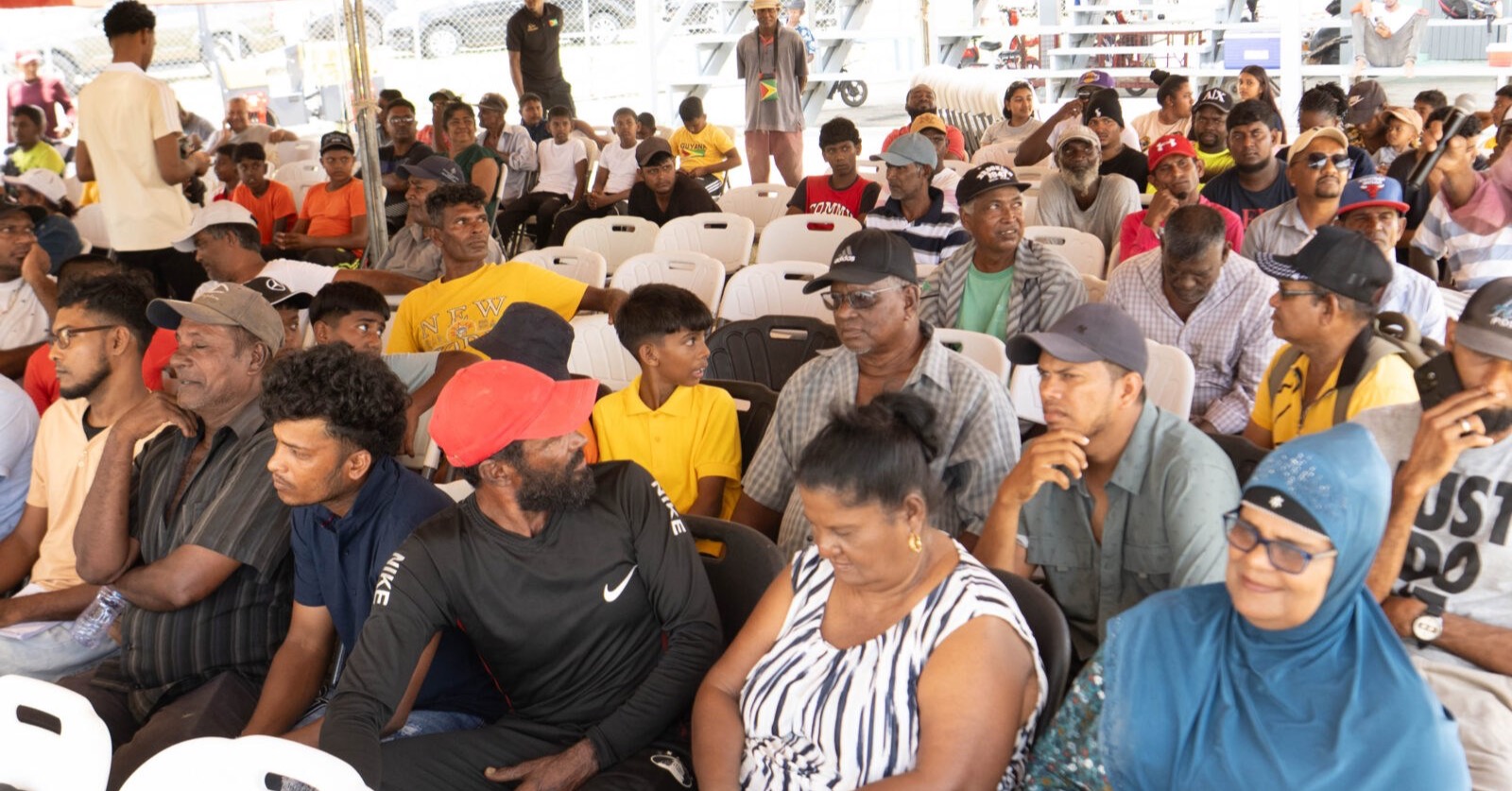
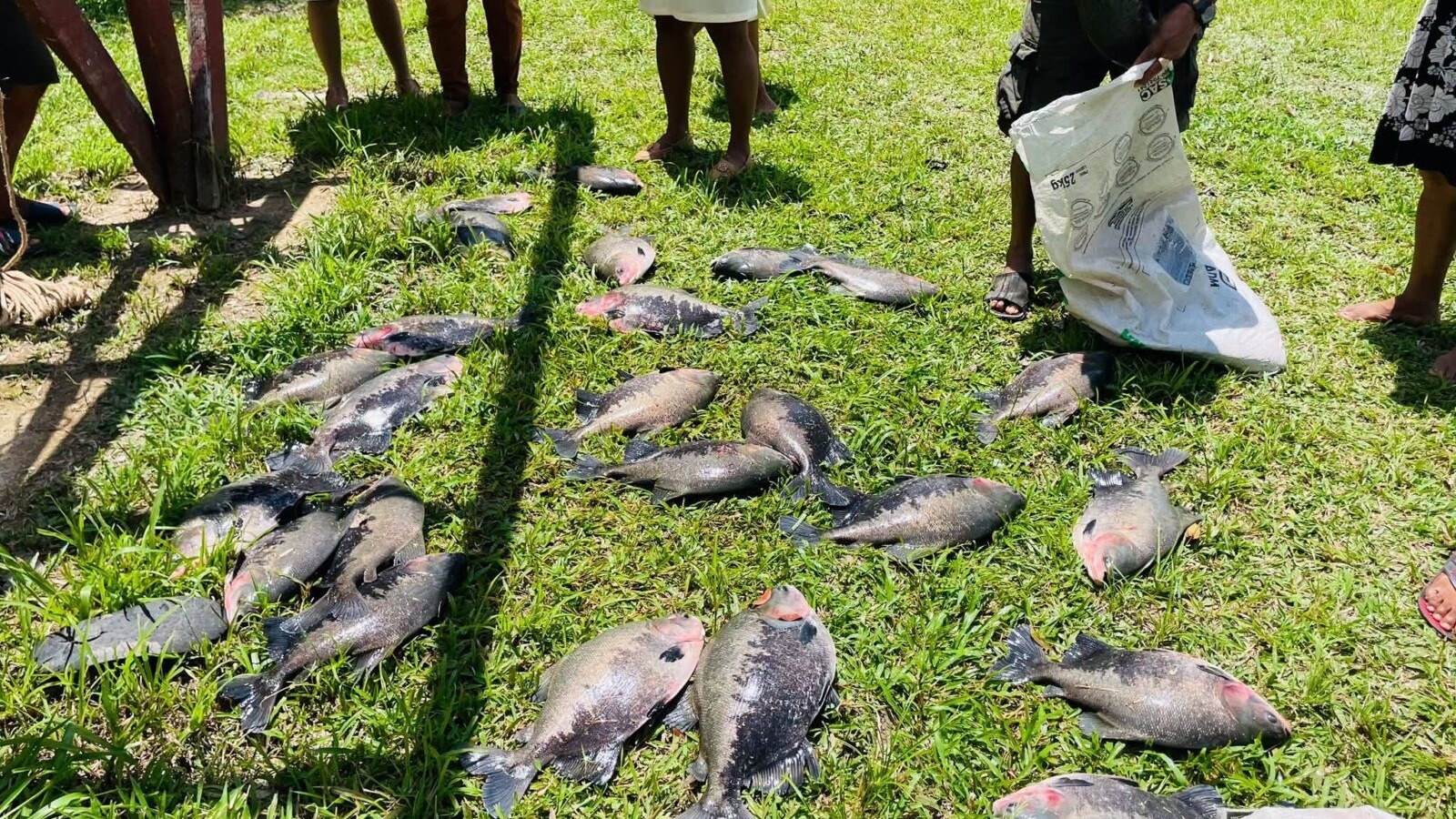
Guyana’s government says its cage-fish programme has expanded to 43 communities, most of them in the hinterland, as public support for inland aquaculture moves beyond the original pilots and into a wider network of community-run production sites.
Photo: Department of Public Information, Guyana.
A 9 October update from the Department of Public Information says cages are now operating in communities including Rockstone, Shulinab, Nappi, Orealla, Siparuta and St Cuthbert’s Mission. Agriculture Minister Zulfikar Mustapha said the programme had grown beyond its pilot locations at Mainstay, Mashabo and Lake Capoey in Region Two.
The development is relevant to investors and agribusiness operators because it points to a broader inland production base, public provision of start-up inputs and an organised route to market. It does not, however, amount to a general investment offer, and the government has not published a single national production total, procurement schedule or private-entry mechanism in the latest announcement.
Public support covers production inputs and technical assistance
Under the programme, participating communities receive cages, fingerlings and feed, together with training and technical support from the Fisheries Department. The government also says the New Guyana Marketing Corporation helps connect producers with buyers after production begins.
That combination matters because small aquaculture projects can be constrained by more than the cost of a cage. Reliable fingerling supply, feed, fish health, harvesting practices, cold-chain handling and access to buyers all affect whether a production cycle translates into durable income.
The minister said one cage could generate about G$8 million in a production cycle. The figure is an official estimate rather than independently audited revenue, and the latest release does not state the stocking density, species mix, cycle length, operating costs, mortality assumptions or net margin behind it. Businesses should therefore treat it as an indicator of programme scale, not a guaranteed return.
Mid-year report confirms a funded expansion pipeline
The Ministry of Finance’s 2026 Mid-Year Report provides independent primary-source support for the expansion trajectory. It records that three cages were operationalised in the first half of the year, taking the national total to 33 at that point. A further 13 cages were expected in the second half of 2026, with more than 9,000 people across Regions Four, Five, Six, Seven, Nine and Ten expected to benefit.
The report also says G$648.3 million of a G$1.5 billion fisheries-sector allocation had been spent during the first half of 2026 on monitoring, infrastructure and production. Those figures cover the wider fisheries programme rather than cage culture alone, but they show that the expansion sits within a funded public-sector work programme.
The latest government update refers to close to 53 cages operating across the country earlier in 2026 and now identifies 43 participating communities. Because the two measures are different—cages versus communities—they should not be treated as a direct growth comparison. The material change is the disclosed geographic reach and the continuing shift from pilots toward a distributed production network.
Commercial openings depend on the next layer of detail
For suppliers, the programme may create demand for cage materials, nets, feed, fingerlings, water-quality equipment, veterinary and technical services, ice, cold storage and transport. Any procurement or partnership opportunity would still need to be confirmed through an official tender, concession or programme notice; the 9 October announcement itself does not invite bids or private capital.
For processors and buyers, a network spanning dozens of communities could eventually support more regular aggregation of inland fish. The commercial test will be whether harvest volumes, quality standards, collection schedules and cold-chain capacity are sufficient to serve coastal retail, hospitality and institutional markets consistently.
There are also execution risks. Cage aquaculture depends on site conditions, feed costs, disease control, water quality, security and coordinated harvesting. Public provision of equipment can lower entry barriers, but commercial sustainability will depend on maintenance, replacement costs and the ability of community enterprises to retain working capital between production cycles.
What investors should watch next
The next useful evidence will be a community-by-community inventory of operational cages, species and stocking plans; verified production and sales volumes; procurement notices for inputs; cold-chain and processing arrangements; and published criteria for additional communities or private suppliers.
Investors should also watch for outcome data that separates gross sales from operating costs and shows how income is distributed within participating communities. Those figures will determine whether the programme is creating a scalable inland aquaculture value chain or primarily delivering local food-security benefits.
For now, the expansion to 43 communities is a credible project-advancement signal. It broadens Guyana’s non-oil production base and creates potential demand along the aquaculture supply chain, while leaving the terms of private participation and the programme’s commercial performance to be established through future official disclosures.