Photo: Department of Public Information, Guyana.
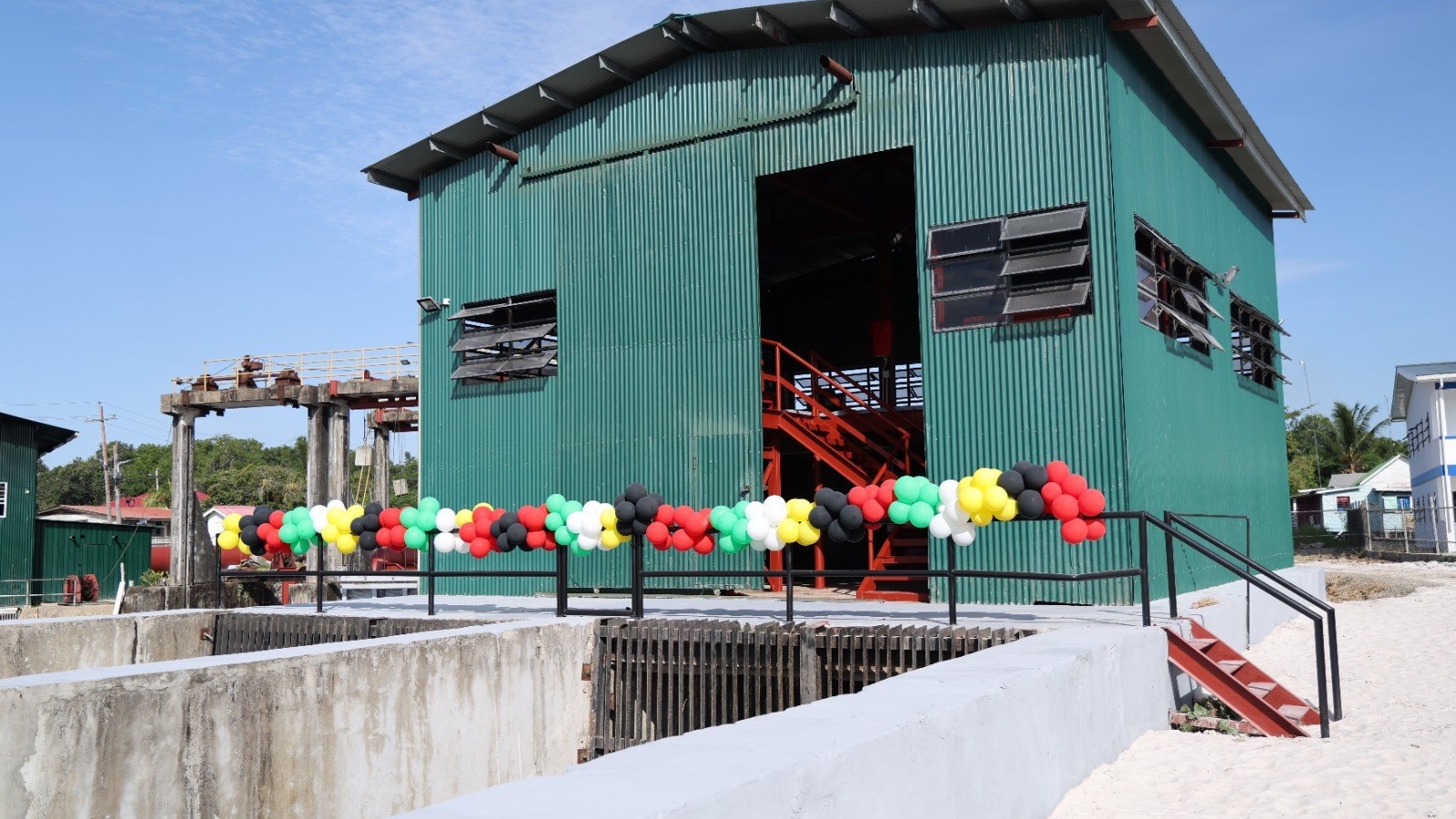
Guyana has commissioned a G$650 million drainage pump station at Canal No. 1 in Region Three, adding four pumps with a combined reported capacity of 580 cubic feet per second to protect agricultural land, homes and commercial activity from excess water.
The Department of Public Information says the facility is intended to improve drainage across approximately 5,000 acres. Agriculture Minister Zulfikar Mustapha commissioned it on October 21 as part of a wider programme to strengthen drainage and irrigation infrastructure.
The station is now a completed public asset rather than a proposed project. Its practical value, however, will be determined by operation and maintenance, the condition of the connected canals and outfalls, and its performance during periods of intense rainfall and high water levels.
Drainage is productive infrastructure
For farmers, drainage capacity affects more than short-term inconvenience. Prolonged waterlogging can damage crops, delay planting and harvesting, restrict access to fields and raise the cost of recovering land for production. Flooding can also disrupt transport, storage, processing and the movement of workers and inputs.
That makes drainage part of the commercial foundation of agriculture. Investors assessing farmland or an agro-processing supply chain need to understand how water moves through the wider system, which authority maintains the canals and structures, how pumping is activated and what level of protection the infrastructure is designed to provide.
The new station improves capacity at one point in that system. It should not be interpreted as a guarantee that the entire 5,000-acre area cannot flood. Actual outcomes will also depend on rainfall intensity, canal maintenance, blockages, downstream conditions, operating procedures and the reliability of the wider drainage network.
Four pumps and 580 cubic feet per second
The official commissioning release identifies four drainage pumps with a combined capacity of 580 cubic feet per second. It does not publish separate pump ratings, operating schedules, maintenance intervals or performance data from a major rainfall event.
Those details matter because installed capacity and delivered performance are not always identical. Investors and producers should distinguish the engineering specification announced at commissioning from evidence of how the station operates under demanding conditions.
The release also says the wider project included a new community centre valued at approximately G$60 million. It does not provide a cost breakdown separating the pump equipment, civil works, electrical or mechanical systems, canals and associated community infrastructure. The G$650 million should therefore be presented as the reported project value rather than assigned to individual components.
Part of a much larger public programme
The Canal No. 1 station sits within a substantial increase in national drainage and irrigation spending. Guyana’s 2026 Budget Speech allocates G$81.9 billion to the subsector, up from G$46.2 billion spent in 2025. The budget says works were expected to continue on Hope-like structures in Regions Five and Six, begin in Region Three and complete eight pump stations across Regions Two, Three, Four, Five and Six.
The wider agriculture budget for 2026 is G$113.2 billion. Drainage and irrigation therefore represent a large share of planned sector spending, reflecting the central role of water management in agricultural expansion and coastal resilience.
NDIA Chairman Lionel Wordsworth said the Canal No. 1 facility is one of six pump stations constructed in Region Three during the past six years. That figure describes the government’s reported infrastructure programme; it does not establish that every station has the same capacity, service area or operating model.
What this means for investors and producers
Public drainage infrastructure can reduce a constraint that individual farmers and businesses cannot efficiently solve alone. A stronger network may support more dependable planting cycles, protect fixed assets and improve confidence in production areas that depend on managed drainage.
The investment case still requires site-level due diligence. A business should verify the elevation and drainage history of its specific property, the condition of local canals and access dams, the distance to primary drainage structures and whether its operation needs independent pumps, raised storage, backup power or flood-response plans.
For suppliers, the national programme may create demand for pumps, electrical and mechanical systems, fabrication, spare parts, monitoring technology, fuel or power systems, canal maintenance and civil works. The Canal No. 1 commissioning itself is not an invitation to bid. Commercial opportunities exist only when an agency publishes a procurement notice or enters a confirmed private transaction.
The infrastructure also supports a wider agricultural value chain. Invest Guyana has previously reported on Guyana’s food-security drive and agro-processing expansion. Drainage capacity helps connect those ambitions to the physical conditions required for consistent production, but market access, storage, finance, labour and quality control remain equally important.
The performance test begins after commissioning
Commissioning confirms that the facility has reached an operational milestone. It does not provide a long-term performance record.
The most useful evidence will come from data collected during wet periods: hours operated, volume discharged, downtime, maintenance requirements, canal levels and the duration of flooding or waterlogging within the service area. Publishing that information would help farmers, communities and investors assess whether the infrastructure is delivering the intended protection.
Clear operating responsibility also matters. Businesses should know which agency manages the station, how faults are reported, whether preventative maintenance is funded and how the pump station is coordinated with sluices, canals and other drainage structures.
The Canal No. 1 facility adds significant reported pumping capacity to Region Three. Its long-term economic value will be measured not by the commissioning ceremony, but by whether it keeps productive land accessible, reduces disruption and remains dependable when the drainage system is under pressure.