
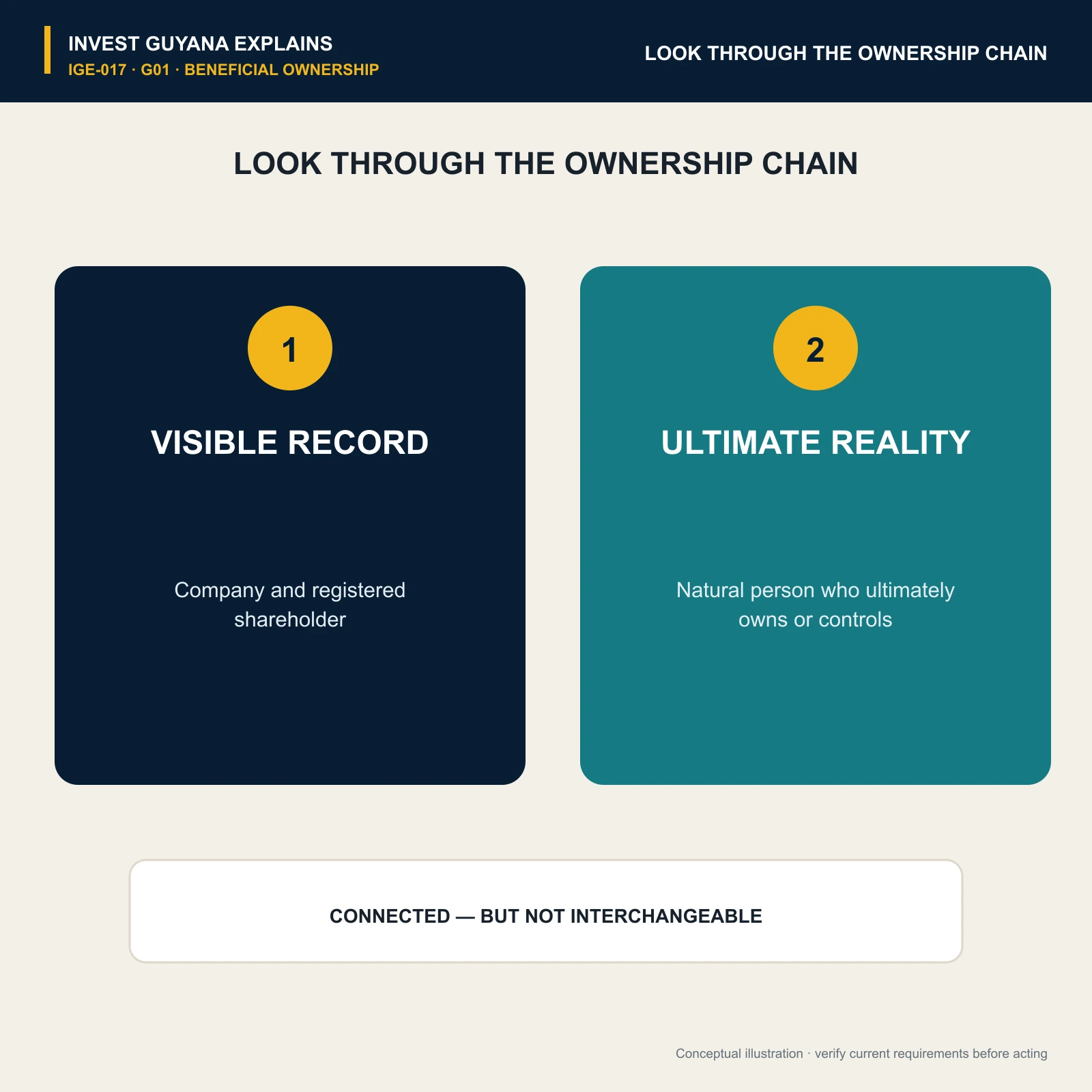
Beneficial ownership looks beyond the company name
A company is a legal person. It can own property, enter contracts, receive income and hold shares in another company. But a company is not itself a living individual.
Beneficial-ownership rules ask a different question from ordinary company registration:
Which natural person ultimately owns, benefits from or controls the legal entity?
That question matters because the name appearing on a share register or corporate document may be only one link in a longer ownership chain. A shareholder may be another company. That company may be owned by a holding company in another jurisdiction. Voting rights, agreements or appointment powers may also give a person control without making that person the most visible name in the corporate record.
The Deeds and Commercial Registries Authority (DCRA) describes a beneficial owner as the natural person found at the end of the ownership chain—the person who ultimately has a right to part of the entity’s income or assets, or the ability to control its activities.
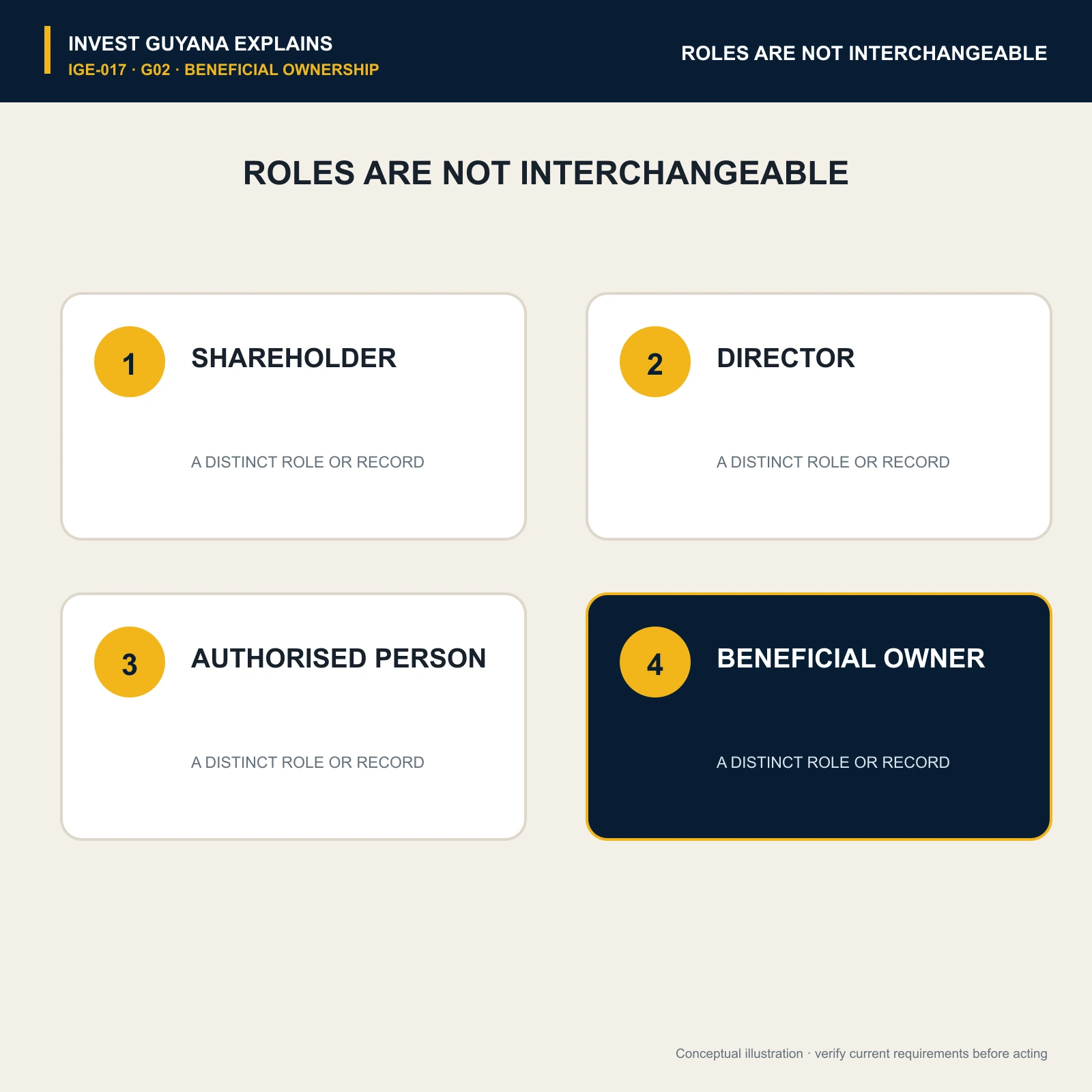
Shareholder, director and beneficial owner are not interchangeable
Several corporate roles can point to the same person, but they do not have to.
Registered shareholder
The registered shareholder is the person or entity recorded as holding shares. If the shareholder is itself a company, the register has not yet identified the natural person at the end of the chain.
Director
A director participates in governing and directing the company. A director may also be a shareholder or beneficial owner, but holding office as a director does not automatically establish ultimate ownership.
Authorised representative or signatory
An authorised person may sign documents or operate an account for the company. Authority to act is not necessarily the same as ownership or ultimate control.
Beneficial owner
The beneficial owner is the natural person whose ownership, economic benefit or control must be understood after looking through any intermediate companies, nominees, trusts or other arrangements.
This is why copying the list of directors or the first layer of shareholders may not answer the beneficial-ownership question.
Control can matter even without a simple majority shareholding
Ownership percentages are important, but beneficial ownership is not always established by one visible percentage alone.
Control may also arise through arrangements that allow a person to influence the company, control voting, direct management or appoint and remove decision-makers. The DCRA’s published guidance therefore refers not only to shareholders, but also to people with indirect interests and people who can exercise control over the company, its directors or its management.
The practical implication is straightforward: companies should not assume that the largest name on a shareholder list is automatically the only person who must be considered. The complete ownership and control structure has to be understood.
Why Guyana maintains beneficial-ownership information
Beneficial-ownership transparency supports the wider anti-money-laundering and counter-financing framework. It helps authorities and regulated institutions understand who is behind a legal entity instead of stopping at the entity’s registered name.
DCRA states that its Commercial Registry is responsible for gathering beneficial-ownership information for local and external incorporations registered in Guyana. Its Anti-Money Laundering Compliance Department handles beneficial-ownership declarations alongside other corporate-maintenance functions.
The objective is not to treat every company as suspicious. The objective is traceability: a corporate structure should not prevent the responsible natural persons from being identified.
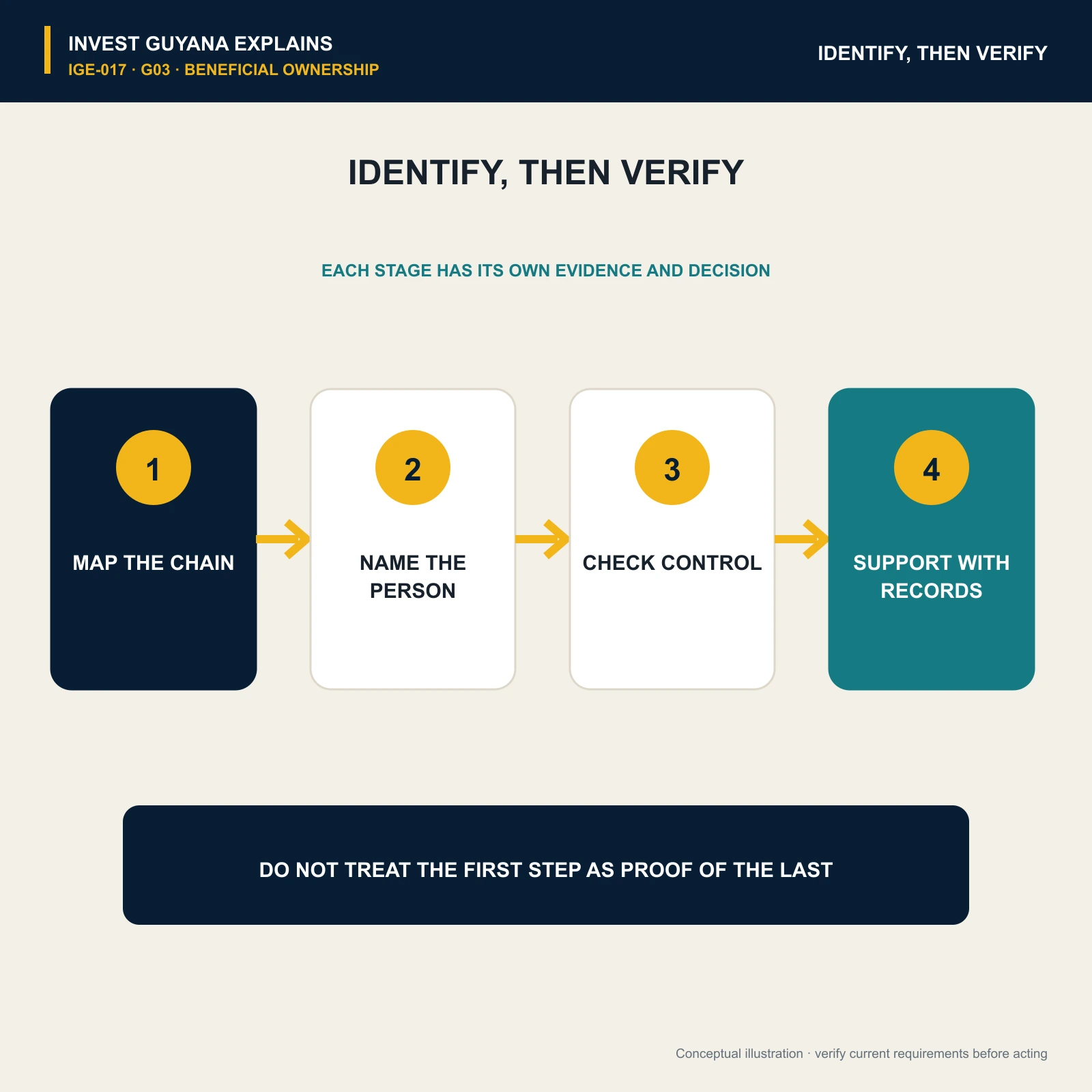
Identification is different from verification
Naming a possible beneficial owner is only the first part of the process. The company must have a reasonable basis for the identification and must be able to support it with suitable information or documentation.
DCRA’s guidance says supporting material may include certified identification documents, company founding documents and agreements that regulate who can bind or control the company. The guidance also recommends keeping supporting records at the company’s registered office.
This distinction matters:
- Identification answers who the beneficial owner is believed to be.
- Verification establishes why the company is satisfied that the identification is accurate.
A diagram of the ownership chain can be useful, but the diagram does not replace the records supporting each link.
A beneficial-ownership declaration is not an annual return
Beneficial-ownership information and an annual company return both support corporate transparency, but they do not serve the same purpose.
An annual return reports prescribed company information for the applicable reporting period. A beneficial-ownership declaration focuses on the natural persons who ultimately own or control the entity. Financial statements, tax returns and beneficial-ownership information are also separate records governed by different purposes and authorities.
They should not be treated as interchangeable simply because they may be requested during the same compliance cycle.
The information must remain current
Beneficial ownership is not a one-time diagram that can be filed and forgotten. Ownership and control can change when shares are transferred, holding structures are reorganised, agreements change or decision-making powers move.
Companies therefore need internal records capable of detecting a relevant change and supporting an accurate update. A company that does not understand its own ownership chain may struggle to answer questions from the registry, banks, professional advisers or counterparties.
What businesses should take away
Beneficial ownership is about the human reality behind a legal structure.
The company name remains important. So do its shareholders, directors and authorised representatives. But none of those records should be assumed to provide the complete answer by itself.
The core questions are:
- Who are the natural persons at the end of the ownership chain?
- Who ultimately receives the economic benefit?
- Who can ultimately control the company or its decision-makers?
- What documents support those conclusions?
- Has anything changed since the information was last reviewed?
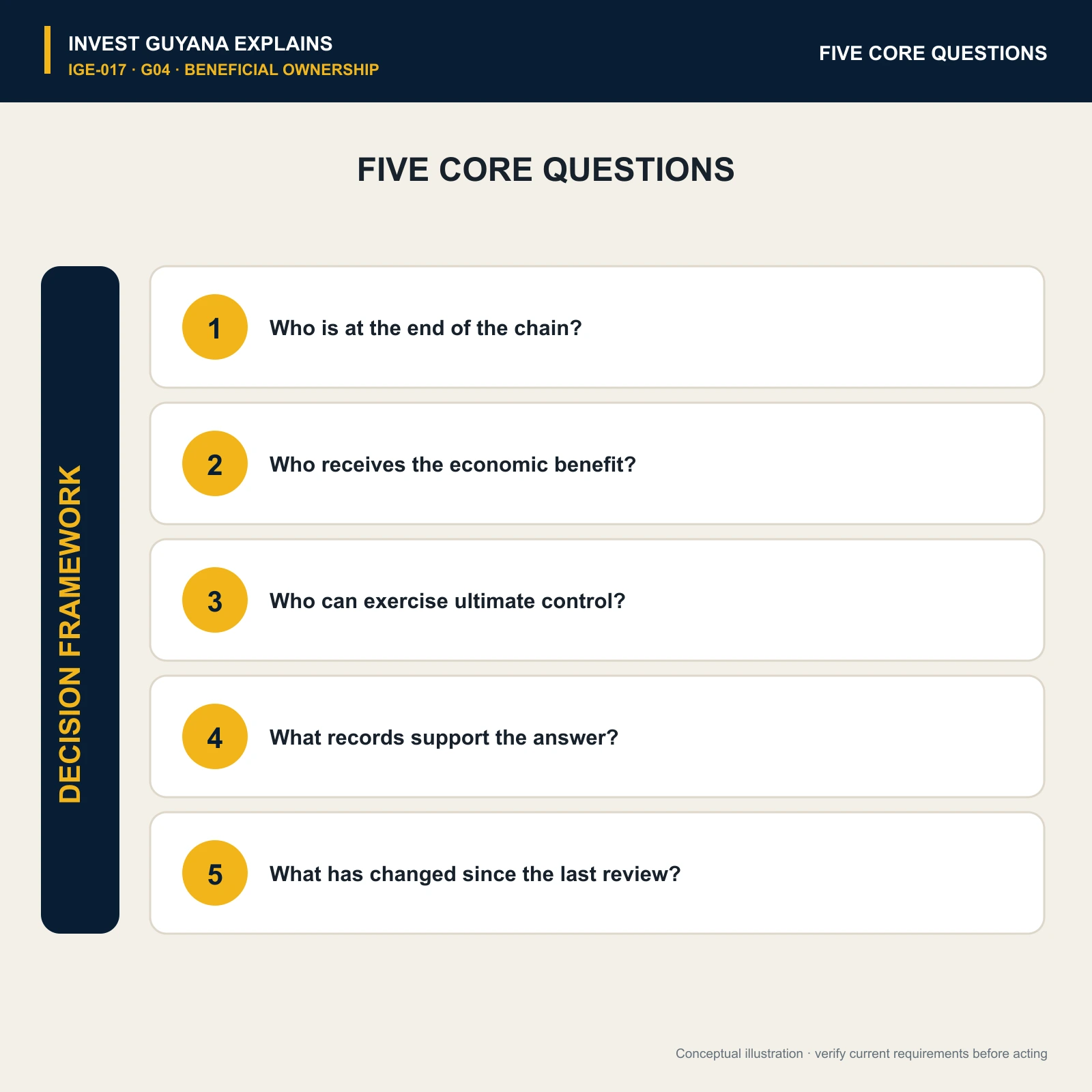
Those are governance questions, not merely form-filling questions. A company that can answer them clearly is better prepared for corporate maintenance, banking due diligence, investment transactions and regulatory review.
The next article in Invest Guyana Explains will examine the difference between an annual return and a tax return, and why one company can be current in one system while still having an outstanding obligation in another.