
The founder held up the certificate as if it were the key to every door the new business would need to open.
After months of planning, the enterprise finally appeared in Guyana’s commercial system under its chosen name. Suppliers could see an official record, the bank could examine its documents and the team could begin signing agreements through a recognised business identity.
Then the founder announced that the certificate meant the company was fully approved to operate.
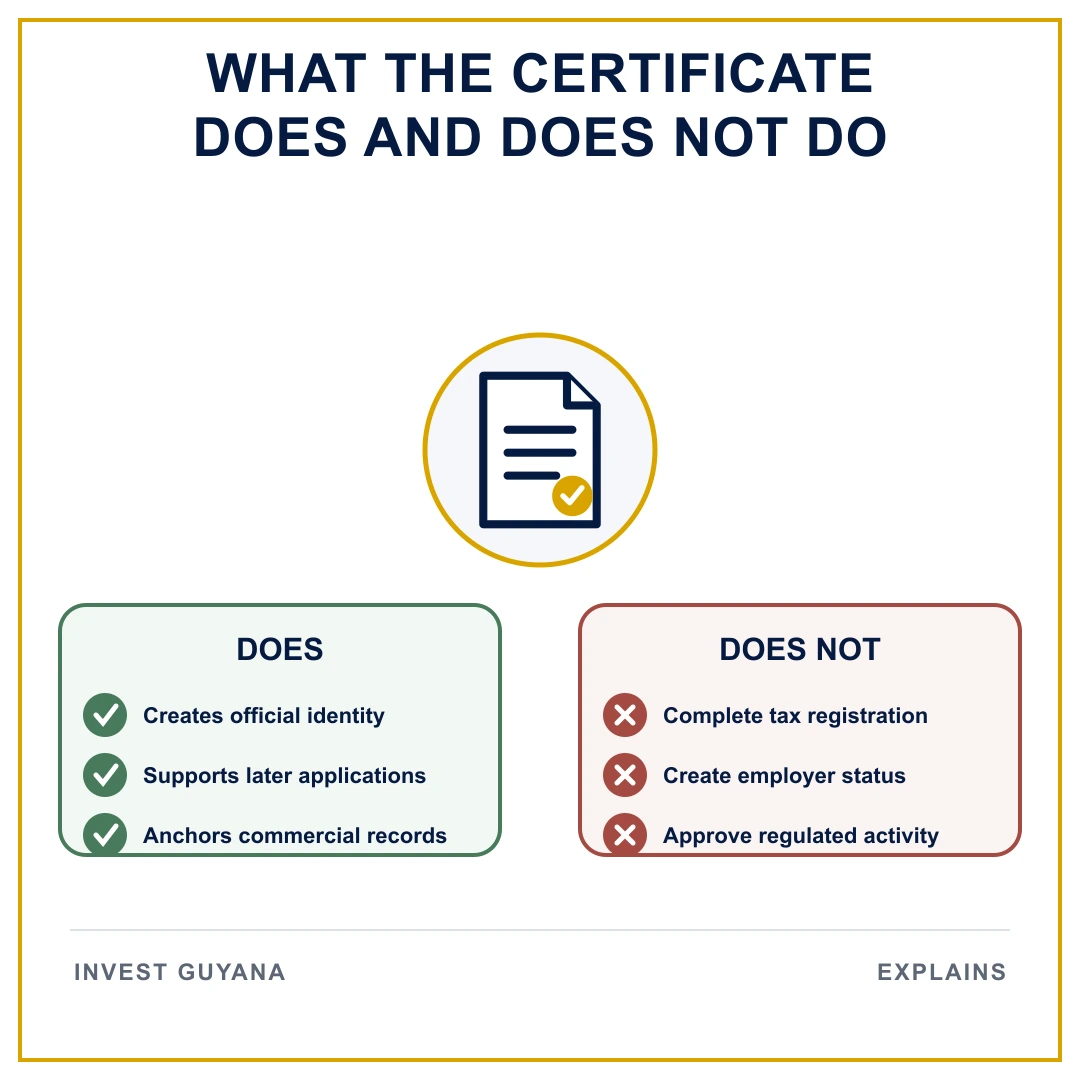
Her adviser paused before explaining that the document answered an important question, but not every question. Registration identified the enterprise and placed it on the official record. It did not automatically register the business for tax, create employer arrangements, approve its premises or authorise every regulated activity in its business plan.
That distinction is central to understanding business registration. The certificate is not insignificant; it is foundational. Its value becomes clearer when readers understand precisely what legal and commercial problem it solves, and why other public systems begin where registration ends.
Registration Answers the Identity Question
Every serious commercial relationship begins with identity. Customers, banks, suppliers, regulators and courts need to know who is entering an agreement and where responsibility sits.
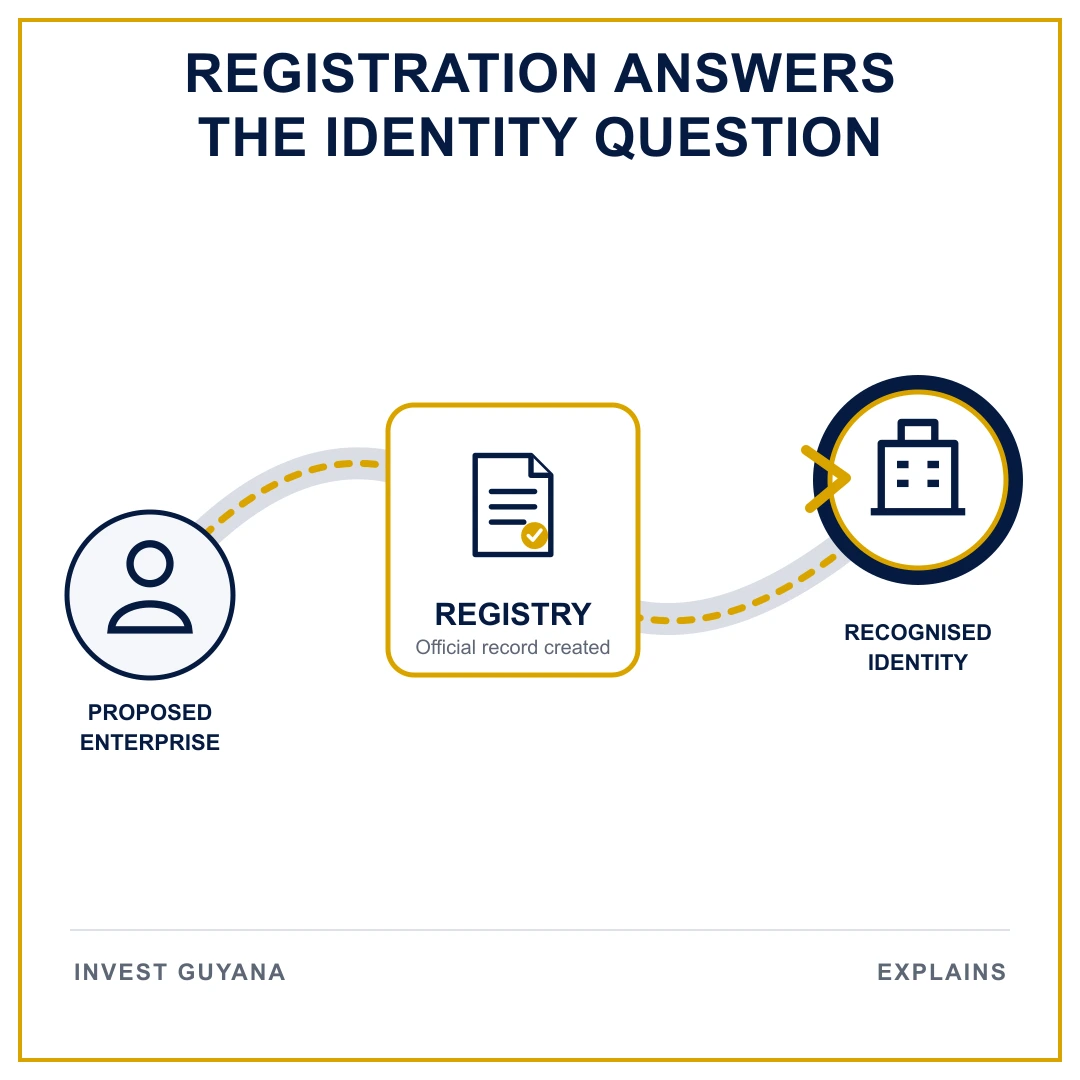
Business registration creates an official record that helps answer those questions. It connects a name or legal entity to the information filed with the Commercial Registry and provides documentary evidence that the enterprise has completed the relevant registration process.
The Deeds and Commercial Registries Authority administers several distinct commercial services, including business-name registration, company incorporation and registration of external companies formed outside Guyana. DCRA Services
These routes do not all create the same legal structure, but they share a practical purpose: they make the enterprise recognisable within the formal commercial system.
This is why the certificate matters far beyond the day it is issued. It becomes part of the evidence used when the business opens accounts, contracts for premises, engages professional advisers or applies to other institutions.
A Business Name and a Company Are Not the Same Thing
People often use “business,” “business name” and “company” as if the words describe one legal arrangement. The Commercial Registry treats them differently.
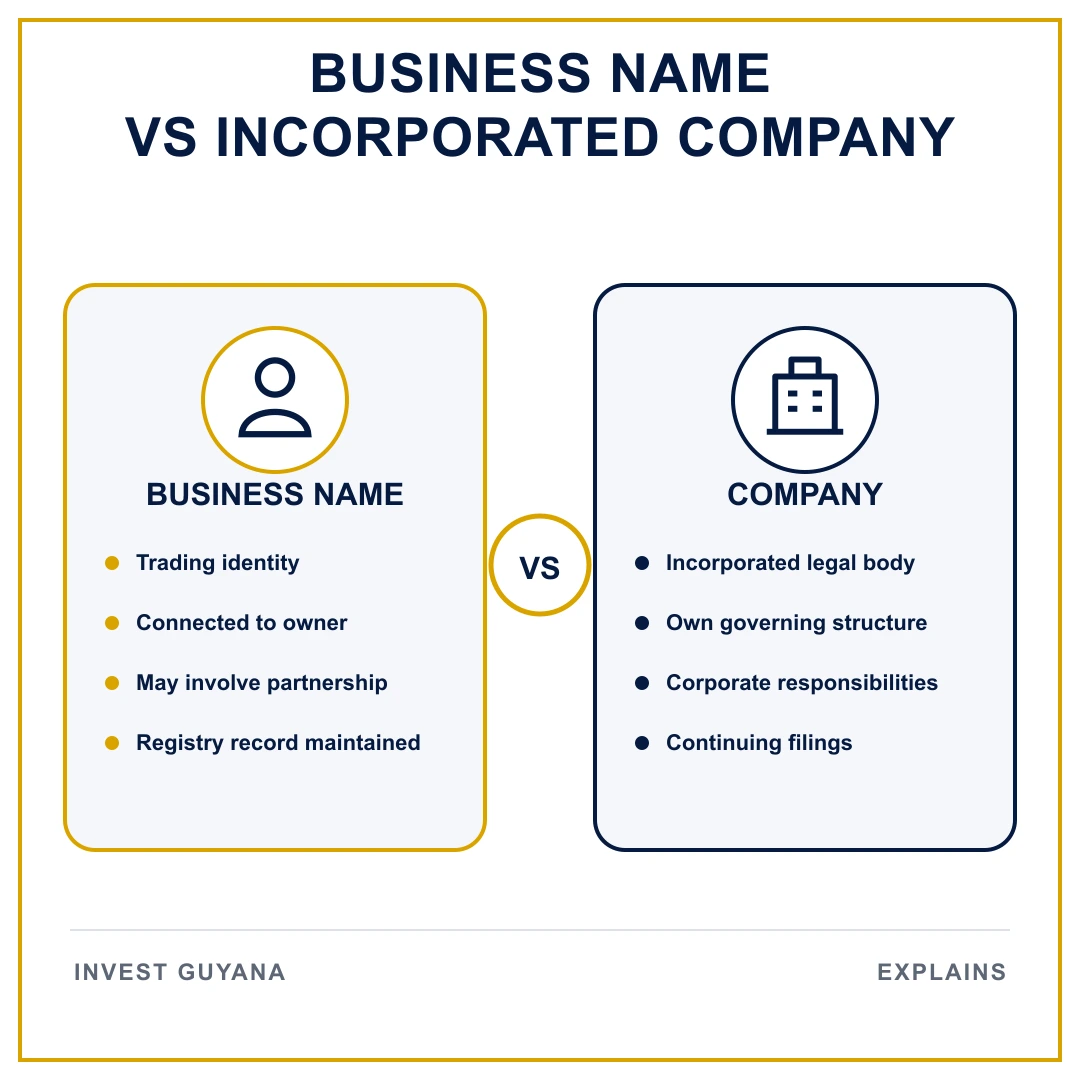
A business name is the name or style under which an individual or partnership carries on business. DCRA explains that an adult may apply to register a business name by submitting the required application and supporting identification. DCRA Business Name Registration
An incorporated company is a separate form created under the Companies Act. It has its own governing documents, ownership structure and continuing corporate responsibilities. An external company follows another route because it was formed under the laws of a country outside Guyana and is registering its presence locally.
The choice among these forms should not be reduced to which certificate is quickest to obtain. It can influence governance, liability, ownership changes, financing, reporting and how the enterprise continues after the involvement of an individual founder changes.
The distinction also matters to anyone dealing with the business. A contract signed by an individual trading under a registered name is not automatically the same legal arrangement as a contract entered by an incorporated company. Investors and counterparties need to identify the actual party, confirm who has authority to act for it and understand which assets or obligations belong to that party.
For an overseas group, registering an external company can serve a different strategic purpose from incorporating a new Guyanese subsidiary. The appropriate route depends on how the operation will be owned, governed and financed, which is why structure should be settled with professional advice before forms are filed.
Registration therefore records a legal decision that should already have been considered. It does not make a sole trader, partnership and incorporated company commercially interchangeable after the certificate arrives.
What the Certificate Makes Possible
Once registered, the enterprise has documentary evidence it can present to other participants in the economy.
A bank can examine the registered identity alongside its own account-opening and due-diligence requirements. A landlord can confirm the name of the party taking the lease. A supplier can issue invoices and contracts to the recognised enterprise, while a regulator can connect later applications to an existing commercial record.
The certificate also creates consistency. The same registered name should appear across tax records, contracts, payroll documents, licences and financial accounts. When those systems use different spellings, addresses or identities, routine transactions can become harder to reconcile.
Registration is therefore best understood as a gateway document. It supports entry into other systems without replacing the decisions those systems must make.
This gateway role explains why the document can feel like permission to operate. Many important activities become possible only after the enterprise can identify itself properly. Yet the institutions receiving the certificate are using it as evidence of identity, not treating it as proof that every separate legal requirement has been satisfied.
The same principle protects the enterprise during due diligence. A prospective lender or investor can begin with the registry record, then compare it with governing documents, tax information, licences and financial statements. Registration supplies the starting identity; the wider review establishes whether the business is properly organised and authorised for the transaction being considered.
What Registration Does Not Approve
The Commercial Registry does not determine the complete operating status of every business it records.
After registration, the enterprise normally enters the tax-administration system separately. GRA’s start-up guidance states that a business should register for taxation after legitimising the enterprise through the Deeds or Commercial Registry. GRA Start Your Business
That tax registration identifies the business as a taxpayer and supports the obligations relevant to its circumstances. It is not a second incorporation, just as the original registration certificate is not a tax clearance.
Employment creates another relationship. A business that hires staff enters employer and National Insurance systems that do not arise merely because the enterprise exists on the commercial register.
Regulated activities and premises can require further approval as well. A registered company may still need sector licences, environmental permission, planning or building approval, customs processes or other authorisation depending on what it intends to do.
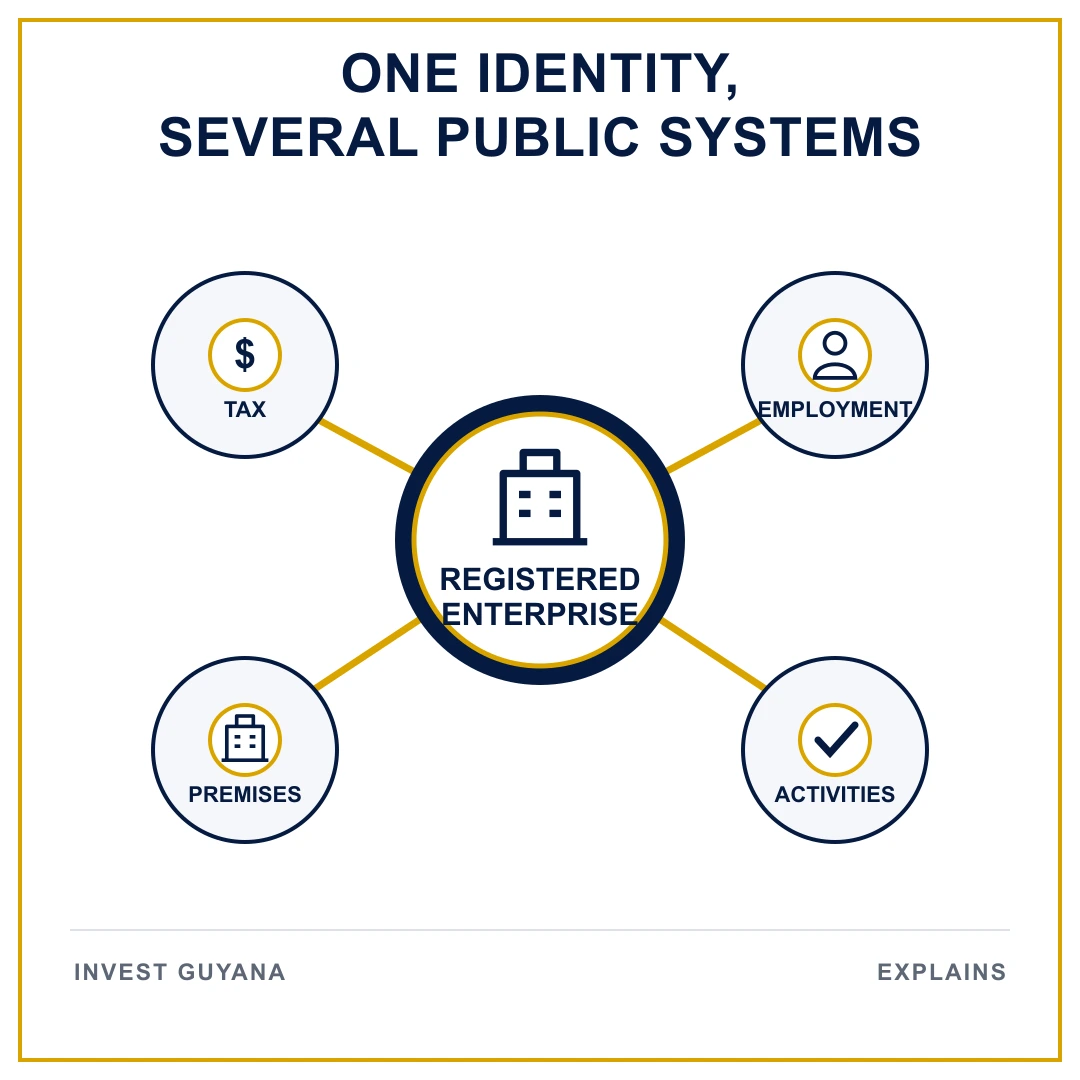
The clean mental model is that registration answers who the enterprise is. Other systems answer how it is taxed, whom it employs, where it operates and which regulated activities it may undertake.
Registration Creates a Continuing Record
The official record should continue to reflect the enterprise after the launch photographs have been taken.
Businesses change names, addresses, directors, ownership details and operating circumstances. Companies also have continuing filing and governance responsibilities under the framework that created them. A certificate issued at formation does not freeze the enterprise permanently in its first configuration.
This means registration should have an internal owner. Someone must know where the governing documents and certificates are stored, which changes require filing and when professional advice is needed.
For an incorporated company, this work is part of corporate administration. For a registered business name, changes or discontinuance may also need to be reflected in the registry record. DCRA’s business-name service includes processes for changes, renewal and discontinuance, illustrating that registration is maintained rather than forgotten.
Reliable records protect commercial relationships. A bank, purchaser, investor or regulator assessing the enterprise should not encounter an official record that no longer matches the business presenting itself.
One Identity, Several Public Systems
The founder from our opening scene eventually stopped treating the certificate as a universal approval and began using it for what it was designed to do.
The registered identity became the common reference across the company’s accounts, contracts and later applications. Tax registration connected that same enterprise to GRA. Employer arrangements were added when staff were hired, while operating approvals were mapped according to the company’s activities and location.
These were not repeated attempts to create the same business. They were different public systems recognising different aspects of one enterprise.
Understanding that relationship prevents two opposite mistakes. The first is undervaluing registration as mere paperwork, when it actually establishes the identity on which formal commercial activity depends. The second is overvaluing it as permission to undertake every activity, when other laws and institutions still have work to do.
The registration certificate belongs at the beginning of the business record because it answers the foundational question. It tells the commercial world who has been registered and under what form.
What happens next depends on the business being built. That is the territory of tax, employment, licensing, premises and sector regulation—and the reason a practical Guide to starting a business must begin with registration without ending there.
Editorial note: This article provides a general explanation of business registration in Guyana. The appropriate legal form, registry filings and continuing obligations depend on the enterprise. Founders should verify current requirements with DCRA and obtain qualified legal and accounting advice before selecting or changing a business structure.