A business owner wakes up to headlines announcing that Parliament has approved changes to tax laws.
The new measures could affect the cost of importing equipment, hiring staff or expanding operations. But one question comes to mind:
Why did Parliament have to approve these changes? Why couldn’t the government simply announce them?
The answer reveals one of the most important parts of Guyana’s system of government.
While the Executive leads the country and develops policy, Parliament is where many of the nation’s most important decisions receive public debate and legal approval. It is where proposed laws are examined, public spending is authorised and elected representatives discuss issues that affect the lives of Guyanese every day.
Whether you’re an investor, entrepreneur, student or simply trying to understand how Guyana works, knowing the role of Parliament helps explain how national decisions move from government proposals to legally recognised action.
What Is Parliament?
In the previous articles in this series, we explored how Guyana’s government is organised and how the Constitution provides the framework for the country’s institutions. Parliament is one of those institutions.
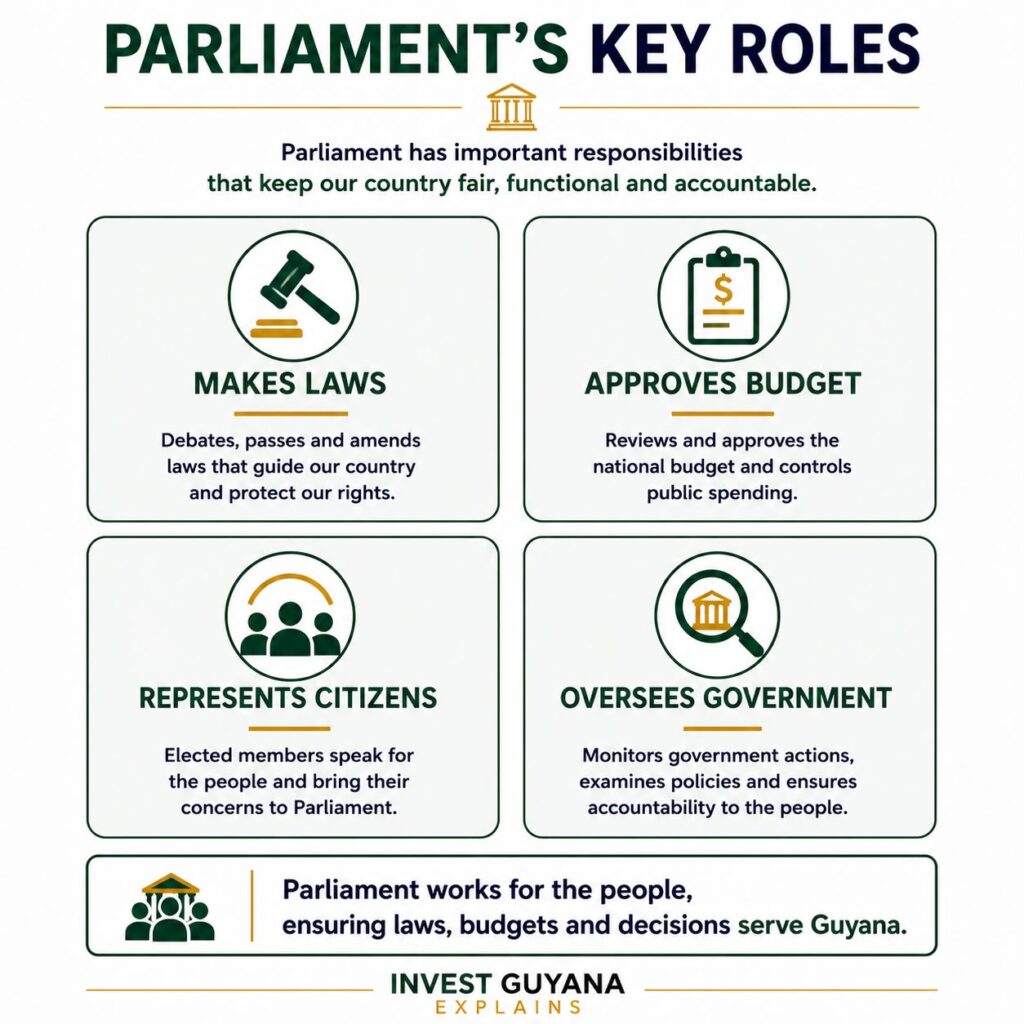
Its purpose is straightforward: to debate, consider and pass laws while representing the interests of the country through elected representatives.
Although many people think of “the government” as a single organisation, Guyana’s system deliberately divides responsibilities among different institutions.
The Executive develops policies and administers the country. The Judiciary interprets and applies the law.
Parliament occupies a different role. It creates the legal framework within which the country operates and authorises many of the government’s most significant actions.
This distinction is important because it helps ensure that major national decisions pass through a recognised legislative process rather than being implemented solely through executive authority.
Parliament is therefore not simply another government office. It is one of the central institutions through which representative democracy operates.
The National Assembly
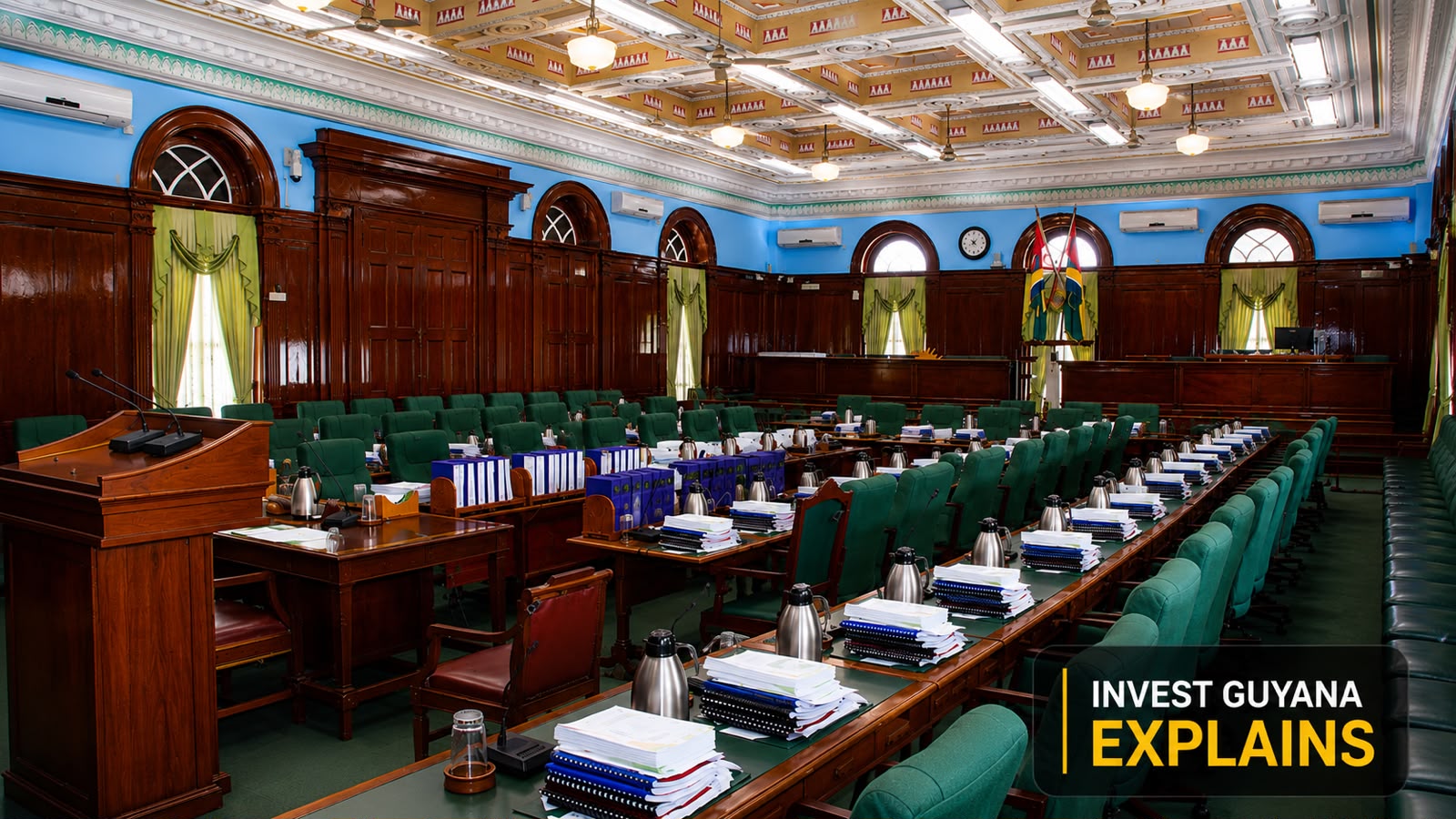
When people refer to debates taking place in Parliament, they are usually referring to meetings of the National Assembly.
The National Assembly is where Members of Parliament meet to debate proposed legislation, discuss national issues and consider matters affecting the country.
Members of Parliament, often called MPs, represent the people through the democratic process. Their responsibilities include examining proposed laws, participating in debates, voting on legislation and considering issues of national importance.
While Members of Parliament may hold different views on public policy, Parliament itself exists to provide a structured process through which those ideas can be debated openly before decisions are made. This process is one reason why legislation often takes time.
Significant legal changes are intended to be discussed, examined and voted upon rather than introduced without public scrutiny.
For businesses and investors, this contributes to a more predictable legal environment, where important legislative changes generally follow established procedures.
Making the Laws
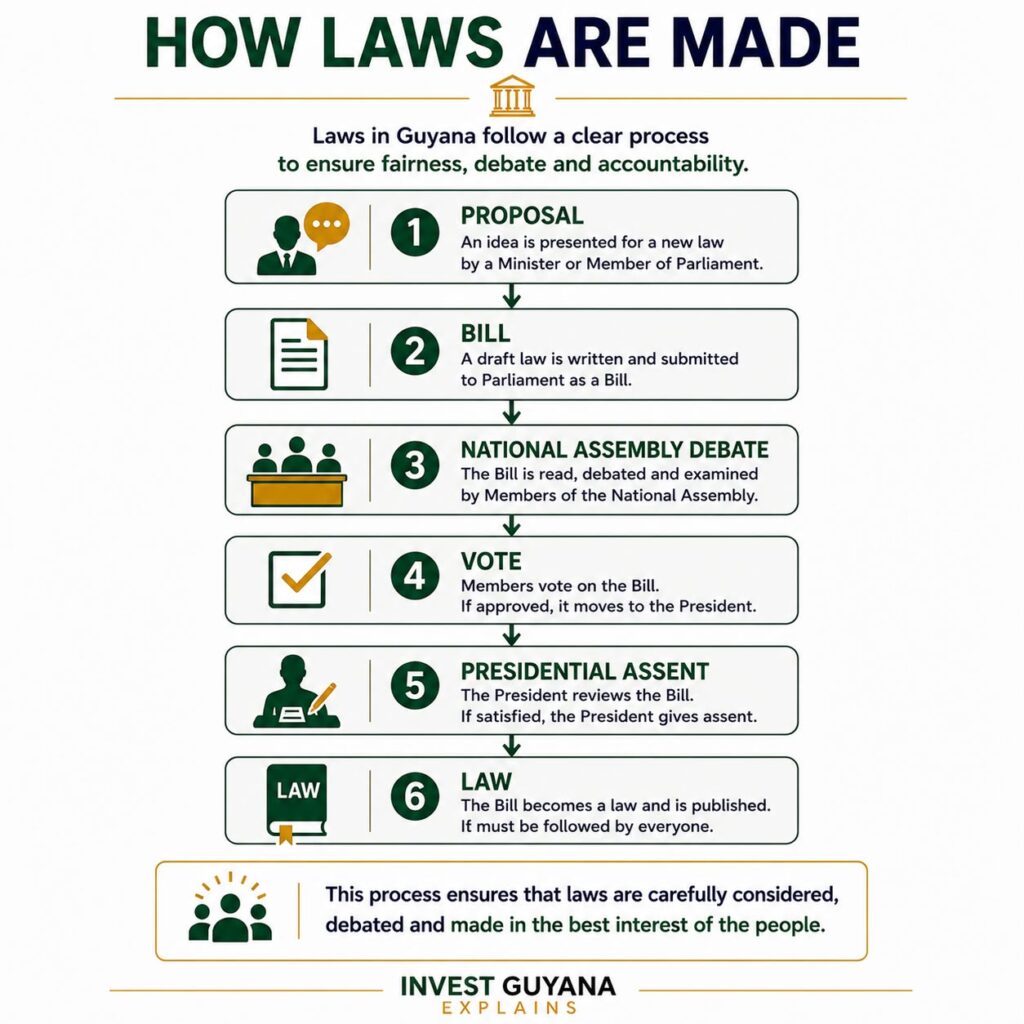
One of Parliament’s best-known responsibilities is making laws. The process usually begins when proposed legislation, known as a bill, is introduced for parliamentary consideration.
Members of Parliament debate the proposal, examine its provisions and consider whether changes should be made before deciding whether it should become law.
Although the detailed legislative process involves several formal stages, the overall principle is easy to understand. New laws are intended to pass through discussion, debate and approval before taking legal effect.
This process encourages transparency by allowing significant legislative proposals to be considered publicly rather than adopted without examination. Imagine a proposal to modernise business regulations or update environmental legislation.
Before those changes become part of Guyana’s legal framework, Parliament provides the forum where the proposal is debated and voted upon. For citizens, this means that many of the rules affecting everyday life pass through a recognised legislative process.
For businesses, it means important commercial laws generally follow established parliamentary procedures before they take effect.
Approving Public Spending
Parliament does more than pass laws. It also plays a central role in approving how public money is spent.
Each year, the government prepares a national budget outlining proposed spending on public services, infrastructure, education, healthcare, security and other priorities.
Before that spending can proceed, Parliament considers the budget and authorises government expenditure through the appropriate legislative process. This responsibility reflects an important democratic principle.
Public money should not simply be spent because the Executive wishes to spend it. Parliament provides oversight by examining and approving expenditure on behalf of the country. This function affects everyone.
Roads, schools, hospitals, drainage projects, security services and many other public programmes depend upon spending that has passed through Parliament.
Businesses also pay close attention to the budget because it may include tax measures, investment incentives, infrastructure projects and economic initiatives that influence commercial activity.
Although budget debates can sometimes appear technical, their practical impact is felt throughout the economy.
Representation and Accountability
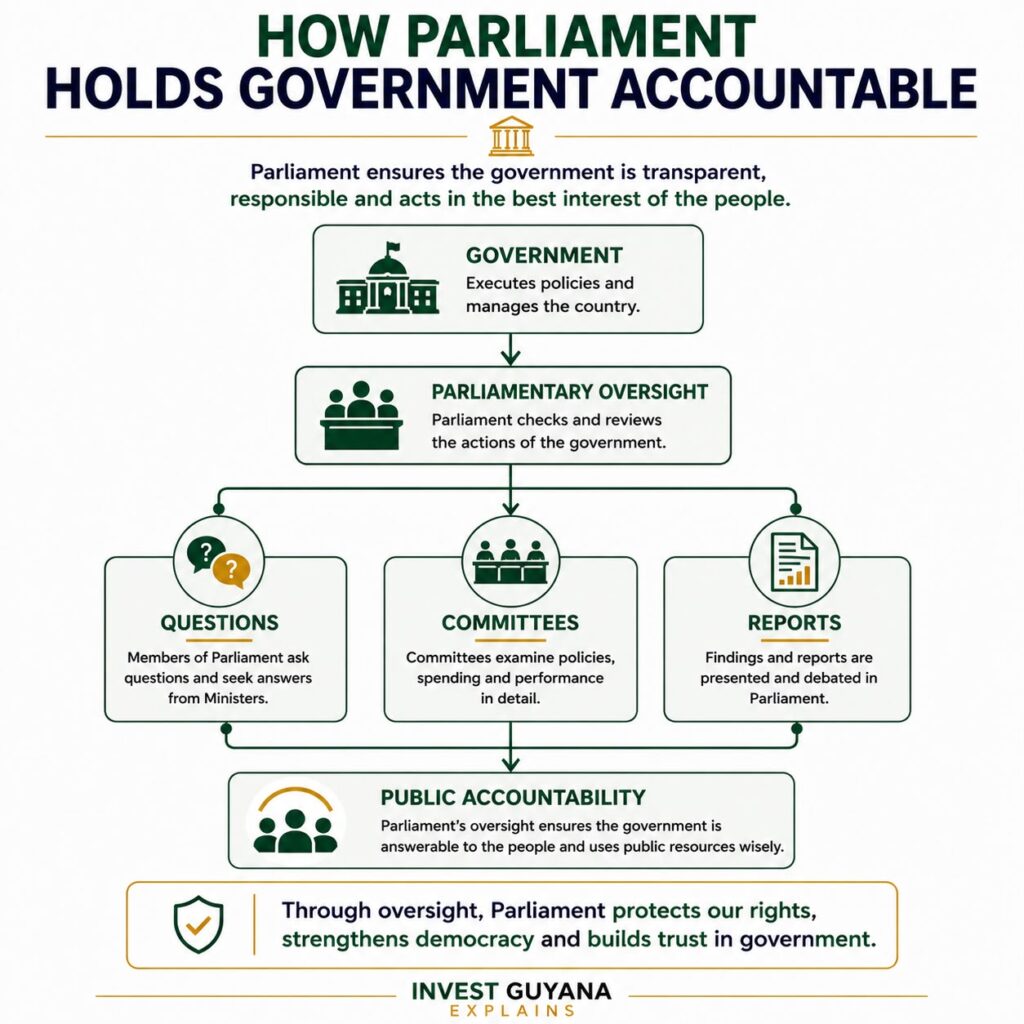
Parliament is also where national issues are discussed in public. Members of Parliament raise questions, participate in debates and examine matters affecting the country.
This creates an opportunity for public issues to be considered through an established democratic institution rather than solely within government ministries. Another important role of Parliament is accountability.
Government ministries and public officials exercise significant responsibilities on behalf of the country. Parliamentary debate and oversight help ensure that public decisions remain subject to examination.
This does not mean Parliament manages the day-to-day work of ministries or government agencies. Instead, it provides an institutional forum where government actions, policies and proposed legislation can be discussed and scrutinised.
For citizens, this contributes to openness in public decision-making. For investors, it strengthens confidence that important national issues are considered through recognised constitutional institutions.
Why Parliament Matters
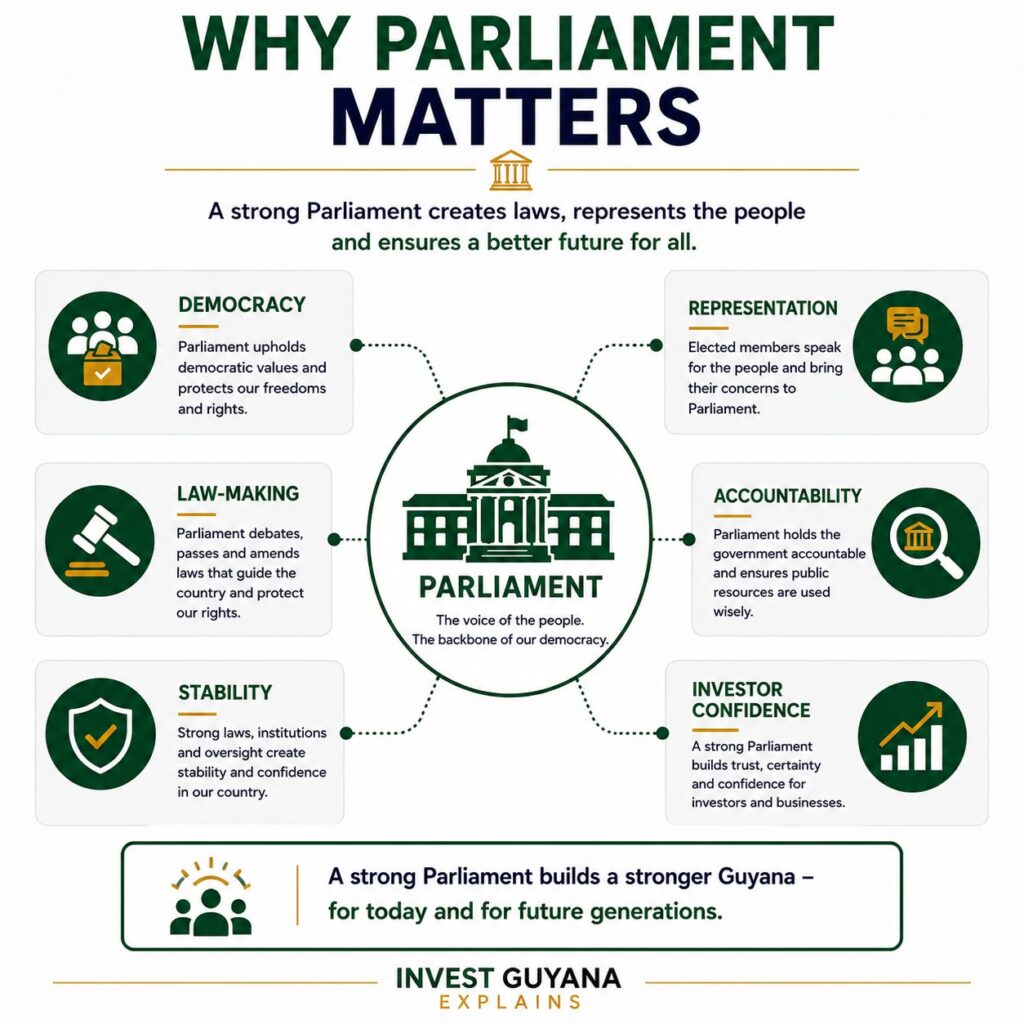
Let’s return to our business owner reading about the new tax law. At first, the headline seemed straightforward. Parliament had approved changes. Now the broader picture becomes clear.
The proposal may have originated within government, but Parliament provided the forum where it was debated and ultimately approved before becoming part of Guyana’s legal framework. The same principle applies across many areas of national life. Tax legislation can influence business costs. Infrastructure funding can affect economic development. Education policies shape the future workforce.Healthcare spending influences public services. Environmental legislation may affect how major projects are developed.
Although people may not follow every parliamentary sitting, the decisions made there influence many aspects of everyday life.
Understanding Parliament therefore helps explain why government announcements are often followed by debate before becoming law.
It also explains why Parliament occupies such an important place within Guyana’s constitutional system. Rather than concentrating decision-making within a single institution, the country uses Parliament to provide discussion, representation and legislative approval as part of democratic governance.
Parliament’s Place in the Bigger Picture
Understanding Parliament is another step toward understanding how Guyana works. The Constitution establishes Parliament and defines its place within the country’s system of government.
The Executive develops policy and administers the country. Parliament debates and passes laws while approving public spending.
The Judiciary interprets and applies those laws independently. Together, these institutions form a system in which different responsibilities are shared rather than concentrated in one place.
For investors, that means major legal and financial decisions generally move through recognised constitutional processes. For businesses, it provides greater clarity about how legislation affecting commercial activity comes into existence. For citizens, it offers a better understanding of how national decisions are made and why parliamentary debates matter.
Parliament is often associated with politics, but its broader purpose is institutional. It provides the framework through which laws are debated, public spending is authorised and national issues are considered on behalf of the country.
In future articles in the Invest Guyana Explains series, we’ll look more closely at how a bill becomes law, how the national budget moves through Parliament and the roles played by Members of Parliament and other parliamentary institutions. Each article builds on the last, creating a practical guide to understanding the systems that shape governance, business and everyday life in Guyana.