
Four people said they had “papers for the land”
The investor was comparing four possible sites.
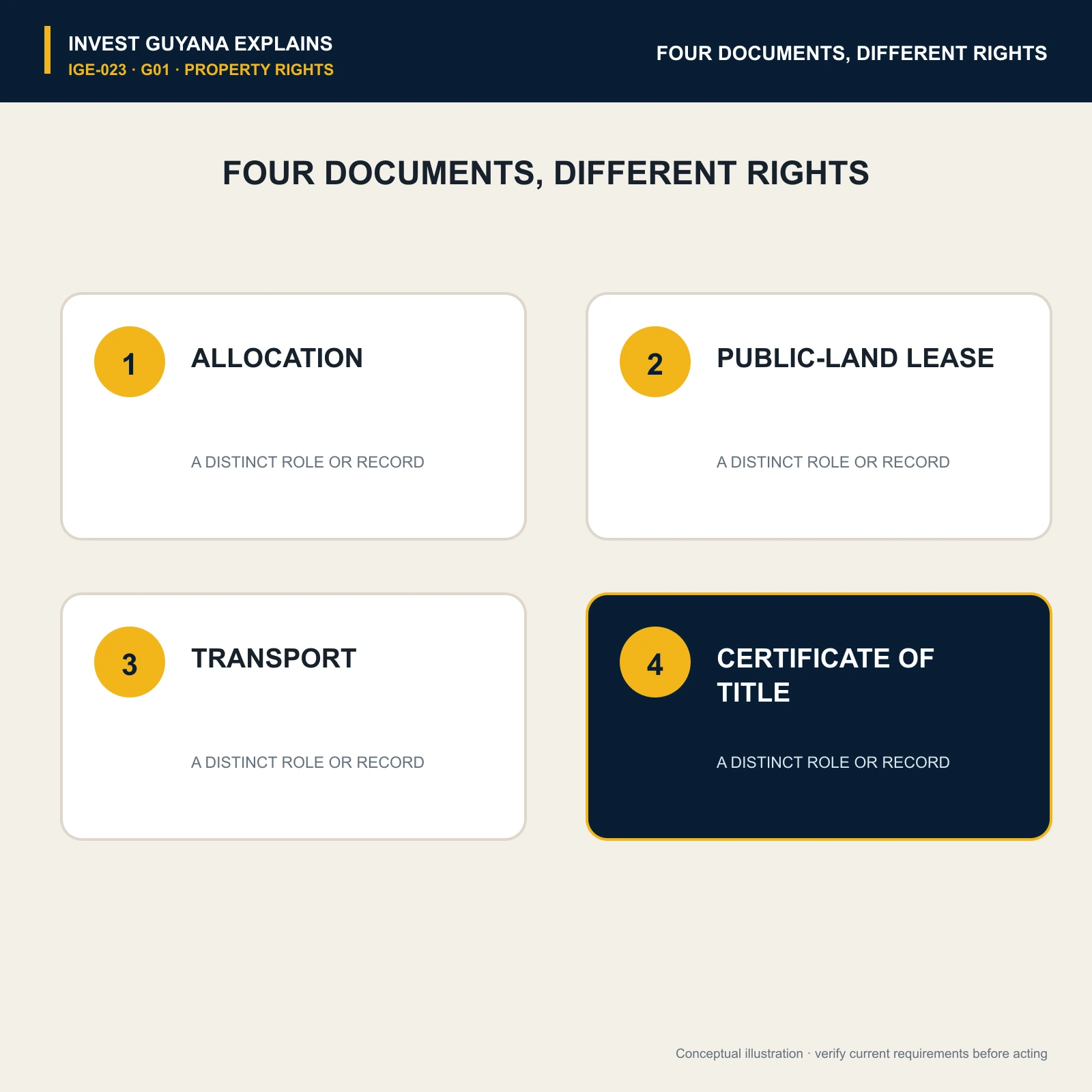
The first seller produced an allocation letter. The second showed a long-term lease. The third referred to a transport. The fourth held a certificate of title.
Each person described the property as “theirs.” Yet the documents did not establish the same legal position.
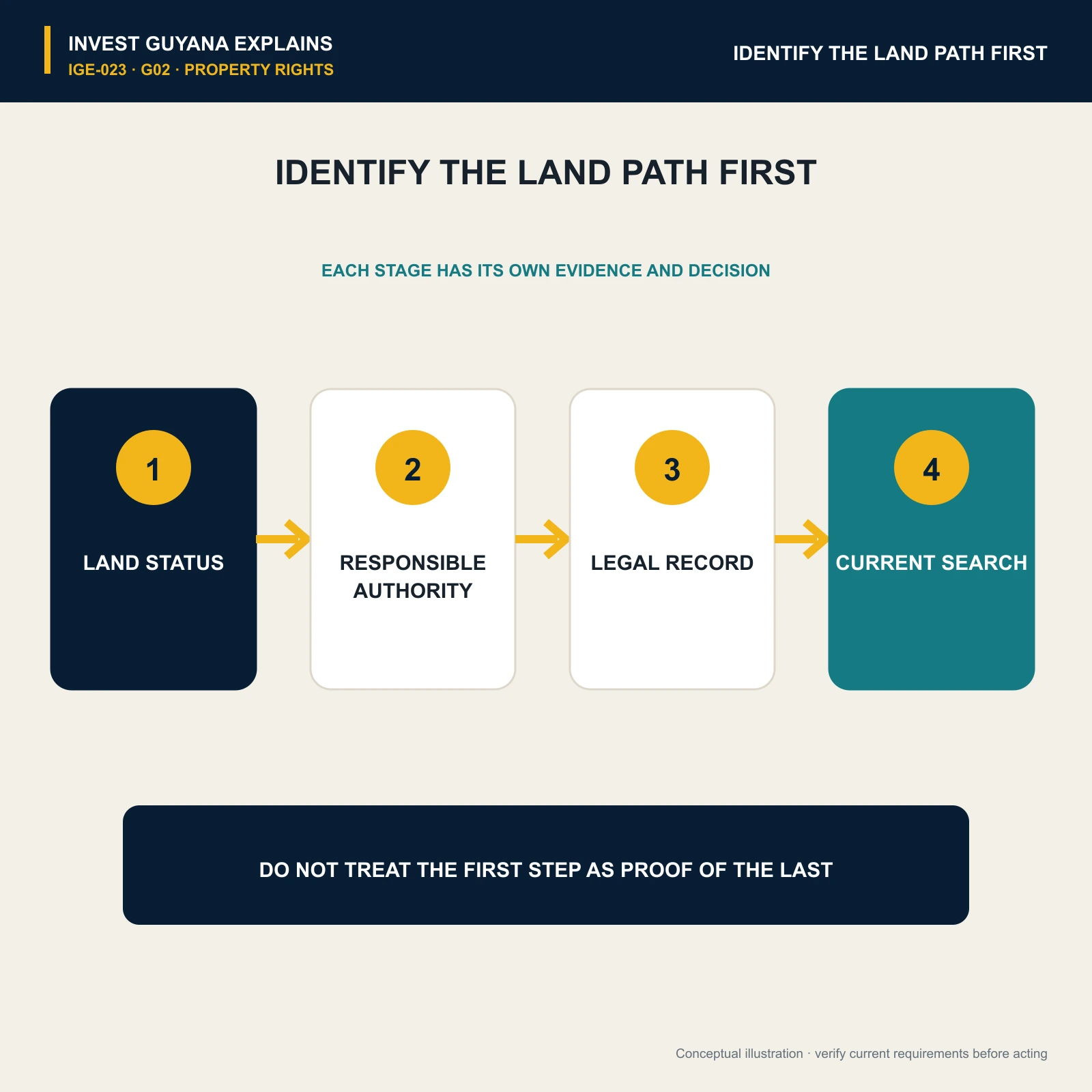
Land in Guyana operates through different land-status and registration systems. The first question is not simply whether a document exists. It is what that document is, which land system it belongs to and what right it actually records.
An allocation is not necessarily a completed title
An allocation or approval can show that an authority has selected or approved an applicant within a land programme. It may be an important step toward a lease or title.
But an allocation does not automatically prove that every later condition has been satisfied, that a survey has been completed, that a lease has been issued or that ownership has been registered.
The document should therefore be read as evidence of the stage it actually records—not as a substitute for every later stage.
A lease creates a time-bound interest governed by its terms
The Guyana Lands and Surveys Commission explains that leases over State or Government land are grants for a term of years and are issued with conditions concerning matters such as renewal, transfer, mortgage and compliance.
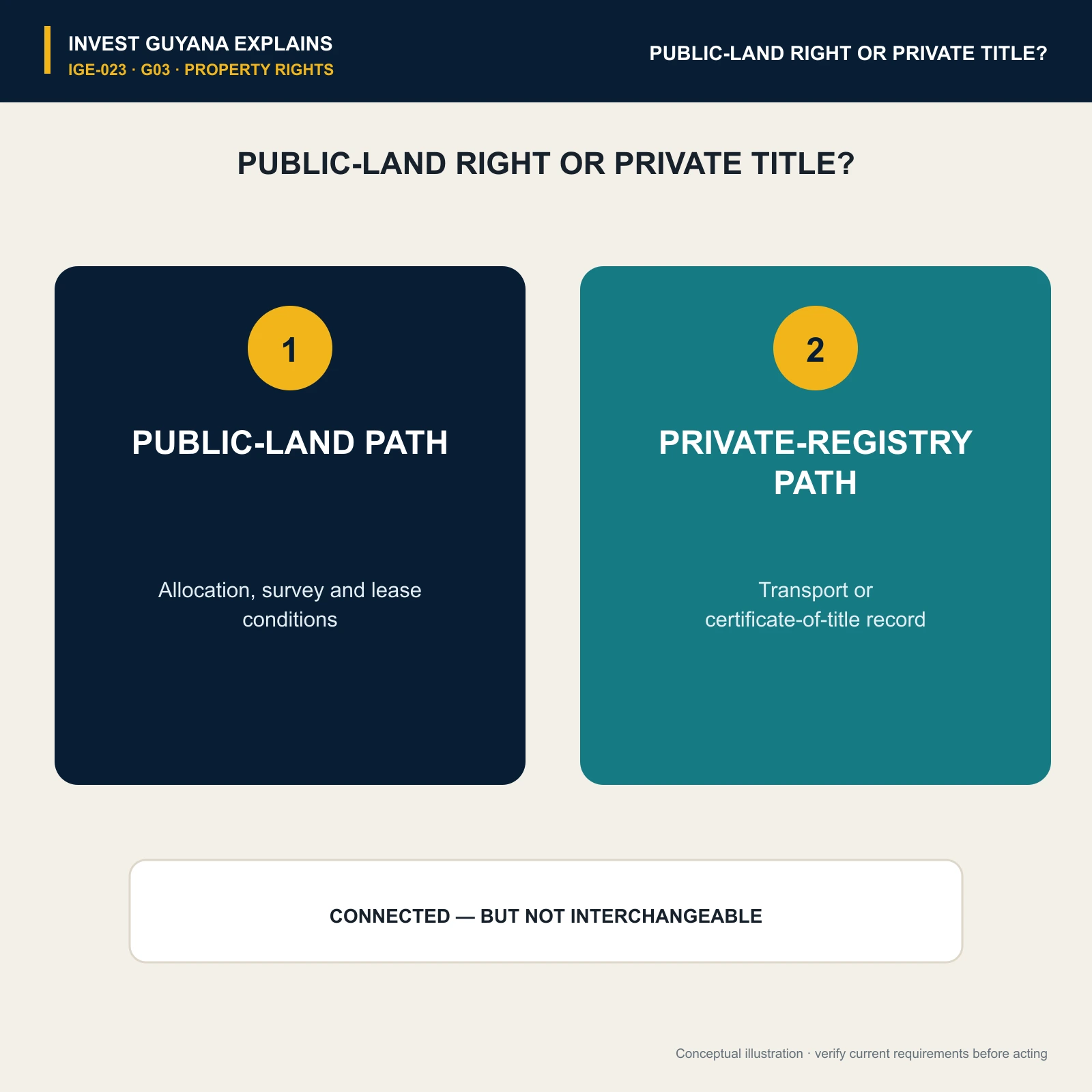
The public-land process keeps an application, approval, cadastral survey and lease issuance as distinct stages. It also preserves the difference between a lease right and private registered title.
A lessee may have significant and enforceable rights, but those rights come from the lease and remain subject to its term and conditions. They should not be described as if the land were transported property.
State land and Government land are related, but not identical labels
GL&SC’s official FAQ distinguishes State land from Government land. It explains that State land is vested in the President without a physical title in the same form, while Government land is held by the State under a physical title.
Both fall within GL&SC’s public-land administration, but the distinction matters when identifying the source of the interest, the authority and the applicable record.
CH&PA allocations and housing records introduce another institutional pathway. A CH&PA document should not automatically be treated as a GL&SC lease or a private registry title.
Transport and certificate of title belong to private-property registration pathways
Guyana’s land system includes both the Deeds Registry and the Land Registry.
A transport is associated with the deeds-registration system. A certificate of title is associated with the land-registration system in declared registration areas. Both can evidence registered property rights, but they arise under different statutory pathways and use different records and procedures.
This is why the existing Explainer, *Land Registration Explained*, emphasised that every property does not follow the same path.
The label on a photocopy is not enough
Property analysis must move beyond the front page of the document.
The questions include:
- Is the document original, certified or merely a copy?
- Does it identify the same parcel being offered?
- Is the named person the current holder of the relevant right?
- Are there mortgages, leases, caveats, liens, restrictions or other registered interests?
- Has a later transfer, death, subdivision or mutation changed the record?
No single generic phrase—“land paper,” “title” or “allocation”—answers all of those questions.
The authority follows the land status
The responsible authority cannot be chosen from the buyer’s preferred process.
Public-land leases lead toward GL&SC. CH&PA allocations lead toward the housing authority’s records and the later title pathway applicable to the parcel. Transports lead to the Deeds Registry. Certificates of title lead to the Land Registry.
The lawyer, surveyor, lender and other professionals may support the transaction, but the controlling record system remains determined by the land’s legal status.
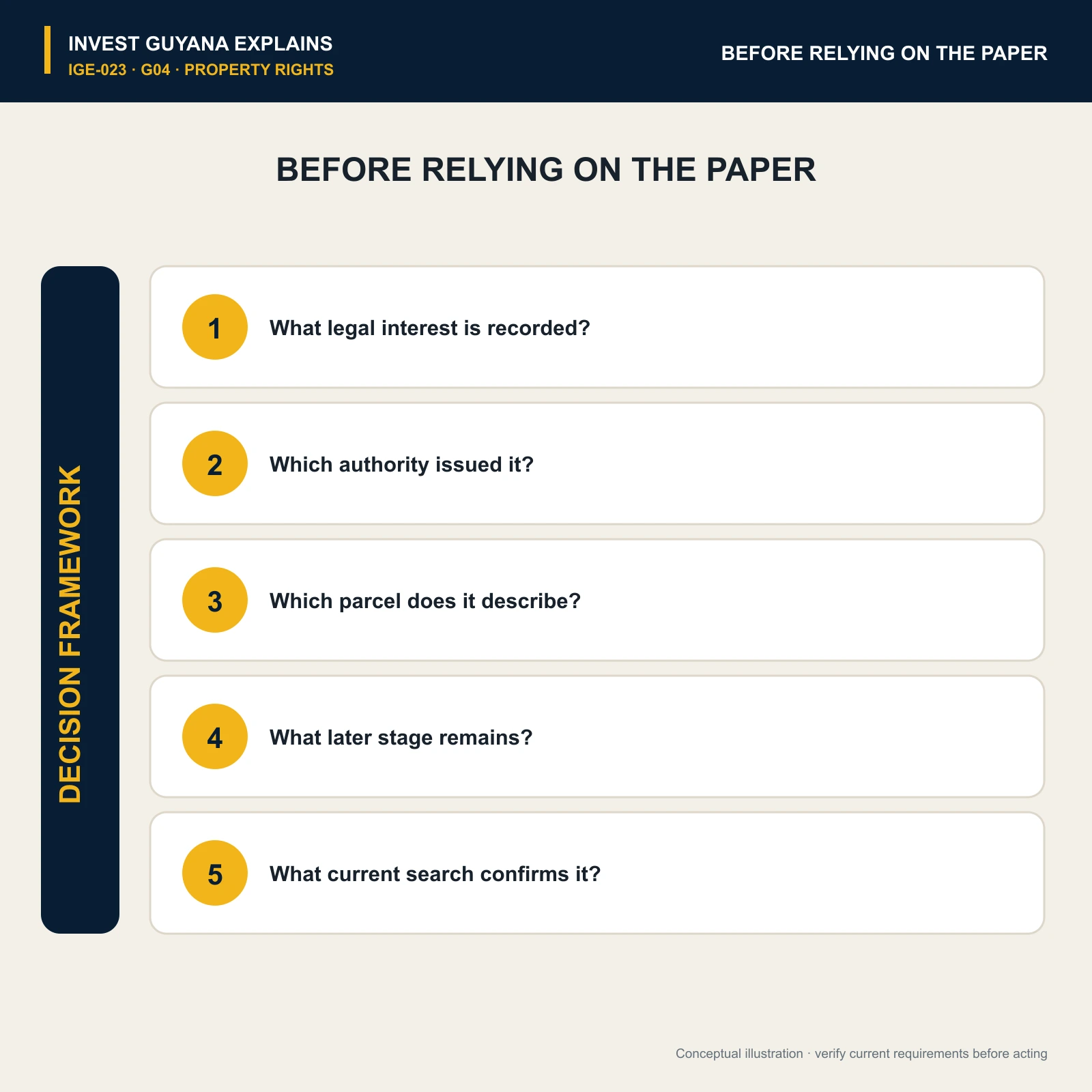
Five questions before relying on a property document
- What legal interest does this document record?
- Which authority issued or registered it?
- What parcel does it describe?
- What later stages, conditions or registrations remain outstanding?
- What current search or certified evidence confirms the position?
The investor takeaway
An allocation, lease, transport and certificate of title can all be important land records. They are not interchangeable.
The safest starting point is to identify the land status, the authority, the registered or contractual right and the stage of the process. Only then can the investor choose the correct search, transfer, financing or development pathway.
The next article in Invest Guyana Explains will examine the difference between a property search and complete due diligence, and why an official record is essential evidence without being the whole investigation.