

The business had occupied the building for twelve years
The company had paid rent, repaired the roof, installed equipment and used the address on every licence and invoice.
When the landlord proposed selling the property, one director argued that the business must now own an interest because it had been there so long.
Long occupation can create important contractual and factual questions. It does not automatically turn every tenant into the registered proprietor.
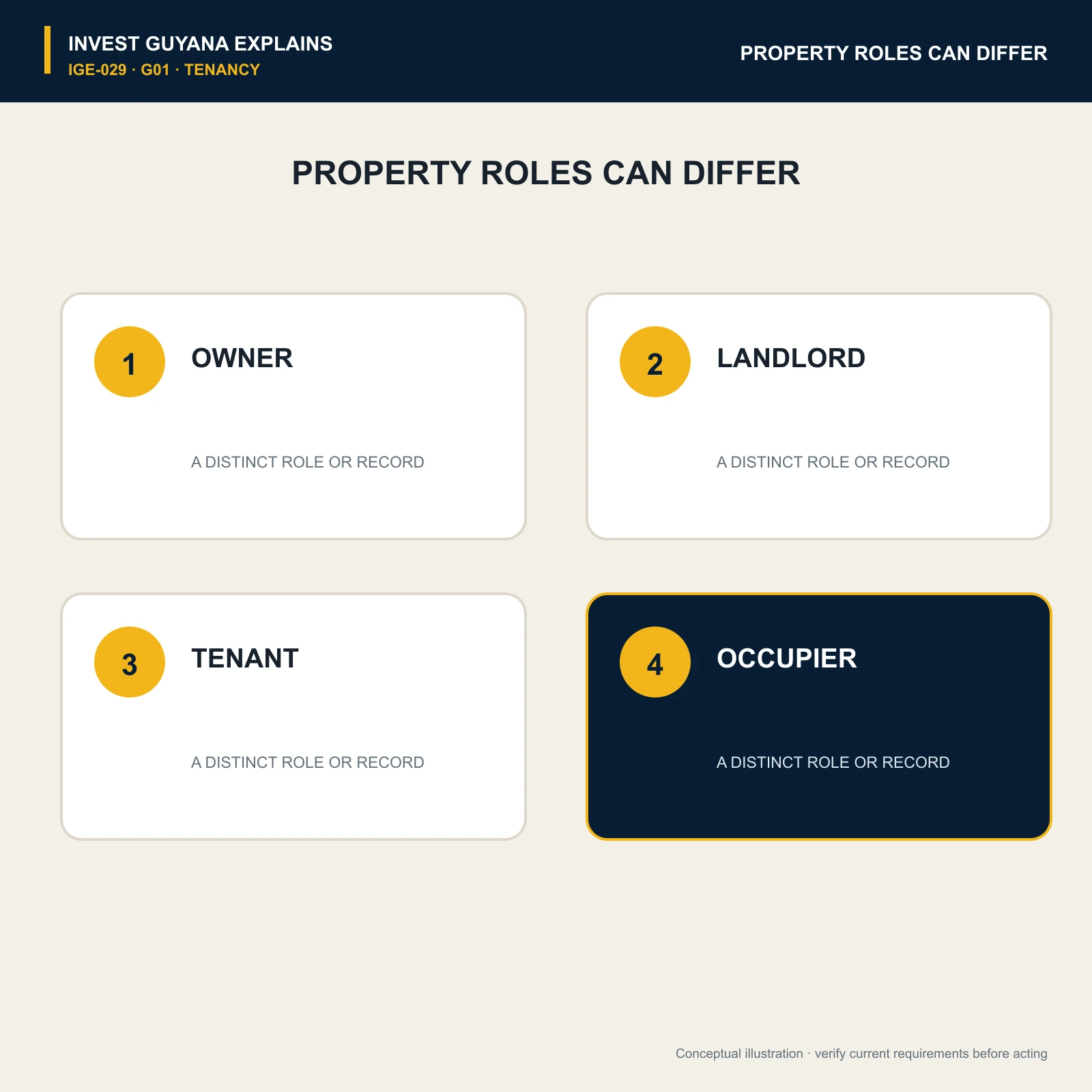
Ownership, possession and use answer different questions
Ownership identifies the person who holds the applicable property right within the legal and registry system.
Possession concerns who physically controls or occupies the property. Use concerns what the occupier is allowed to do there.
One person can own the property while another possesses and uses it under a tenancy. A manager or caretaker may possess it without being a tenant. A tenant may have exclusive use of part of a building while the landlord retains other areas.
The tenancy agreement defines the contractual relationship
The agreement can identify the premises, term, rent, deposit, permitted use, repair responsibilities, renewal arrangements and events that may end the tenancy.
Those contractual rights can be commercially significant. A tenant may need the premises to operate a business and may invest heavily in fitting it out.
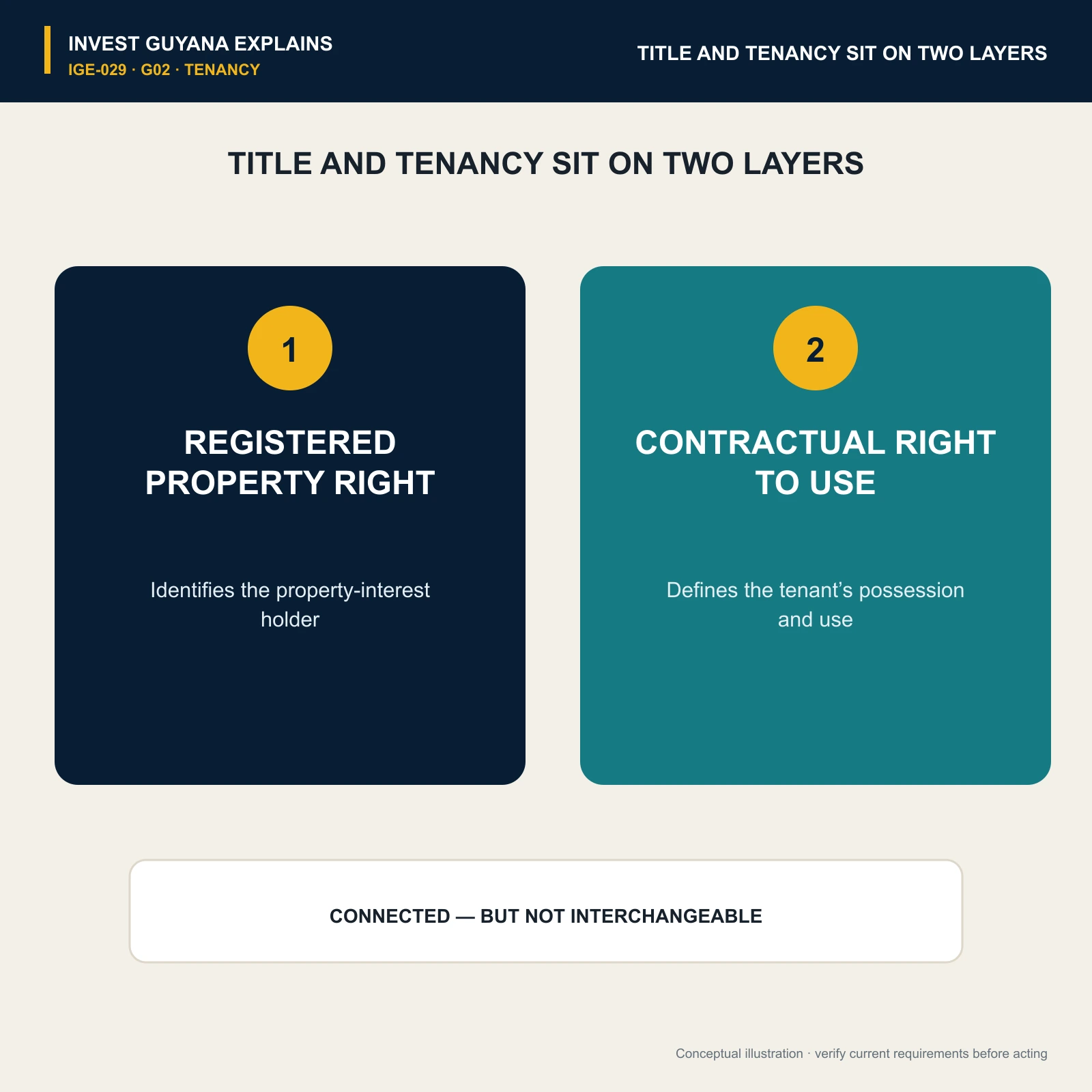
But the agreement should not be described as a transport or certificate of title. It is evidence of the tenancy relationship, not automatic proof that ownership has transferred.
The landlord’s title and the tenant’s rights both matter
A tenant should still ask whether the landlord has the authority to grant the tenancy.
The property may be mortgaged, jointly owned, part of an estate or held under a lease that restricts subletting. Public-land leases can contain conditions affecting transfer, sublease or mortgage.
The tenant’s due diligence therefore includes the landlord’s legal capacity and the property interest behind the tenancy—not only the keys and the rent receipt.
Improvements do not always become the tenant’s property
Commercial tenants often install partitions, machinery, signage, generators or other improvements.
The agreement and applicable law may affect whether an item remains removable, becomes part of the property or must be restored at the end of the tenancy. The amount spent does not, by itself, transfer ownership of the land.
The parties should address improvements before the work begins rather than after the tenancy ends.
Business approvals do not prove property ownership
A licence, tax record, utility account or company registration may use the rented address. Those records can show that the business operates there.
They do not automatically prove that the business owns the land. The same principle works in reverse: the landlord’s title does not replace the tenant’s need for sector, planning or operational approvals.

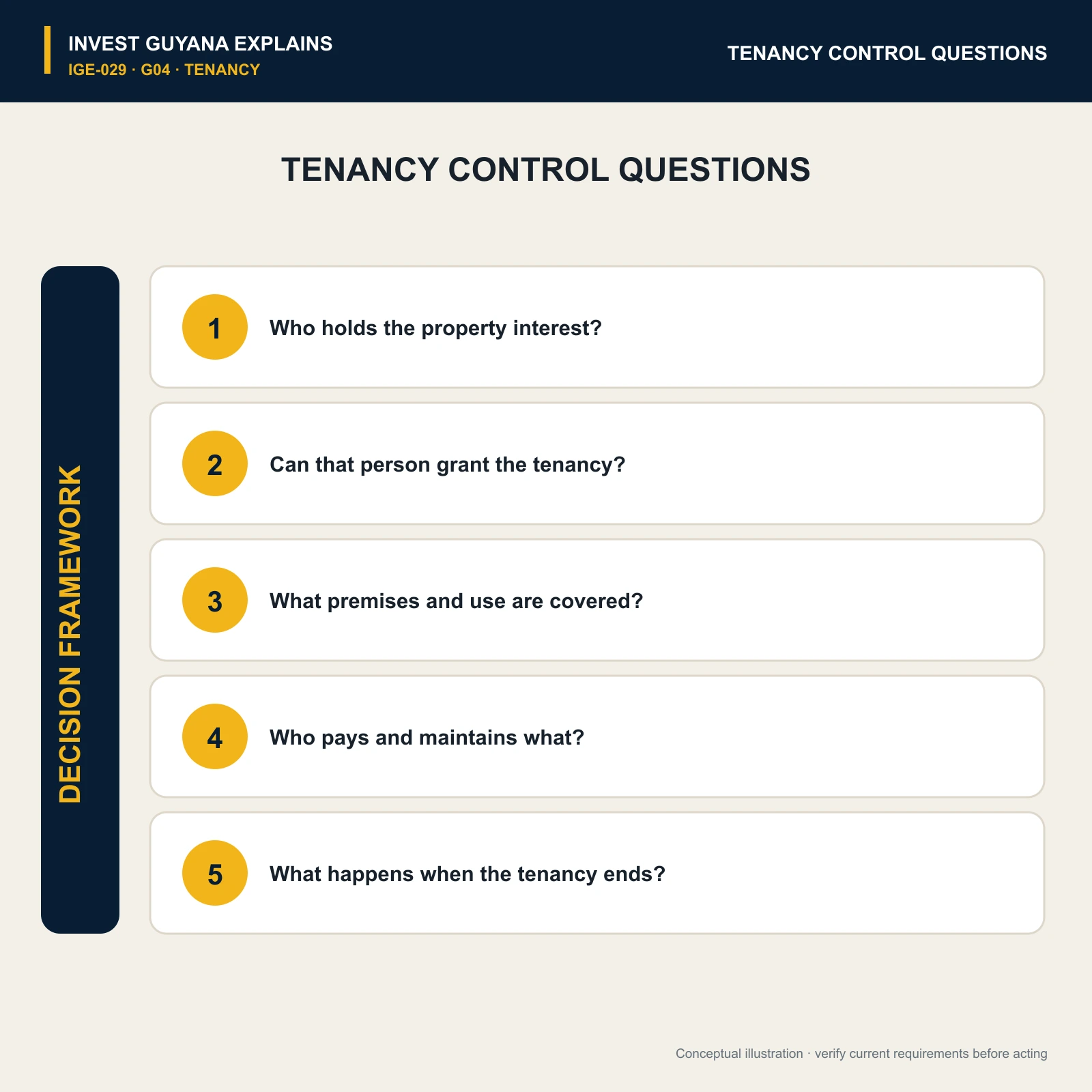
Questions a tenant and investor should ask
- Who holds the registered or leased property interest?
- Does that person have authority to grant this tenancy?
- What premises, term and permitted use does the agreement cover?
- Who is responsible for rates, utilities, repairs and approvals?
- What happens to the deposit, improvements and possession when the tenancy ends?
The investor takeaway
Tenancy can create a real and valuable right to occupy and use property. It is not the same as registered ownership.
The strongest lease analysis keeps four things visible: the landlord’s property right, the tenant’s contractual right, the physical premises and the intended use. Confusing them can leave a business with an approved operation but an insecure site—or a secure tenancy for a use the property cannot lawfully support.
The next article in Invest Guyana Explains will examine inherited property, and why a death certificate, will or family understanding does not automatically update the applicable property record.