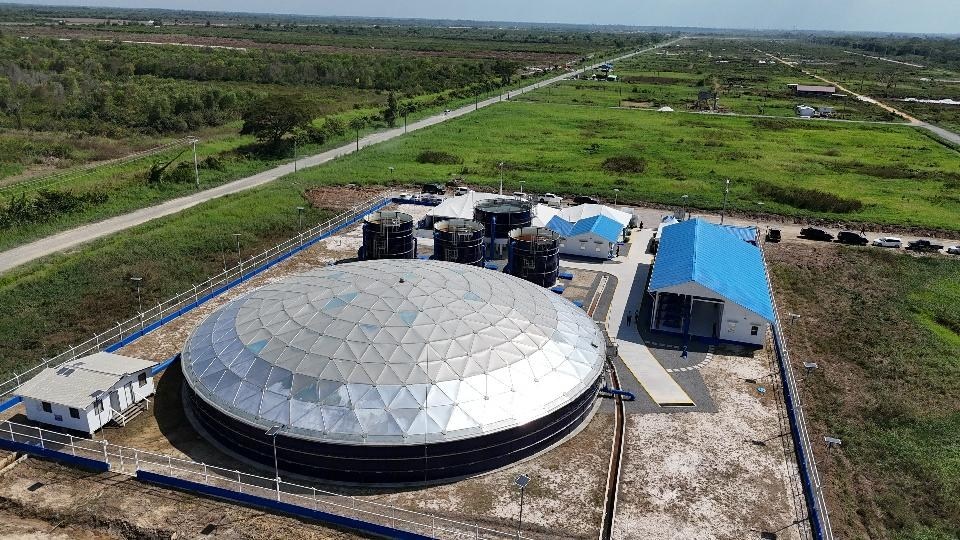
Guyana Water Incorporated says potable-water access has reached approximately 98.6% of the population after more than 200 wells and over 200 kilometres of transmission and distribution pipelines were delivered during the past five years.
Photo: Department of Public Information, Guyana.
The 9 October update also puts treated-water coverage at about 80%, up from roughly 52%, and outlines the next stage of the country’s water-infrastructure programme. That distinction matters: access to potable water is not the same measure as the share of customers receiving treated water.
For investors and suppliers, the release provides a current marker for a utility buildout tied directly to housing, commercial development and public capital spending. It points to continuing demand for civil works, wells, pipelines, pumping and treatment systems, controls, maintenance and technical services. It does not by itself announce contract awards, procurement deadlines or guaranteed private-sector revenue.
Coverage gains are backed by a wider capital programme
GWI’s statement says more than 200 wells were drilled over five years and more than 200 kilometres of transmission and distribution pipelines were installed. It also says hinterland access rose from approximately 46% to 95% by 2026.
The official 2026 Budget provides a useful cross-check and baseline. It records 29 new deep-water wells on the coast and 230 medium-depth wells in hinterland communities over the previous term. It also reports that treated-water coverage rose from 52% in 2020 to 77% at the end of 2025. GWI’s newer figure of about 80% is therefore directionally consistent with continued work during 2026, although the agency has not published a detailed methodology with the latest statement.
The Budget allocated G$21.6 billion to the water sector in 2026 after G$19.7 billion was spent in 2025. It identifies more than 100 kilometres of distribution mains, new wells, leak-detection technology, SCADA systems and treatment investments among the year’s priorities.
Phase Two adds seven treatment plants
GWI says Phase Two of the Coastal Water Treatment Infrastructure Programme includes seven new plants. Two are major surface-water facilities: a 24 million-litres-per-day plant at Hope serving more than 35,000 residents from Cane Grove to Cove and John, and a 26 million-litres-per-day plant at Diamond intended to serve more than 36,000 residents on the East Bank Demerara corridor.
Five additional plants are planned for Maria’s Delight, Leguan, Wakenaam, Bath and Adventure. GWI also says 16 smaller treatment plants have been completed and six more are being rolled out.
The government’s September update independently confirms the broader construction programme, reporting seven treatment plants completed over five years, 12 existing plants rehabilitated and the Hope and Diamond surface-water facilities advancing. It explicitly links investment to the expansion of housing, warehouses, condominiums, hotels and other commercial activity.
The supplier opportunity extends beyond construction
The investable opportunity is broader than the headline access figure. Water systems require drilling services, pipes and fittings, pumps, electrical and electromechanical equipment, storage, treatment media, laboratory testing, monitoring, metering, leak detection, SCADA integration, solar power for remote systems and long-term operations and maintenance.
Independent reporting in September said GWI planned 14 additional wells for new housing communities and expected contractor procurement to begin as early as October or November. It also reported plans for a surface-water plant at Stewartville and expansion of low-cost water-refilling stations. Those items should be tracked through formal GWI, ministry and national procurement channels rather than treated as open opportunities until bid documents are issued.
The programme also carries execution risks. National coverage percentages do not describe pressure, continuity, water quality or service reliability in every community. GWI acknowledged continuing iron-content concerns in some groundwater systems. Investors should distinguish between announced plans, procurement, contract award, construction and commissioning, and should test payment terms, site access, imported-equipment exposure and maintenance capacity for each project.
What investors should watch next
The immediate watchpoints are tender notices and awards for the Diamond, Hope and five additional treatment plants; well-drilling and distribution-main packages; SCADA and leak-detection procurement; and updates showing whether treated-water coverage continues to rise.
Detailed project documents will also be needed to assess financing sources, delivery models, contractor eligibility, local-content requirements, environmental approvals and operating responsibility. The latest GWI figures establish material infrastructure progress and a credible expansion pipeline, but the commercial pathway depends on project-specific procurement and implementation evidence.
Primary update: Ministry of Public Utilities and Aviation / Guyana Water Incorporated, 9 October 2026.