

Imagine your company is preparing to make one of the biggest investments in its history. After months of research, you’ve identified Guyana as a promising destination. The economy is growing, opportunities are expanding and your team is ready to move forward. Then someone around the boardroom table asks an important question:
“What protects our investment if governments change?“
It’s a sensible question. Elections happen. New leaders are elected. Policies evolve. Priorities shift. Yet businesses continue to invest, people continue to buy property and contracts continue to be signed.
The reason is that governments do not operate without limits. They work within a legal framework that defines what they can do, how they exercise power and what rights people enjoy. In Guyana, that framework is the Constitution.
You don’t need to be a lawyer to understand why it matters. Whether you’re starting a business, purchasing land, following the national budget or simply trying to understand how the country works, the Constitution provides the foundation on which everything else is built.
The Rulebook for the Country
Every organisation needs rules. A business has articles of incorporation. A sports league has a rulebook. A building begins with an architectural blueprint before construction starts.
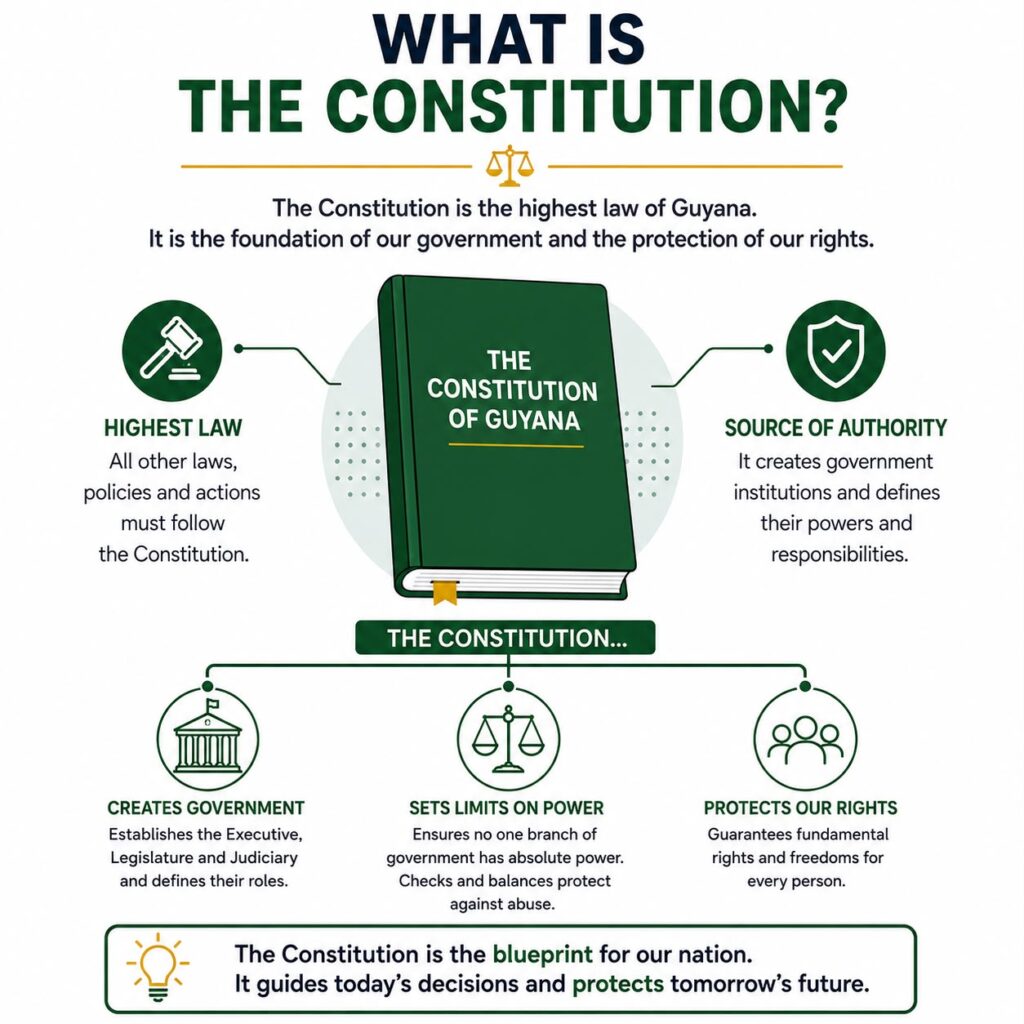
Countries are no different. A constitution is the foundational document that establishes how a country is governed. It defines the structure of the state, creates its major institutions, distributes powers and sets out the principles that guide public authority.
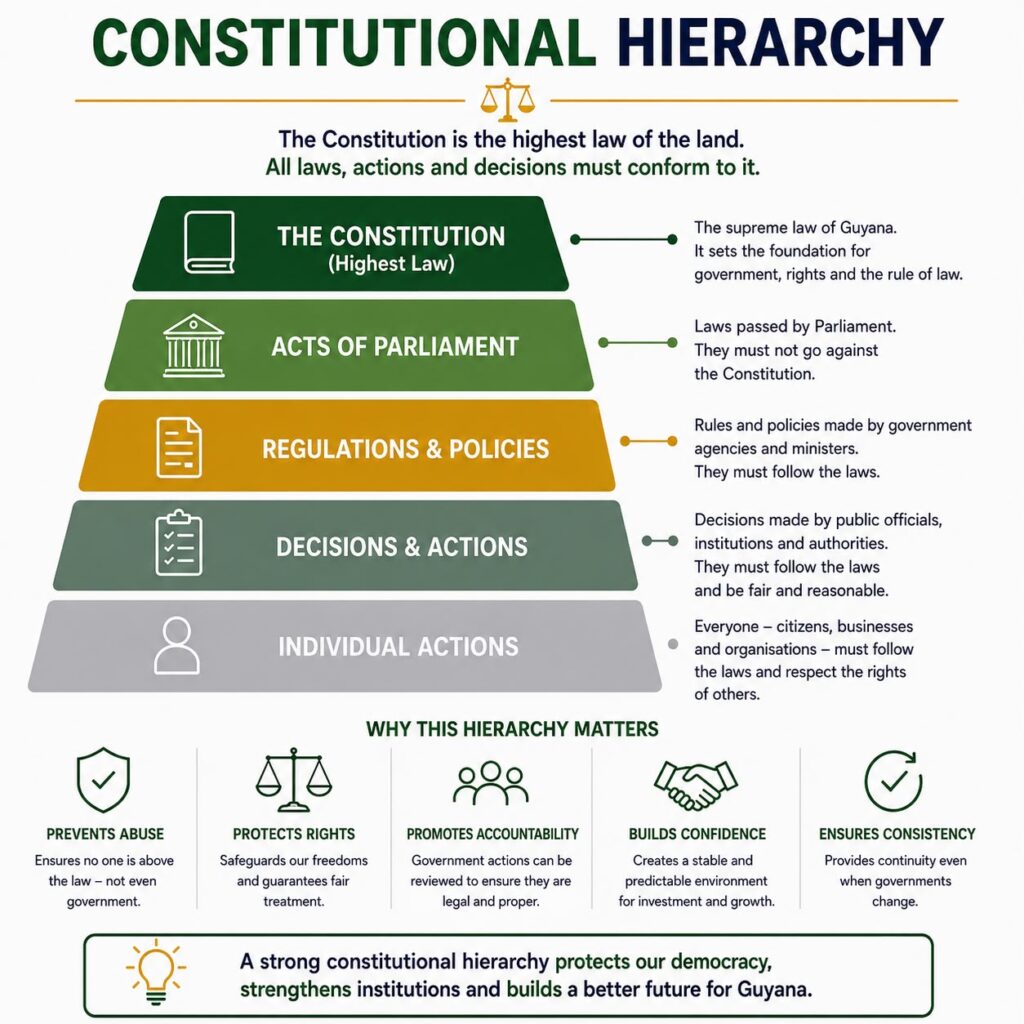
That is why the Constitution is often described as the highest law of the land.It does not govern the small details of everyday life. Instead, it provides the framework within which all other laws are made.
Think of it as the operating manual for the country. When Parliament passes legislation, those laws must fit within the Constitution. When government ministries develop policies, they operate within the powers the Constitution provides. When courts interpret laws, they look to the Constitution as the ultimate legal reference point.
This hierarchy is important because it creates consistency. Governments may introduce new programmes or change existing policies, but they cannot simply ignore the constitutional framework that gives them authority in the first place.
Understanding this helps explain why the Constitution occupies such a central place in democratic governance. It is not just another law. It is the document from which the authority to make laws ultimately flows.
Creating Government
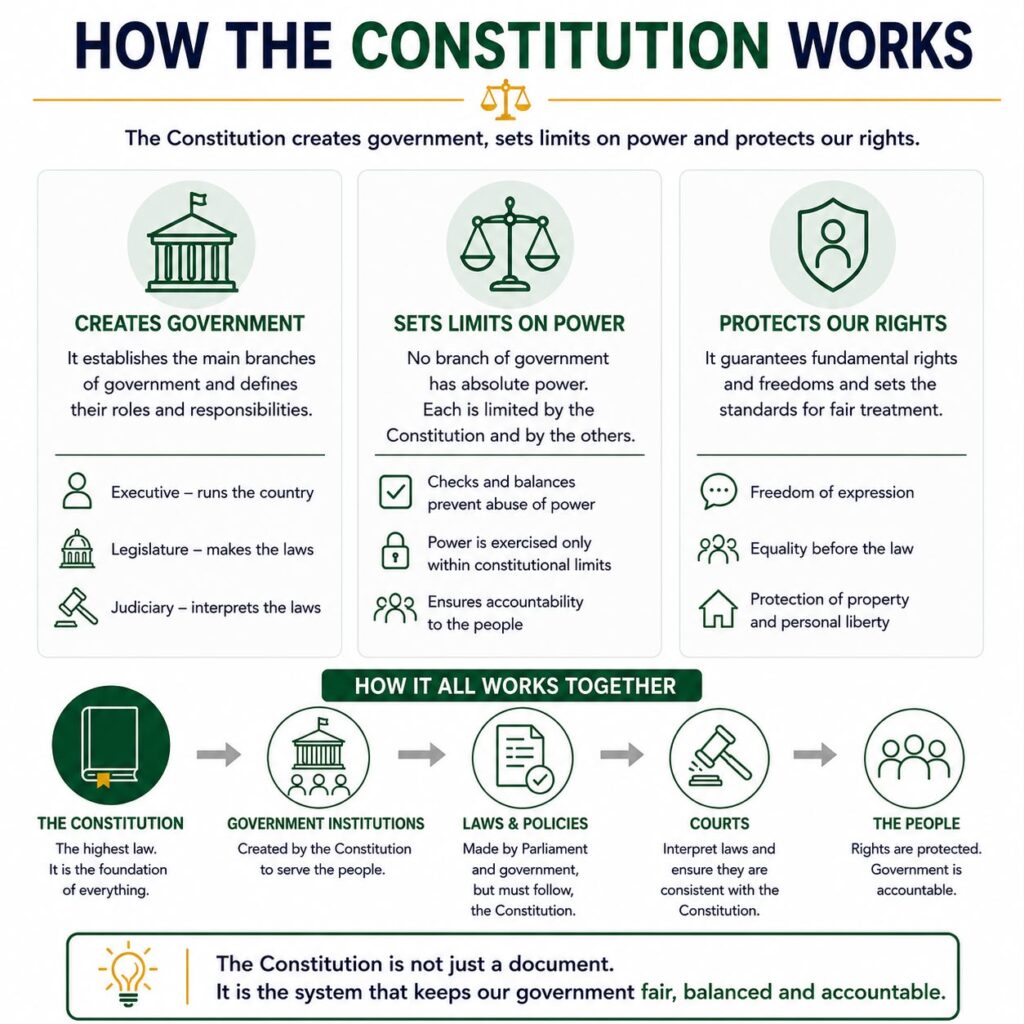
In the previous article, How the Government of Guyana Works, we explored the country’s three main branches of government: the Executive, the Legislature and the Judiciary
The Constitution is what brings those institutions into existence and defines their respective roles. It establishes the offices that make up the Executive, including the Presidency, and provides the framework within which the government carries out its responsibilities.
It establishes Parliament, giving it the authority to debate and pass laws on behalf of the country. It also establishes an independent Judiciary, giving the courts the responsibility to interpret and apply the law. These institutions perform different functions, but they all derive their authority from the same constitutional foundation.
This separation of responsibilities is deliberate. If the same institution created laws, enforced them and decided disputes about them, there would be very little protection against the misuse of power. By assigning different responsibilities to different branches, the Constitution creates a system in which institutions perform distinct roles while operating within a shared legal framework.
That does not mean government always moves quickly or that institutions never disagree. In fact, different perspectives and careful scrutiny are often part of the process. But the Constitution provides the common framework that helps those institutions work together while respecting their respective responsibilities.
It also provides continuity. Governments may change after elections. Ministers may leave office. New policies may replace old ones.
The institutions themselves, however, continue to operate because they exist under the Constitution rather than under any individual government. For investors, businesses and citizens alike, this continuity is one of the characteristics of stable public administration.
Protecting Rights
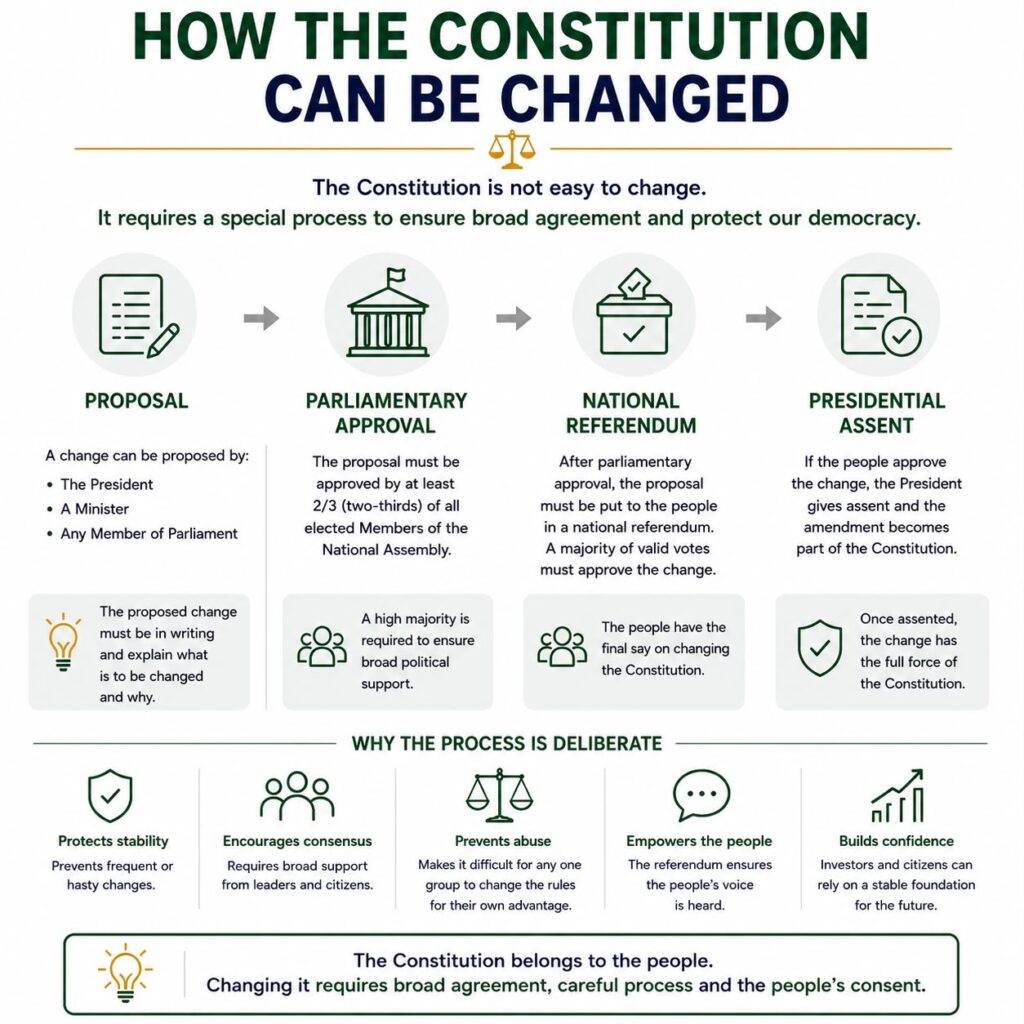
The Constitution does more than organise government. It also recognises important rights and freedoms that help define the relationship between the state and the people.
These constitutional protections are not simply statements of principle. They provide a framework that guides how public authority should be exercised.
Among the broad principles reflected in constitutional protections are equality before the law, freedom of expression, due process and protections relating to property and personal liberty.
While individual laws regulate specific activities, constitutional rights establish the broader standards against which those laws and government actions are measured.
Consider a simple example. A business owner entering into a commercial agreement expects disputes to be resolved according to established legal procedures rather than arbitrary decisions. A homeowner expects legal processes to exist if property rights are challenged. A journalist expects to work within a legal framework that recognises freedom of expression while respecting the rights of others.
The Constitution does not eliminate disagreements or prevent legal disputes from occurring. Instead, it establishes the principles within which those disputes are addressed.
That distinction is important. The Constitution is not designed to answer every legal question directly. Rather, it provides the foundation upon which the wider legal system is built.
Why It Matters for Investors and Businesses
For many readers, constitutional law can seem distant from everyday business decisions. In practice, however, the Constitution helps create the conditions that allow economies to function with greater confidence.
Imagine two countries. In one, government institutions operate according to established constitutional rules. Laws are created through recognised processes. Courts operate independently. Public institutions continue functioning even when political leadership changes.
In the other, major decisions depend largely on whoever happens to hold office at the time, with few established limits or independent institutions. Most investors would naturally have greater confidence in the first environment.
Long-term investment depends on predictability. Companies investing in factories, hotels, office buildings or infrastructure often make decisions that extend over decades. They need confidence that public institutions will continue functioning, contracts will be governed by law and legal processes will remain available if disputes arise.
The Constitution contributes to that confidence by providing the enduring framework within which governments operate. This does not mean every business decision becomes simple or that regulations never change. Governments introduce new legislation, amend policies and respond to changing economic circumstances.
What remains consistent is the constitutional framework through which those changes occur. That distinction is one reason why constitutional stability matters.
It provides confidence that change takes place through recognised institutions and legal processes rather than through arbitrary exercise of power.
The Constitution also benefits ordinary citizens in countless ways. It supports confidence in elections, public administration, the courts and the rule of law. It provides the foundation for institutions that people rely upon throughout their lives, whether applying for government services, purchasing property, starting businesses or resolving legal disputes.
Although many people may never read the Constitution from beginning to end, they benefit every day from the stability it helps create.
Why the Constitution Matters
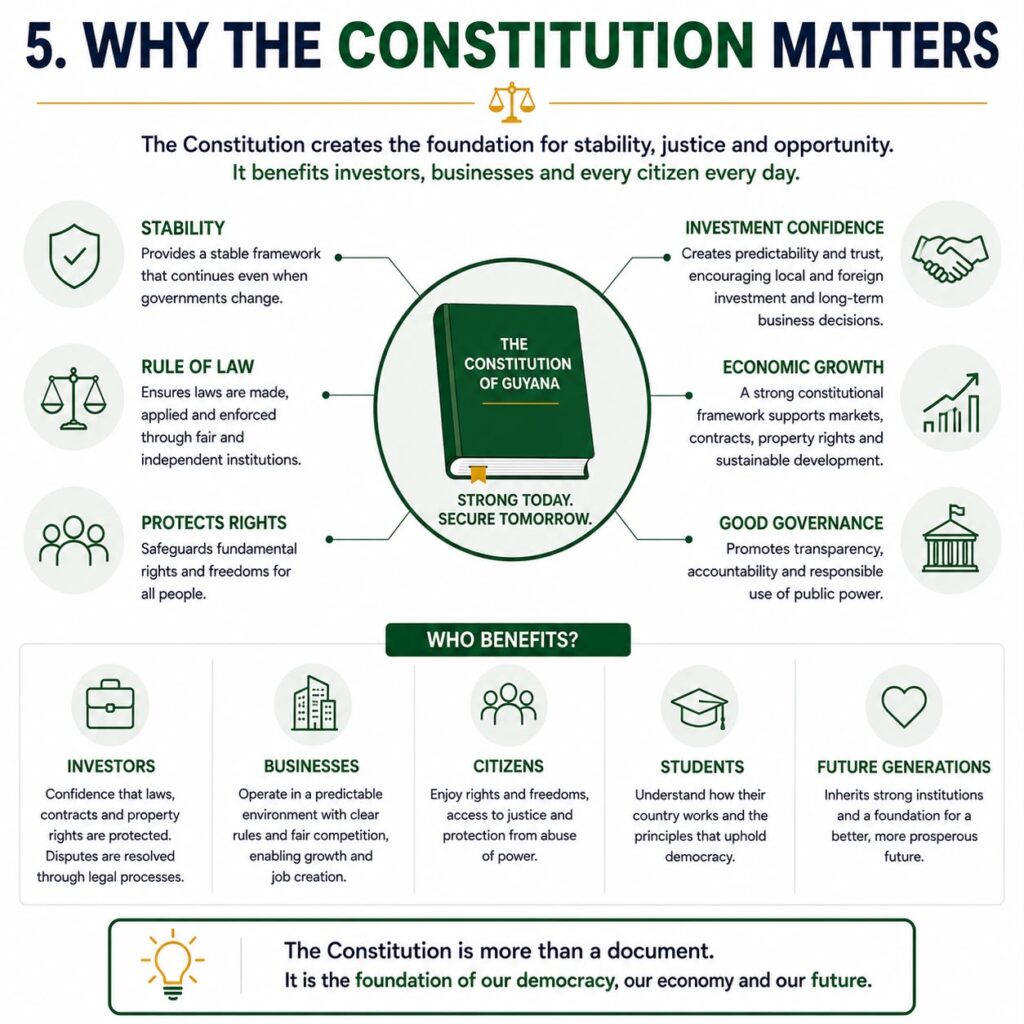
Let’s return to our investors preparing to expand into Guyana. At the beginning of their discussions, they wanted reassurance that the country offered more than attractive commercial opportunities. They wanted confidence in the institutions that would continue operating long after their investment was made.
They now understand that governments may change, ministers may change and policies may evolve, but those changes take place within a constitutional framework that establishes how public authority is exercised.
That framework creates the institutions discussed in the previous article, defines their responsibilities and provides the foundation upon which laws, public administration and the justice system operate.
For businesses, this means decisions are made within established institutions rather than by a single office acting alone.For citizens, it means government authority exists within recognised legal boundaries.For students, it provides a clearer understanding of how the country’s political and legal systems fit together.
The Constitution is sometimes viewed as a document reserved for lawyers and judges. In reality, it belongs to everyone because it provides the framework for the country itself.
Understanding that framework is an important step toward understanding Guyana. In future articles in the Invest Guyana Explains series, we’ll explore the institutions and principles created by the Constitution in greater depth, including Parliament, constitutional rights, the courts and the processes through which laws are made and applied. Together, these explainers will build a practical understanding of how Guyana’s public institutions support governance, business and everyday life.