The investor believed the difficult decision had already been made. After months of searching, the company had selected a site for a new distribution centre and agreed the commercial terms with the seller.
Then the legal adviser asked to see the title documents.
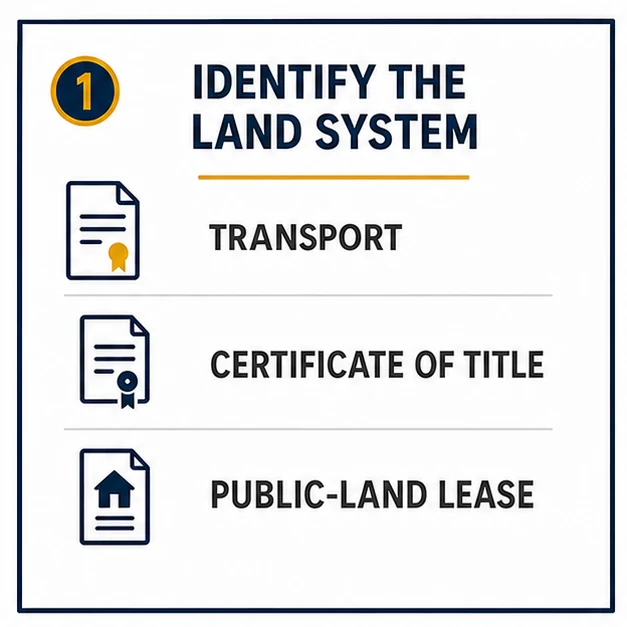
The seller referred to a transport. Another property considered earlier had a certificate of title, while a third site had been described as leased public land. To the investor, all three were simply land. To the registration system, they represented different forms of ownership or tenure that could lead to different institutions and procedures.
That is the first lesson in understanding land registration in Guyana. Before asking how to transfer a property, a buyer must identify what kind of interest is being transferred and where the official record is kept.
Land Registration Creates an Official Record
Property transactions involve more than a private agreement between buyer and seller. The public record must show who holds the recognised interest in the land and which mortgages, leases or other registered matters may affect it.
Registration gives transactions a formal place within that record. It allows ownership and other interests to be examined, supports the use of property as security and provides a reference point for future dealings.
For businesses, this matters long after the purchase price has been paid. A lender may need evidence of title before accepting land as collateral. A developer may need to demonstrate its legal interest when applying for approvals. A future purchaser will want to know that the current owner acquired the property through the appropriate process.
The registration system therefore does not merely produce a document for a file. It connects the property’s legal history to its next commercial use.
Transport and Certificate of Title Are Not the Same Document
Private property in Guyana can appear under more than one registration system. The Land Registry’s official explanation distinguishes a transport, associated with the Roman-Dutch system, from a certificate of title, introduced under the English-law land-registration system. Both can evidence ownership of private property, but they are maintained through different registries and have procedural differences. Land Registry—Transport and Certificate of Title
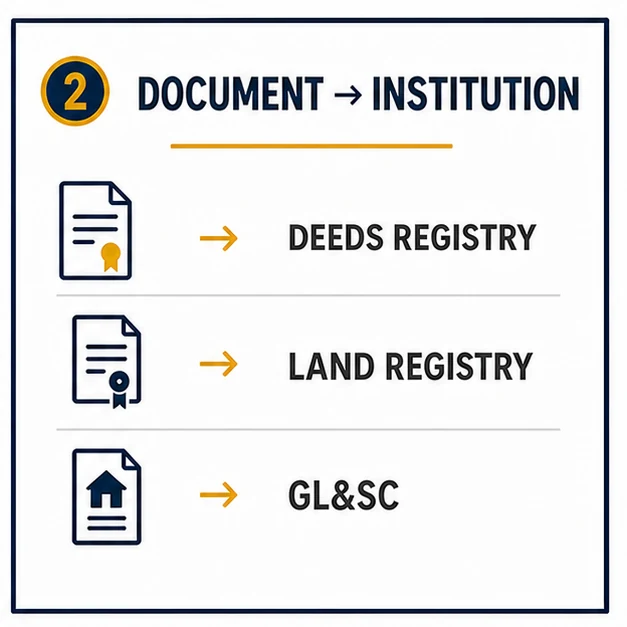
The Deeds Registry keeps transports and administers conveyancing under that system. The Land Registry issues certificates of title and provides services for registered land, including official title searches and transfers. Deeds and Commercial Registries Authority Land Registry Services
For a buyer, the practical lesson is not to decide which system sounds stronger. It is to identify which system governs the specific parcel and follow the process appropriate to that record.
Calling every ownership document a “deed” or “title” may be convenient in conversation, but precision becomes important when searches, agreements, mortgages and transfers are being prepared.
Public Land Introduces a Different Relationship
Not every site is privately owned land being sold from one owner to another. Guyana also has public lands administered through the Guyana Lands and Surveys Commission.
In that context, the relevant interest may be a lease rather than private freehold ownership. The lease defines the term and conditions under which the lessee may occupy and use the land. GL&SC’s current information explains that long-term leases follow approval and cadastral survey, and may contain provisions dealing with renewal, transfer, subletting, mortgage and inspection. GL&SC Public Lands
This changes the investor’s question. A person acquiring or financing a leasehold interest must understand not only the land but also the lease conditions, remaining term, permitted use and any consent required for transfer or mortgage.
A lease is not automatically inferior or unsuitable for investment. It is a different legal and commercial arrangement that must be assessed on its own terms.
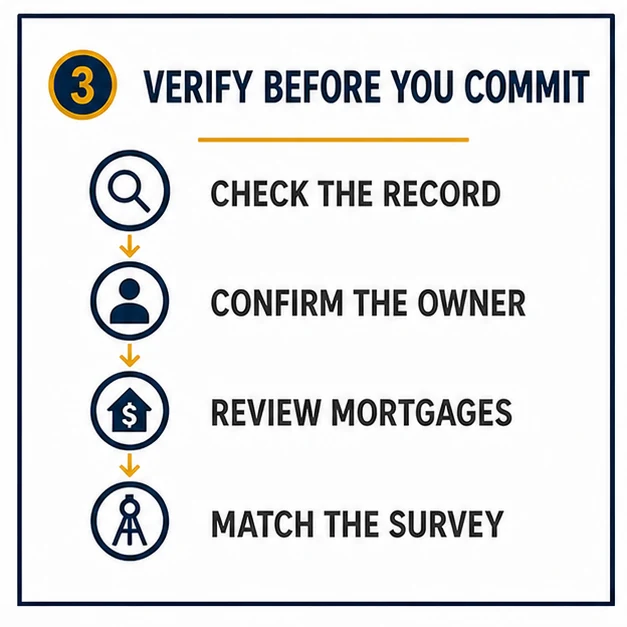
The Search Comes Before the Assumption
The seller’s document is an essential starting point, but professional due diligence does not end with looking at the paper handed across the table. The relevant registry record must be examined.
A title or transport search can help confirm the registered owner and identify recorded mortgages or other matters affecting the property. For leased public land, the lease record and the lessor’s requirements may be equally important.
The physical site must also match the legal description. Survey plans, boundaries, access and occupation can create practical questions that are not answered by the ownership document alone. A business may be buying land for a warehouse, hotel or industrial facility, yet the commercial plan still depends on the parcel being correctly identified and legally available for the intended transaction.
This is why property due diligence combines records, documents and the actual land. A clean-looking site does not prove a clean title, and a title document does not by itself resolve every boundary or planning issue.
Agreement Is Not Yet Registration
When buyer and seller sign an agreement, they have reached an important commercial milestone. The agreement records the terms on which they intend the transaction to proceed.
It does not necessarily mean that the public register already shows the buyer as owner. The transfer must still move through the process applicable to the property’s registration system, with the required documents, searches, notices, duties, consents or appearances determined by current law and practice.
That interval between agreement and completed registration is why transaction planning matters. Financing conditions, possession, deposits and completion dates should be structured with an understanding of what remains to be done.
It is also why businesses normally use qualified legal professionals for conveyancing. The task is not simply to fill in a form; it is to confirm the title, prepare the transaction correctly and ensure that the interest the buyer expects to acquire is the interest ultimately recorded.
Mortgages and Other Interests Matter
Land is often part of a wider financing structure. A bank may lend against the property, an existing mortgage may need to be discharged or a lease may require permission before it can be mortgaged.
The Deeds Registry’s functions include the registration of mortgages and encumbrances affecting land held under its system. GL&SC separately describes procedures and conditions connected with mortgaging and transferring public-land leases. These examples show why the identity of the registry or lessor is central to the transaction.
For investors, the commercial question is not only, “Can we buy this site?” It is also, “Can the interest be financed, transferred and used in the way our project requires?”
Those questions should be answered before the land becomes the foundation of a detailed development plan.
Registration Does Not Replace Other Approvals
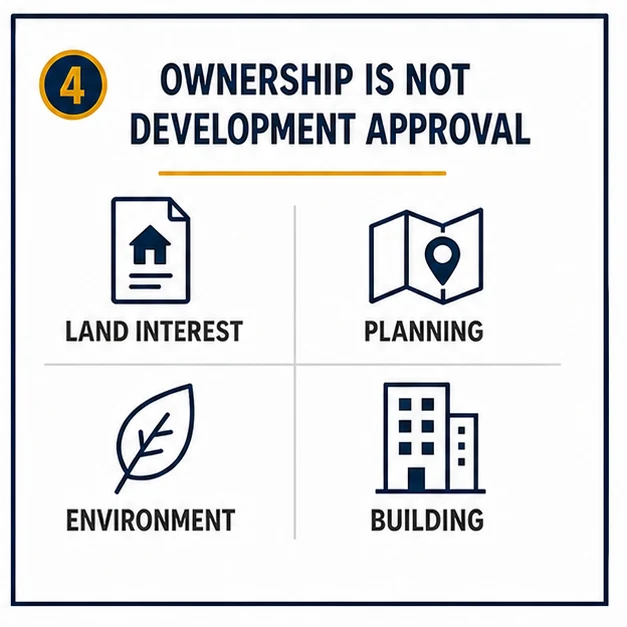
Ownership and development permission are separate issues. A company can acquire a valid interest in land and still need planning, environmental, building or sector-specific approvals before carrying out its project.
Likewise, receiving a development approval does not itself prove that the applicant owns the site. Different institutions examine different parts of the project, which is why the approval map established in earlier articles remains important.
The land record answers who holds the interest and what registered matters affect it. Planning and regulatory systems answer what may be done on the site and under which conditions.
Treating those questions separately helps investors avoid an expensive mistake: acquiring a property before confirming that the intended project can realistically proceed there.
Begin With the Document, Then Verify the System
The distribution-centre investor eventually returned to the three possible sites with a better framework. Instead of asking only about acreage and price, the company asked what document evidenced the interest, which institution maintained the record, what searches were required, whether any mortgage or restriction affected the land and whether the proposed use depended on other approvals.
The questions did not make the transaction unnecessarily complicated. They revealed the transaction that actually existed.
In Guyana, a transport, a certificate of title and a public-land lease can each support legitimate property interests. They should not, however, be treated as interchangeable labels for the same process.
The right path begins by identifying the land system, verifying the record and aligning the legal interest with the commercial purpose. Once those foundations are sound, the property can support the investment rather than become its greatest uncertainty.
The next article in Invest Guyana Explains will follow goods rather than land, examining how commercial imports move from documents and classification through customs assessment and release.
Editorial note: This article provides a general explanation of land registration and tenure in Guyana and is not legal advice. Property rights, searches, transfers, duties, consents and procedures depend on the parcel and current law. Buyers should use current registry information and qualified Guyanese legal and surveying professionals.