The building was finished, but the opening date was not secure
The contractor handed over the keys to a new commercial property. The owner had already submitted electricity and water applications and assumed both services would be active before the opening.
Then the utility teams asked about inspection, site conditions and connection work.
The owner had treated the application as if it were the connection.
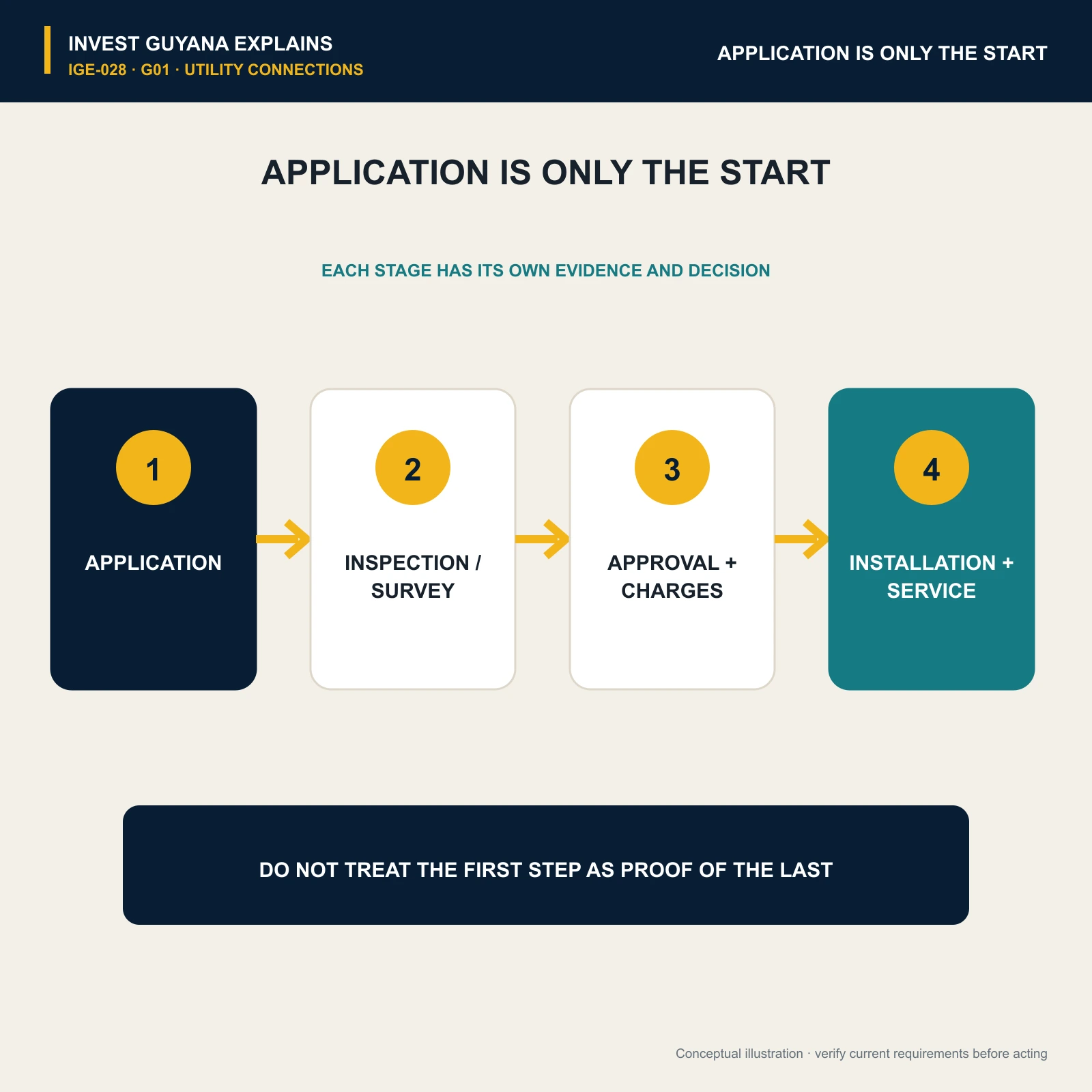
Utilities involve a chain of customer, technical and infrastructure decisions. Each stage has to be visible in the project plan.
Application places the request into the utility process
An application gives the provider information about the customer, property and requested service. Residential and business pathways can require different information or financial arrangements.
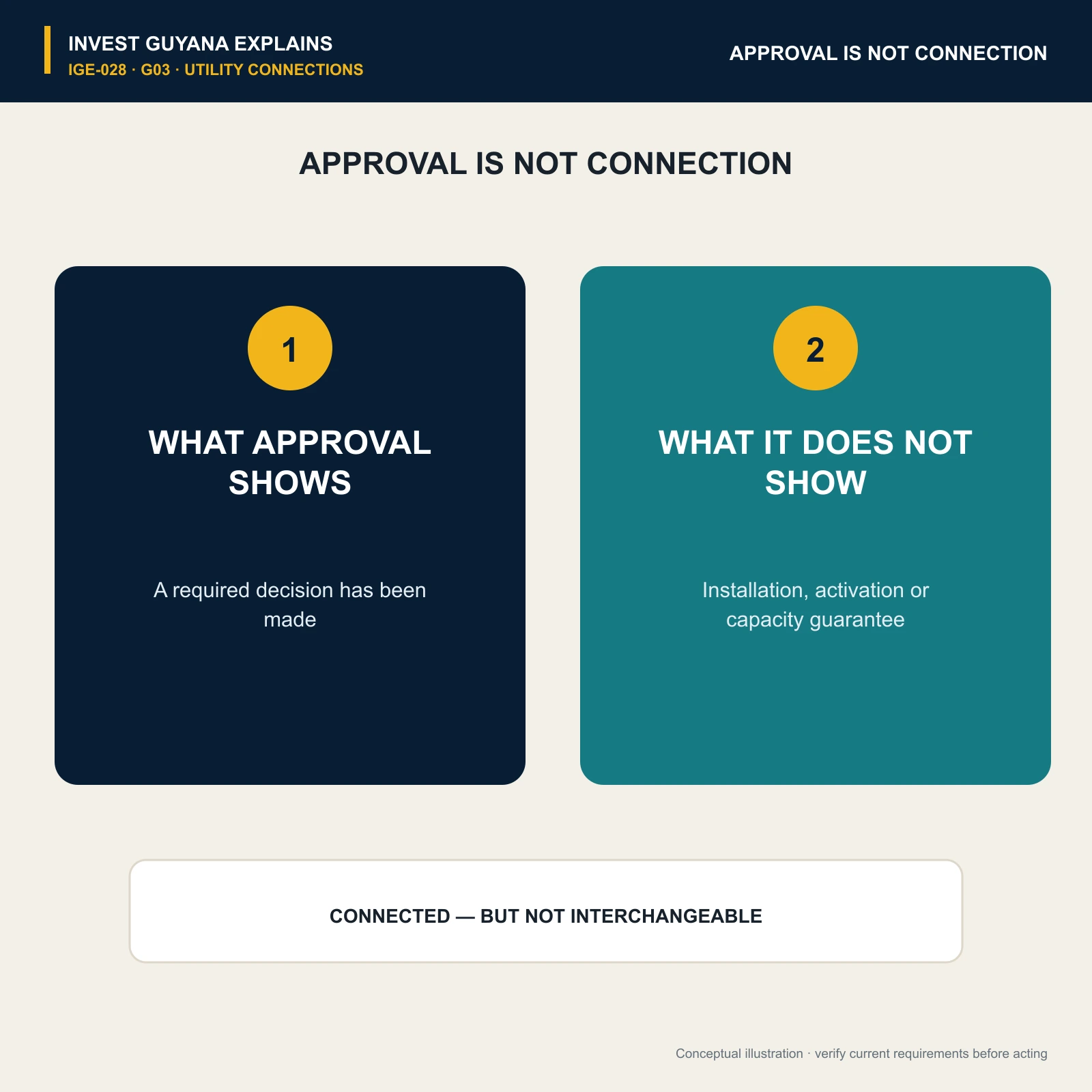
The application does not itself establish that the wiring or plumbing is compliant, the parcel has network access, an extension is unnecessary or the installation date is confirmed.
The utility-connection process keeps application, investigation or survey, approval, charge, installation and active service as distinct stages.
Electricity involves both installation readiness and provider work
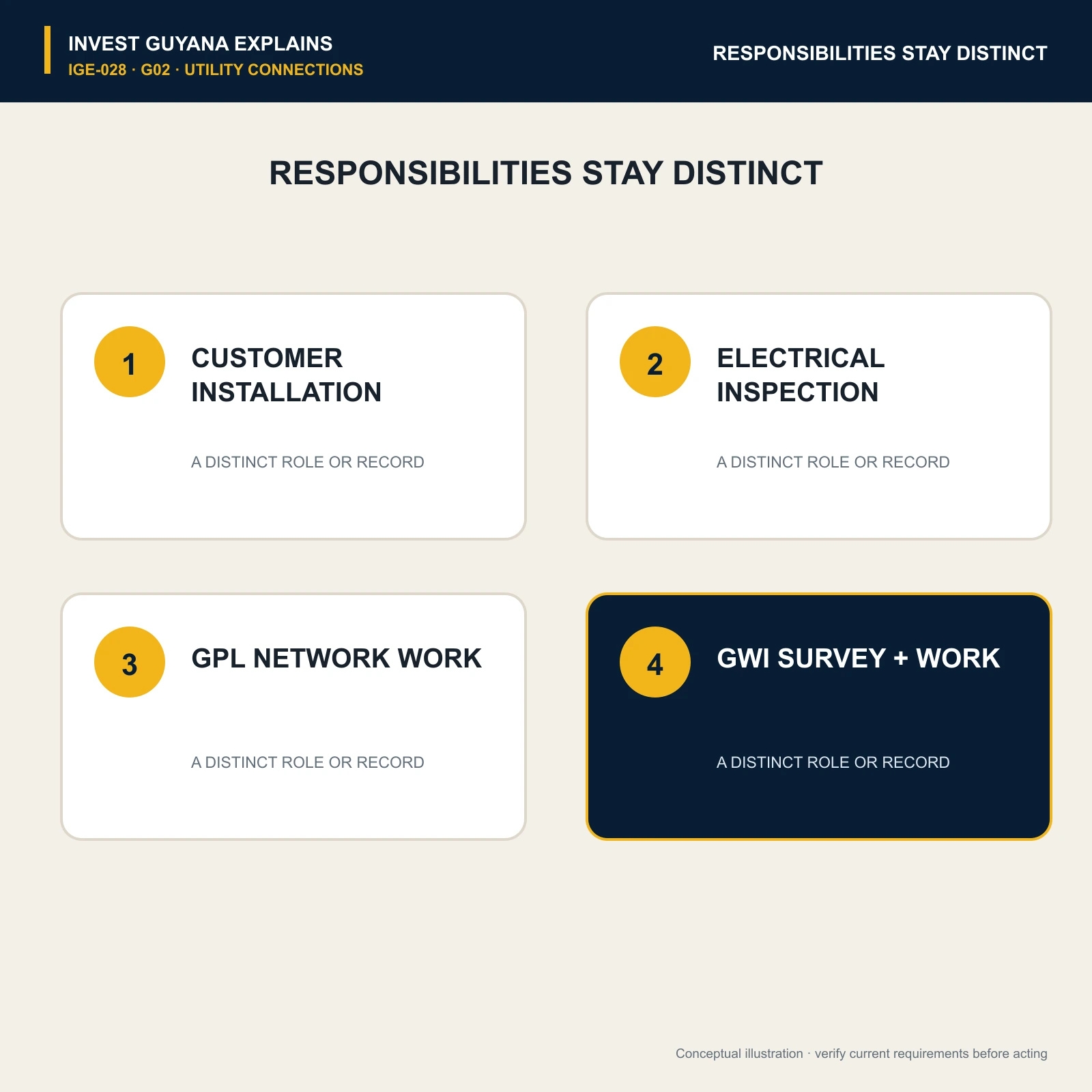
For an electricity connection, the customer’s electrical installation and the utility’s network responsibilities are not the same job.
Electrical inspection or certification is distinct from Guyana Power and Light’s site investigation, approval and installation. A compliant internal installation does not prove that GPL has completed the external connection. GPL approval does not replace the customer’s responsibility for a compliant installation.
Current provider materials distinguish residential and business or corporate application pathways. A GYD 50,000 deposit appears in the business or corporate postpaid context and should not be presented as a universal residential deposit.
Water application, survey, approval and installation are separate
Guyana Water Incorporated’s process likewise involves more than submitting a form.
Guyana Water Incorporated’s process keeps the application, field survey, approval and installation stages separate. It also distinguishes a water connection from public-sewerage approval; sewerage availability must be confirmed for the specific parcel.
The online application and PDF application are separate official manifestations. Their fields should not be silently merged into a fictional universal form.
Planning approval does not install utilities
The planning Single Window can coordinate development referrals, but it does not replace the providers’ customer procedures, technical inspections, surveys, charges or installation work.
A project may therefore have planning approval and still need utility capacity, provider approvals and construction. Conversely, a utility’s willingness to process an application does not grant planning permission for the development.
The systems should be coordinated in the project schedule without being collapsed.
Why old service standards require caution
Older 2015–2016 service-standard documents are historical evidence, not current 2026 connection promises. They should not be used to infer a universal GPL connection time, extension amount, customer contribution or installation period.
Infrastructure conditions vary. A site next to an existing main or distribution line may present a different engineering task from a remote development that needs network extension.
The publication should therefore ask the provider for current parcel-specific information instead of promising a standard date from an old document.
Five questions before setting an opening date
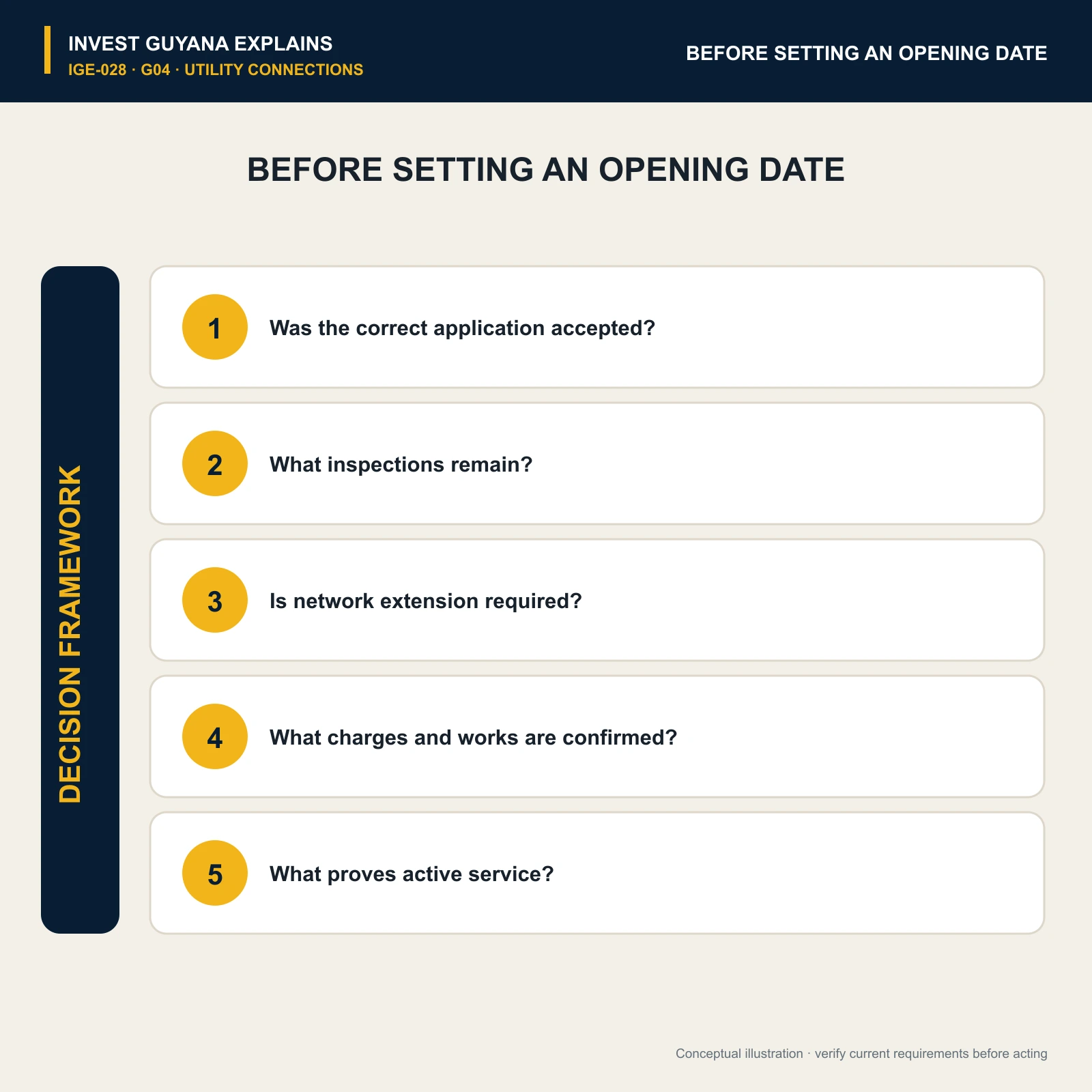
- Has the correct residential or business application been accepted?
- What inspections or surveys remain outstanding?
- Is network capacity or extension work required?
- What charges, customer works and provider works have been confirmed?
- What evidence establishes installation and active service?
The investor takeaway
A utility application is the beginning of a service pathway, not the connection itself.
Inspection, technical readiness, approval, network work, customer payment, installation and activation can be separate stages. Projects that recognise those stages early are less likely to finish the building before they finish the infrastructure plan.
The next article in Invest Guyana Explains will examine tenancy, showing why a contractual right to possess and use premises is valuable but is not the same as registered ownership.