
The buyer asked for one “property tax figure”
The investment committee wanted a simple number for the acquisition model.
“What is the property tax?” one director asked.
The adviser responded with three questions: Was the director asking about the owner’s national property-tax position, local rates attached to the property, or taxes and charges triggered by the transfer?
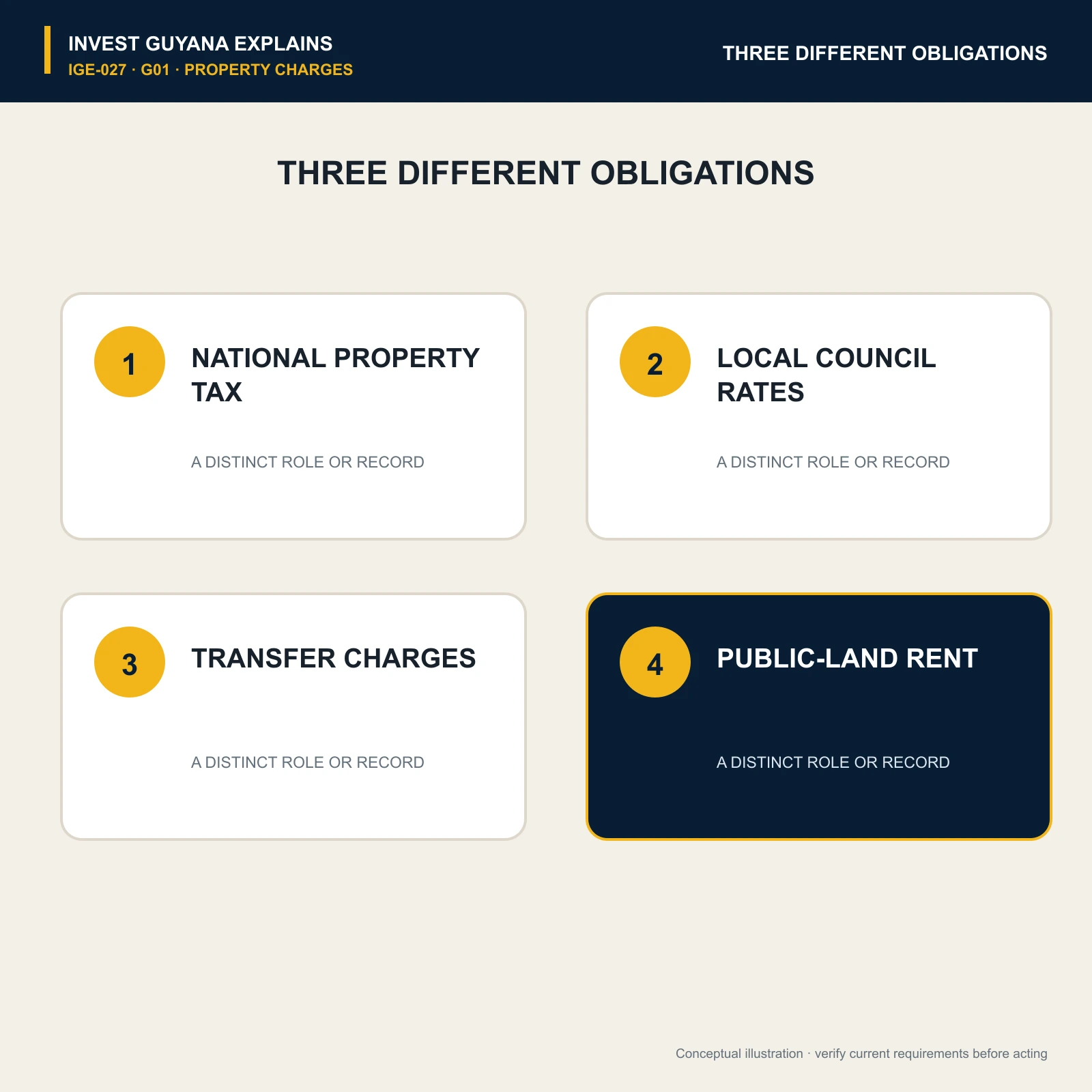
The phrase “property tax” is often used as if it describes every government amount connected with real estate. It does not.
National property tax looks at a taxpayer’s position
Guyana’s national property-tax system concerns the taxpayer’s taxable property position under the governing rules. The analysis is not simply a bill attached to one address in the same way as a local rate.
The taxpayer, valuation basis, exemptions, liabilities and filing position have to be considered under the applicable national tax framework.
An investor should therefore avoid copying the previous owner’s payment and assuming it predicts the buyer’s national position.
Council rates are a local-government obligation
Municipalities and local democratic organs can impose rates connected to property within their jurisdictions.
The responsible local authority, valuation record, period and outstanding balance matter. A rates receipt can be important transaction evidence, but it does not settle every national tax or registry question.
The same property may therefore appear in a local rates system and in other national or registry processes without those records becoming interchangeable.
A transfer can trigger separate amounts
Buying, selling, gifting, inheriting or otherwise transferring an interest can create transaction-specific taxes, duties, fees or process charges.
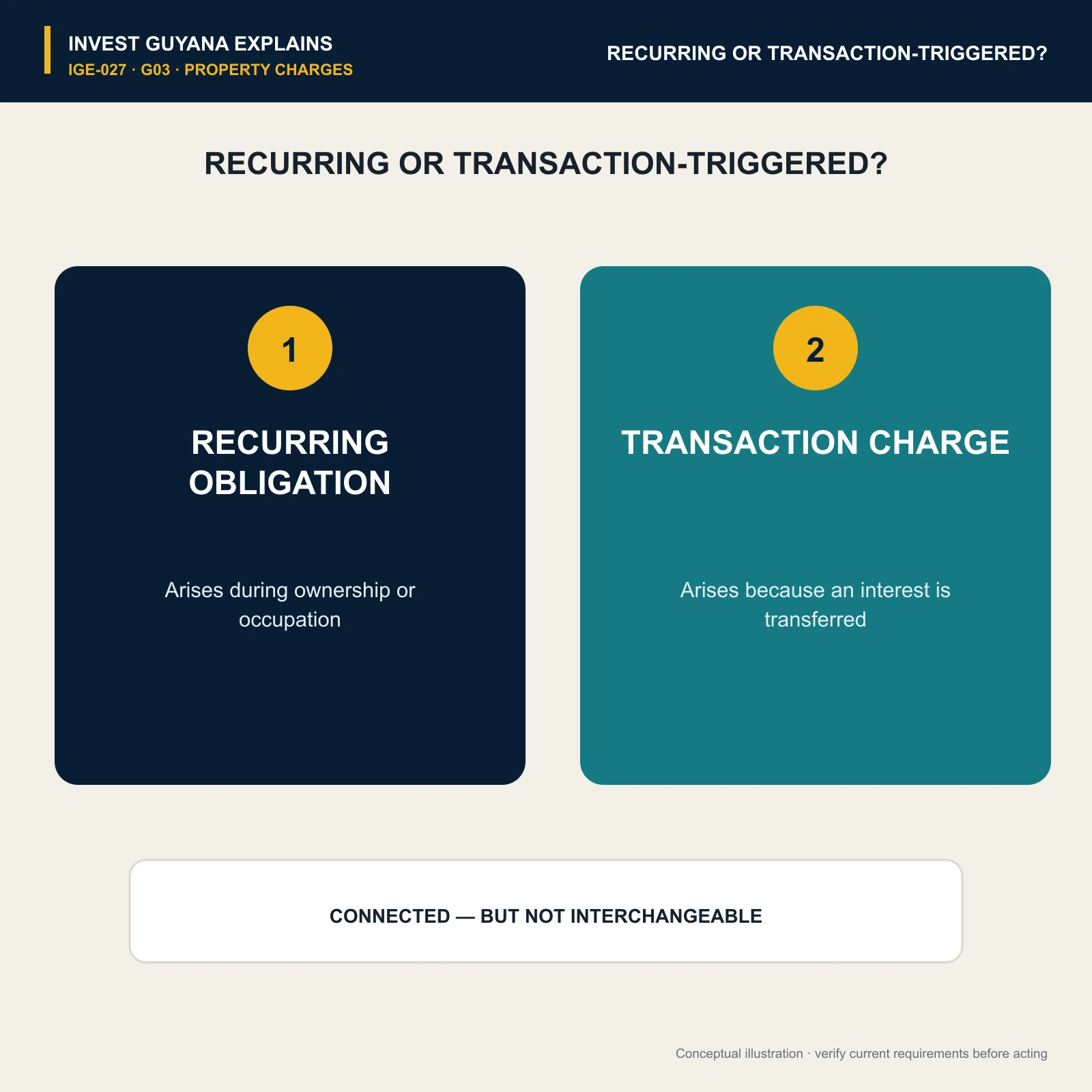
Those amounts arise because of the transaction and the applicable legal route. They are different from recurring rates and from a taxpayer’s broader property-tax position.
The registry system also matters. A deeds-side transport, land-registry transfer, public-land lease transfer and estate transfer do not necessarily use the same instruments or charges.
Official materials describe some property-related charges differently across contexts, making a universal fee calculator unreliable. Estate-related charges in particular should be confirmed for the actual transaction rather than reduced to one all-purpose percentage.
“Paid up” must be tied to a specific obligation and date
A statement that a property is “paid up” can be misleading if it does not identify what was paid.
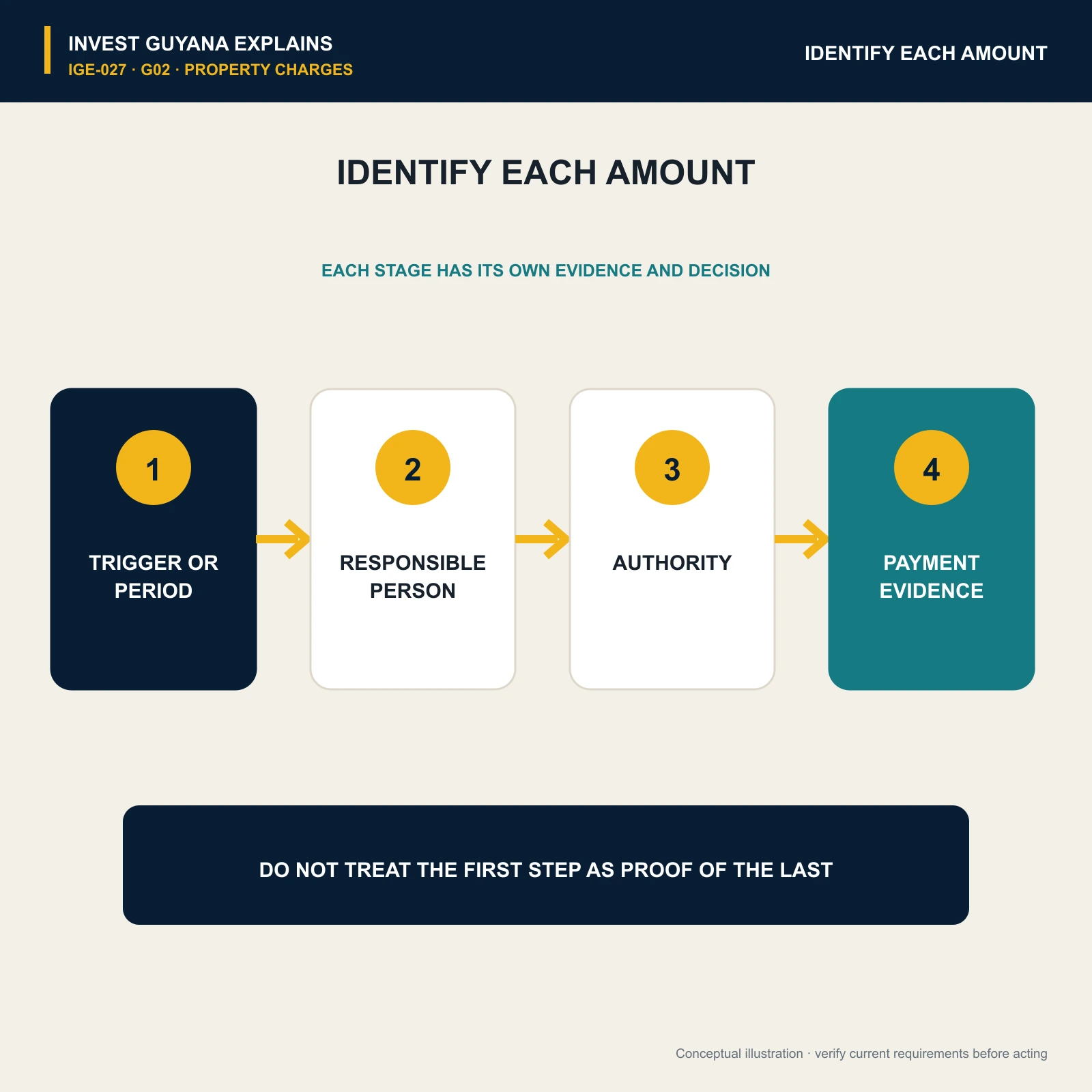
The evidence should answer:
- which authority received the payment;
- what tax, rate, rent, duty or fee it covered;
- which period or transaction it applied to;
- whose obligation was settled;
- whether later amounts have arisen.
A local rates receipt is not proof that a GL&SC lease rent is current. A property-tax return is not proof that transfer charges were paid. A registry receipt is not a clearance from every other authority.
Why the distinction matters in a purchase model
The costs fall into different time horizons.
Transaction charges affect acquisition or disposal. Council rates and lease rents may recur during ownership or occupation. National property tax may depend on the taxpayer’s wider circumstances. Professional, survey, planning, utility and financing costs belong to still other categories.
Combining everything into one “property tax” line hides both timing and risk. A more useful model identifies each obligation, trigger, authority and evidence.
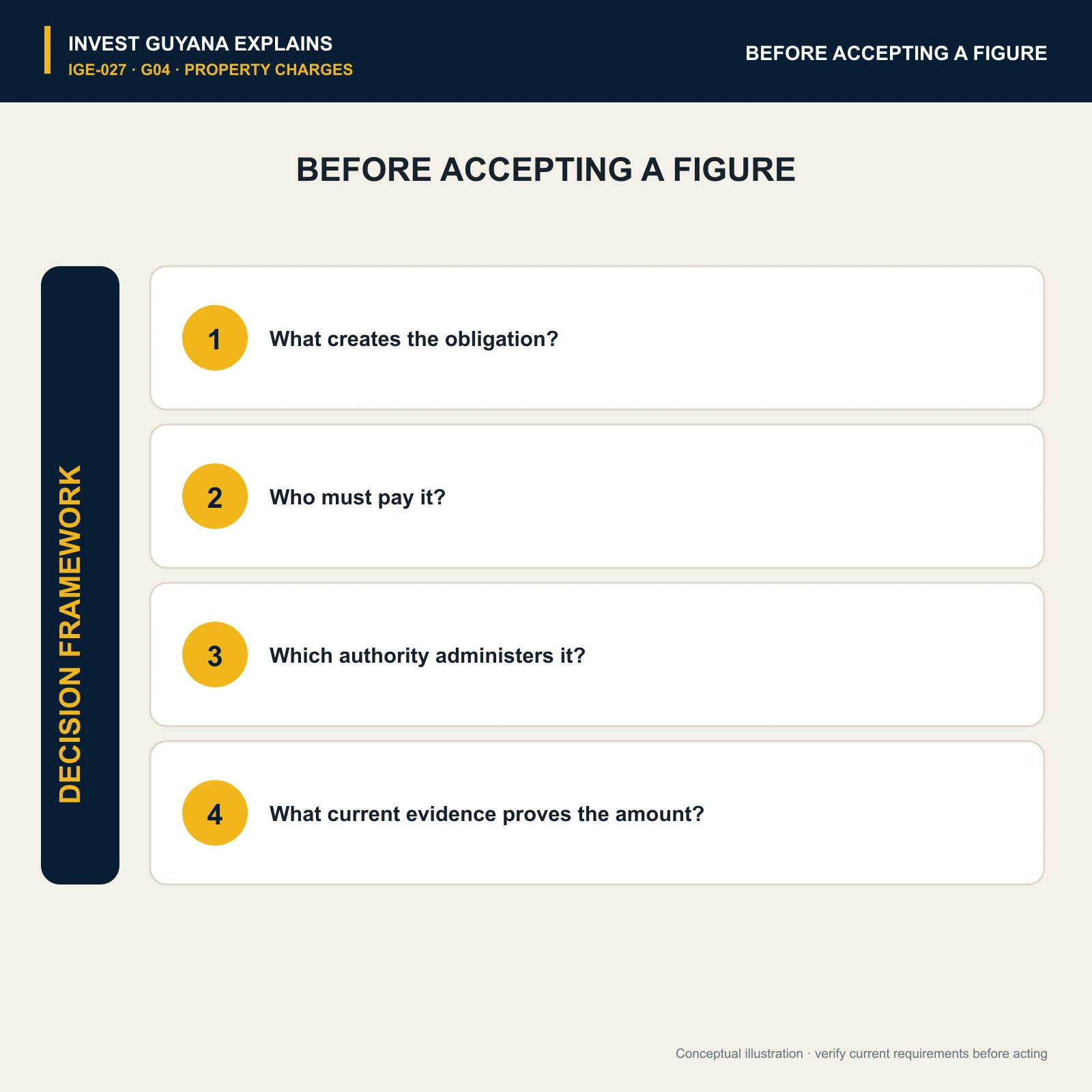
Four questions for every property-related charge
- What event or period creates the obligation?
- Who is legally responsible for it?
- Which authority administers it?
- What current official evidence establishes the amount and confirms payment?
The investor takeaway
Property tax, council rates and transaction charges are not three names for one bill.
They can concern different taxpayers, authorities, valuation bases, periods and triggers. The safest approach is to identify each obligation separately and verify it using current parcel- and transaction-specific evidence.
The next article in Invest Guyana Explains will move from property charges to infrastructure, explaining why a utility application, approval, installation and active connection are separate stages.