
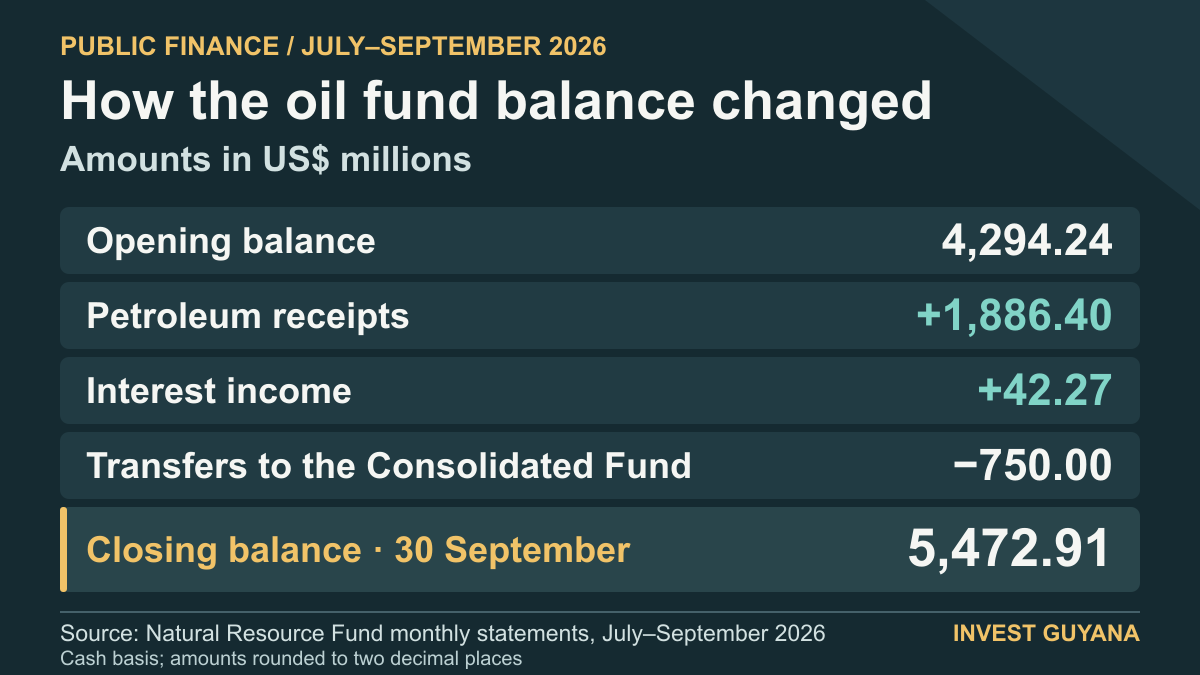
Graphic: Invest Guyana News, based on Natural Resource Fund monthly statements.
Guyana’s Natural Resource Fund closed September at US$5.47 billion, up US$1.18 billion from the end of June. Finance Minister Ashni Singh tabled the third-quarter petroleum receipts notification in the National Assembly on 11 November, according to the Ministry of Finance release carried by the Department of Public Information.
The tabling is the new development; the money was received between 1 July and 30 September. The ministry said the notice was presented under section 33(2) of the Natural Resource Fund Act 2021. The disclosure does not announce a new withdrawal or spending allocation.
How the fund moved from US$4.29B to US$5.47B
The July, August and September monthly statements show US$1.886 billion in petroleum receipts and US$42.3 million in interest. After US$750 million in transfers to the Consolidated Fund, the balance rose by about 27% over the quarter. The Bank of Guyana’s September statement confirms the closing balance and records it entirely in cash and cash equivalents.
| Movement | US$ million |
|---|---|
| Opening balance | 4,294.24 |
| Petroleum receipts | +1,886.40 |
| Interest income | +42.27 |
| Transfers out | −750.00 |
| Closing balance | 5,472.91 |
Transfers out went to the Consolidated Fund. Invest Guyana calculations from the monthly cash-basis statements, using the reported rate of G$208.50 per US$1. Amounts rounded to two decimal places.
Profit oil accounted for roughly 94% of petroleum receipts, or US$1.775 billion. Royalties accounted for US$111.2 million, with a further receipt of about US$100,000. These amounts measure cash received during the quarter. They do not measure the value of all oil produced, the realised price per barrel or the government’s share of every barrel produced in that period. Interest earned on the fund is also separate from petroleum receipts.
What the balance means for businesses
A larger fund balance strengthens Guyana’s financial buffer, but it is not the same as a larger budget for any specific project. A transfer into the Consolidated Fund is another step: it moves money into the government’s main account, without showing which contracts have been awarded or paid.
The IMF’s 2026 review of Guyana makes another distinction: the Natural Resource Fund provides a buffer but is not counted as part of the central bank’s gross international reserves. IMF staff also recommended preserving the withdrawal ceilings and balancing near-term investment needs with longer-term savings.
For contractors and suppliers planning around public investment, the useful sequence is to follow approved budget allocations, tender notices, contract awards and actual payment terms. A road project can appear in a budget before the work is tendered; an award can be announced before its contractor receives the first payment. Those milestones tell a business more about likely orders and working-capital needs than the fund balance alone.
Invest Guyana reported a US$4.1 billion April balance. The September figure updates that picture. The next disclosures to watch are monthly receipts and transfers, and the budget decisions that determine how much of the fund can be drawn and where public spending is directed.