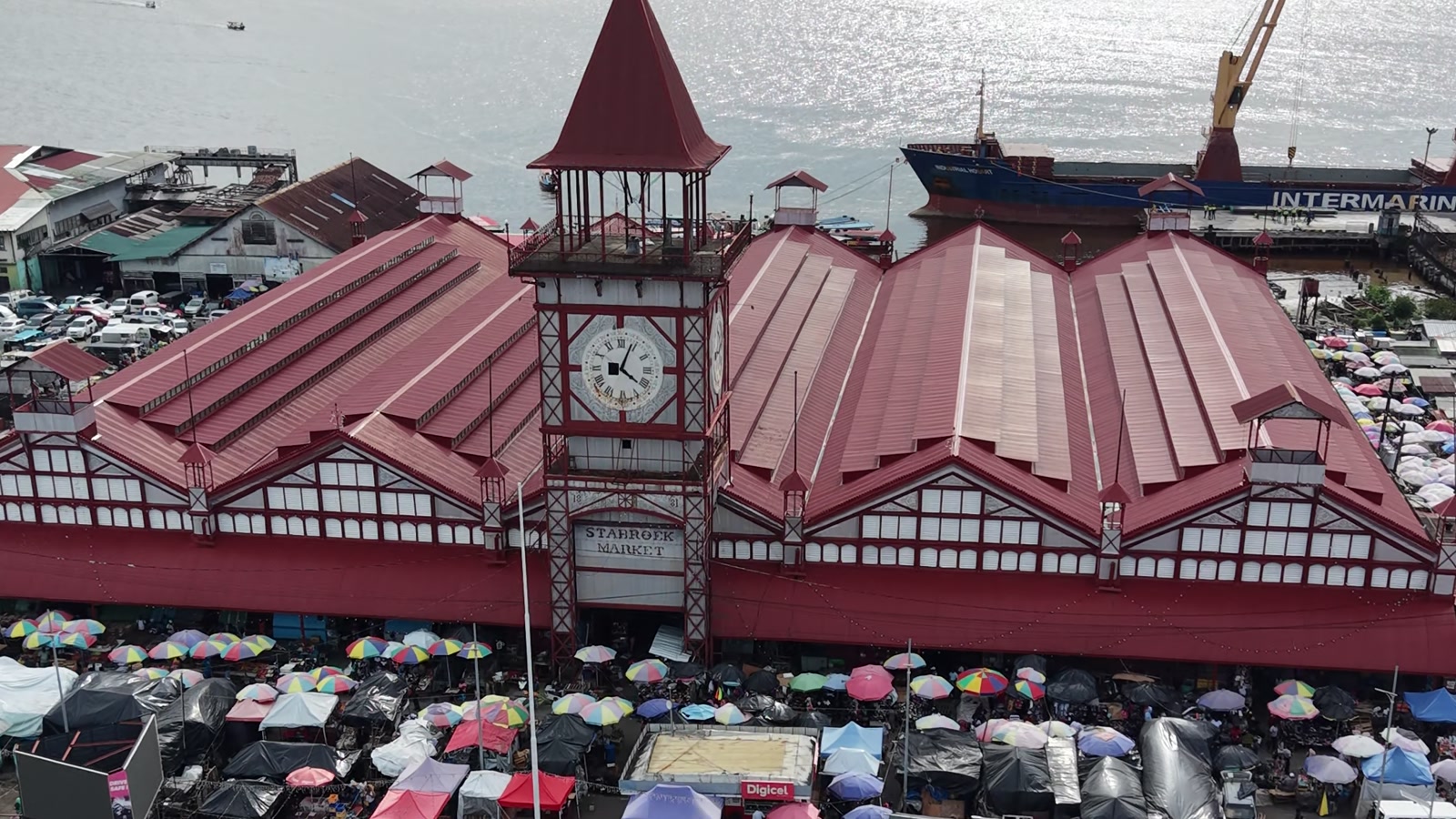
Stabroek Market, Georgetown (file photo).
President Irfaan Ali has proposed combining orders from public institutions such as schools and hospitals into a single purchasing system for eggs, chicken, beef and mutton. The plan announced on 13 November would also let wholesalers and retailers opt in. A farmer would still be free to sell elsewhere, and a shop could keep buying from its usual suppliers.
For a poultry producer, the attraction is knowing how much a buyer needs and when, before paying for feed and chicks. The government says it intends to publish order volumes, delivery periods and quality standards in advance. That could give farmers and processors a firmer basis for planning production, especially if buyers commit to purchasing over more than one production cycle. But Friday’s statement did not set out the first order volumes, who will administer the system, or how a business can apply to supply it.
Who carries the cost between delivery and payment?
Larger orders can create a cash problem as well as a sales opportunity. A supplier may have to pay for feed, processing, refrigeration and transport before receiving a dollar from the buyer. The President said the system would set payment deadlines and track whether they are met. He also said the government was discussing a 30-day line of credit at 4% with banks. No participating lender, rate basis, fee schedule or borrowing terms were announced. Producers cannot yet treat that facility as available or use the headline rate to calculate their financing costs.
The plan would take account of production costs, quality and reliability rather than awarding business solely on the lowest price on a given day. Even so, smaller producers will need to see whether orders are divided into lots they can supply, or whether they will need to bid together or work through a processor. The proposal names farmers, cooperatives, processors and consortiums as potential suppliers, but it does not set out how contracts would be allocated.
Chicken and cattle run on different timelines
The Finance Ministry’s mid-year report gives a sense of why one timetable would not suit all four products. In the first half of 2026, poultry meat output rose 20.9% and egg production 11%, while beef and mutton output fell. Those are production figures, not volumes available to the pilot. The President said chicken and egg production could expand relatively quickly with reliable inputs and buyers. Beef and mutton would need longer lead times and investment in areas such as animal health, slaughter capacity, cold storage and transport.
Orders from several buyers may give a processor or haulier enough volume to justify a better route or fuller truck. Whether that lowers shelf prices depends on how the savings are shared. The proposal calls for participating retailers to agree to maximum mark-ups, display programme prices and pass lower wholesale costs on to customers. A proposed price dashboard would let shoppers see whether that is happening. The announcement did not give a start date, a list of outlets or new shelf prices.
For suppliers deciding whether to add a poultry house, a cold room or a delivery vehicle, the next useful documents are the first order schedule and contract terms. Those should show how much the buyer is prepared to take, what standards the supplier must meet and when the money comes in.