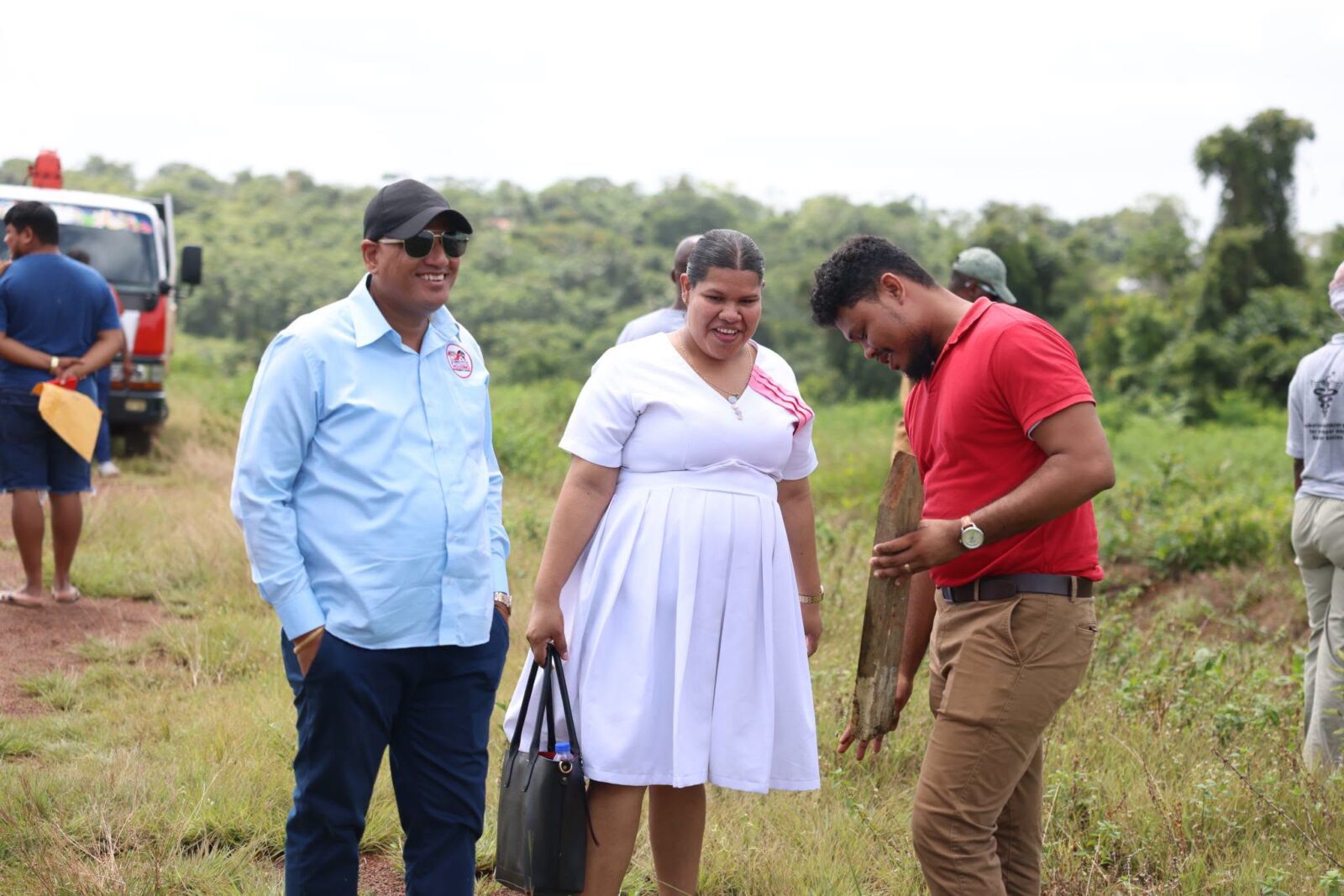
Housing Minister Collin Croal joins a family during a land-identification exercise (Source: Department of Public Information).
More than 8,500 land titles have been processed during the government’s first year in office, according to a September 3 update from the Department of Public Information.
Housing Minister Collin Croal said the total is expected to pass 10,000 as the government continues a land-regularisation programme covering more than 21 areas.
The programme targets communities where people have occupied land for years or decades without formal ownership. Regularisation is intended to provide greater tenure security and allow property to be transferred legally to family members.
The official release says the process involves surveying, planning and legal procedures. It does not provide a regional breakdown of the 8,500 titles or distinguish among titles prepared, signed, registered, issued or collected. The figure should therefore be reported specifically as titles processed.
Regularisation and new allocations are different tracks
Regularising an occupied community is not the same as allocating a new house lot. Regularisation deals with the legal and planning work required to formalise eligible occupation, while allocation involves identifying and assigning land for new housing development.
That distinction matters when assessing progress. A processed title may improve the legal position of an existing occupant, but it does not represent a newly created house lot or a completed home.
The September 3 announcement also does not state how many households remain in the regularisation pipeline, how many areas have completed every statutory stage or how long individual applicants should expect the process to take.
The housing ministry said it is working with relevant agencies on land transfers and community regularisation, including locations where residents occupy reserves or other unregulated land. Those cases may require different planning, infrastructure and legal responses.
Wider housing expansion
An August 30 official update said the government intends to accelerate land acquisition and housing development from September. The ministry said it had identified housing backlogs by region and was working to secure and prepare additional land.
Allocation exercises were expected in Regions Two, Three and Four, while exercises had already been conducted in Regions Five, Six and Ten. Where state agencies do not hold enough suitable land, the ministry said additional acquisitions would be pursued.
Region Four remains the largest pressure point. The August update placed its pending house-lot applications above 50,000 and identified Silica City, Yarrowkabra, St Cuthbert’s Mission and Long Creek among areas being considered or developed along the Soesdyke–Linden Highway.
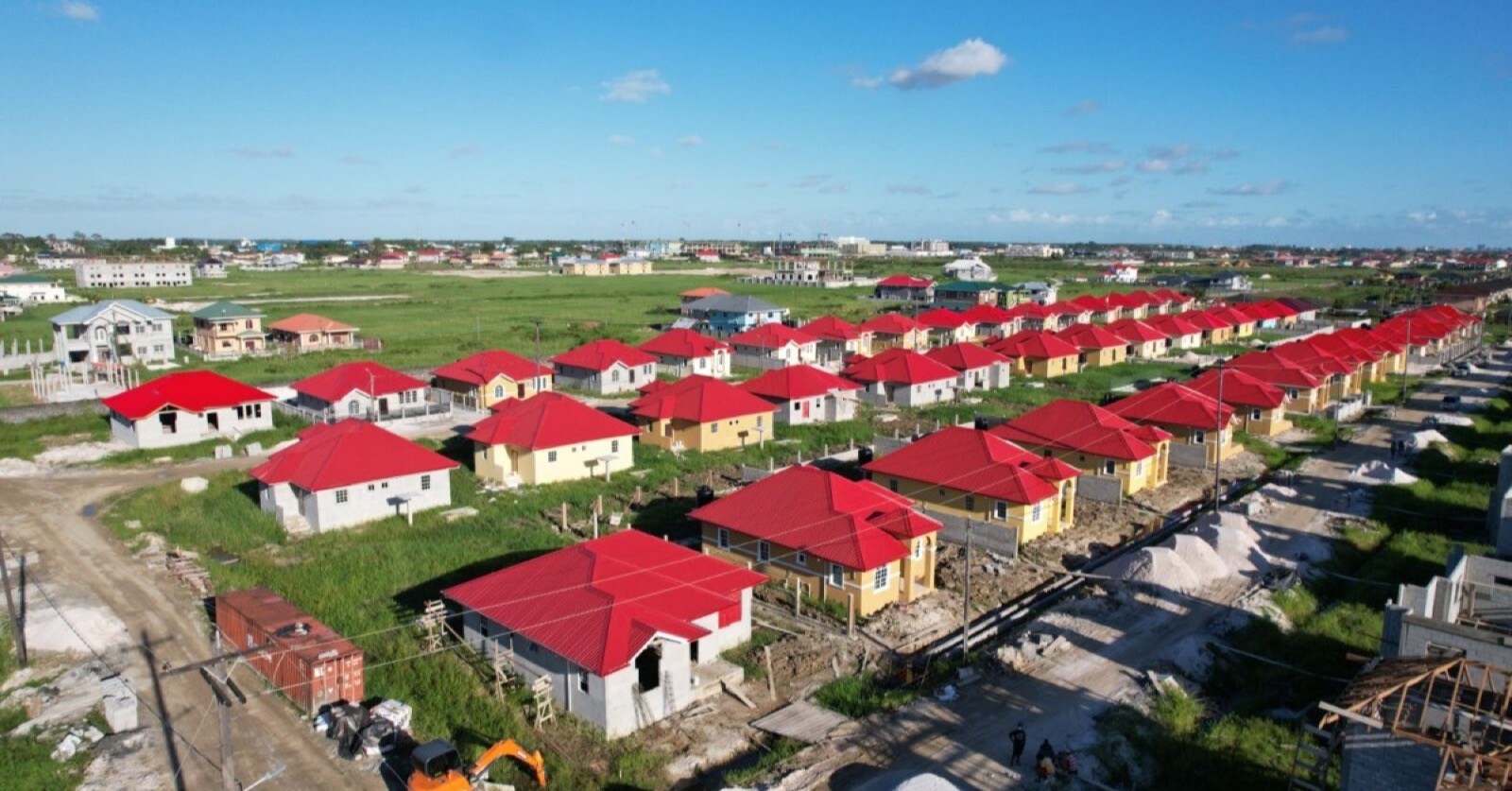
The wider programme includes a government target to construct 40,000 homes over five years. That target is separate from the number of titles processed and should not be used to imply that 8,500 homes have been constructed.
Why formal title matters
A registered property interest can affect a household’s ability to transfer, inherit, sell, lease or use property in a financing transaction. The practical effect depends on the form of tenure, the terms of the title and whether the property is free of disputes or other restrictions.
Applicants should not treat an allocation letter, payment receipt, survey activity or notification that a title is being processed as interchangeable with final registered ownership. Each document represents a different stage and may confer different rights.
The latest release does not specify the mix of transports, certificates of title, leases or other instruments included in the 8,500 figure. Readers should verify the legal effect of the document issued in their particular case.
What to monitor next
The next useful public update would provide a regional breakdown, identify the regularisation areas, distinguish titles processed from titles delivered and report how many cases remain outstanding.
Investors and homeowners should also watch for published development plans, infrastructure schedules and allocation exercises associated with newly acquired land. Roads, drainage, electricity, water and transport access will affect whether new housing areas become fully usable communities.
Until more detailed data is released, the confirmed position is that more than 8,500 titles have been processed, the government expects to exceed 10,000 and regularisation work is targeting more than 21 areas.