
Understanding the forces shaping one of the country’s fastest-growing markets
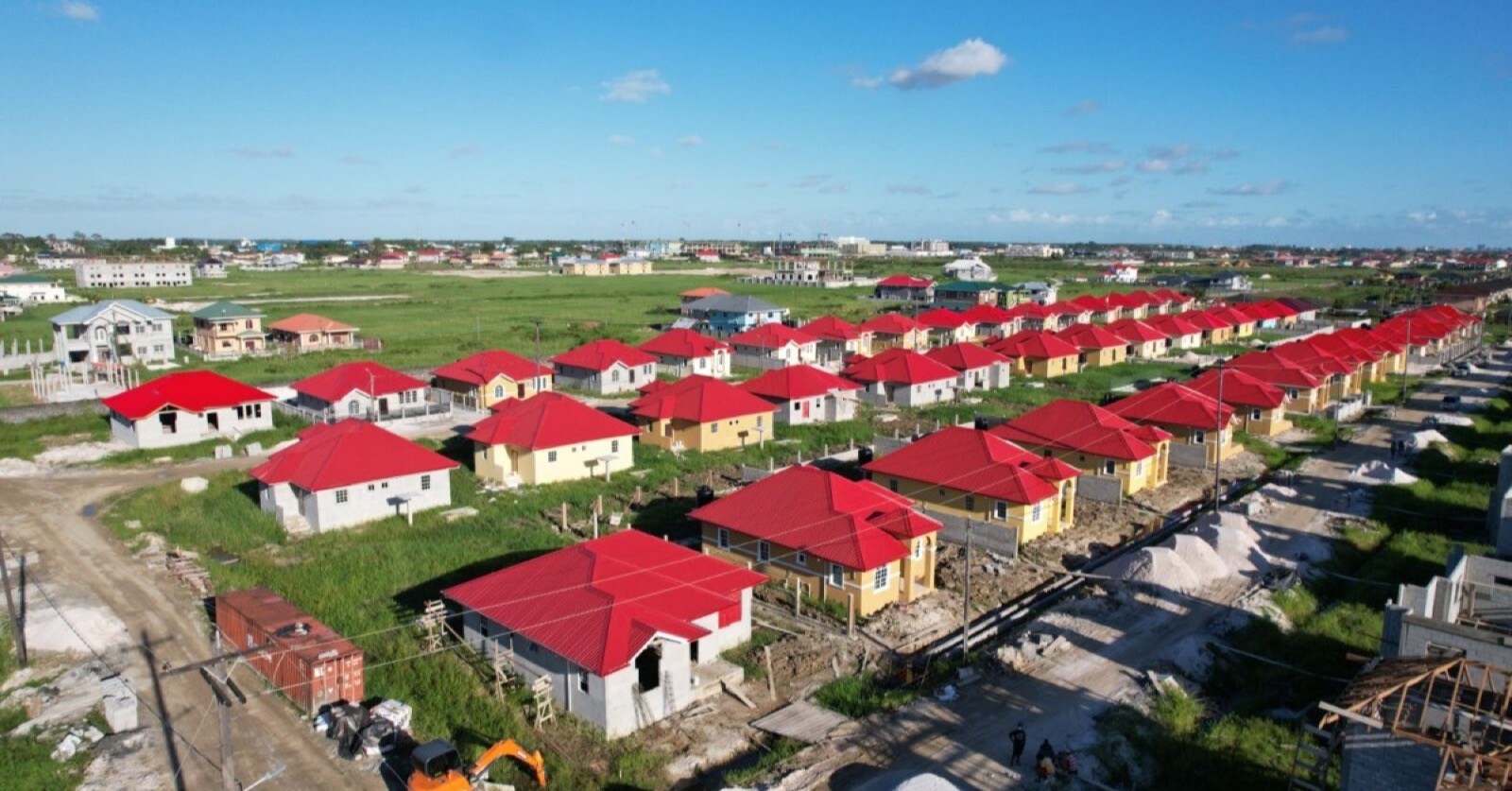
Guyana’s residential property market has undergone a remarkable transformation in recent years. New housing schemes continue to expand, major highways are improving connectivity, private developers are launching large-scale developments, and demand for homes continues to grow.
At the same time, many Guyanese have noticed that purchasing or building a home has become more expensive.
While rising land prices often receive the most attention, they represent only one part of a much larger picture.
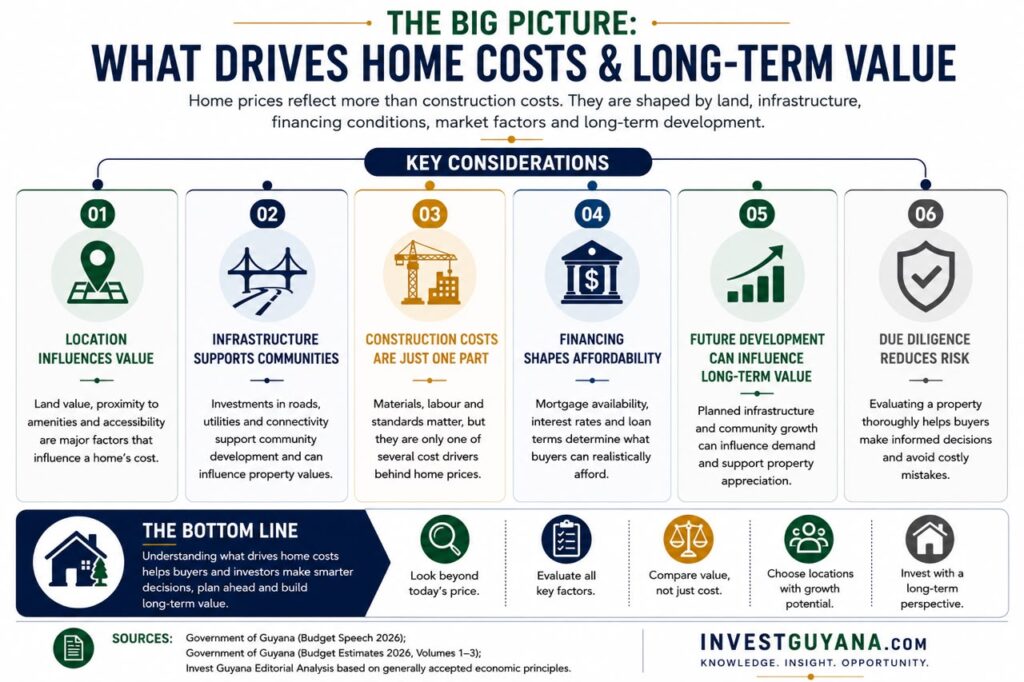
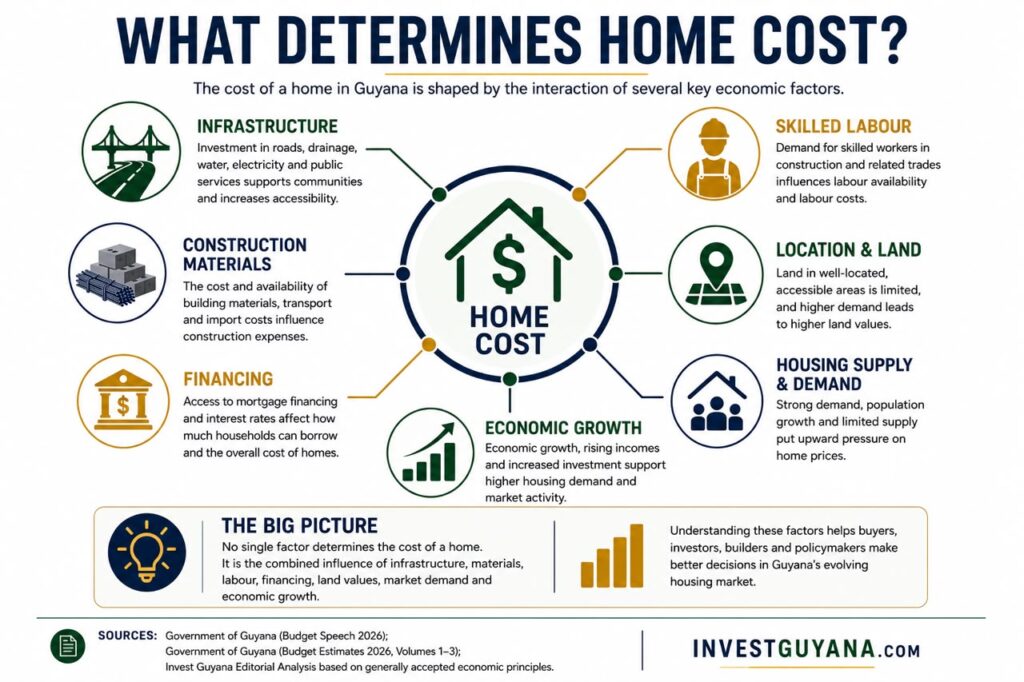
The cost of a home is influenced by several factors, including land, infrastructure, construction materials, labour, financing and market demand. Understanding how these factors interact provides a clearer picture of why housing costs have increased as Guyana continues its rapid economic development.
Government Investment Is Supporting Housing Development
Housing development involves much more than constructing individual homes.
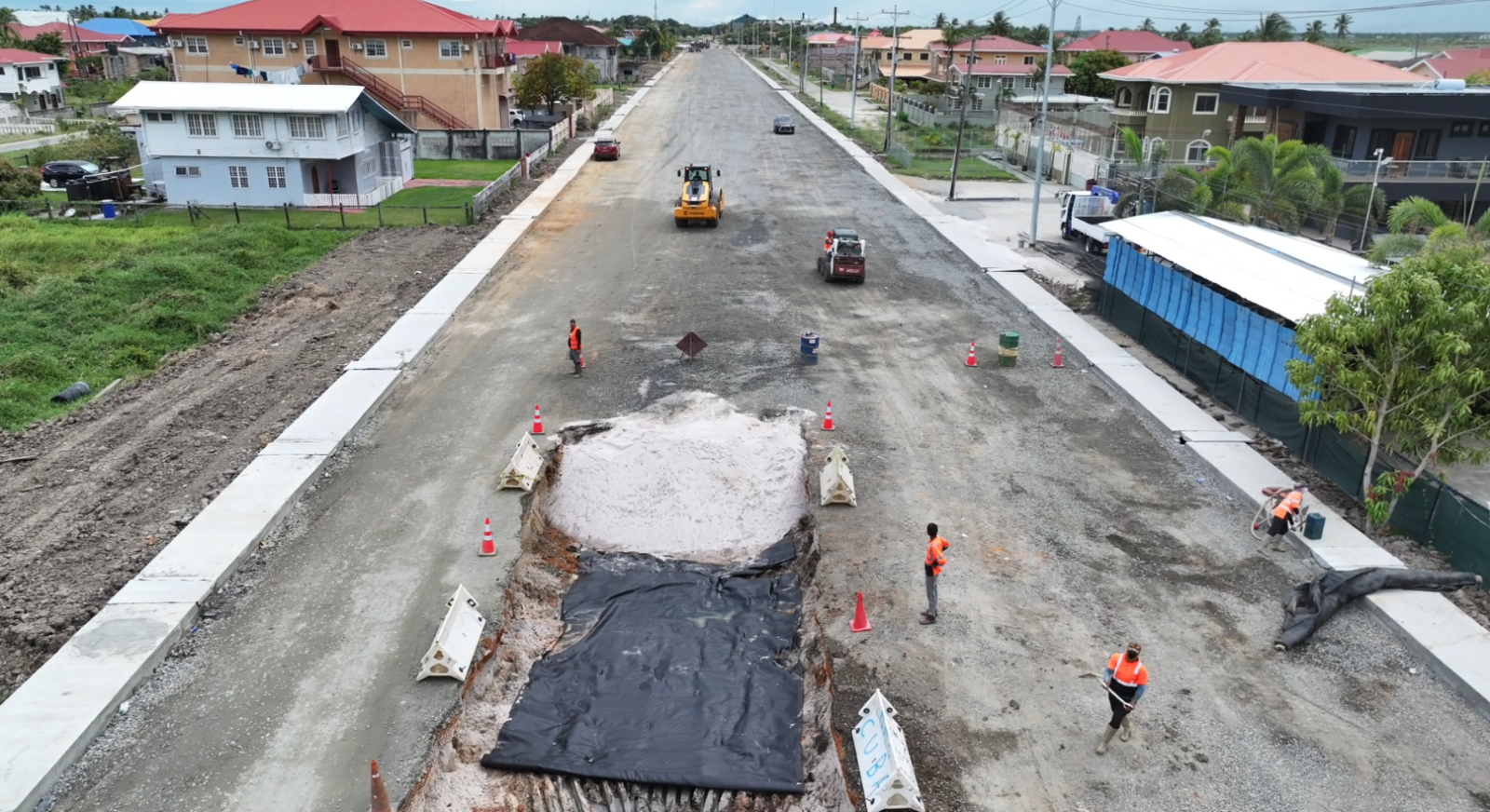
Before residential communities can grow, substantial investment is required in roads, bridges, drainage systems, water networks, electricity, public utilities and other essential infrastructure.
Budget 2026 continues this national investment strategy through significant allocations for housing, transportation and supporting infrastructure.
The Ministry of Housing received approximately G$159.4 billion in Budget 2026, with approximately G$157.5 billion allocated to the Housing Development Programme.
These investments are intended to expand serviced communities, improve accessibility and support long-term residential development across the country.
Infrastructure Can Influence Property Values
Infrastructure is one of the most important long-term drivers of residential development.
Roads, bridges, drainage systems, electricity, water services, schools and commercial facilities improve accessibility and enhance the attractiveness of communities.
As Guyana’s transportation network expands, communities that were once relatively isolated are becoming better connected to employment centres, business districts and essential public services.
Improved infrastructure alone does not determine property values. However, it is one of several factors that can influence residential demand, investment decisions and long-term market activity.
Construction Costs Continue to Influence Housing Prices
The final cost of a home reflects much more than the value of the land.
Developers must account for construction materials, skilled labour, engineering, surveying, utilities, financing, professional services and regulatory approvals before a home reaches the market.
Many construction materials used in Guyana continue to be imported, exposing builders to fluctuations in international commodity prices, freight costs, exchange rates and global supply chains.
As these costs change, they can influence the overall cost of residential construction.
A Growing Economy Increases Demand for Skilled Labour
Guyana’s rapidly expanding economy continues to increase demand for skilled workers across multiple industries.
Construction companies often compete for electricians, plumbers, masons, carpenters, heavy equipment operators and other specialised trades.
Higher wages reflect growing employment opportunities and rising demand for skilled professionals. At the same time, labour represents a significant component of residential construction costs and can influence the final selling price of new homes.
According to Budget 2026, Guyana’s construction sector is estimated to have expanded by 31 percent during 2025, reflecting continued public and private investment throughout the country.
Financing Influences Housing Demand
Access to financing is another important factor shaping the residential market.
When more households are able to obtain mortgages, more families can purchase or construct homes, increasing activity within the housing market.
Budget 2026 reports that real estate mortgage lending expanded by an estimated 19 percent during 2025, supported by Government policies promoting home ownership.
Greater access to financing creates opportunities for home ownership while also contributing to stronger housing demand.
Not Every Home Serves the Same Market
Guyana’s residential market has become increasingly diverse.
Today’s market includes:
- Government housing schemes
- Entry-level private homes
- Middle-income residential developments
- Townhouses
- Condominiums
- Gated communities
- Luxury residences
Each serves different buyers and offers varying combinations of location, infrastructure, construction quality, amenities and investment potential.
Comparing prices across these different market segments without considering these differences can create a misleading impression of the overall housing market.
Challenges for Buyers and Developers
Rapid economic growth creates tremendous opportunities, but it also presents challenges.
Developers continue to manage construction costs, labour availability, financing expenses, imported materials and project timelines while responding to increasing market demand.
Homebuyers must also carefully evaluate affordability, financing options, construction quality, location, infrastructure and long-term value when making purchasing decisions.
As Guyana’s housing market continues to mature, informed decision-making becomes increasingly important for both buyers and investors.
Invest Guyana Insight
There is no single reason why homes have become more expensive.
Housing prices reflect the combined influence of infrastructure investment, land values, construction materials, labour, financing, professional services and market demand.
Understanding these underlying drivers provides a more complete picture of Guyana’s residential market than focusing solely on asking prices.
Investor Takeaway
Guyana’s housing market continues to evolve alongside one of the world’s fastest-growing economies.
For prospective homeowners and investors, evaluating residential property requires looking beyond today’s purchase price.
Location, infrastructure, accessibility, construction quality, financing conditions and long-term community development are all important factors that can influence the future performance of residential property.
As Guyana continues expanding its housing stock and infrastructure network, understanding these market fundamentals can help buyers and investors make more informed long-term decisions.
⸻
Key Takeaways
- Housing prices are influenced by multiple economic factors rather than land values alone.
- Government investment in infrastructure supports the development of serviced communities.
- Construction materials, labour and financing all contribute to the overall cost of building a home.
- Increased mortgage lending has supported greater home ownership while contributing to housing market activity.
- Understanding market fundamentals is essential for making informed residential investment decisions.
Sources:
- Government of Guyana, Budget Speech 2026
- Government of Guyana, Budget Estimates 2026, Volumes 1–3