
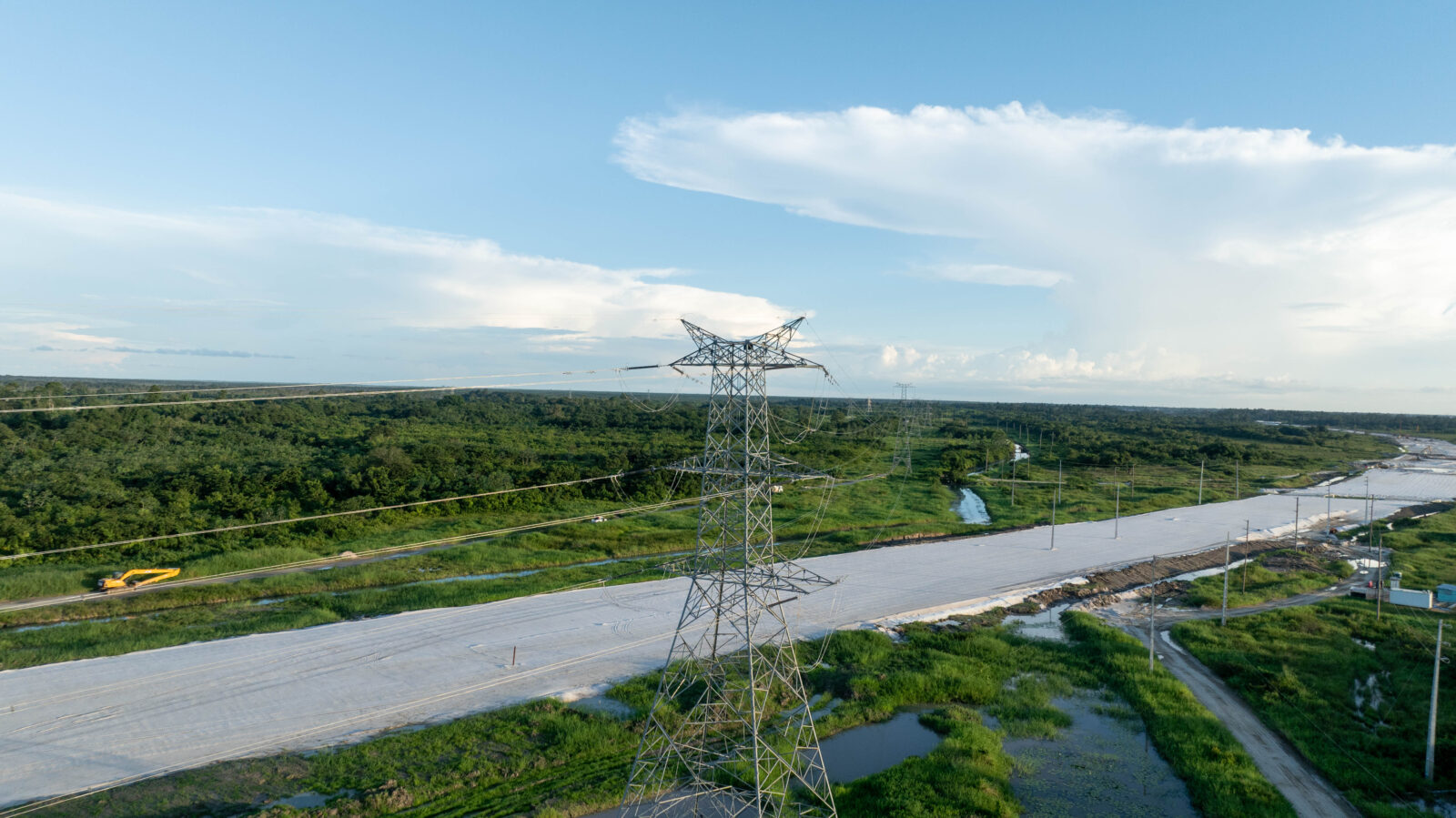
Existing electrical infrastructure on Guyana’s East Coast provides context for the proposed replacement route (Photo: Department of Public Information, Guyana).
A highway expansion on the East Coast Demerara has an electrical prerequisite. The government says a new 69-kilovolt transmission line is being built through the backlands from Ogle to Good Hope so that an existing line along the Plaisance Railway Embankment can eventually be removed. The target for the replacement line is the end of November, according to a 21 September Department of Public Information report.
The existing infrastructure cannot simply be taken down to create road space. Minister of Public Utilities and Aviation Deodat Indar said it carries bulk electricity along the corridor and helps connect the Demerara and Berbice systems. Guyana Power and Light’s director of power generation and delivery similarly described the existing line as important to the interconnected system while its replacement is being completed.
The sequence behind the road project
The plan is to establish an alternative transmission route before moving the current infrastructure out of the road corridor. That sequence is the story’s operational core. If the old line were removed before the new one could perform its role, the interruption could affect electricity supply far beyond the immediate highway worksite.
Indar said POWERCHINA had been contracted to construct the replacement line. The reported scope includes clearing and preparing a route through wetland and marshland, constructing foundations, placing steel monopoles and stringing conductors. Those conditions help explain why a transmission relocation is a substantial civil and electrical project rather than a quick movement of roadside poles.
The minister’s end-November date is a target, not evidence of energisation or a confirmed date for road widening. The DPI account does not supply a commissioning certificate, a detailed road-construction schedule or an outage guarantee. It also refers to a separate 230kV development; that must not be combined with the 69kV replacement line in a single project total.
Why the link matters to business
The works show how transport and power investments can depend on one another. A wider road may improve movement along the East Coast, but construction in a corridor carrying critical electrical infrastructure must be staged around network continuity. For logistics operators, contractors and businesses planning facilities along the route, both timelines matter.
The useful milestone is not merely that poles are installed. The replacement line must be completed, tested and brought into service before the existing route can be removed safely. Only then can the road project rely on the released corridor without treating the current electrical link as expendable.
Until those steps are independently confirmed, the strongest statement is that the government is advancing a replacement line to enable the highway expansion. The project’s promised benefit depends on delivery of the new route and an orderly transfer of power, followed by the road works themselves.