The American Chamber of Commerce of Guyana is urging the country to pursue a bilateral tax treaty with the United States, establish a sovereign credit rating and develop longer-term government bonds to strengthen investor confidence and deepen commercial relations between the two countries.
AMCHAM Guyana Executive Director Richard Leo said those measures, along with improvements to public procurement and permitting systems, could help move the Guyana–US business relationship towards a more strategic and long-term partnership.
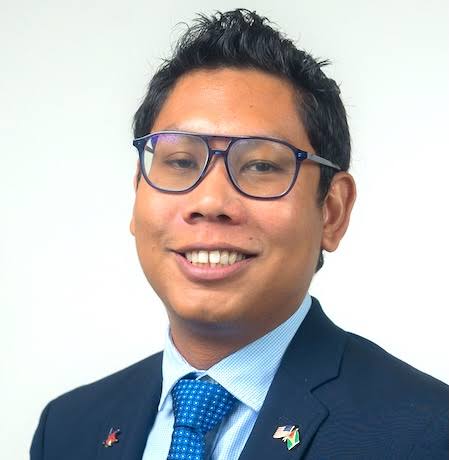
Speaking on the Energy Perspectives podcast, Leo said Guyana has performed well in attracting American businesses and maintaining their interest as the economy expands.
He noted that US companies securing major contracts in Guyana, including under the Gas-to-Energy project, have helped demonstrate that international businesses can compete and operate successfully in the local market.
However, Leo said further reforms would provide investors with greater predictability and confidence.
“Looking at things in the future, like having a bilateral tax treaty, those are all things which I believe would complement and grow or inspire confidence,” he said.
A bilateral tax treaty would establish clearer rules governing how income earned across Guyana and the United States is taxed. Such agreements are generally intended to reduce the possibility of businesses and investors being taxed twice on the same income while providing greater certainty for cross-border transactions.
Leo said international investors have also expressed interest in Guyana creating a yield curve by issuing government bonds with a wider range of maturity periods.
“Another thing that I’ve heard from many international investors is Guyana potentially having a yield curve, or basically issuing bonds more than from one year to three to five years, as well as having a credit rating, which continues to be an ask from several international banks,” he said.
A sovereign credit rating would provide lenders and investors with an independent assessment of the country’s creditworthiness. Meanwhile, government bonds with different maturity periods could help establish benchmark interest rates and provide more options for institutions seeking to make longer-term investments in Guyana.
Leo also identified the modernisation of public procurement and a more coordinated approach to permitting as important areas for improvement.
US investment expanding beyond oil
AMCHAM Guyana, established in 2018, serves as a bridge between businesses in Guyana and the United States. Its work includes facilitating trade, promoting investment, supporting market entry, advocating on issues affecting American firms and preparing local companies to partner with US businesses.
Leo said the organisation has a commercial services agreement with the US Department of Commerce and assists American firms with market research, business matchmaking and entry into Guyana.
Although petroleum remains a major source of international interest, he said US companies are also exploring opportunities in healthcare, agriculture, infrastructure and other non-oil industries.
“We’ve seen more companies coming in that are not in the oil and gas,” Leo said, identifying healthcare and agriculture among the sectors showing progress.
Infrastructure has recorded some of the strongest activity because of the scale of construction and development taking place across Georgetown and other parts of the country, he added.
AMCHAM is also examining opportunities in Guyana’s emerging downstream sector, which Leo expects to develop further over the next five years.
He said increased US investment in agriculture and manufacturing could follow the completion of the Gas-to-Energy project, which is expected to support industrial development through improved access to electricity and natural gas.
Local companies urged to improve governance
Leo also encouraged Guyanese companies seeking American partners to strengthen their corporate governance, clearly identify what they bring to a partnership and become familiar with US business practices.
Local companies may be required to sign non-disclosure agreements and comply with other legal and regulatory requirements when working with American firms. Consulting US attorneys or certified public accountants could therefore help businesses understand their obligations before entering partnerships, he said.
Leo advised companies to conduct their own due diligence by meeting prospective partners, speaking with their legal representatives, visiting their facilities and assessing whether both organisations share compatible values.
Family-owned and small businesses should also consider corporate structures that allow them to manage risk more effectively when entering joint ventures, he said.
Leo added that larger Guyanese companies that have already entered the US market should help smaller firms understand the process and prepare for similar opportunities.
He said a successful long-term relationship would involve the United States remaining a major trading partner while Guyanese businesses increasingly invest in the US and use it as a gateway to other markets.
Guyana must also continue monitoring regional competition as Suriname and Trinidad and Tobago strengthen their energy industries, Leo said. Improving the speed and efficiency of local processes will be essential to maintaining the country’s competitiveness as investors consider opportunities across the region.