When people begin searching for property, the first number they usually focus on is the purchase price.
It is an understandable starting point. Whether buying a family home, commercial property or a parcel of land, price appears to offer the simplest way to compare one opportunity with another.
Experienced investors, however, usually begin somewhere else. They begin with location.
Not because the cheapest property is always a bargain or because the most expensive one is automatically the best investment, but because location quietly influences almost every factor that determines long-term value. Understanding that relationship is one of the most important lessons in real estate.
A Property Is More Than the Land It Sits On
Two neighbouring properties may appear remarkably similar. They may have comparable land sizes, similar buildings and even the same asking price.
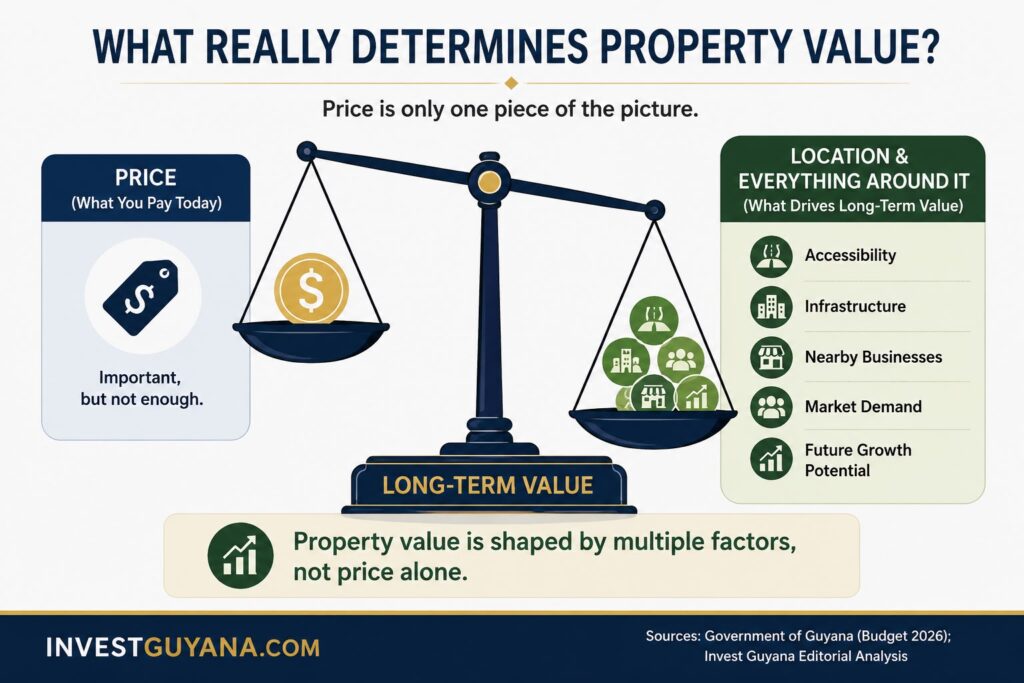
Yet the neighbourhood surrounding them often determines which one becomes the better long-term investment. Accessibility, surrounding development, public infrastructure, nearby businesses and future growth all influence how buyers and investors evaluate a location.
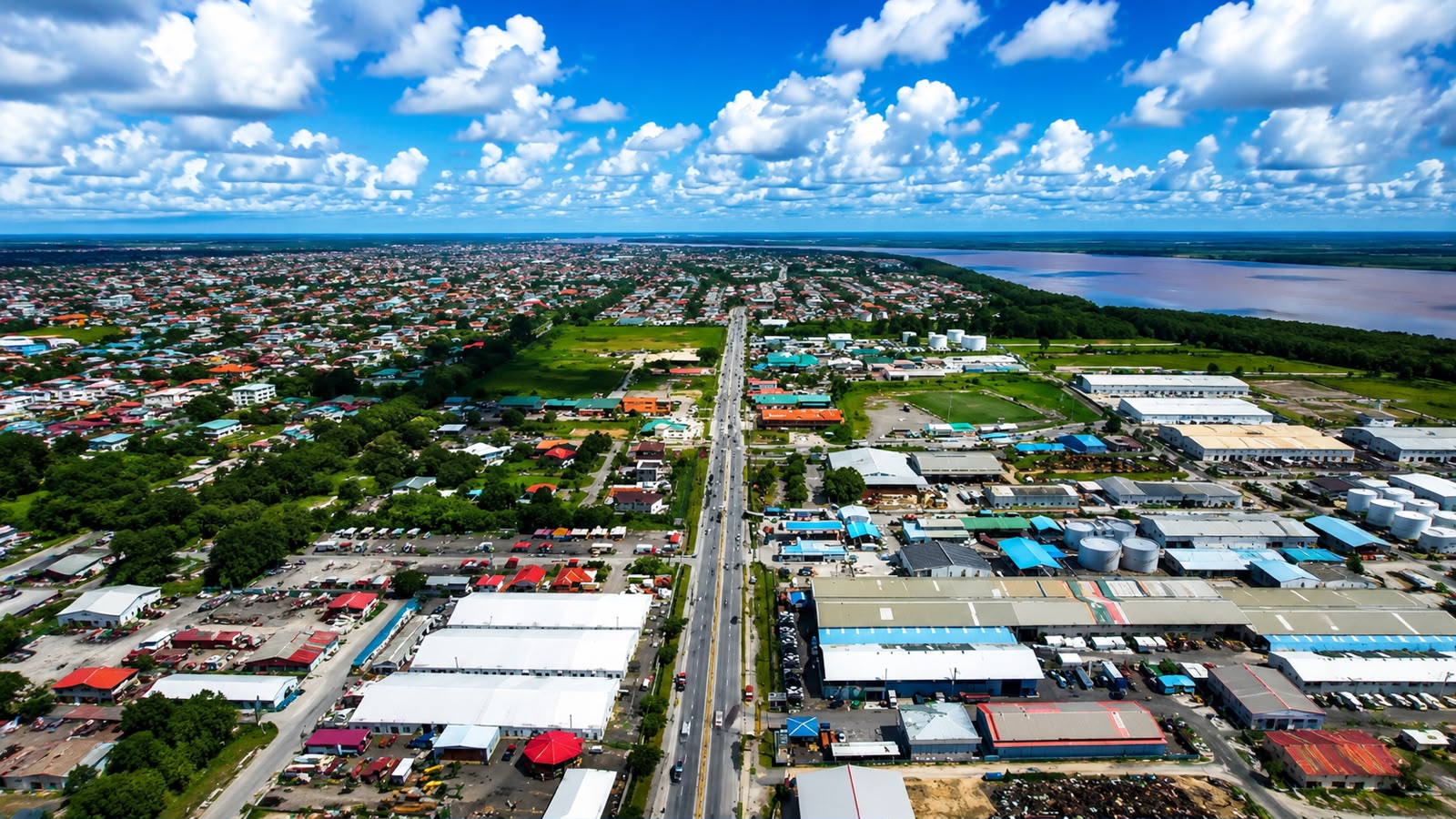
A property close to major transportation routes may appeal to businesses seeking efficient logistics. A residential community near schools, healthcare facilities and shopping centres may attract stronger long-term demand than an otherwise similar location farther away. The land itself may be similar. Its surroundings rarely are.
Infrastructure Quietly Shapes Property Values

Roads, bridges, drainage systems, utilities and reliable public services do more than improve convenience. They influence how people live, where businesses invest and how communities develop over time.
Improved accessibility can reduce travel times, encourage commercial activity and attract additional private investment. As businesses establish themselves, surrounding areas often become more attractive for residential development, creating new demand for housing and services. This does not mean every infrastructure project automatically increases property values. Rather, infrastructure creates conditions that can influence long-term demand.
Businesses Follow People. People Follow Opportunity.
Property markets rarely evolve in isolation. As employment opportunities expand, residential demand often follows.
Growing communities then create demand for supermarkets, restaurants, healthcare providers, schools and professional services. Those businesses, in turn, make the community even more attractive to future residents.
Over time, this relationship can transform a quiet neighbourhood into a thriving commercial and residential centre. For investors, recognising where that cycle is beginning can be just as valuable as recognising where it has already occurred.
Looking Beyond Today’s Price
Experienced property buyers often ask different questions from first-time purchasers. Price remains important. It is simply not the only consideration.
Successful investors also examine accessibility, existing infrastructure, planned public investment, nearby commercial activity and the long-term direction of the surrounding community. None of these factors guarantees future appreciation.
Together, however, they provide a much clearer picture of a property’s long-term potential than price alone.
The Bigger Picture
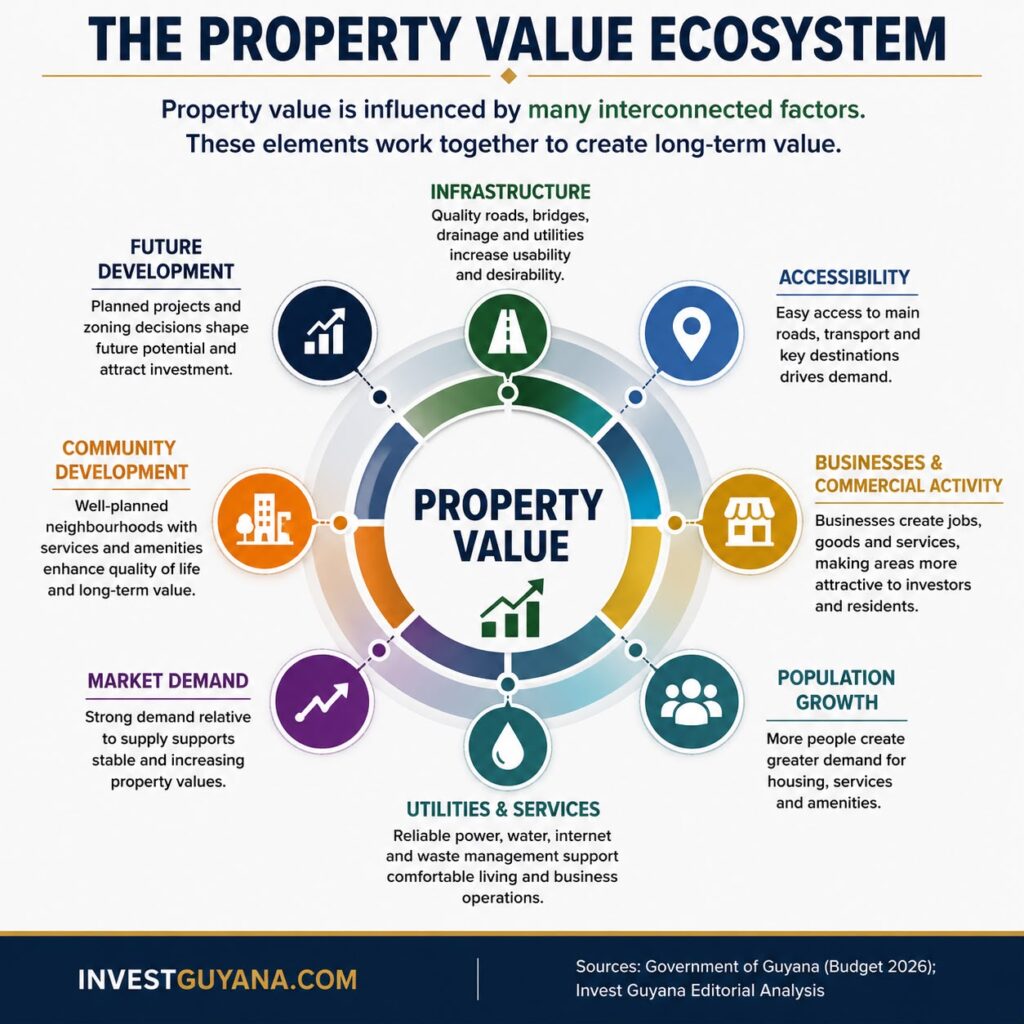
Property values are influenced by much more than construction costs or land size. They reflect the interaction between infrastructure, accessibility, market demand, surrounding development and the confidence buyers have in an area’s future.
That helps explain why two properties that appear similar today can perform very differently over time. For investors, understanding these relationships is often far more valuable than simply negotiating the lowest purchase price.
Investor Perspective
Buying property is not simply about acquiring land. It is about choosing a location within an evolving economic landscape. The first price you pay is recorded on the agreement of sale.
The value that matters most is often created by everything that happens after you become the owner. The most successful real estate investments are rarely defined by purchasing the cheapest property.
They are usually defined by choosing the right location, at the right time, with a clear understanding of how communities, businesses and infrastructure grow together.