Photo: Department of Public Information, Guyana.
A trip to Georgetown for specialist care involves more than reaching a hospital. For a family travelling from the hinterland, the questions can begin well before an appointment: where to stay, how a relative will manage the journey and what happens if the visit takes longer than expected. A place to sleep is one part of that arrangement, but rarely the whole of it.
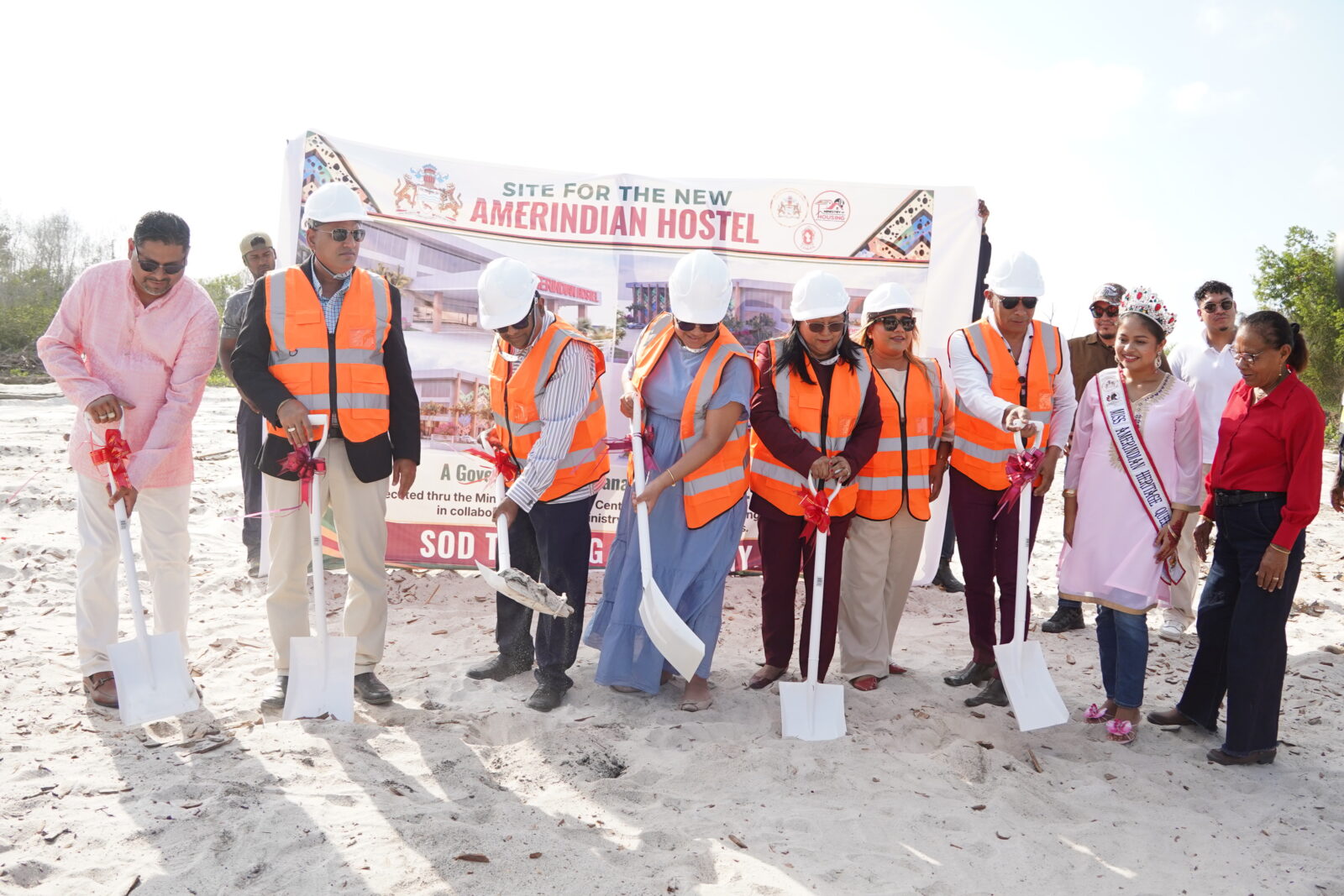
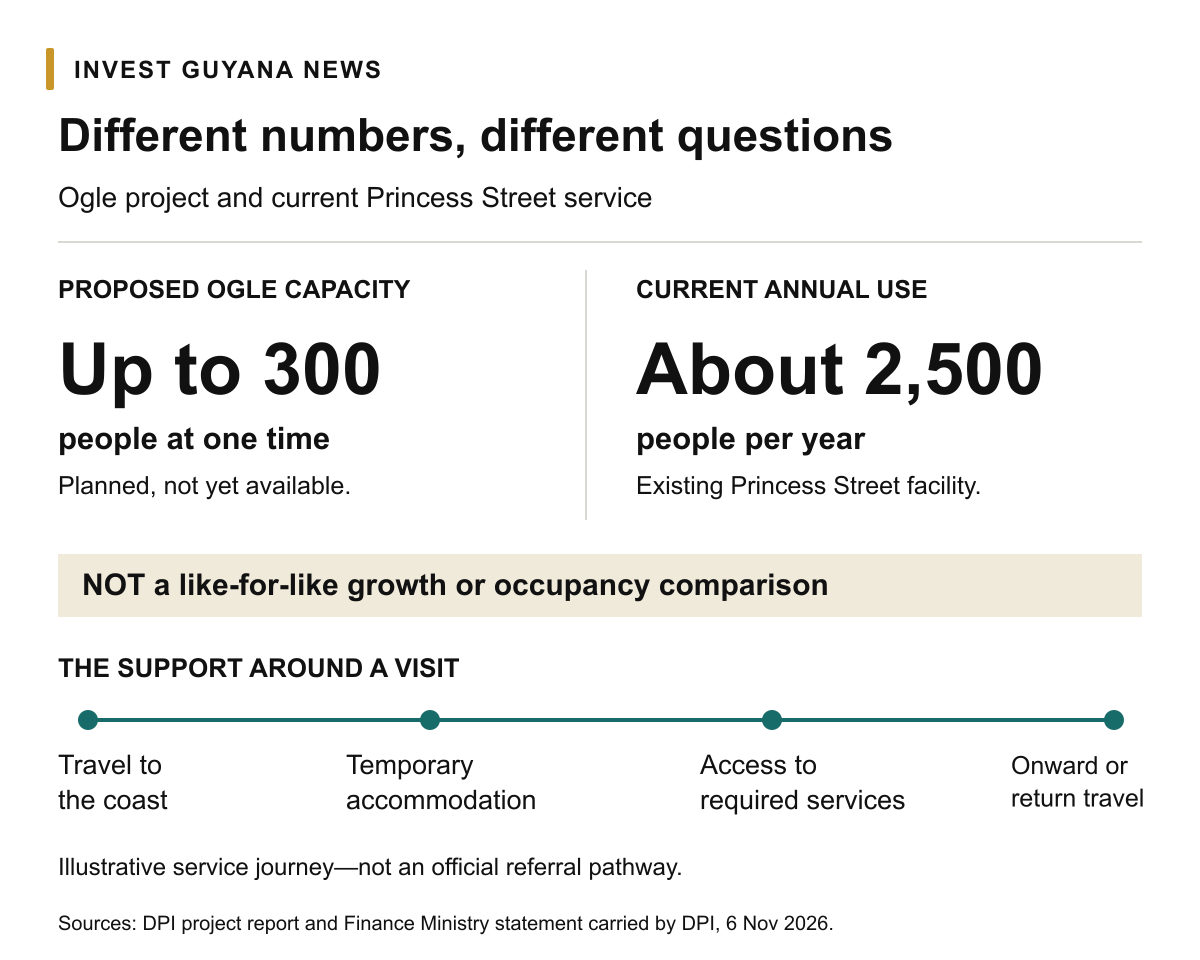
The government broke ground on 6 November for a G$1.16 billion Amerindian hostel at Ogle, East Coast Demerara, intended for Indigenous and hinterland residents accessing coastal services. The planned three-storey building is designed for up to 300 people at one time. That is proposed capacity, not accommodation already available to use.
The project brings the less visible infrastructure around a medical visit into focus. A consultation may be the reason for travelling, while accommodation and practical support help determine whether a family can manage the trip and return home afterwards.
The journey includes more than the fare
For a household, the cost of being away is not confined to a ticket. Meals, local journeys and the demands placed on an accompanying relative can all matter. There may also be work, children or other responsibilities to organise at home.
An appointment that changes or requires another visit can alter several arrangements at once. Someone has to establish whether accommodation remains available, how transport will be organised and when the family can reasonably travel back. A system that treats each of those matters separately may leave the visitor doing the coordination while also dealing with illness.
The existing public support described by the Ministry of Amerindian Affairs already extends beyond lodging. DPI reports meals, hospital transport, welfare assistance and return passage, with help also available to accompanying relatives. This is a service model whose usefulness depends on the parts working together.
A larger building could provide more room for that work. Its practical value, however, will depend on whether residents can move through the service without repeatedly having to explain their circumstances or resolve avoidable gaps between agencies. The relevant test is the experience of the person making the journey, not simply the appearance of the new premises.
Temporary accommodation has a distinct role
The word hostel can suggest a tourism business to an international reader. This project serves a different purpose: temporary accommodation connected with essential services for Indigenous and hinterland residents. It should be understood within that public-service role, rather than through hotel rates, visitor spending or commercial occupancy assumptions.
It is also important to distinguish accommodation from clinical care. A safe place to stay can support a medical journey without replacing the hospital or the professional decisions made there. Clear responsibilities between the hostel, referring services and receiving facility would help families understand whom to contact when their needs change.
That distinction has practical implications for operating arrangements. Staff need an understandable route for referring a concern, while residents need information they can use. A person unfamiliar with the city should not have to work out an organisation chart to find out how to get to an appointment or raise a welfare issue.
Privacy deserves attention in that process. Sharing enough information to coordinate a journey is different from circulating a person's medical circumstances unnecessarily. Good service design should make the next step clear while respecting the individual using the service.
Capacity and annual use answer different questions
The Finance Ministry's statement on the groundbreaking, also published on 6 November, places the project alongside the existing Princess Street hostel, built in 1972. It reports roughly 2,500 people served annually by the current facility and repeats the new building's planned simultaneous capacity.
Those measures cannot establish a percentage increase in accommodation. An annual service count covers people passing through over a period; capacity describes how many can be accommodated together. DPI separately records 257 people accommodated in the previous month, another period-based measure rather than a count of beds.
Length of stay makes the distinction meaningful. A place used by someone for a short visit can become available to another person quickly. A resident who needs to remain longer occupies it for more time. Two facilities with the same nominal capacity can therefore support different numbers of visits over a year.
Useful future reporting would explain the demand the new premises are meeting. Stays, their duration, requests that could not be accommodated and the needs of accompanying relatives could give managers a clearer picture than a single headline total. For public-investment scrutiny, those measures would help connect expenditure with the service people actually receive.
Construction must lead into a working service
DPI identifies the Central Housing and Planning Authority as the project delivery agency and Mac Junior International as the awarded contractor. The announcement concerns construction beginning; it is not an invitation for a new bidder to obtain the main contract.
Delivering the building and preparing it for residents are related but different tasks. Finishing rooms does not, by itself, establish that staffing, equipment, meal provision, transport and maintenance are ready. Those arrangements need to be considered early enough to support a sensible transition from construction into use.
For a facility serving people away from home, the everyday details matter. Residents need reliable information about arrival, belongings, meals and onward travel. Staff need workable arrangements for cleaning, repairs and communicating with families.
The public value of capital expenditure also depends on recurrent resources. A building can be new while the services inside it are stretched. Assessing the project over its useful life means considering the ability to staff and maintain it, not treating the construction payment as the end of the investment.
The measure of success is a more manageable visit
For Guyana's wider development programme, the hostel illustrates a connection that large infrastructure headlines can overlook. Access to a service involves both the destination and the arrangements that allow someone to reach it, remain nearby when necessary and return home. Investment in one part can be less useful if another part leaves the journey difficult to manage.
The next stage at Ogle is delivery. Subsequent reporting should follow construction progress and, eventually, the opening and operation of the facility, keeping those milestones separate. The groundbreaking establishes the start of a project; it does not yet establish the results residents will experience.
For the family considering that journey to Georgetown, the meaningful outcome would be straightforward: less uncertainty around where to stay, whom to ask for help and how to get home. A well-run hostel can form part of that support. The test will be how the completed facility works for the people who need it.