Photo: Caribbean Community (CARICOM) Secretariat
CARICOM has identified agriculture and agribusiness, renewable energy, tourism, transport, logistics and communications as priority areas for investment, arguing that the region needs capital that expands production rather than simply increasing the volume of financial inflows.
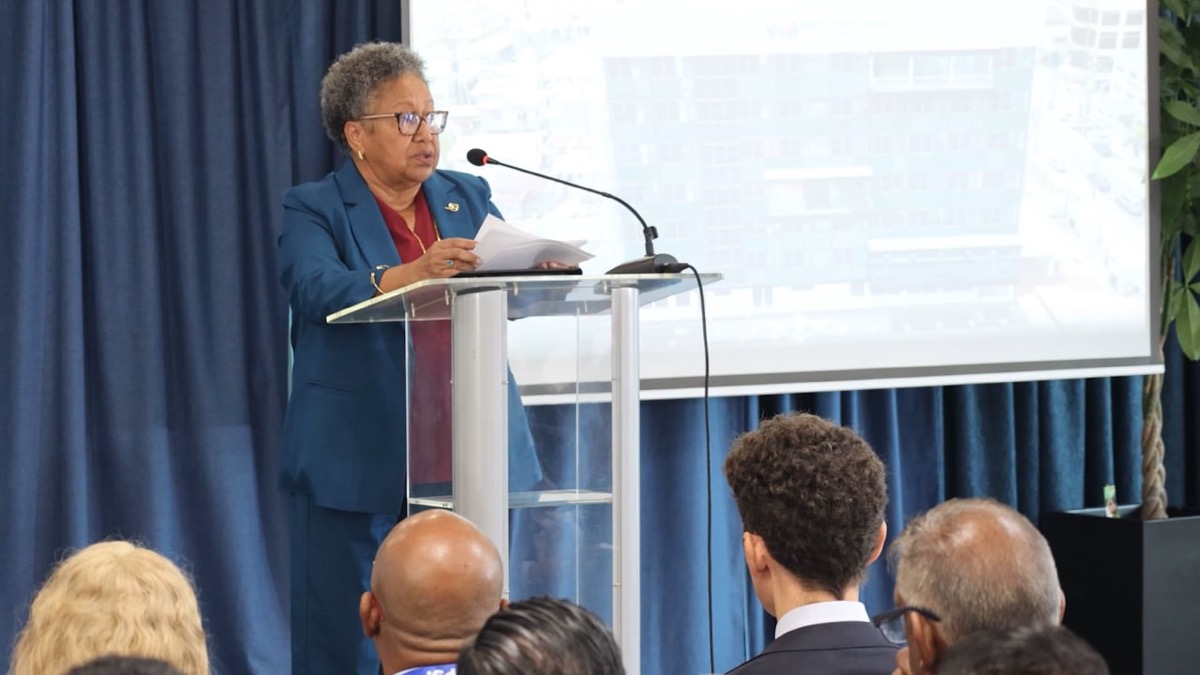
CARICOM Secretary-General Dr Carla Barnett outlined the opportunities at the opening of the World Trade Centre Georgetown International Trade and Investment Conference on October 19. In her official address, she urged investors to examine the Caribbean through both national markets and the wider regional platform created through economic integration.
The address paired an investment invitation with a clear diagnosis. Caribbean exports have grown, but much of that expansion has come from energy and commodities. Tourism remains the dominant source of services exports, while foreign direct investment is concentrated in a limited group of sectors and greenfield investment remains comparatively weak.
For businesses considering Guyana and the wider Caribbean, the message is that opportunity exists—but the most valuable projects will be those that build productive capacity, connect markets and reduce persistent operating constraints.
A stronger trade position, with concentration risk
CARICOM’s merchandise exports increased from approximately US$19 billion to more than US$39 billion over the past five years, according to the Secretary-General. Imports reached approximately US$42.9 billion in 2025, while the merchandise trade deficit narrowed to an estimated US$2.6 billion in 2024 and US$3.3 billion in 2025 from levels exceeding US$10 billion in earlier years.
That is a material improvement, but its composition matters. Energy and commodity exports account for much of the growth, while member states continue to import a substantial share of their food, manufactured products and capital equipment.
The services economy presents a similar concentration. CARICOM recorded a services trade surplus of more than US$7.2 billion in 2024, but travel represented approximately 82 per cent of total services exports.
Tourism is therefore both a major regional strength and a source of exposure. Investment that links tourism to agriculture, culture, transport, technology and local services can retain more value within Caribbean economies while reducing dependence on a narrow set of imported inputs.
Where CARICOM sees the opportunity
Agriculture and agribusiness offer room for investment across production, processing, storage, distribution and regional supply chains. In Guyana, that opportunity aligns with expanding agricultural output and the country’s role in the regional food-security agenda. The commercial challenge is not only producing more, but moving products consistently, meeting standards and matching supply with regional demand.
Renewable energy can reduce production costs and exposure to imported fuel. Projects that improve energy reliability for manufacturers, farms, tourism properties and cold-storage facilities can affect competitiveness across several sectors at once.
Tourism remains central, but CARICOM’s framing emphasises stronger linkages rather than isolated accommodation projects. A hotel or resort can create wider economic value when it buys regional food, uses local transport and experiences, employs Caribbean technology providers and supports cultural industries.
Transport, logistics and communications are both investment sectors and enabling infrastructure. Weak maritime and air links, high freight costs, fragmented digital systems and inefficient cross-border payments can prevent firms from treating CARICOM as a practical market even where legal access exists.
For Guyanese companies, this creates opportunities in warehousing, port services, cold chains, distribution, business-to-business technology and regional professional services. It also creates competition, since deeper integration can make it easier for firms from other member states to enter the local market.
Investment remains modest and concentrated
CARICOM and the wider Caribbean attracted approximately US$4 billion in inward foreign direct investment in both 2024 and 2025, according to the address. Those flows represented only a small share of total investment into Latin America and the Caribbean and remained concentrated in tourism, real estate, energy and selected services.
The Secretary-General specifically identified comparatively weak greenfield investment. Greenfield projects matter because they create new operations, physical capacity and employment rather than transferring ownership of an existing asset.
The policy objective is therefore not simply to report a higher FDI total. CARICOM is seeking investment that broadens production, supports innovation, strengthens regional value chains and creates employment.
That distinction is important for Guyana. Rapid economic expansion can attract capital to established high-growth sectors, but long-term resilience depends on whether investment builds capabilities in agriculture, manufacturing, services, logistics, technology and human capital alongside energy.
Four regional mechanisms under development
CARICOM identified four areas intended to improve the environment for productive investment.
The first is the CARICOM Industrial Policy and Strategy, designed to strengthen regional production through the cross-border use of natural resources, skills, capital, technology and management capacity. The second is a regional Investment Policy intended to improve transparency, predictability and coherence while recognising differences among member states.
The third is work on capital markets and cross-border payments. A CARICOM Payments and Settlement System is under consideration by regional central banks. Slow or costly payment arrangements can weigh particularly heavily on smaller firms trying to trade across multiple jurisdictions.
The fourth is tax coordination, including the Intra-CARICOM Double Taxation Agreement. Greater certainty over how income and business activities are taxed across borders can reduce friction for regional investors, although companies must still examine the rules that apply in each jurisdiction.
These mechanisms remain works in progress. Their value will be measured by whether companies can establish operations, move capital, receive payments, manage tax obligations and trade across the region with lower cost and greater certainty.
What the regional lens means for investors
The Caribbean is not a single uniform market. Each jurisdiction has its own laws, institutions, infrastructure and commercial conditions. Regional integration does not remove the need for country-level due diligence.
It can, however, change the scale of an investment case. A processing plant, logistics platform or digital service may be difficult to justify using demand from one small market alone, but more viable when designed for several connected markets.
Guyana’s location, growth and natural-resource base give it a strong position in this conversation. The country can serve as a production base for food, energy-linked services and selected manufactured products, while Georgetown’s role as the CARICOM headquarters and host of the conference reinforces its place in regional business diplomacy.
The central opportunity is to design businesses that use Guyana’s advantages while solving Caribbean constraints. The central risk is assuming that policy commitments automatically remove practical barriers. Investors will still need to test transport costs, payment systems, standards, licensing, taxation, foreign-exchange arrangements and the reliability of regional demand.
CARICOM’s message is therefore both promotional and disciplined: the region has investable sectors, but the capital it most needs is capital that produces, connects and diversifies.