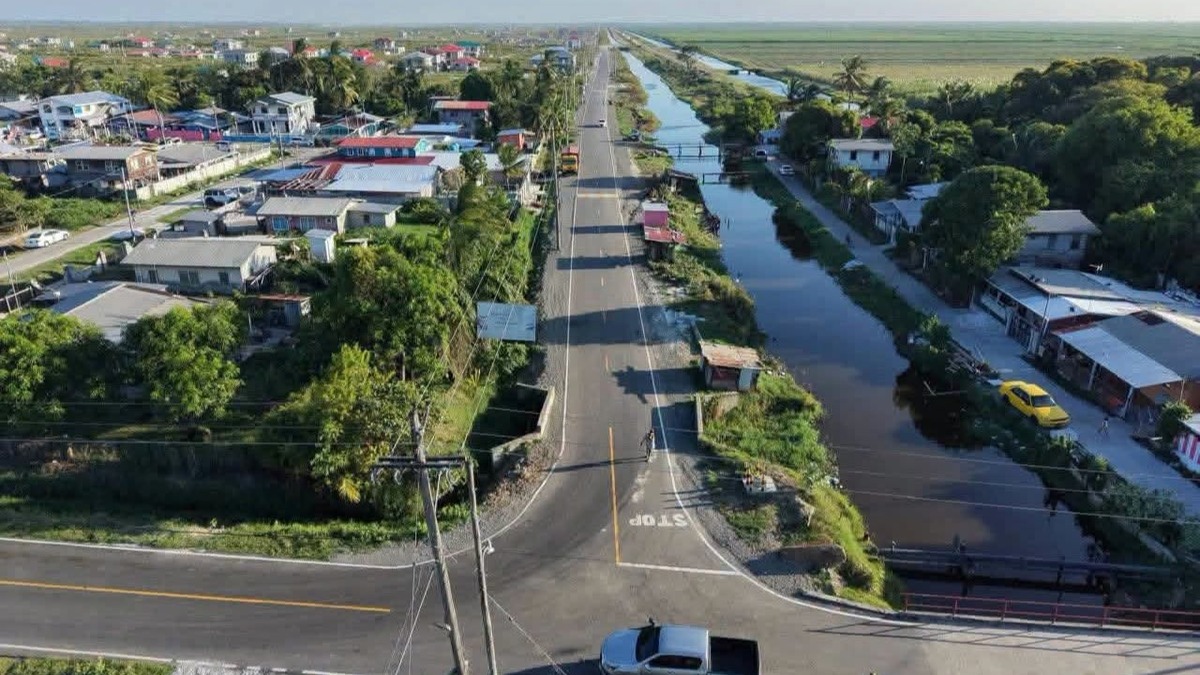
Guyana has completed a 3.6-kilometre road upgrade between Leonora and Stewartville, delivering a new usable section of the wider Tuschen-to-Ruimzeight bypass planned for the West Coast Demerara corridor.
Photo: Department of Public Information, Guyana.
The completed section is a tangible implementation milestone in a larger transport programme intended to create an alternative route through existing and expanding housing communities. It does not mean that the full bypass is complete: new road sections and interconnecting bridges are still required before the corridor can operate continuously from Tuschen to Ruimzeight.
A completed section within a larger bypass
The Department of Public Information’s official project update says the Ministry of Public Works’ Special Projects Unit completed the 3.6-kilometre upgrade. The work strengthens and asphalts existing roads between Leonora and Stewartville.
Delivery is split between two agencies. Public Works is improving existing roads, while the Ministry of Housing is responsible for new sections and the bridges needed to connect the alignment. The route is designed to divert light traffic from the West Demerara Public Road and complement the four-lane highway being developed from Crane to Parika.
This division matters when assessing progress. The verified achievement is the completed Leonora-Stewartville section, not the entire bypass. The remaining value depends on whether the road and bridge packages join the upgraded sections into one reliable corridor.
Thirteen lots and about 36 bridges
The wider alignment requires the construction or rehabilitation of about 36 bridges. In June, the Central Housing and Planning Authority invited bids for its portion of the works, divided into 13 lots with an eight-month construction period.
DPI’s June procurement notice described a competitive bidding process for the road and bridge works. An earlier May alignment inspection set out the proposed interconnection of roads through communities along the West Coast.
The public sources do not disclose final awards or a single consolidated contract value for the full bypass. Broader Region Three budget figures should not be treated as the cost of this specific corridor. Investors should therefore separate the completed 3.6-kilometre section from procurement and construction that remain underway or pending.
Why the corridor matters to investors
Transport capacity is becoming more important as housing, commercial activity and industrial development expand across Region Three. A functioning alternative route can reduce dependence on a single coastal road, improve local access and make travel times less vulnerable to peak-hour congestion.
For businesses, the practical value lies in network reliability. Suppliers, workers and customers need predictable access between the West Bank and West Coast of Demerara. A continuous secondary corridor could also improve connections among housing areas and future commercial sites without forcing every light-vehicle trip onto the main public road.
The route’s investment effect will depend on continuity and maintenance rather than kilometres completed in isolation. Bridges, drainage, junctions and the remaining road links must work as one system before businesses can rely on the bypass as a durable logistics alternative.
What to watch next
The next material disclosures are the award and mobilisation status of the 13 lots, progress on the roughly 36 bridges, and the completion of missing links between Tuschen and Ruimzeight. Clear information on delivery schedules, contract values and responsible contractors would allow investors to judge execution risk more precisely.
Traffic management will also matter as sections open. The bypass is intended primarily to move light traffic away from the West Demerara Public Road, so signs, junction design and connections to residential communities will influence how much congestion relief it provides.
For now, the investor-grade development is specific and measurable: a 3.6-kilometre section has been upgraded and completed while the wider bypass advances through a multi-lot road-and-bridge programme. That milestone improves local connectivity today and provides evidence that the broader corridor is moving from alignment and procurement toward physical delivery.