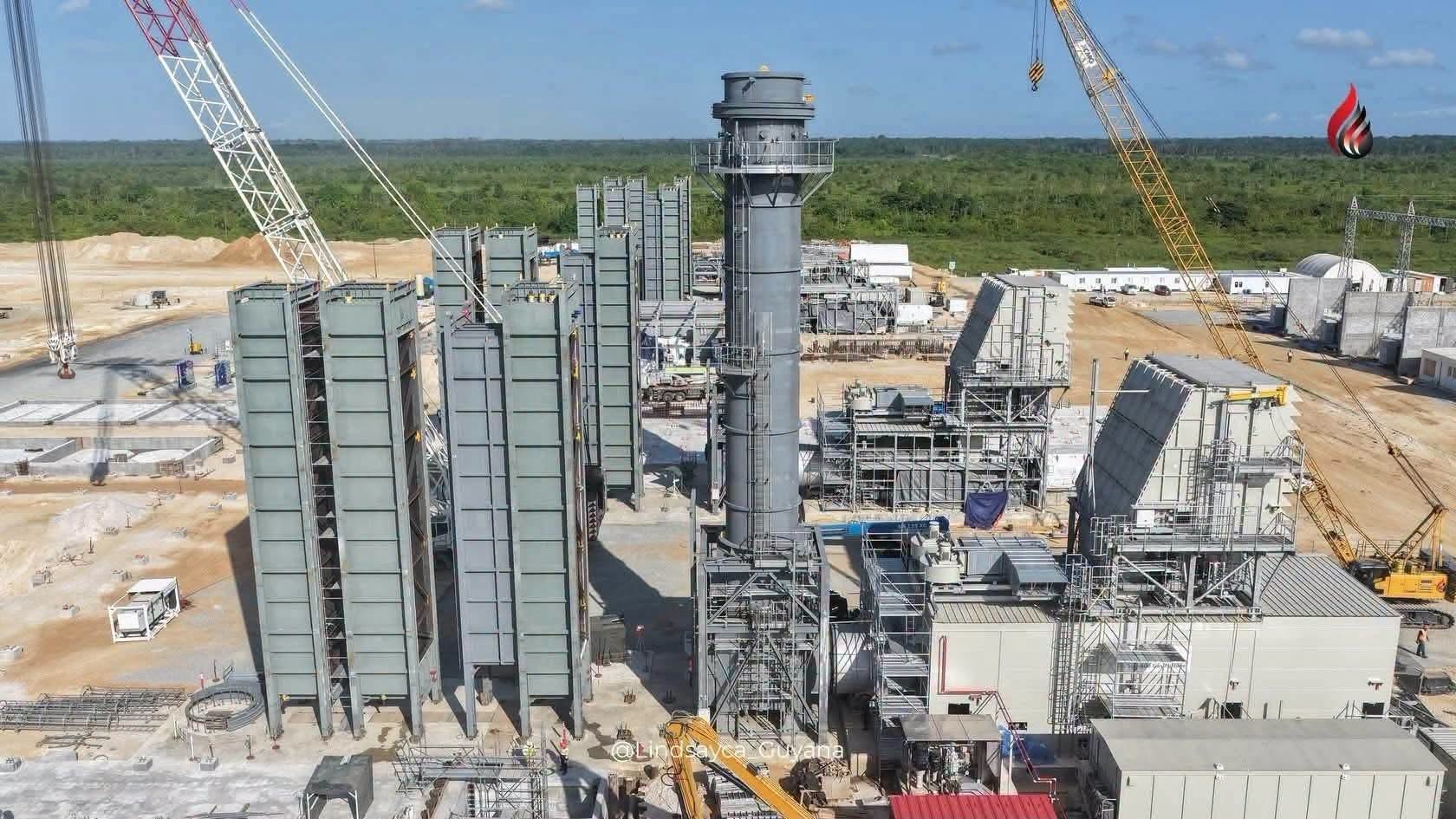
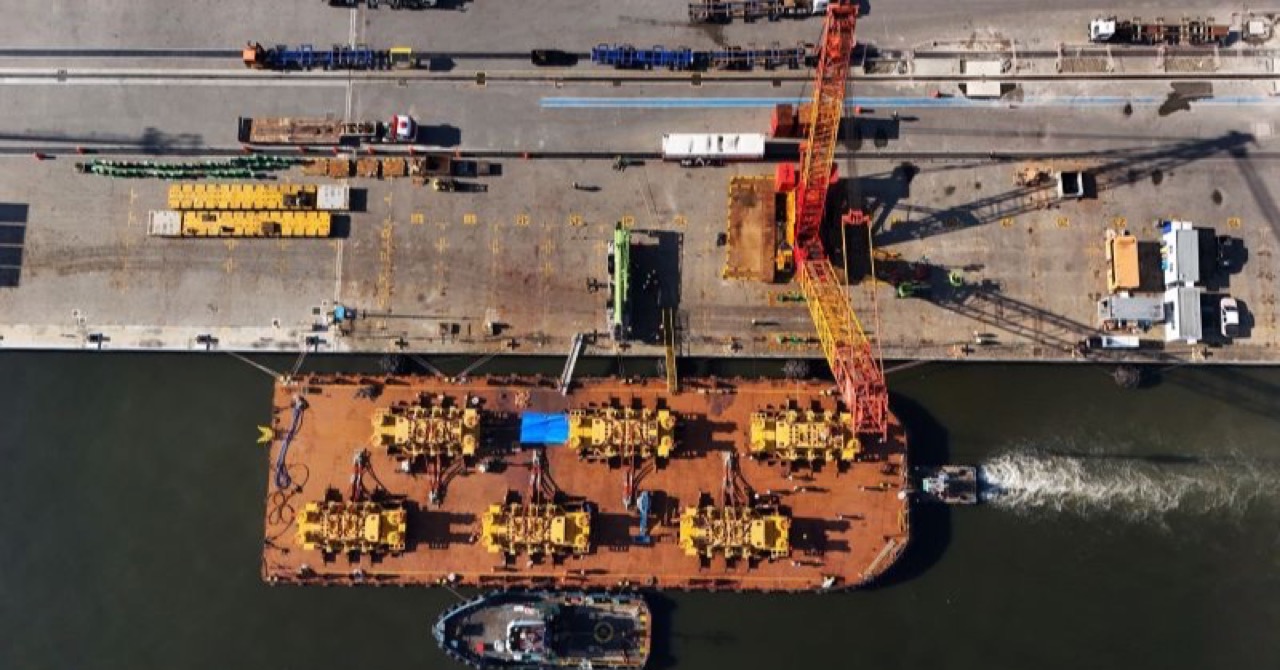
TechnipFMC has completed the loadout of six subsea manifolds for ExxonMobil’s Whiptail development offshore Guyana, marking a defined equipment-delivery milestone for the country’s sixth approved Stabroek Block project.
In an official company update published on 25 August, TechnipFMC said the six Subsea 2.0 manifolds weighed a combined 960 tons and were loaded during a single operation in Brazil. More than 60 professionals contributed to the operation, according to the company.
TechnipFMC described it as the largest loadout of Subsea 2.0 manifolds in the company’s history.
The achievement means the six units completed the reported loadout operation. It does not by itself confirm that they have arrived in Guyana’s offshore area, been installed on the seabed, connected to wells or entered service.
Six units form part of a larger subsea contract
TechnipFMC’s April 2024 contract announcement said its Whiptail scope covered project management, engineering and manufacturing for 48 subsea trees and associated tooling, together with 12 manifolds, controls and tie-in equipment.
The company classified the award as a “large” contract, which in TechnipFMC’s reporting terminology represented a value between US$500 million and US$1 billion. It did not disclose a precise contract price.
The August loadout concerns six manifolds. The earlier contract names 12 in the overall scope, but the latest update does not establish the manufacturing, transport or installation status of the remaining equipment.
TechnipFMC describes subsea manifolds as high-performance tie-in systems used within subsea-field architecture. Its Subsea 2.0 design uses standard core components configured for project requirements and is intended to simplify manufacturing and installation.
Whiptail remains a project under development
ExxonMobil approved the final investment decision for Whiptail in April 2024 after receiving government and regulatory approvals. The company placed the project’s additional investment at US$12.7 billion and targeted approximately 250,000 barrels of daily production capacity by the end of 2027.
Those are project investment, capacity and schedule statements. The 250,000-barrel figure is designed production capacity, not current output, and the 2027 timing remains a company target until startup occurs.
Whiptail’s subsea wells and equipment will be connected to the Jaguar floating production, storage and offloading vessel.
SBM Offshore says the Jaguar FPSO is designed to produce 250,000 barrels of oil per day, treat 540 million cubic feet of associated gas per day, inject 300,000 barrels of water per day and store approximately two million barrels of crude.
The vessel is designed to operate in water approximately 1,630 metres deep. Those design specifications should not be reported as achieved operating performance before commissioning and production.
Why the loadout matters
Large offshore developments move through engineering, fabrication, transport, installation, hook-up, testing and commissioning before production can begin. Completion of the six-manifold loadout is evidence that a major portion of Whiptail’s subsea hardware has reached a transport stage.
It is more specific than a general progress statement: TechnipFMC identified the equipment, the number of units, their combined weight and the location of the loadout.
For Guyana, the milestone shows continued execution of the capital programme behind future offshore production. For contractors and suppliers, it also indicates that Whiptail is moving from manufacturing into logistics and installation activity.
It does not establish the value of this single shipment, the installation sequence, the proportion of the entire subsea system completed or any revision to Whiptail’s production timetable.
What investors should watch next
The next material milestones include confirmation that the manifolds have reached the installation area, placement and connection of the equipment, further subsea-tree and manifold deliveries, completion and arrival of the Jaguar FPSO, hook-up, commissioning and first oil.
Any change to the end-2027 target should come from ExxonMobil or another project principal. Likewise, completion percentages should not be calculated from the number or weight of components shipped because different elements carry different engineering, installation and commissioning requirements.
The 960-ton loadout is a verified delivery milestone. It is not yet a production milestone.