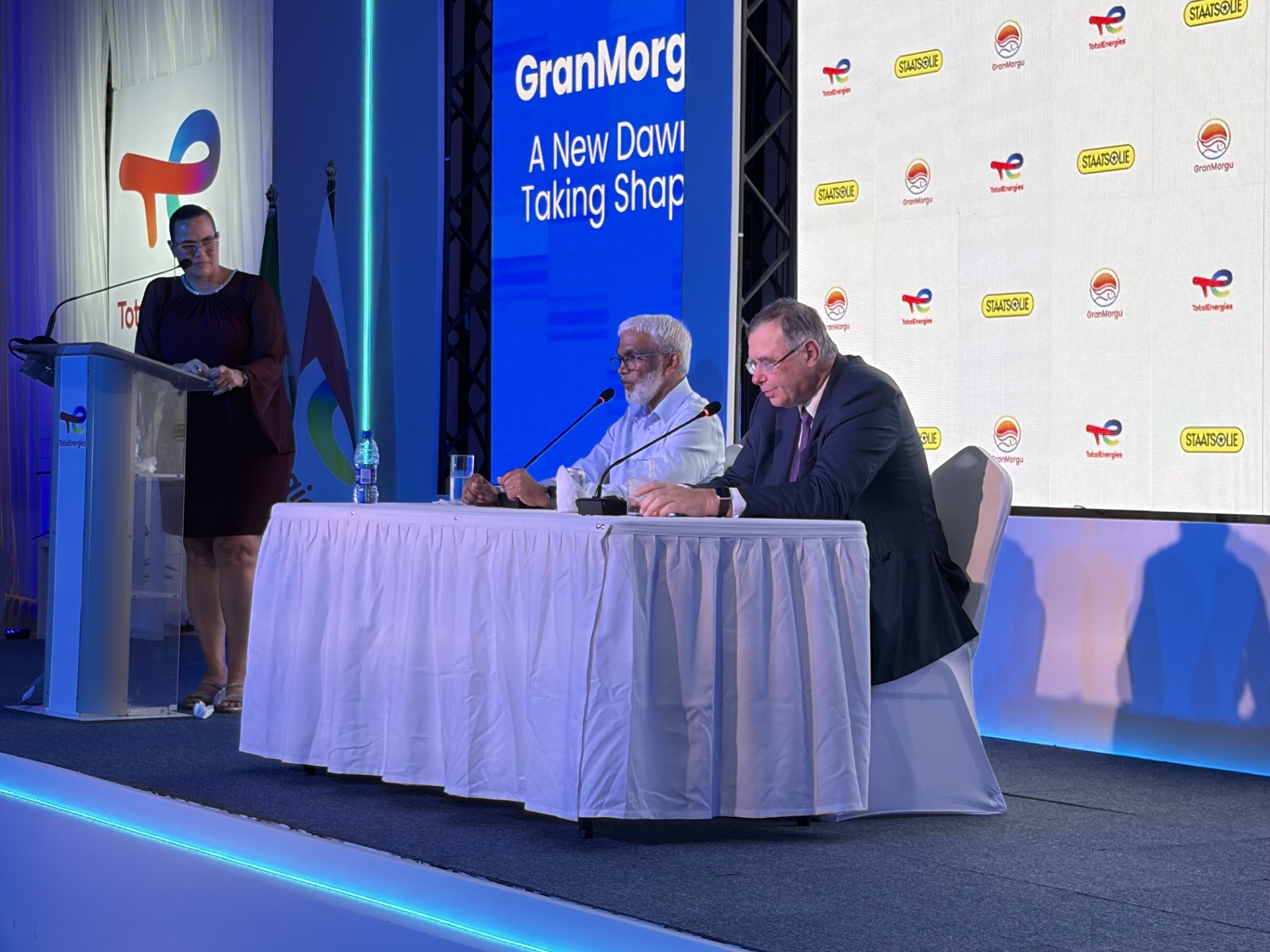
File photo: Staatsolie, September 2026.
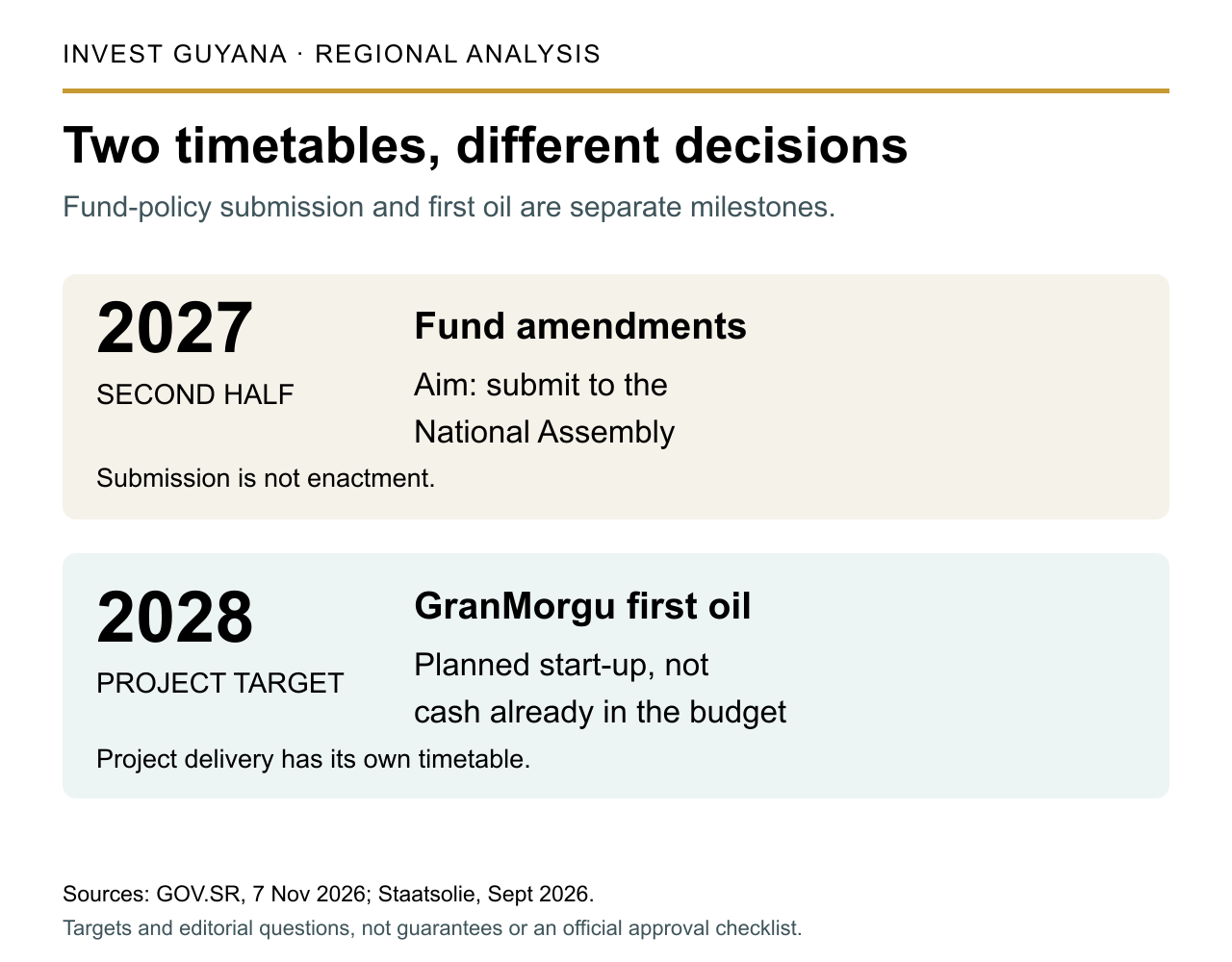
Suriname is preparing another revision of its oil-revenue framework, with President Jennifer Simons setting the second half of 2027 as the target for submitting amendments to the National Assembly. For investors following the neighbouring offshore economy, the announcement puts the management of future receipts alongside the construction of the projects expected to generate them.
In an official presidential account of her November 7 remarks, Simons described policy organised around savings and stabilisation, investment and social purposes. She linked the proposed approach to avoiding economic overheating and improving transparency. The target is for legislation to be submitted, not a date on which a new system is guaranteed to become operational.
Her administration is also concerned about rising demand for goods and services as international companies and workers enter the economy. Those pressures, she said, make local production and institutional preparation important before larger revenues arrive.
An existing fund and a new proposed revision
Suriname is not starting with an empty legislative page. Its Savings and Stabilisation Fund dates to 2017, and the Ministry of Finance announced further amendments on December 31, 2024, following parliamentary adoption the previous day. Public financial management legislation was enacted alongside them.
That earlier framework linked an indicative medium-term debt anchor, measured net of fund assets, with annual limits on primary expenditure. Its stated purposes included avoiding spending surges before offshore production, building buffers against lower mineral prices and saving for future generations.
The distinction matters commercially. A framework for receiving and saving resource income is not the same thing as a commitment to spend it immediately on a particular road, service or public contract. Future budget decisions and the rules governing withdrawals will help determine when expected wealth becomes actual demand in the economy.
In a separate account of her September 30 annual address, Simons had already said the fund should be fully operational before the first deposit of oil receipts. She placed decisions about development spending, debt reduction and saving within the wider budget and debt policy. November's announcement therefore adds a proposed legislative timetable to an existing preparation agenda.
Implementation remains the important test
An IMF technical-assistance assessment published on May 15, 2026 identified a gap between the legal framework and its operation. It recognised legislative progress but pointed to delayed implementing provisions, incomplete governance arrangements and limited institutional capacity.
The assessment recommended establishing governance bodies with clear responsibilities, improving revenue forecasting and strengthening the medium-term link between policy and budgets. It also called for realistic oil-revenue projections and fiscal stress testing. Those were findings and recommendations published in May, not a fresh audit of every institution in November.
For a business assessing demand, that distinction changes the questions worth asking. The size of a prospective resource base does not explain how quickly the state can appraise a project, approve a budget or execute an investment programme. Rules, administrative capacity and a credible spending path are part of the operating environment, rather than details to examine only after production begins.
The oil project has its own timetable
The fiscal preparations sit beside GranMorgu, the offshore development in Block 58. TotalEnergies' project description lists a production capacity of 220,000 barrels a day and expected start-up in 2028. It identifies TotalEnergies and APA Corporation as 40 per cent partners each, with Staatsolie holding 20 per cent.
In a September 21 update, Staatsolie said vessel construction, offshore equipment fabrication and preparations for production drilling were progressing to schedule. It also reported that more than 100 Surinamese companies were supplying the project. These are company-reported conditions at that update; the 2028 start remains a project target.
Supply-chain activity can therefore take place before the associated public revenues become available for budget use. A supplier's commercial assessment needs to identify its actual customer and contract, rather than treating expected government income as a substitute for an order or payment commitment.
What investors should follow next
The next meaningful milestones are the amendment's submission, the rules it contains, the arrangements for governing the fund and the budgets that turn policy into spending authority. Progress on GranMorgu must be followed separately.
For Guyanese and international businesses considering Suriname, the policy signal is preparation, not an invitation to assume a guaranteed windfall. The stronger investment case will connect a specific customer and realistic demand to the institutions, financing and delivery timetable that can support it.