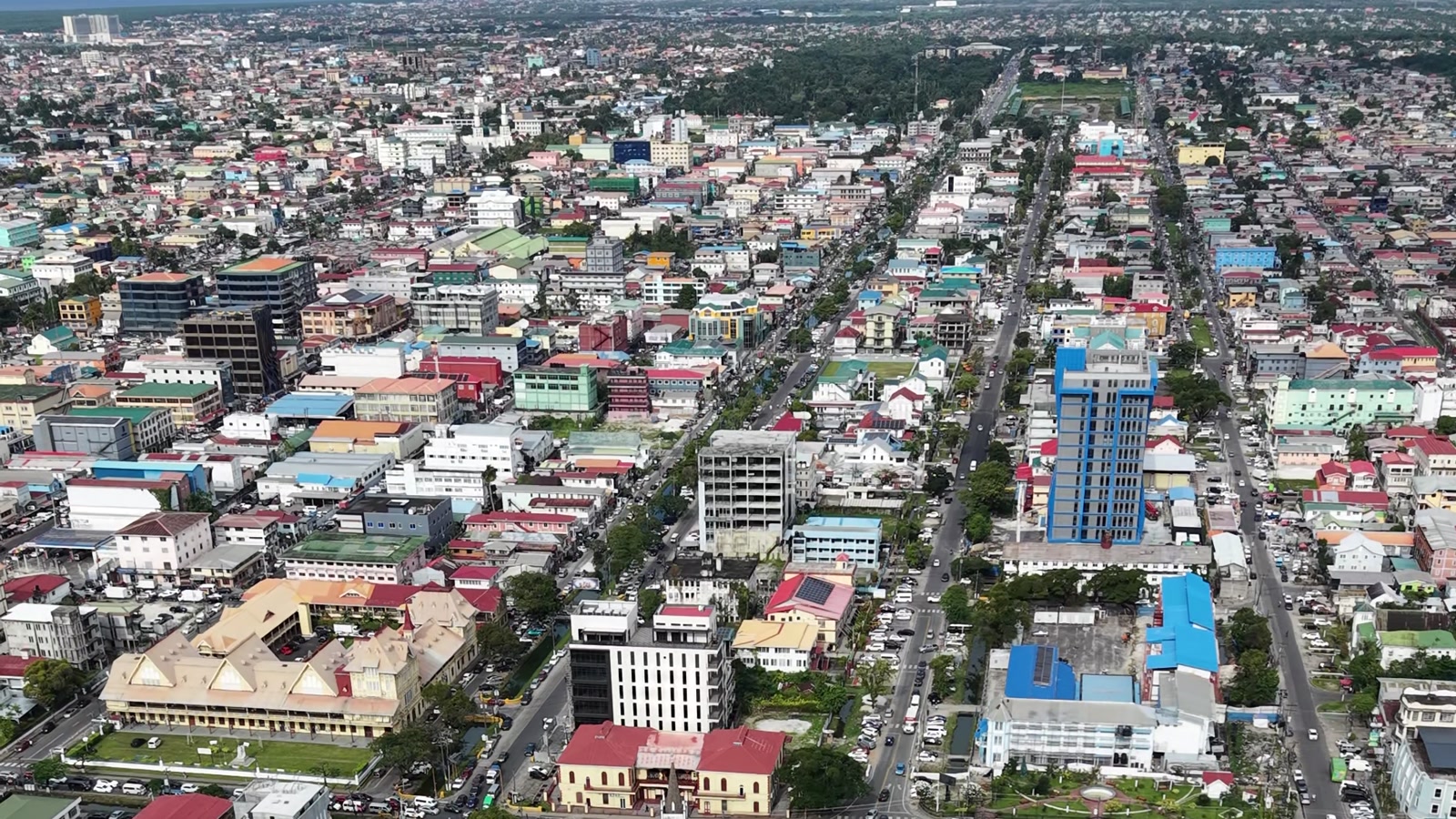
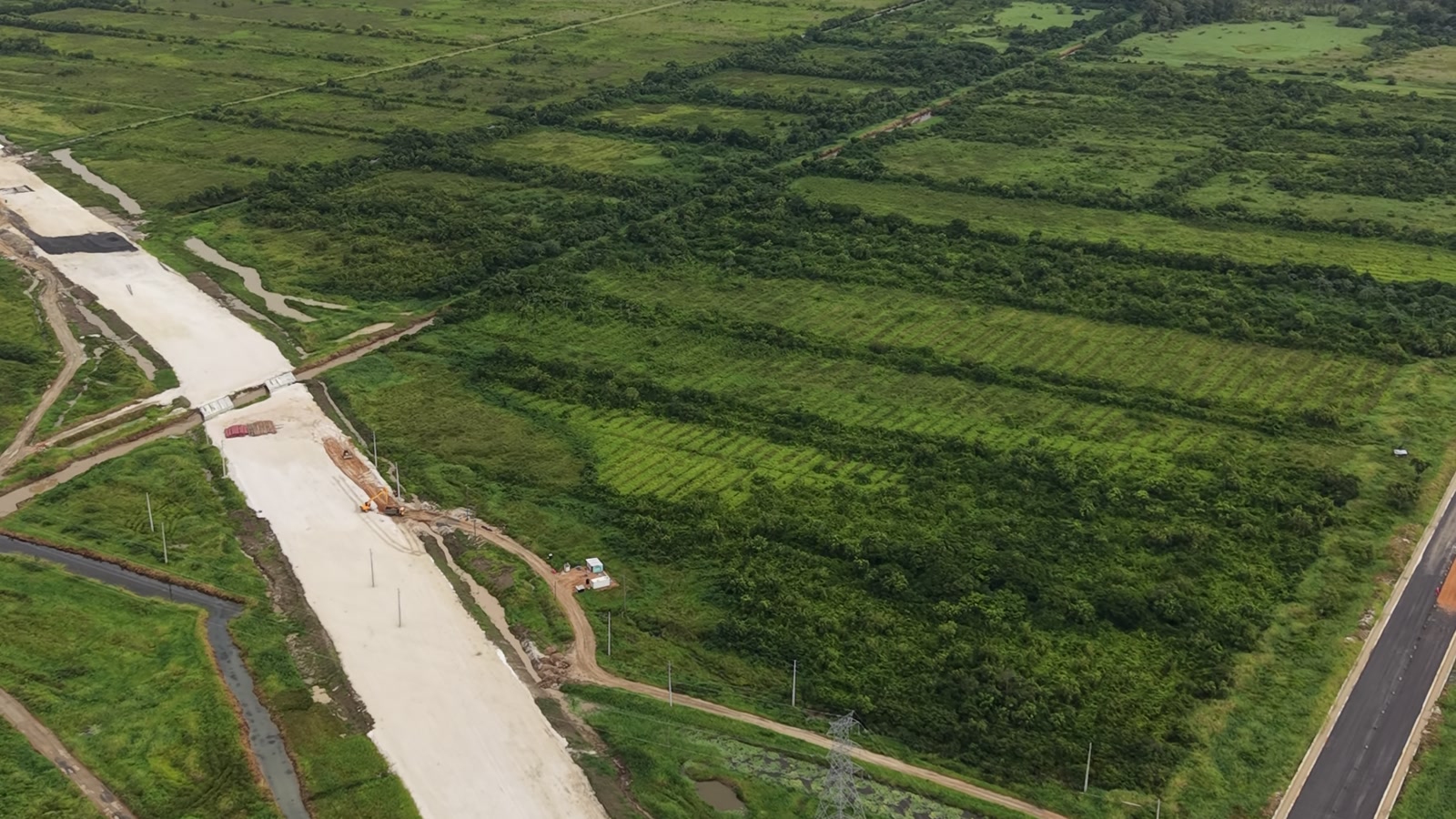
File image: East Bank Demerara roadworks; the Region Six housing schemes are not pictured.
Housing Minister Collin Croal has set the end of 2027 as the target for clearing Region Six’s housing application backlog. He outlined the commitment at a housing drive in New Amsterdam on Tuesday, 24 November, according to DPI’s report of the exercise.
The undertaking concerns pending applications submitted by 31 December 2025. About 8,000 registrations remain in the ministry’s system, although Croal said some applicants may have migrated or moved out of the region. That is a registered queue, not a count of 8,000 homes ready for construction.
The ministry reports G$9.3 billion in infrastructure investment around New Amsterdam, including Providence, Overwinning and Glasgow. Surveying and preparatory work are underway, with some beneficiaries expected to be invited to identify their lots in the first week of December.
For Berbice’s builders, hardware dealers and transport operators, allocations can create a pipeline of future work. The timing is less straightforward than the size of the waiting list suggests. A household may still need to identify its site, complete purchase documentation and develop a building proposal before deciding on orders for blocks, timber or roofing sheets.
Roads and drains before the building work
A CHPA invitation published on 27 October sets out one infrastructure package at Overwinning. The eight-lot procurement covers approximately 22.7 kilometres of aggregate-surfaced roads, earthen drains, reinforced-concrete culverts and bridges under the Saudi Fund for Development-backed housing infrastructure programme.
The notice records a 6 January 2027 submission deadline. It is a procurement invitation, not evidence that those contracts have been awarded or the works completed. The document does not establish how that package relates to the full G$9.3 billion described in Tuesday’s announcement, and the two should not be treated as interchangeable totals.
Its scope shows the civil works needed to open land for housing. Roads provide access for people and construction deliveries; drainage and crossings form part of making the scheme usable. Those are public infrastructure contracts, distinct from the private building jobs that individual allottees may later commission. The report does not quantify how many households will be ready to start construction at the same time.
Land identification is another stage with its own requirements. The Government Portal’s allocation service description says CHPA assigns a specific lot to a selected applicant and arranges boundary verification once the cadastral plan has been received. It also requires the allottee to attend that verification and complete the payments for the lot.
An allocation is not a finished house
The paperwork continues beyond the allocation exercise. An Agreement of Sale is the purchase contract between CHPA and the allottee. The published service applies where the agency is ready to process agreements for the scheme, with the buyer required to fulfil the purchase payments and allocation conditions.
The separate title and transport service is for allottees who have completed payment and supplied the required documents. It processes the instrument conferring legal ownership. Allocation, purchase agreement and ownership documentation are stages in acquiring the lot. Construction of a house is a further, separate undertaking.
For a builder discussing a job with a prospective homeowner, those stages affect how definite the project is. An invitation to select a lot is not a signed construction contract, and a household’s intended building budget is not yet a supplier’s sale. Tuesday’s housing update provides no mortgage approvals, private construction commitments or measured increase in building-material purchases.
CHPA’s Single Window guidance also places planning and development applications in a separate process. The platform allows applications to be submitted and tracked, with requirements varying by development and participating agency. Its site-plan guidance addresses boundaries, access, drainage and sanitation, among other details. Land allocation does not itself settle those design questions.
Nor is the backlog announcement a turn-key house programme. The Government Portal describes allocation of a completed housing unit as an alternative to land-only allocation, with its own bank prequalification or payment process. The Region Six target should therefore be read as the minister’s land-allocation commitment, not a promise that every registered applicant will receive a completed house.
In Providence, Overwinning and Glasgow, the progress of servicing, land documentation and household building plans will determine when another family is ready to buy materials and hire tradesmen. Clearing the older application queue would be an important step. The resulting construction activity will depend on how quickly those next stages follow.