A decade ago, few international investors would have predicted that Guyana would become one of the most closely watched economies in the world.
Today, the South American nation is at the center of a remarkable economic transformation. Driven by offshore oil production, expanding infrastructure investment and a rapidly evolving private sector, Guyana has emerged as one of the fastest-growing economies on the planet.
Yet beyond the headlines and record-breaking growth figures lies a deeper story, one that investors increasingly need to understand.
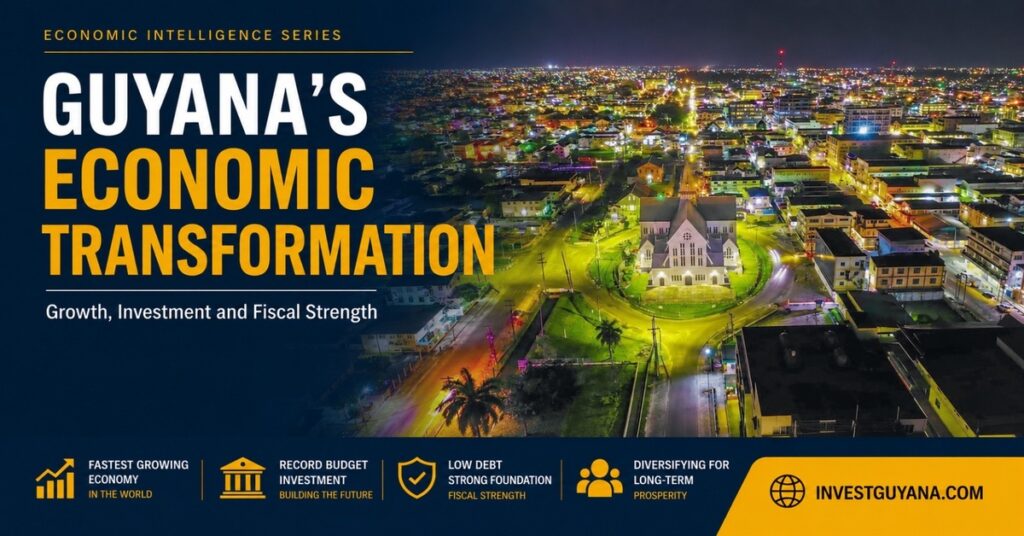
The true significance of Guyana’s transformation is not simply the pace of economic growth. It is the combination of strong GDP expansion, rising government investment, manageable debt levels and a growing non-oil economy that is reshaping the country’s future.
A Growth Story Unlike Any Other
Economic growth is often discussed in percentages, but percentages alone rarely capture the scale of change taking place.
In many developed economies, annual GDP growth of two to three percent is considered strong performance. Fast-growing emerging markets may achieve growth rates between five and eight percent during exceptional years.
Guyana has been operating on an entirely different scale.
According to the International Monetary Fund (IMF), Guyana’s economy expanded by approximately 43.6 percent in 2024, making it the fastest-growing economy in the world.
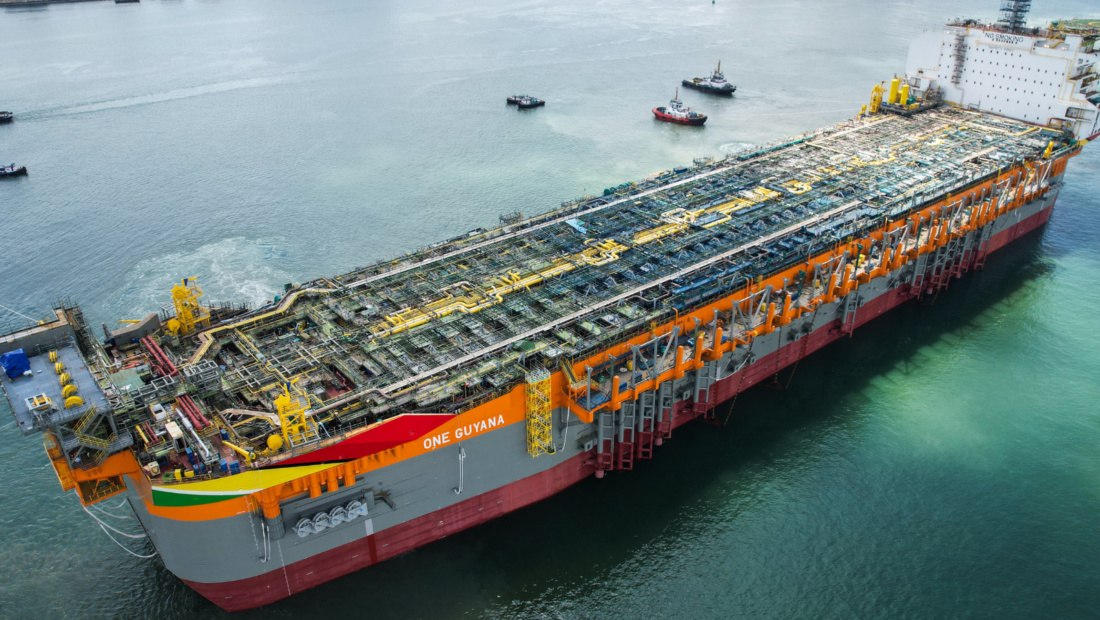
This extraordinary growth has been driven primarily by increasing oil production from the Stabroek Block, where successive offshore developments continue to expand output and generate significant revenues for the country.
However, focusing solely on oil risks overlooking an important part of the story.
While petroleum remains the primary growth engine, economic activity is increasingly spreading across construction, housing, logistics, financial services, agriculture, tourism and a wide range of supporting industries.
For investors, that distinction is critical.
Oil may have ignited the boom, but many of the long-term opportunities are emerging in the sectors being built around it.
Putting Guyana’s Growth Into Perspective
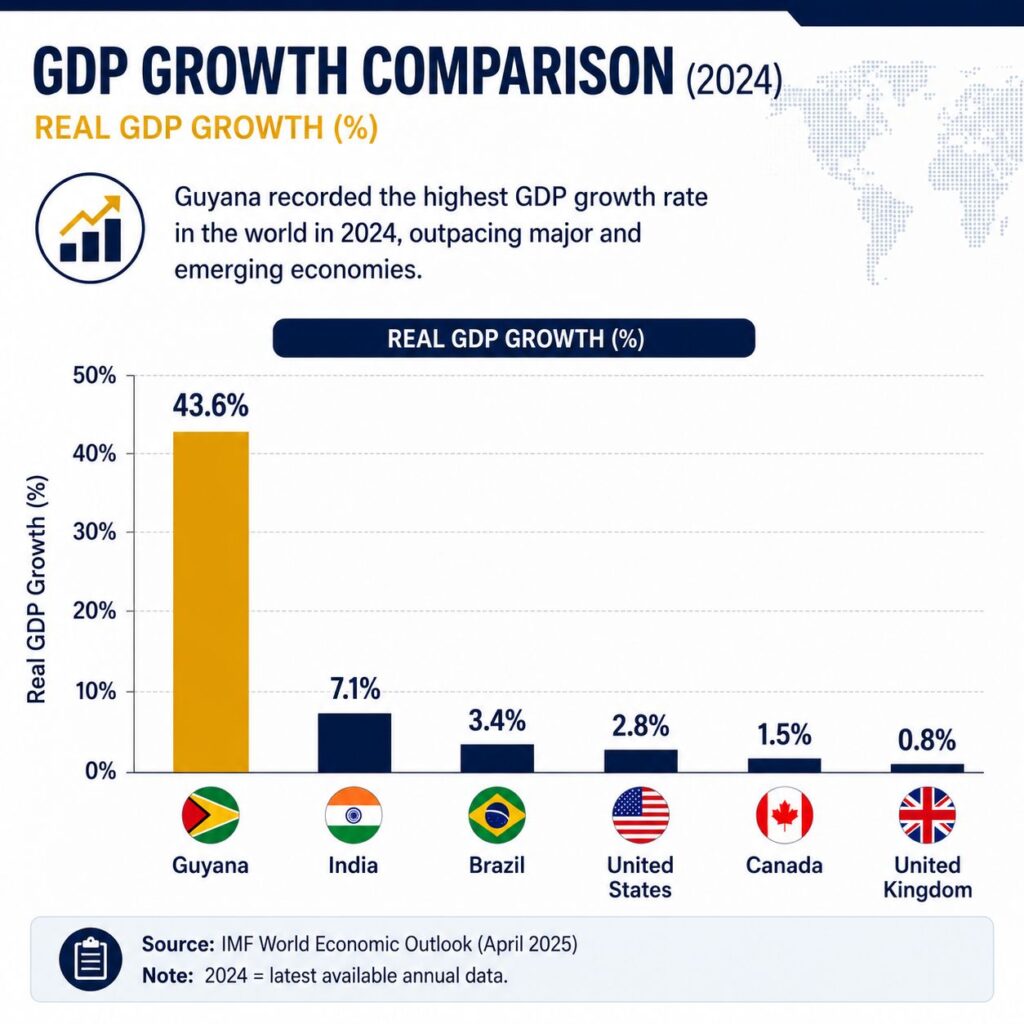
The scale of Guyana’s recent growth becomes even more apparent when compared with other major economies.
While Guyana recorded growth of approximately 43.6 percent in 2024, India grew by 7.1 percent, Brazil by 3.4 percent, the United States by 2.8 percent, Canada by 1.5 percent and the United Kingdom by 0.8 percent.
This comparison does not suggest that Guyana’s economy is larger than those countries.
Rather, it highlights the speed at which economic activity is expanding and the scale of transformation taking place within a relatively short period of time.
Such growth is attracting increased attention from multinational corporations, infrastructure developers, institutional investors and international financial institutions seeking exposure to one of the world’s most dynamic emerging markets.
Following the Money: The Rise of the National Budget
Economic growth becomes meaningful when it translates into investment.
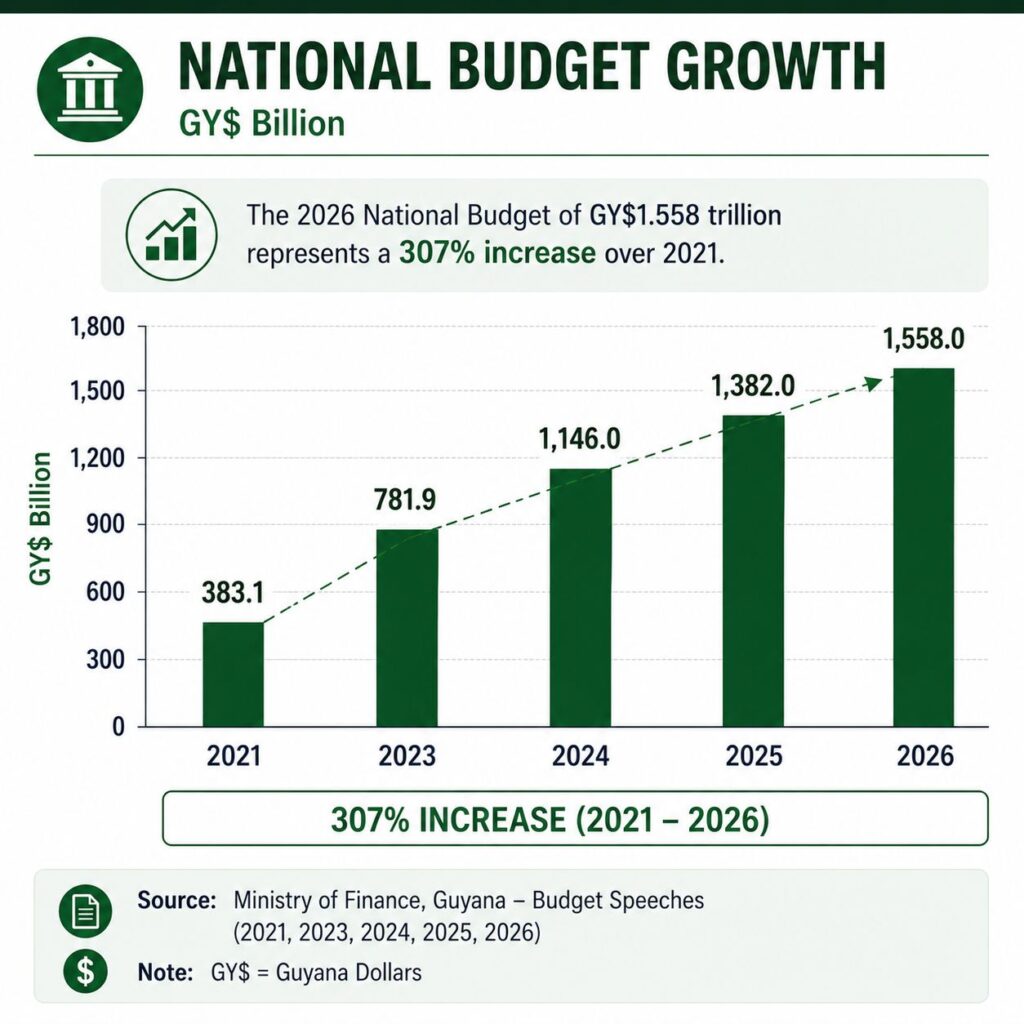
One of the clearest indicators of Guyana’s transformation can be found in the rapid expansion of the national budget.
In 2021, Guyana’s national budget stood at approximately GY$383.1 billion.
By 2026, that figure had increased to GY$1.558 trillion, representing an increase of more than 300 percent in just five years.
The scale of this expansion reflects the government’s growing fiscal capacity and its ability to invest in projects aimed at supporting long-term development.
Across the country, these investments are becoming increasingly visible.
Major road projects are improving connectivity. New bridges are opening access to emerging economic corridors. Housing developments continue to expand. Public healthcare facilities, schools, utilities and energy infrastructure are being upgraded to support a growing population and economy.
For investors, national budgets provide more than financial statistics.
They offer insight into where future opportunities may emerge and which sectors are likely to benefit from sustained public investment.
Is Guyana Borrowing Too Much?
Rapid growth and rising government spending often raise questions about debt sustainability.
In many countries, major infrastructure programmes are financed through large-scale borrowing, leading to increasing debt burdens and long-term fiscal pressures.
Guyana’s position is notably different.
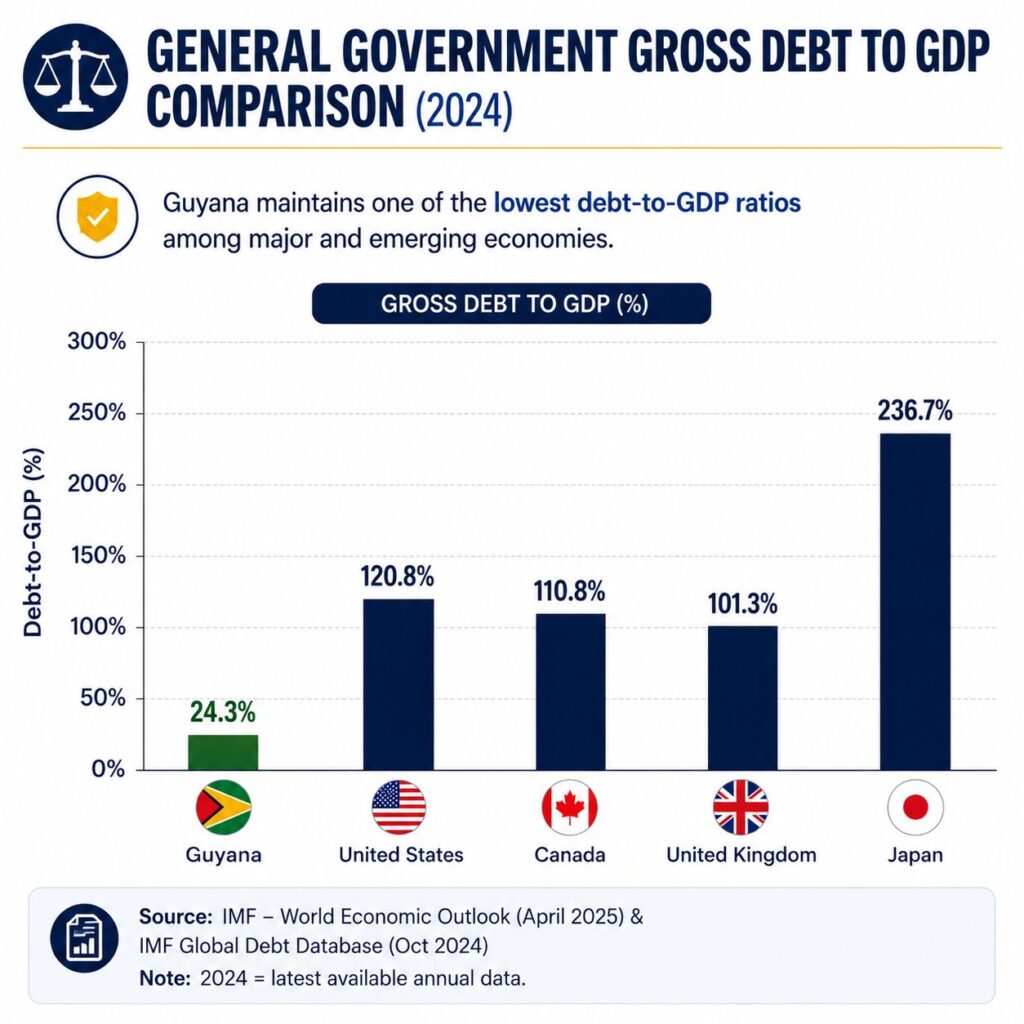
Despite significant public investment, the country’s debt-to-GDP ratio remains relatively low by international standards.
At the end of 2024, Guyana’s public debt stood at approximately 24.3 percent of GDP.
For comparison, debt-to-GDP ratios in many advanced economies exceed 100 percent. The United States stands above 120 percent, Canada above 110 percent and the United Kingdom above 100 percent. Japan remains among the highest globally at over 230 percent.
While debt remains an important consideration for any economy, Guyana’s current position provides policymakers with a level of fiscal flexibility that many countries would welcome.
For investors assessing sovereign risk, this is a significant advantage.
The combination of strong growth and relatively moderate debt levels is uncommon in today’s global economy.
Beyond Oil: The Rise of the Non-Oil Economy
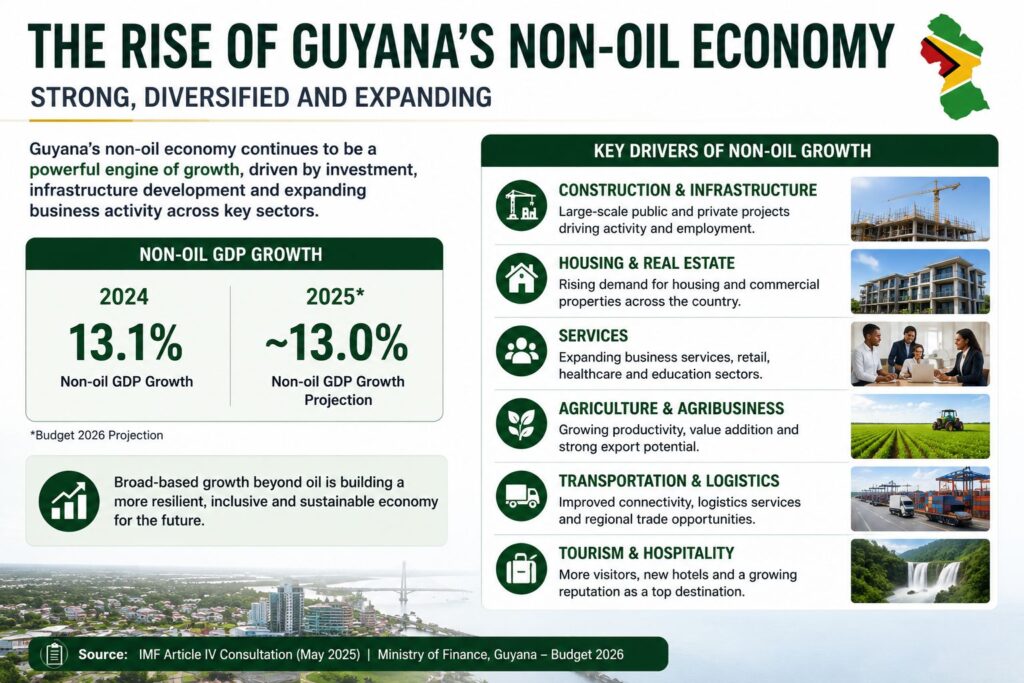
Perhaps the most important development for Guyana’s long-term future is the continued expansion of the non-oil economy.
According to the IMF, non-oil GDP grew by approximately 13.1 percent in 2024, with strong growth expected to continue in 2025.
This growth is being supported by several key sectors.
Construction and infrastructure development continue to benefit from public and private investment. Housing and real estate remain active as demand rises across the country. Transportation and logistics are expanding alongside new commercial activity. Agriculture continues to play an important role in exports and food security, while tourism and hospitality are gradually attracting new investment.
The growth of these sectors matters because long-term prosperity depends on diversification.
Countries that successfully transform resource wealth into sustainable economic development are typically those that invest beyond the resource sector itself.
Guyana appears to be moving in that direction.
Challenges Remain
Despite the optimism surrounding Guyana’s economic outlook, challenges remain.
Labour shortages continue to affect multiple industries. Infrastructure projects must be delivered efficiently and on schedule. Inflationary pressures require careful monitoring, particularly during periods of rapid growth.
The country also faces a broader strategic challenge.
Can today’s resource wealth be converted into long-term prosperity that benefits future generations?
The answer will depend on continued investment in infrastructure, education, healthcare, institutional capacity and economic diversification.
The countries that successfully navigate resource booms are often those that focus not only on extracting wealth, but also on building the foundations of a competitive and productive economy.
The Investor Takeaway
The numbers tell a compelling story.
Guyana is experiencing one of the most significant economic transformations of the modern era. Economic growth remains among the highest in the world. Government investment continues to reshape the country’s infrastructure. Public debt remains relatively manageable. And the non-oil economy is expanding alongside the country’s energy sector.
For investors, these trends suggest that Guyana’s story extends far beyond oil production alone.
What is emerging is a broader development story, one built on growth, investment and opportunity across multiple sectors.
The coming decade will ultimately determine the full scale of that transformation.
But based on the data today, Guyana has established itself as one of the most compelling investment destinations in the Western Hemisphere.