
Photo: Department of Public Information, Guyana.
For many Guyanese, dealing with a government office has traditionally required more than completing a form. It has also meant finding out when to arrive, allowing time for a queue and hoping the correct documents are in hand before reaching the counter.
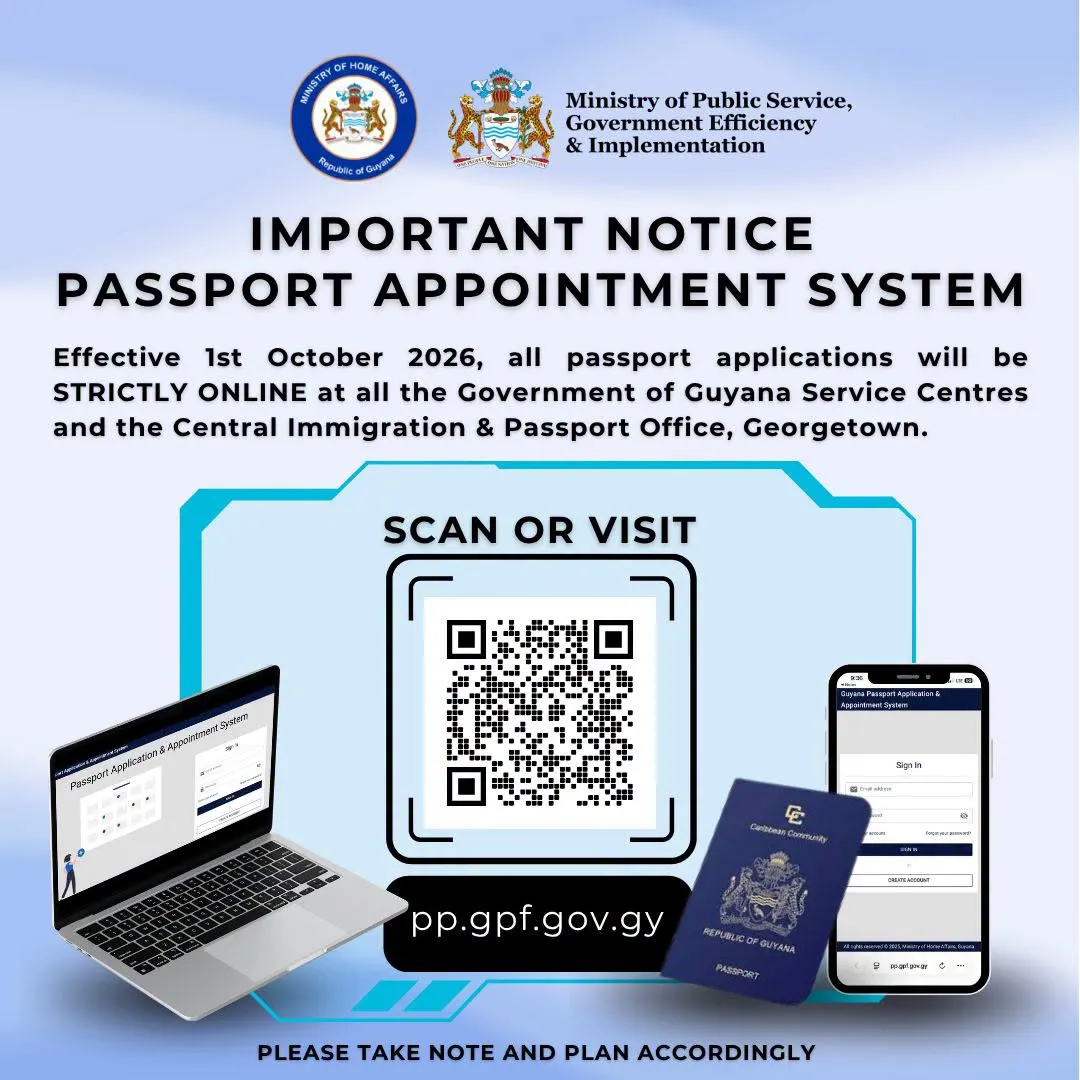
From October 1, passport applications are required to begin online through the government’s application and appointment platform. Applicants can enter their information electronically and select an appointment time before visiting the passport office. The change is part of a wider effort to move public services from paper-based, counter-dependent processes towards digital platforms that can be accessed from a phone or computer.
The shift does not mean that every stage of obtaining a passport has suddenly become remote. Applicants may still need to attend in person for identity checks, document verification, biometric capture or collection, depending on the service required. What changes is the way the application and appointment are initiated and organised.
That distinction matters. Digital government works best when it removes uncertainty from a necessary physical interaction rather than simply moving an unclear process onto a screen.
An existing platform enters a new phase
Guyana’s online passport platform is not new. The Ministry of Home Affairs and the Guyana Police Force launched the Online Guyana Passport Application and Appointment System in June 2025. The platform allows applicants to create an account, enter application information electronically and schedule an appointment.
An official government notice describes October 1, 2026 as the point from which passport applications must begin online at government service centres and the Central Immigration and Passport Office. In practical terms, the platform is moving from being a digital option within the process to the standard route for starting an application and securing an appointment.
For applicants, the intended benefit is straightforward: a confirmed time should reduce the uncertainty associated with arriving without knowing how long the process will take. For the agency, scheduled demand can make staffing and service capacity easier to manage.
The real test will be operational. Users will judge the system by whether appointments are available, confirmations arrive reliably, the portal remains accessible and the in-person stage begins close to the selected time. A digital booking system creates value only when the service behind it is organised around the booking.
More than a passport initiative
The passport change sits within a broader digitalisation programme. A government account of the programme identifies several platforms intended to change how citizens, workers and businesses interact with public institutions.
GovConnect is designed to support appointments and queue management across agencies. Citizens Connect gives users a channel for reporting public-service and community issues and tracking their resolution. SkillsConnect links skilled and semi-skilled workers with people and businesses seeking services.
According to the published update, SkillsConnect had recorded 1,872 profiles and facilitated 438 job connections by April 2026. The same source reported that more than 1,800 matters had been submitted through Citizens Connect and approximately 1,400 had been resolved at the time of reporting. Those figures are government-reported platform results rather than an independent assessment, but they show that digital public services are moving beyond pilot concepts into active use.
The next milestones are also significant. The government said National Insurance Scheme registration and contribution services were expected to move fully online by October 15, with compliance and benefit services targeted for digitalisation later in the year. Because those are forward-looking dates, businesses should verify that each service is live before changing an internal filing or payment procedure.
Why businesses should pay attention
Public-service digitalisation is often discussed as a matter of convenience for citizens, but it also affects the cost of doing business.
Every hour spent locating a form, waiting for an appointment or making a repeat visit is an administrative cost. The burden is especially noticeable for small businesses, where the person handling a government transaction may also be the owner, finance manager and operations lead.
More predictable services can make routine compliance easier. Online appointments help companies plan around employee absences. Digital NIS services could reduce the time required to manage registration and contributions. A central procurement portal makes it easier for suppliers to identify government opportunities without monitoring separate notices from multiple agencies.
Guyana’s eProcure portal already provides a central location for procurement opportunities by agency, category and deadline. The current platform publishes opportunities and documents, while the government has described fully electronic bidding and improved procurement tracking as later reform objectives. Those future capabilities should not be treated as operational until they are formally launched.
The same caution applies across the digitalisation programme. An announced platform, an operational service and a fully integrated government system are three different stages. Businesses should confirm which transactions can actually be completed online, which still require original documents and which require an in-person visit.
Access still matters
Digital services can reduce queues while creating a new challenge for people without reliable internet access, a suitable device or confidence using an online system.
The government says integrated service centres and help desks at Neighbourhood Democratic Councils are intended to assist people who need in-person support. That provision will be important for elderly applicants, residents in areas with limited connectivity and users who encounter technical problems.
For businesses, the lesson is similar. A digital platform should be treated as part of a compliance process, not as a substitute for internal controls. Companies should retain confirmation emails, reference numbers, receipts and copies of submitted documents. They should also avoid unofficial websites or intermediaries when a transaction involves identity, payment or sensitive company information.
A change measured by the experience
Moving passport applications fully online is a visible milestone, but the larger story is the gradual redesign of the relationship between government and the people who use its services.
If the systems work as intended, a citizen should spend less time finding the correct office, a business should have clearer access to compliance and procurement information, and agencies should have better data about demand and performance.
The technology alone cannot guarantee those outcomes. Reliability, data protection, staff responsiveness and support for users who cannot complete the process independently will determine whether digitalisation feels like genuine reform.
For now, the October 1 passport change provides a practical test. The application begins online, but public confidence will depend on what happens after the user presses submit.