
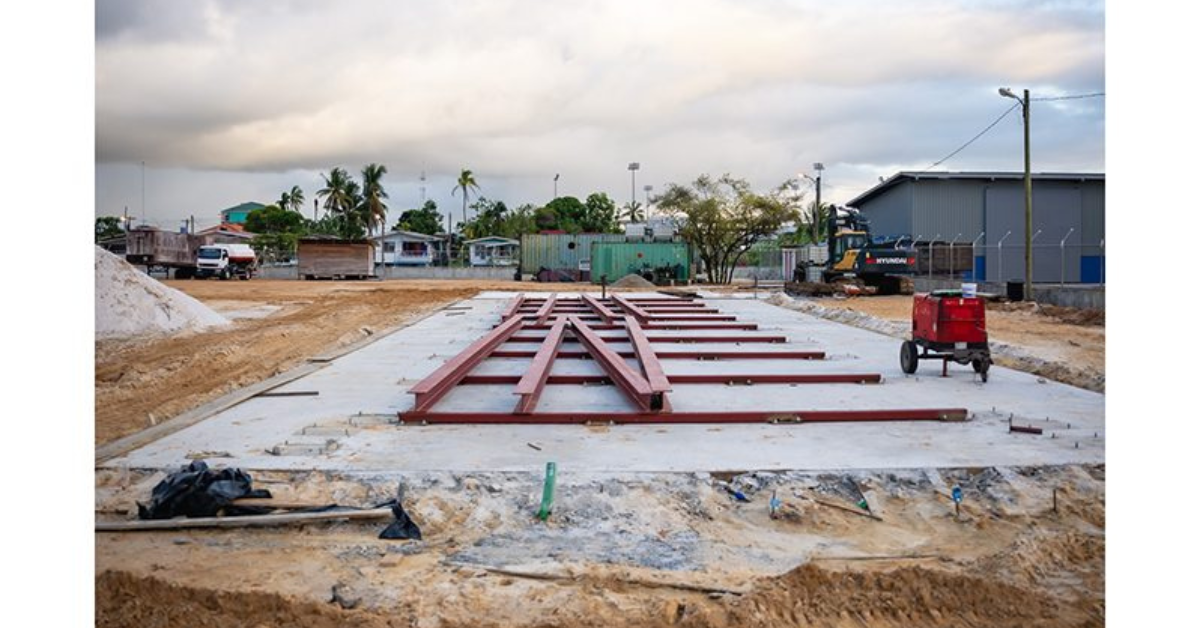
Guyana’s construction sector remains the leading driver of the country’s non-oil economic boom, as rapid infrastructure development, housing expansion and private investment continue to reshape the national economy, according to the International Monetary Fund (IMF).
In its 2026 Article IV Mission concluding statement, the IMF said Guyana’s non-oil economy continued to grow strongly in 2025, expanding by about 14 per cent, with construction standing out as the largest contributor.
“Encouragingly, broad-based growth in the non-oil economy continued at about 14 percent, with construction remaining the largest driver, and agriculture, mining, and manufacturing also contributing meaningfully,” the IMF said.
The Fund said these trends broadly continued in the first half of 2026, although some sectors were affected by heavy rainfall.

The continued strength of construction is a major signal for Guyana’s business sector, with public infrastructure, housing, roads, bridges, commercial buildings, hotels and energy-related projects generating demand across multiple industries.
The boom is also creating opportunities for contractors, suppliers, transport operators, engineers, equipment providers, building material distributors, financiers and small businesses linked to the wider construction value chain.
Guyana’s overall economy also continued to expand rapidly. The IMF said real GDP grew by more than 19 per cent in 2025, after average growth of nearly 40 per cent during 2023 and 2024.
Oil production exceeded expectations, surpassing 900,000 barrels per day by the end of 2025. However, the IMF’s findings show that the non-oil economy is also gaining momentum, supported by strong public investment and expanding private-sector activity.
The Fund said large public investment continued in 2025, while private credit supported economic activity, especially through household credit and business lending across the real sector.
The IMF also said the labour market strengthened, with unemployment falling to 6.2 per cent by the end of 2025.
Looking ahead, the Fund said Guyana’s non-oil economy is projected to grow by about seven per cent on average over the next five years, as Government continues its plans to address infrastructure and developmental needs.
That outlook is particularly important for construction, which remains central to Guyana’s transformation.
The IMF said public spending should continue to prioritise productivity-enhancing projects and support the most vulnerable. It also said policy efforts should remain focused on strengthening the monitoring of spending outcomes and oversight of public enterprises.
The Fund noted that rapid growth in the housing market, largely supported by public housing investment, warrants continued close monitoring. It also recommended the development of a real estate price index to strengthen financial stability oversight.
At the same time, the IMF said Guyana’s banking sector remains well capitalised, with strong liquidity buffers and improving asset quality. Stress tests continue to suggest that banks remain resilient under reasonable adverse scenarios.
The IMF’s assessment points to a construction sector that is not only fuelling growth, but also helping to drive wider business activity across the economy.
With infrastructure spending set to continue and the non-oil economy projected to remain strong, construction is expected to remain one of the most important engines of Guyana’s business expansion.