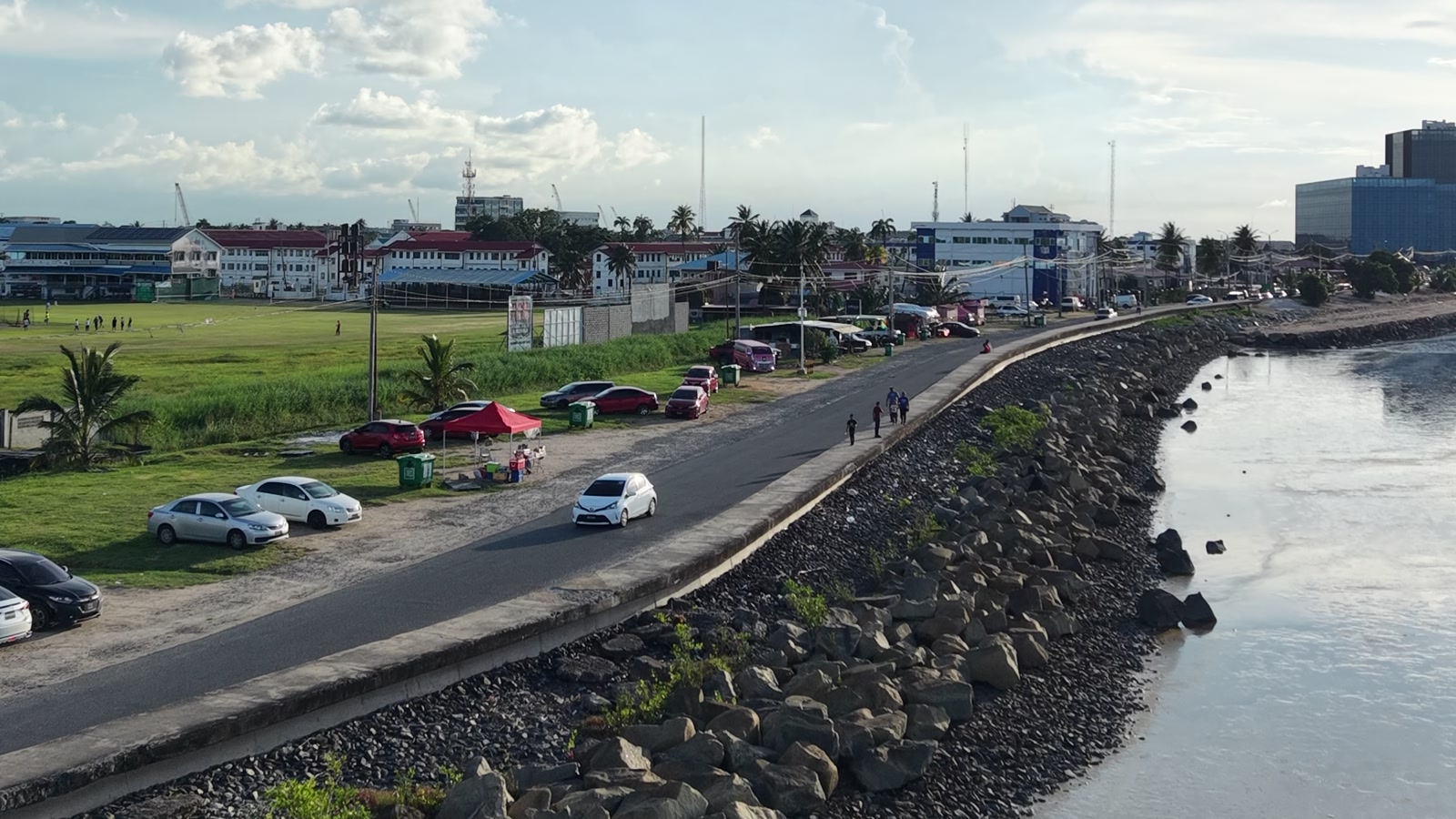
File image: Georgetown’s seafront; not an enforcement location.
The Ministry of Natural Resources says it has secured three court orders for the forfeiture and condemnation of equipment used in illegal mining. The cases involved defendants who pleaded guilty or were found guilty, according to the ministry statement published by DPI on 26 November.
The ministry also reports more than 200 mining-related convictions during 2026 so far. It says forfeited equipment may subsequently be auctioned and that a dredge belonging to a repeat offender was destroyed. The statement provides no equipment valuations, auction proceeds or individual court-order dates.
For mining businesses and those supplying machinery, the capital at stake is more than a potential fine. An operation depends on the equipment being available to work. Losing an asset, or having its use interrupted, can affect the production plan behind spending on fuel, transport and labour. The ministry’s figures do not quantify those business losses.
The court order concerns the asset
The published 2012 consolidated text of the Mining Act, Chapter 65:01 set out distinct provisions. In that text, section 100(1) addressed equipment used for prohibited acts, with a conditional restoration safeguard involving the owner and the person in charge. Section 102 concerned unregistered or unlicensed dredges and specified machinery where the relevant regulations apply. Under section 106, a convicting court could also order forfeiture and condemnation of an asset belonging to the convicted person when the offence occurred and liable to forfeiture through its use in that offence.
These are not interchangeable findings about every machine on a mining site. The underlying orders have not been published with the announcement, so the particular equipment, ownership findings and conditions in each case cannot be established from it. The report is not evidence that every seized machine has been forfeited, sold or destroyed.
Equipment papers and permission to work
GGMC’s equipment-registration guidance requires owners to register dredges and specified machinery. The published requirements include identification, tax identification, equipment serial or chassis particulars and business documents where applicable. Supplementary equipment such as bulldozers and backhoes also falls within its registration guidance. That puts the identity of the machine and its owner into the record.
A dredge licence is a separate application. GGMC identifies the applicant as the owner of a registered dredge and lists the registration receipt and dredge number among the requirements. Completing a registration application is therefore not the same step as obtaining the licence.
The place where equipment will work raises another question. Where an endorsed mining-privilege holder works on another holder’s claim or mining-permit area, GGMC’s operating-permission guidance describes the holder’s consent and written permission from the Commissioner. It gives different supporting-document requirements for nationals and non-nationals. An agreement between businesses should not be mistaken for completion of the agency’s process.
For an owner sending equipment to another operator, those separate records are practical business questions: which machine is involved, who will use it and where the work is authorised. Checking them before mobilisation is less disruptive than trying to establish them after a dispute or inspection. None of those documents alone establishes that every aspect of an operation is lawful.
The trail continues to the gold produced. The Gold Board’s published customer guidance lists mining licences or permits and the Form 14 Permit to Convey production sheet among the documents for individual sellers. The Board also directs producers to the authorised selling channel. These are standing requirements, not a new gold-buying programme announced with the equipment orders.
A business record that joins the machine, its operating arrangements and production is useful for more than an application. It helps an owner or operator explain what was done and under whose authority. It is not a guarantee against enforcement, and the rights or remedies in a particular case depend on its facts and the applicable law.
The ministry’s new report makes the risk to mining assets explicit. For an operator preparing another mobilisation, keeping registration, licensing and the authority to work aligned is part of protecting the investment already committed to the job. The three reported orders are an enforcement milestone; their individual legal and financial outcomes remain undisclosed.