
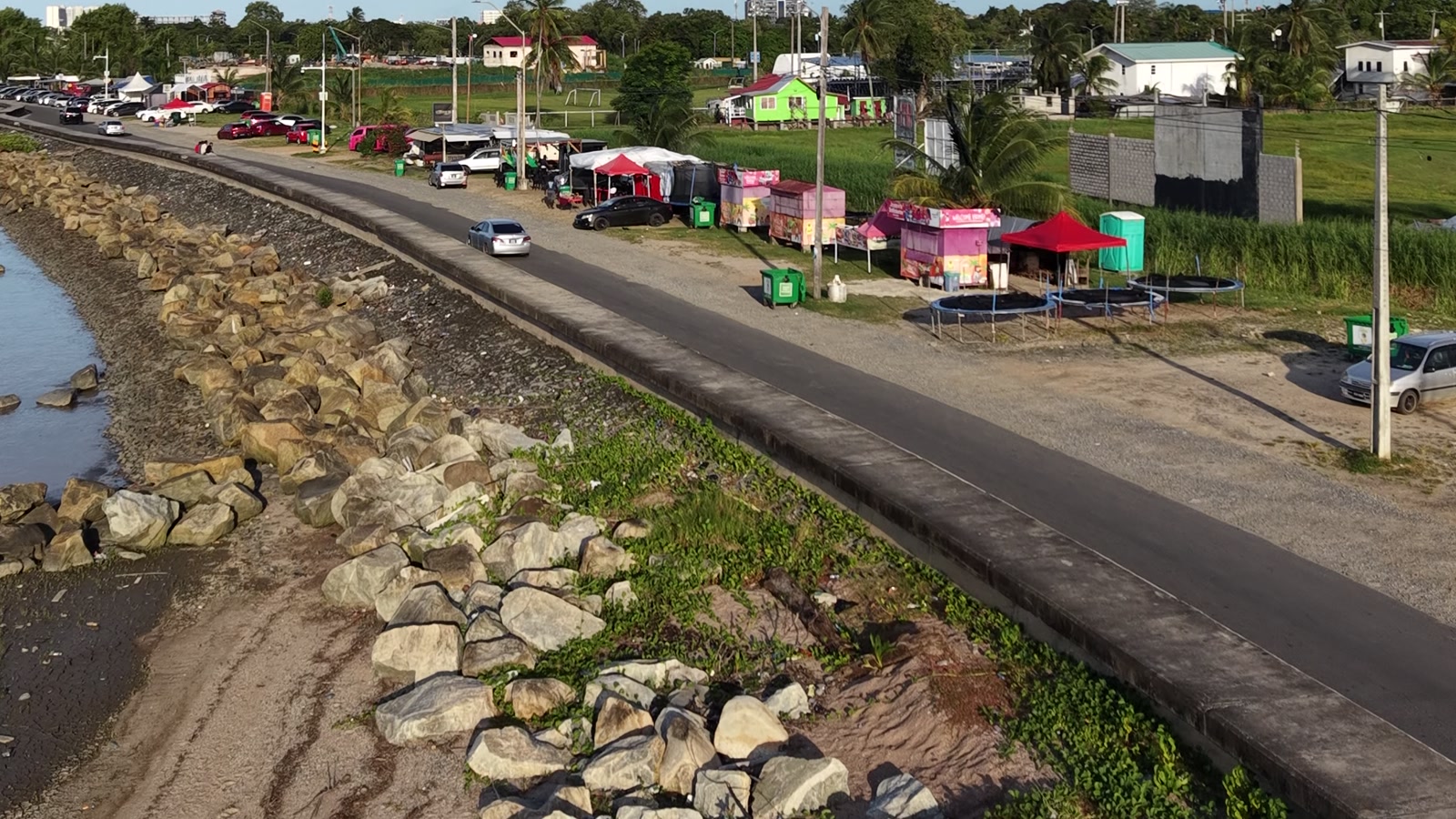
File image: Georgetown’s coastal road; vehicles pictured are not identified as electric.
The Caribbean Development Bank has begun design work on a proposed Caribbean E-Mobility Fund, opening a regional discussion on financing electric vehicles and the infrastructure behind them. Its 25 November announcement describes a consultancy, not a fund already lending to businesses.
Working with the Caribbean Centre for Renewable Energy and Energy Efficiency, CDB has engaged pManifold Business Solutions to examine the market and recommend the facility’s structure and financing arrangements. The proposed scope covers vehicles, charging, commercial and public fleets, electricity networks and supporting technical capacity.
No capitalisation amount, Guyana allocation or application window is set out in the release. Guyana is a CDB borrowing member, but that does not establish which local projects would qualify or what financing they might receive. For an importer, bank or fleet owner here, the immediate value is in preparing a credible project rather than budgeting for an unapproved loan.
Guyana has usage figures to work with
Guyana already has charging-use figures that can inform that work. In a 28 September report, the Guyana Energy Agency published charging data presented by Permanent Secretary Alfred King. Monthly sessions increased from 231 in January to 744 in July 2026; electricity dispensed rose from 4,186.48 to 20,999.36 kilowatt-hours over those months. The report recorded 1,540 registered Flash Charge accounts at the end of July.
A session count cannot establish how many individual vehicles used the network, and an account need not be active. GEA gives no station-level revenue or operating margin. A charging-site business would still need to establish how much of that activity it could attract and what customers would pay.
A more recent example is the University of Guyana’s Turkeyen installation. GEA’s 6 November commissioning report describes a 60-kilowatt charger with space for two vehicles, supported by a 15-kilowatt grid-connected solar system. It says surplus solar electricity is supplied to GPL under a net-billing arrangement.
The charger and solar array have different ratings, and the installation remains grid-connected. Its design cannot be treated as a stand-alone solar supply for a fleet. A forecourt, hotel or delivery depot would need its own demand profile and cost calculation.
Vehicle acquisition costs already benefit from favourable tax treatment. The GRA’s current motor-vehicle guide lists zero customs duty, excise tax and VAT for electric cars in both power-rating categories, regardless of manufacture year. That wording concerns electric cars; it should not be stretched to promise identical treatment for every commercial vehicle, charger or spare part. Importers should confirm the classification of the goods they intend to bring in.
The depot needs its own investment case
For a delivery company moving from fuel purchases to depot charging, the electricity connection becomes part of the transport budget. GPL’s change-of-service guidance requires a Certificate of Inspection for a change in load. Buying a charger does not establish that an existing connection can serve the intended fleet; the operator needs a site-specific assessment before settling the equipment order.
Adding solar brings another process. GPL’s published grid-tie guidance sets technical requirements for interconnection and says installations of 100 kilowatts AC and above require an interconnection assessment before approval. A solar carport therefore needs electrical design and utility engagement, not merely enough roof space for panels.
GEA also held a January consultation on charging-station safety and technical requirements. That notice described a framework under development; it is not evidence that a final standard has since been adopted. A developer should establish the requirements currently applicable to the particular installation with the responsible agencies.
Servicing deserves the same attention. GEA’s September report said its latest cohort would bring the number of locally trained EV and hybrid technicians to 102. That is a useful capacity-building measure, but not a warranty that a particular vehicle’s battery, diagnostic equipment or replacement parts will be available when needed.
For a Guyanese business replacing working vehicles, the sound comparison is a complete operating proposal: routes and charging time, the connection and equipment bill, electricity purchases, maintenance support and finance repayments. Regional funding could eventually help a viable project proceed. Until terms exist, the proposed fund belongs in the financing possibilities—not in the cash-flow forecast as money already secured.