Photo credit: Marco Farouk Basir
Guyana shipped only 673 tonnes less rice in the first half of 2026 than it did a year earlier. Yet the country earned US$25.3 million less from those exports. The Bank of Guyana’s half-year report puts shipments at 224,290 tonnes, down 0.3%. Receipts fell 20.6% to US$97.8 million.
At the opening of GuyExpo on 12 November, President Irfaan Ali put diversification at the centre of his address. The Ministry of Finance says non-oil export earnings rose 24.6% in the first half, largely because of gold. For a mill buying paddy, the rice figures tell a different story: almost the same tonnage went out at a much lower price.
What a tonne of rice fetched
The average export price fell from US$547.35 to US$436.15 per tonne. Put those two prices against the same 1,000-tonne shipment and the difference is US$111,200 before costs. That is an illustration using the national averages, which can shift with the mix of grades sold and markets served. It is not a figure from any mill’s books.
| Measure | 2025 | 2026 |
|---|---|---|
| Volume (tonnes) | 224,963 | 224,290 |
| Receipts (US$ million) | 123.1 | 97.8 |
| Average price (US$/tonne) | 547.35 | 436.15 |
Figures: Bank of Guyana, rice discussion and Table VII; export values also appear in the Finance Ministry’s Appendix B.
The Finance Ministry’s production figures show a slightly larger first crop: 414,088 tonnes of rice equivalent, up from 410,194. That is what the country produced, not what it shipped. The gap between those figures doesn’t tell us how much stock mills held, and the export average doesn’t tell us what farmers got for their paddy.
Prices abroad have not all moved in the same direction. The World Bank’s November figures put Thai 5%-broken rice at US$489 a tonne in October, up from US$482 in September. The Vietnamese benchmark for the same grade fell from US$418.50 to US$413.90. Neither tells us what a Guyanese exporter fetched for an October shipment.
Paying for paddy before the buyer pays
A mill may have to pay for paddy, then cover drying, milling and storage before it collects from the buyer. A lower selling price leaves less to cover those costs if they stay the same. A late payment adds another problem: the mill may still have to buy paddy for the next order while it waits to be paid for the last one.
At the end of September, commercial banks reported about G$22.59 billion in outstanding loans and advances to resident private businesses classified under paddy and another G$6.07 billion under rice milling. That comes to G$28.66 billion across the two categories in the Bank of Guyana’s September Statistical Abstract (Table 2.13(i)). The balances don’t show how much banks lent that month or how much was overdue.
The planned storage hub at Onderneeming on the Essequibo Coast could give growers more time to sell. The sod was turned on 16 October, with construction expected to take a year. The announcement gave neither an opening date nor a storage fee. A better offer later is worth waiting for only if the extra money covers what it costs to store and finance the stock.
Growers are already preparing for the first crop of 2027. The Ministry of Agriculture reported on 10 November that about 178,000 acres had been prepared across four regions, with about 140,000 of them in Regions Five and Six. What millers still need for their budgets is the price buyers will pay for each grade and how much they will take.
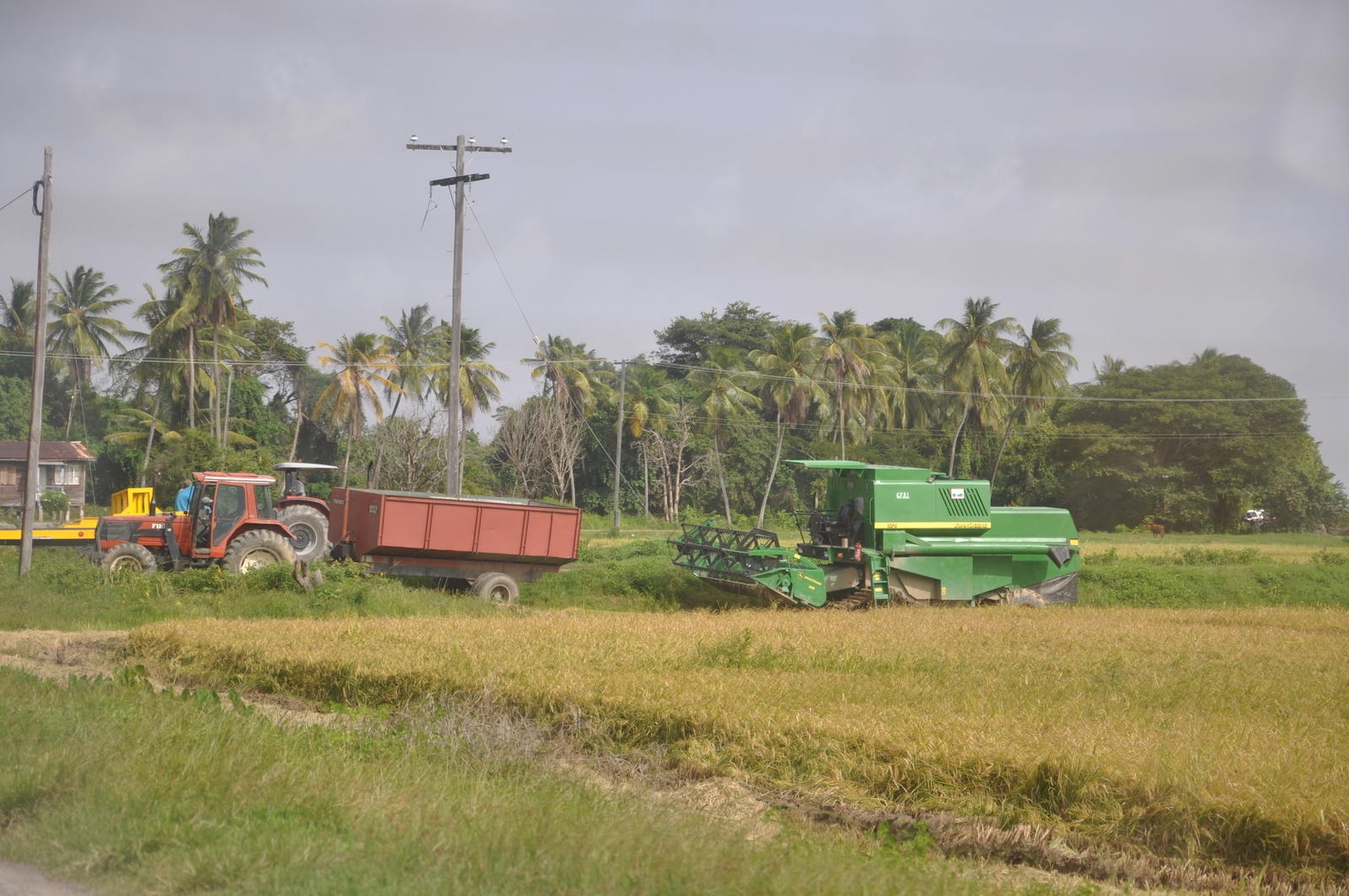
Photo note: Rice Harvesting, file photo by Marco Farouk Basir (CC BY-SA 3.0).