
Photo: Ministry of Agriculture, Guyana.
Guyana is placing stronger scientific and economic research at the centre of its fisheries and aquaculture investment strategy, as the government seeks to expand production without weakening fish stocks, aquatic habitats or the livelihoods that depend on them.
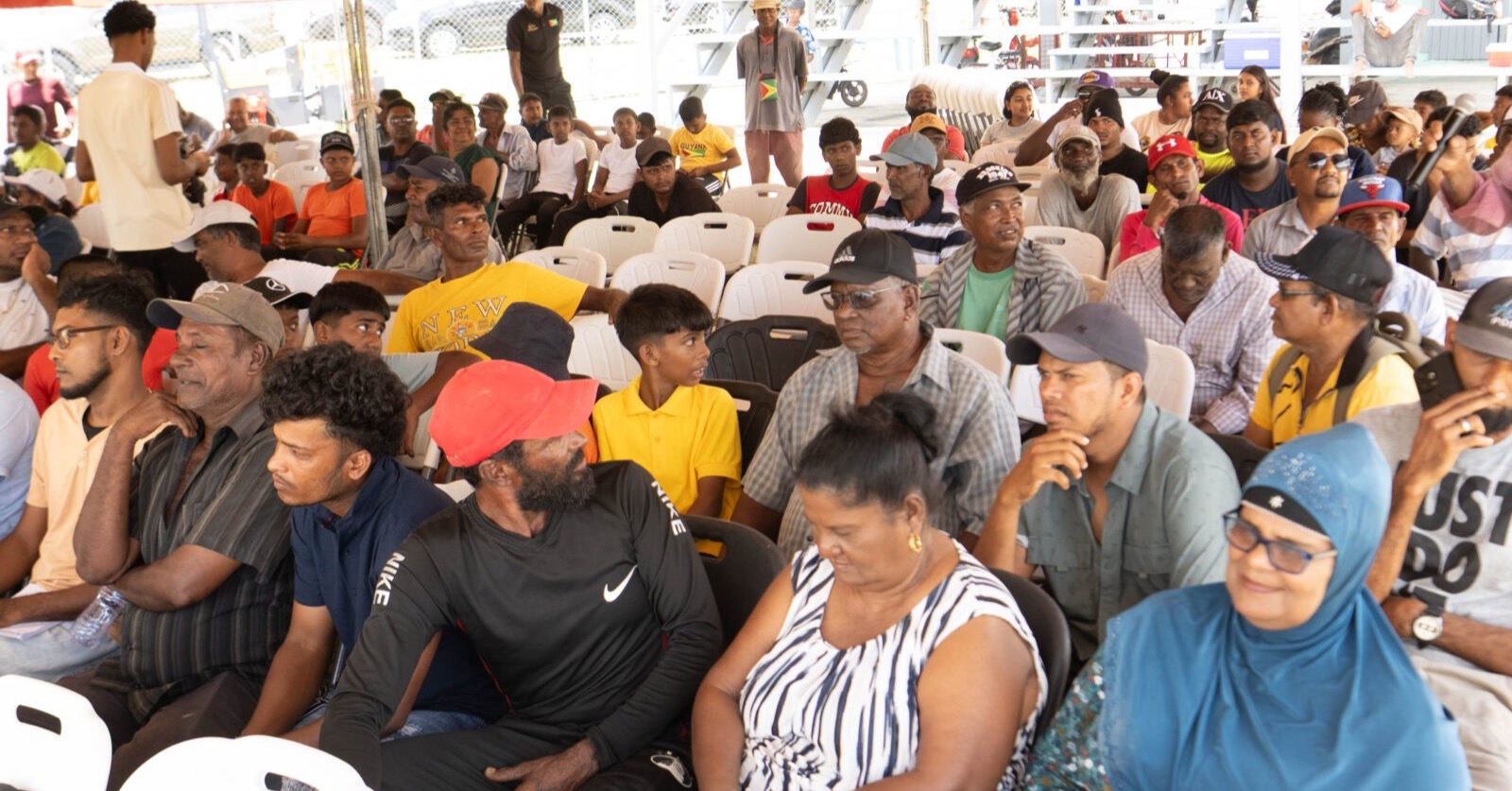
Agriculture Minister Zulfikar Mustapha used the Fisheries Department’s second annual Fisheries Research Symposium on October 21 to argue that research should guide real investment decisions rather than remain separate from sector operations.
The message is commercially significant because Guyana is already funding an expansion of fisheries infrastructure, monitoring and aquaculture. The 2026 Budget Speech provides G$1.5 billion for continued development of the sector. The latest Ministry of Agriculture update says the investment affects a wider value chain that includes fishers, vendors, processors, transport providers and other businesses.
The symposium did not announce a new tender, grant programme or private-investment window. Its material development is a clearer policy test for future spending: capital should be directed by reliable evidence about what can be produced, where it can be produced sustainably and where losses or market gaps are reducing value.
Research is part of investment infrastructure
In fisheries, physical assets alone do not determine performance. A landing site, cold room, cage, pond or processing line is only commercially useful if operators understand the resource base, production conditions, mortality risk, feed requirements, water quality, harvest timing and market demand.
Mustapha said reliable research can help identify the aquaculture systems best suited to Guyana, reduce losses and show where additional investment would have the greatest effect. He also called for accurate information on fish stocks and aquatic habitats, together with more attention to household income, employment, food security and opportunities for women and young people.
Those objectives align with the Fisheries Department’s stated structure. Its official sector page says the department’s Statistical Unit collects and analyses data and conducts surveys to support policy, planning and resource management. The department also includes legal and inspectorate, aquaculture and resource-management functions.
For an investor, that institutional design matters. Biological data, production records and market information can influence site selection, technology, operating scale, insurance, working-capital needs and the time required to reach commercial output.
The G$1.5 billion allocation is sector-wide
The government’s G$1.5 billion provision covers the continued development of fisheries in 2026. The symposium report describes the allocation as supporting infrastructure, monitoring and aquaculture.
It should not be presented as a new research fund or as financing available directly to any company. The official material does not state how much of the allocation is reserved for research, identify a call for proposals, or provide procurement and partnership terms.
That qualification prevents the announcement from being overstated while preserving its investment relevance. Public spending on landing facilities, monitoring systems and aquaculture capacity can lower sector constraints and create demand for equipment and services. Research helps determine whether those assets are placed and operated in ways that improve output rather than simply increase capital expenditure.
The distinction is particularly important as Guyana expands community aquaculture. Invest Guyana reported on October 9 that the cage-fish programme had reached 43 communities. That earlier story covered programme scale, public inputs and possible supply-chain demand. The new research story addresses a different question: how Guyana can evaluate production models and direct the next phase of sector investment using stronger evidence.
Better data can reduce commercial uncertainty
Aquaculture projects can fail even when demand for fish is strong. Poor site conditions, unsuitable species, feed costs, disease, low survival rates, water-quality problems, theft, inconsistent cold storage or weak access to buyers can erode expected returns.
Research does not remove those risks, but it can make them more visible before capital is committed. Comparative performance data can show which production systems work under different conditions. Mortality and feed-conversion records can improve financial models. Water and habitat monitoring can identify environmental limits. Market studies can help determine the product forms, volumes and delivery schedules that processors, hotels, retailers and institutional buyers require.
For the marine fishery, reliable stock information is equally important. Investment in vessels, processing or export capacity becomes vulnerable if commercial expectations exceed the sustainable resource base. Better evidence can support licensing, seasonal management and fleet planning while helping businesses avoid building capacity that cannot be supplied consistently.
The latest official statement does not publish a new stock assessment, production dataset or investment prospectus. Investors should therefore treat the symposium as a direction of policy, not as proof that all of the necessary data are already available.
The opportunity extends beyond primary production
If the research agenda is converted into operating programmes, potential demand may extend to laboratories, water-quality testing, geographic and habitat mapping, vessel monitoring, farm-management systems, traceability, cold-chain logistics, feed, fingerlings, fish health, processing and market analysis.
Research institutions and technical firms may also find opportunities in trials, training, data systems and performance measurement. Any commercial opportunity must still be confirmed through an official procurement notice, partnership call or private transaction. The symposium itself does not invite bids.
For processors and distributors, the most valuable output may be greater predictability. Reliable information on harvest volumes, species, quality, timing and location can improve procurement and capacity planning. For communities and small producers, clear performance evidence can reduce the risk of adopting systems that appear attractive in theory but are costly to maintain.
What to watch next
The next investor-grade evidence would be publication of research priorities, datasets, trial results, stock assessments or a funded work programme showing how the government will convert the symposium’s recommendations into decisions.
Businesses should also watch for procurement notices covering monitoring equipment, aquaculture systems, laboratories, feed, cold storage, landing facilities, training or data services. Programme announcements should be separated from open commercial opportunities; a policy commitment does not automatically create a tender or financing window.
The most useful performance measures will connect public spending to outcomes: production and survival rates, operating costs, losses, market access, income, environmental indicators and the durability of businesses after initial support ends.
Guyana’s fisheries expansion is therefore entering a more demanding stage. The question is no longer only how many facilities, cages or programmes can be added. It is whether credible evidence can guide capital toward systems that are productive, resilient and environmentally sustainable.