
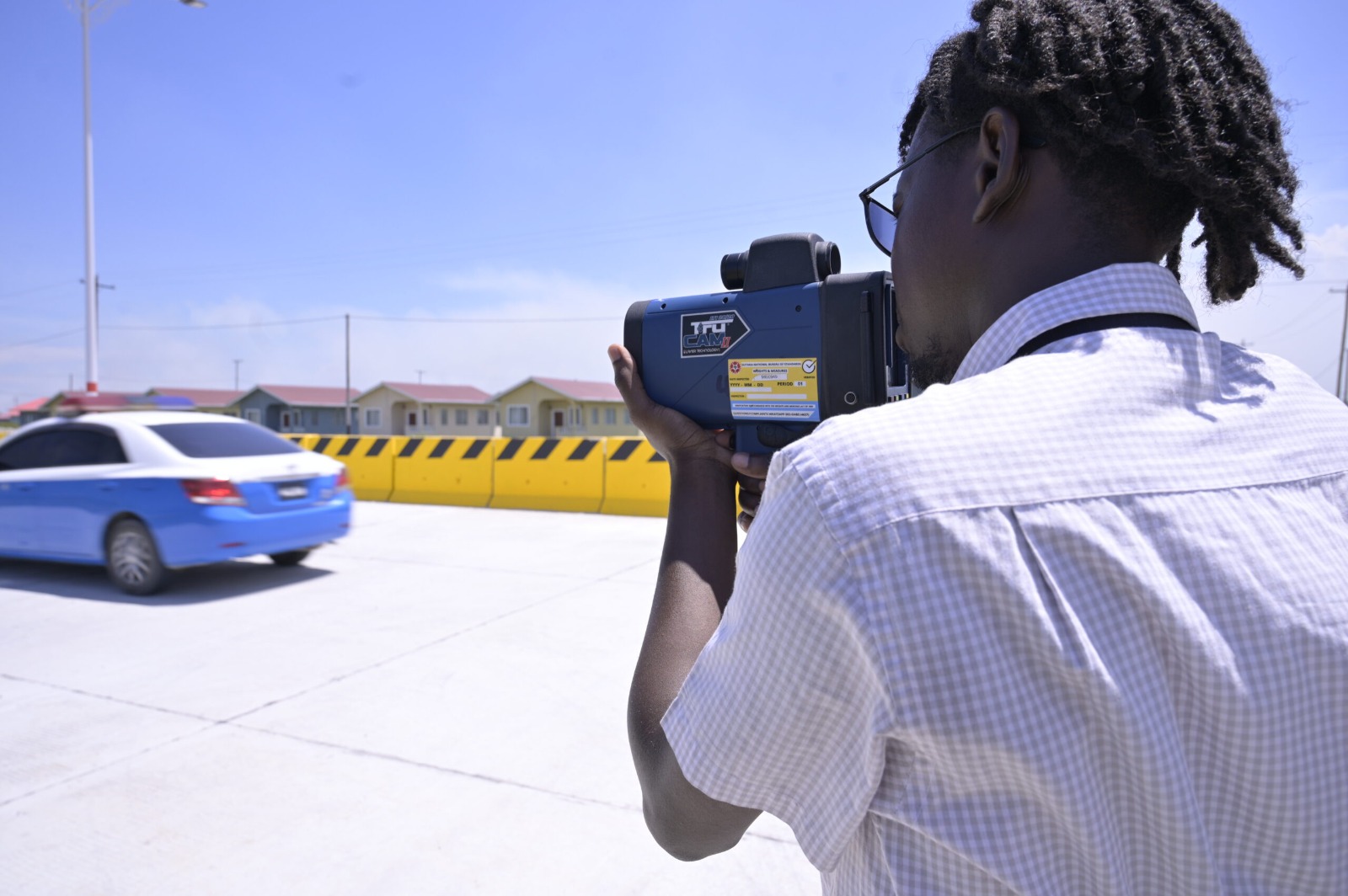
Photo: Department of Public Information, Guyana (August 2026 speed-camera verification).
Guyana plans to begin installing 8,000 automatic speed-control devices on trucks during the second half of 2026, while extending the reach of its camera-based traffic enforcement system. For haulage and construction businesses, the two programmes raise different operational questions: how vehicles will be equipped and how offences are already being detected.
DPI’s 17 September report brings the planned installation programme back into focus through the government’s mid-year review. It should not be read as an announcement that the devices are already fitted across the country’s truck fleet. September update.
A budget measure moving towards implementation
The proposal dates to Budget 2026. DPI reported it on 26 January as part of the Finance Minister’s road-safety measures, describing the devices as speed limiters intended to improve safety. That earlier announcement establishes the policy’s history; the later report concerns its intended implementation period, rather than a second allocation of another set of devices. January announcement.
This distinction matters for businesses monitoring announcements over several months. A policy can appear in the budget, return in a progress report and later receive implementing instructions. Each publication may add information without representing a new programme or a completed rollout.
Equipment and enforcement are not the same intervention
The Ministry of Finance’s Mid-Year Report directly confirms the planned second-half start. In section 3.122, it also records 30,226 speeding tickets issued through the Safe Road Intelligence System during the first half of 2026. The system covers 112 lanes, with a further 48 planned by year-end. These figures describe enforcement activity and intended coverage, rather than the number of speed-control devices installed. Government report.
A vehicle-mounted limiter and a roadside camera serve different purposes. One concerns control of the vehicle’s speed; the other provides a means of detecting an offence. A fleet can therefore encounter camera enforcement before any new equipment programme reaches its vehicles. The existence of one system does not establish the installation status of the other.
Nor does the ticket total identify that many separate drivers or demonstrate a particular reduction in crashes. Those would require different evidence. The number is useful as a measure of recorded enforcement activity within its stated period.
What fleet operators still need to know
Implementation details will determine the practical effect on businesses. Relevant questions include the vehicles covered, installation arrangements, approved specifications, maintenance responsibilities and costs. The reviewed sources do not establish a universal installation deadline or provide a complete technical instruction for operators.
The appropriate reading is therefore a forward planning signal, not a substitute for formal directions. Businesses can follow the responsible authorities’ implementation notices while keeping the planned equipment rollout distinct from traffic enforcement already taking place. That separation makes the update more useful than treating every road-safety measure as one change arriving on the same day.