
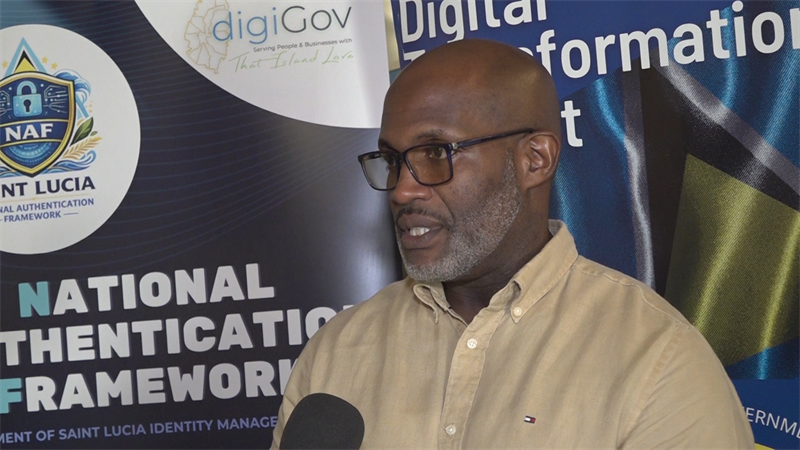
Photo: Government of Saint Lucia.
Saint Lucia is developing plans for a supervised testing environment for digital-identity and financial technology services, with an initial focus on tools that could connect to its DigiGov platform. The initiative is still being designed, rather than operating as an open programme for businesses.
The Ministry of Finance said on 15 September that government officials, regulators, financial institutions, telecommunications bodies and technology providers had taken part in a stakeholder workshop. The United Nations Economic Commission for Latin America and the Caribbean is supporting the work.
The proposal would allow selected technologies and business models to be examined under regulatory oversight before wider use. Digital identity and payment options are the first intended areas, with expansion to other sectors a possibility rather than an approved next phase.
A testing framework still to be built
According to the ministry, consultations are intended to shape a concept document. Government would then seek funding for the arrangements needed to run the sandbox, including its governance and operating structure.
The update gives no application opening date or approved programme budget. Businesses should therefore read it as a statement of policy direction, not as an invitation to apply or a relaxation of existing regulatory obligations.
For a payment or identity-service provider, the eventual design would matter as much as the announcement. Which products could be tested, who would oversee them and what safeguards participants would have to meet would determine the commercial relevance of the programme.
Why oversight is central
The initiative addresses a practical tension: public services need ways to adopt new technology while protecting the people who use it. A test environment can help examine those questions, but establishing one does not by itself demonstrate that a product is safe or ready for general use.
That caution is consistent with ECLAC's earlier work on regulatory sandboxes, which stresses clear policy frameworks, capable multidisciplinary teams and sustained implementation. That research provides context; it is not confirmation that Saint Lucia's proposed structures are already in place.
For now, the next substantive milestones are a settled concept, funding and published operating rules. Those developments would turn a proposal for experimentation into a defined programme that technology companies and regulators could assess.