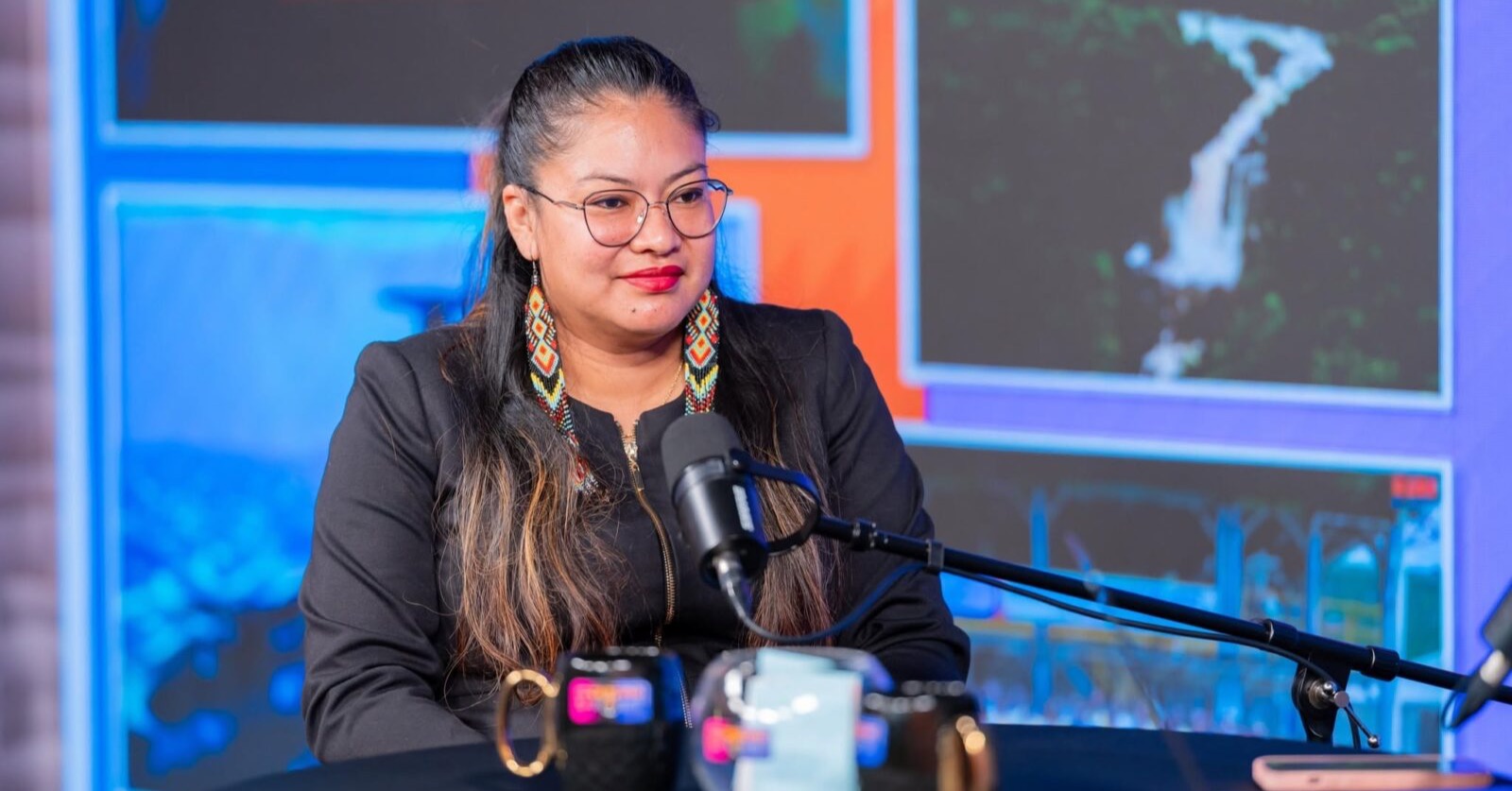
Minister of Amerindian Affairs Sarah Browne-Shadeek discusses Development Bank opportunities for Indigenous youth (Source: Department of Public Information).
Minister of Amerindian Affairs Sarah Browne-Shadeek said prospective entrepreneurs should carefully develop their ventures so they are ready when the bank becomes operational. She highlighted possible uses including tunnel-house agriculture and transportation services, particularly in hinterland regions where mobility can be a significant constraint.
The September 6 announcement is a call to prepare, not confirmation that general applications are open. It does not provide a launch date, application portal, branch network, processing timetable or final eligibility guide.
Prospective applicants should therefore wait for the bank’s official application notice before submitting documents or paying anyone who claims to arrange access.
What the financing programme proposes
Budget 2026 allocates US$100 million for injection into the Guyana Development Bank. The flagship programme is intended to give eligible SMEs, young entrepreneurs, women and persons living with disabilities access to microcredit of up to G$3 million at zero interest and with no collateral requirement for targeted investments in specified sectors.
The budget also outlines a co-investment model under which SMEs may be able to access up to an additional G$7 million at preferential rates from participating commercial banks. That is a separate proposed financing layer: the participating banks, final pricing, risk-sharing structure and approval requirements have not been identified in the September update.
Zero interest and no collateral do not make the financing a grant. Borrowers would still be expected to meet the bank’s eligibility requirements and repay approved loans under the final terms.
The September release also says the bank will provide mentorship, business-plan preparation, financial-management training and technical support. Those services could help applicants strengthen their proposals, but no delivery schedule or list of approved service providers was published.
Bank established, operational details still awaited
President Irfaan Ali assented to the Guyana Development Bank Act on July 30, bringing into force the legal framework establishing the institution. The Act followed passage of the Guyana Development Bank Bill by the National Assembly on July 27.
Legal establishment should not be confused with a complete public rollout. The September 6 release continues to describe the financing opportunities as becoming available once the bank is operational.
Earlier official guidance advised prospective applicants to prepare a business idea or business plan, valid identification and proof of business registration or a willingness to register. It also said applicants would need to meet Guyana Revenue Authority and National Insurance Scheme compliance requirements, with assistance expected for people who need to complete those steps.
Those points are useful preparation guidance, but applicants should check them against the final rules when the bank publishes its forms, sector list and underwriting procedures.
Opportunities and limits for hinterland ventures
The Development Bank is intended to add individual and group-level entrepreneurship financing to existing community programmes, rather than replace village-wide grants or funds.
The government has encouraged Indigenous entrepreneurs to consider forming groups for larger productive projects. However, the September release does not publish a group-financing formula, maximum collective exposure, ownership rules or security arrangements. It should not be assumed that forming a group guarantees approval or automatically increases the amount available.
Tunnel-house agriculture and transportation may address genuine community needs, but each venture will require evidence of demand, realistic operating costs and a workable repayment plan. Transport businesses must account for fuel, maintenance, insurance, licensing and replacement costs, while agricultural projects need secure land access, water, inputs, technical support and dependable markets.
Remote entrepreneurs may also face added costs for registration, banking, connectivity and moving goods. The accessibility of the bank’s regional support and application process will therefore be an important part of implementation.
What prospective applicants should prepare
Entrepreneurs can begin by defining the customer, product or service, start-up cost, expected monthly income and expenses, and the amount they could reasonably repay. Supplier quotations, proof of market demand and any required licences or land-use permissions will strengthen a proposal.
Applicants should keep personal and business finances separate, retain sales and expense records and verify their registration, GRA and NIS status. They should also confirm whether their proposed activity falls within the bank’s specified sectors once those sectors are formally published.
The next material milestones are an official opening date, published eligibility rules, application forms, regional access points, repayment terms and the process for the additional commercial-bank financing.
Until those details are released, the confirmed position is that the Development Bank has been legally established and is backed by a US$100 million Budget 2026 allocation, while Indigenous entrepreneurs are being encouraged to prepare for financing that is expected to become available when operations begin.