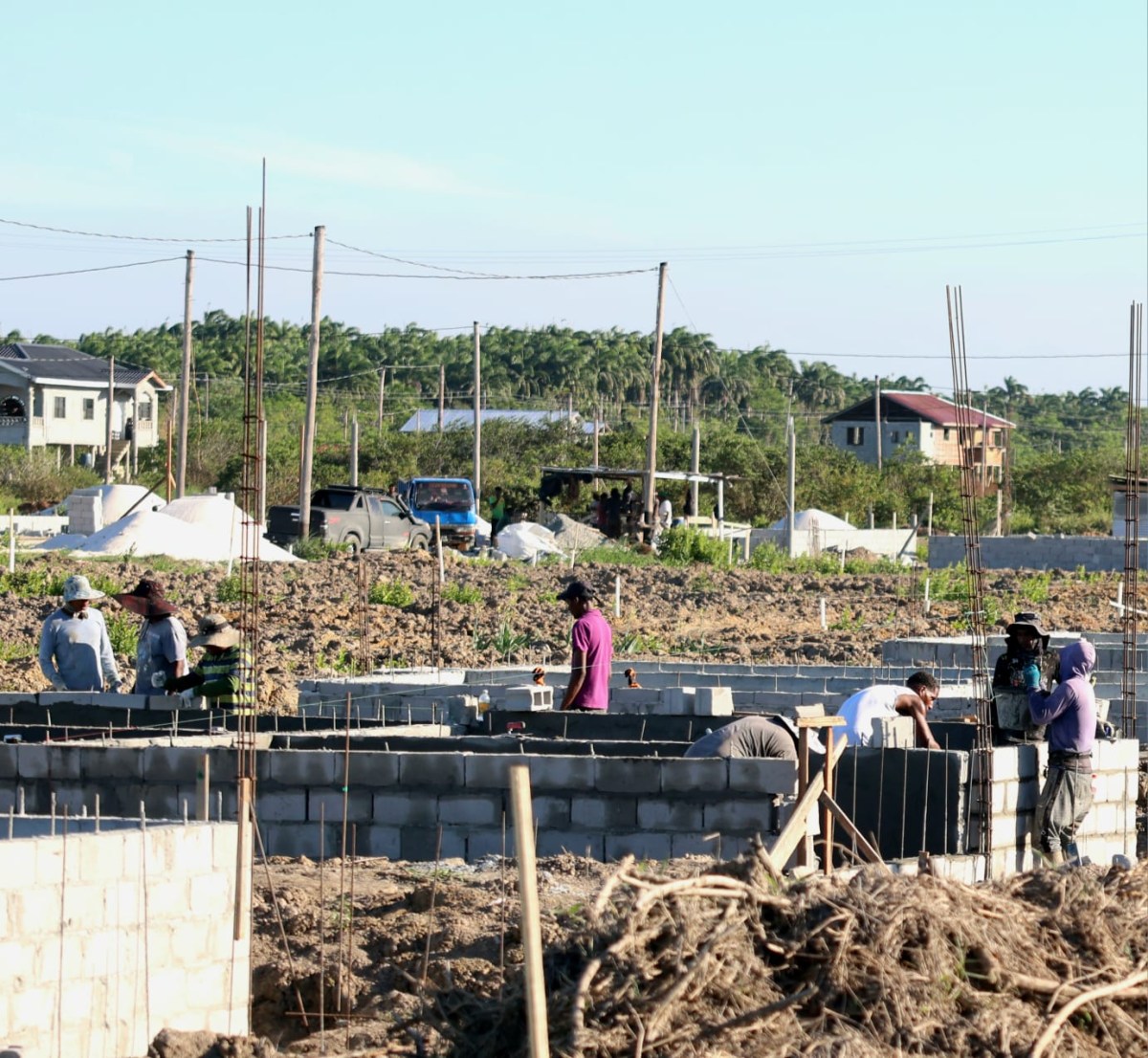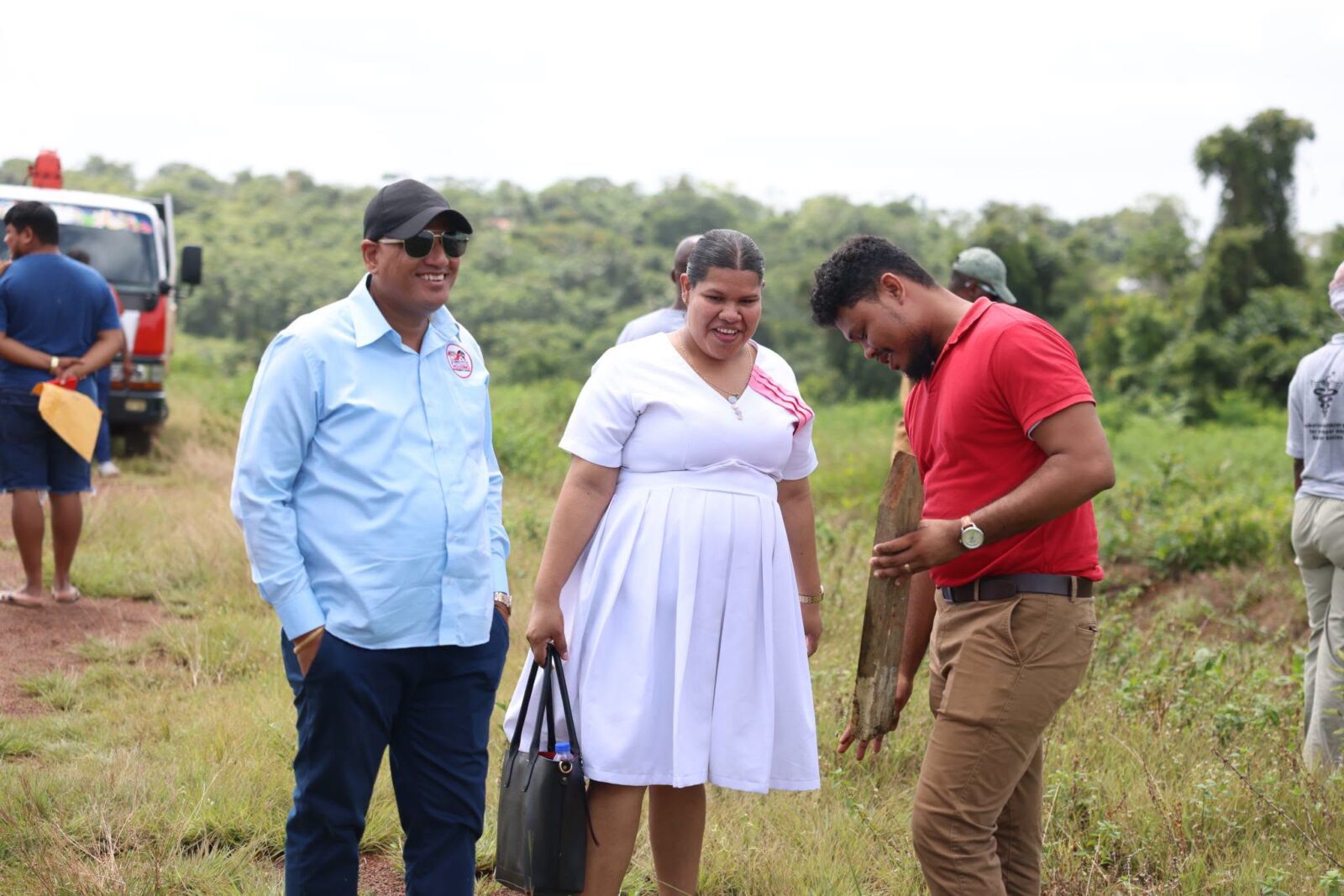
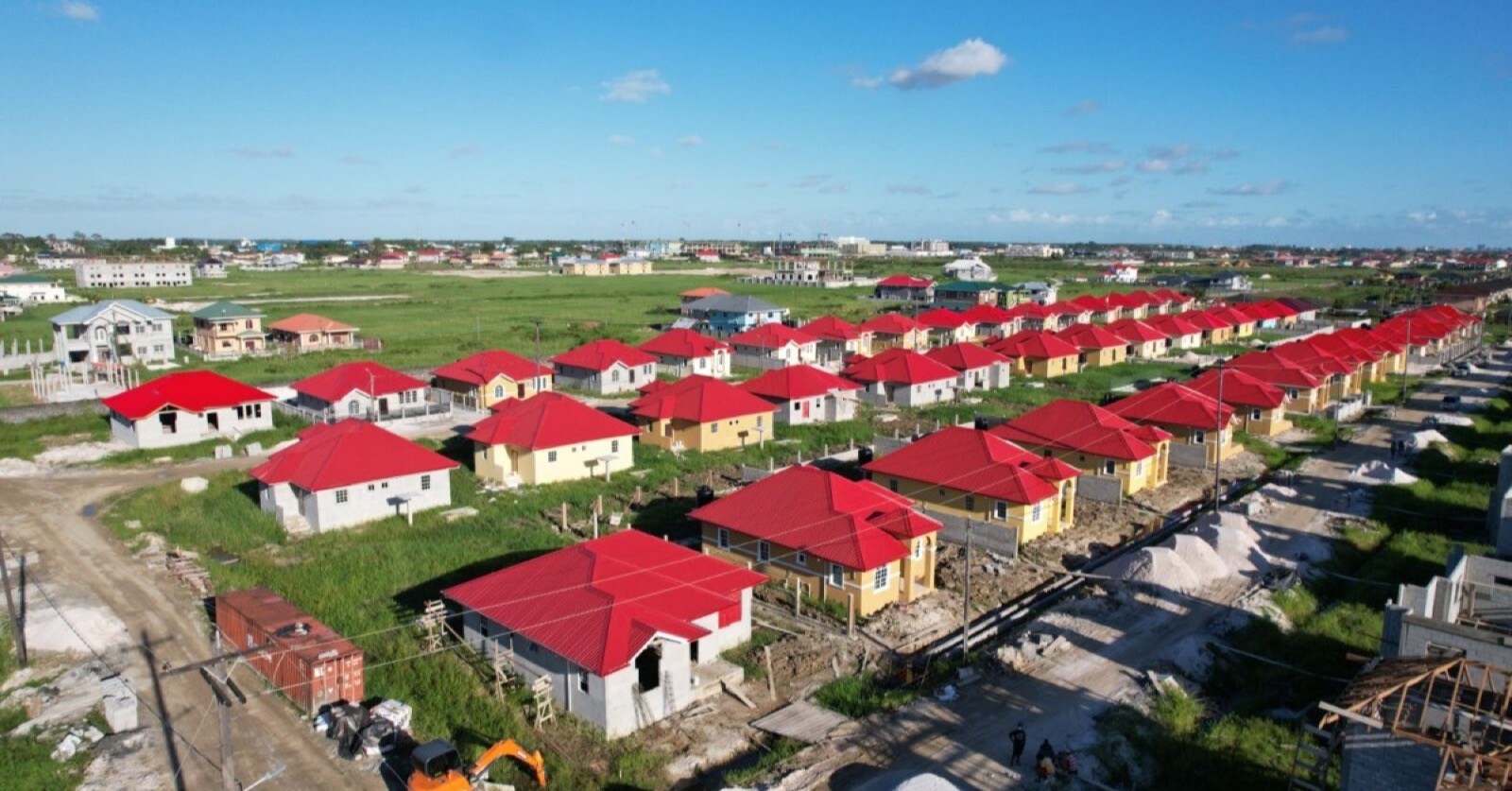
A housing development along Guyana’s East Bank corridor — source: Department of Public Information.
Guyana’s government says the backlog of housing applications in Region Four exceeds 50,000, underscoring the pressure on the country’s largest housing market.
In an August 30 update, the government said it intended to accelerate land acquisition, housing development and allocations from September. The announcement identified Silica City, Yarrowkabra, St Cuthbert’s Mission and Long Creek among areas along the Soesdyke–Linden corridor connected to the expansion effort.
The official release does not establish that each named area is immediately available for allocation, fully serviced or open for individual applications. Applicants should continue to rely on formal notices and direct communication from the Central Housing and Planning Authority.
Land supply is the central constraint
The reported backlog indicates that demand in Region Four remains substantially greater than the number of serviced lots presently available for allocation.
Acquiring land is only one stage in creating a housing area. Planning approvals, surveys, roads, drainage, electricity, water and other infrastructure may be required before a site is ready for occupation or construction.
That distinction matters for applicants and investors. An announcement that land is being acquired or developed does not mean a transport or certificate of title has been issued, that utilities are connected, or that construction can begin immediately.
The government has also said allocations are upcoming in Regions Two, Three and Four, following allocation activity in Regions Five, Six and Ten. The current release does not provide a region-by-region timetable or the number of lots to be distributed in each area.
Separate official updates do not fully reconcile the Region Four count. A July 29 government release reported 50,375 pending applications as of December 2025 and said 1,569 allocations through April 2026 had reduced that figure to 48,806. The August 30 statement subsequently described more than 50,000 applications as pending without explaining the different reference point or calculation.
The latest ministerial statement is therefore reported as the government’s current description of the backlog, not as an independently reconciled total.
A broader five-year housing target
The update places the immediate land programme within a wider government target of delivering 40,000 new homes over five years.
That target should be distinguished from the number of house lots allocated and from the size of the application backlog. A completed home, an allocated lot and a pending application are different measures and should not be combined as if they represent the same stage of delivery.
For the private sector, a larger housing pipeline can create demand for surveying, engineering, construction, finance, utilities, transport and building materials. The timing of that demand will depend on confirmed allocations, infrastructure contracts and the actual readiness of each development area.
What applicants and businesses should verify
Applicants should confirm the status of their application through the official CH&PA process and should not make payments to intermediaries promising allocations.
Before treating a new area as investment-ready, businesses should verify the land authority, development plan, infrastructure scope, procurement notices and access arrangements. The August 30 announcement did not publish parcel-level details or a full construction schedule.
Future allocation notices, infrastructure awards and service-completion dates will show whether the September acceleration is translating into deliverable sites.