

The family agreed who should receive the house
After the owner died, the family met and agreed that the eldest daughter should keep the house. She moved in, paid the rates and maintained the property.
Years later, she tried to use the house as security for a loan. The registry still showed the deceased owner.
The family agreement had resolved a personal question. It had not completed the estate and registry process.
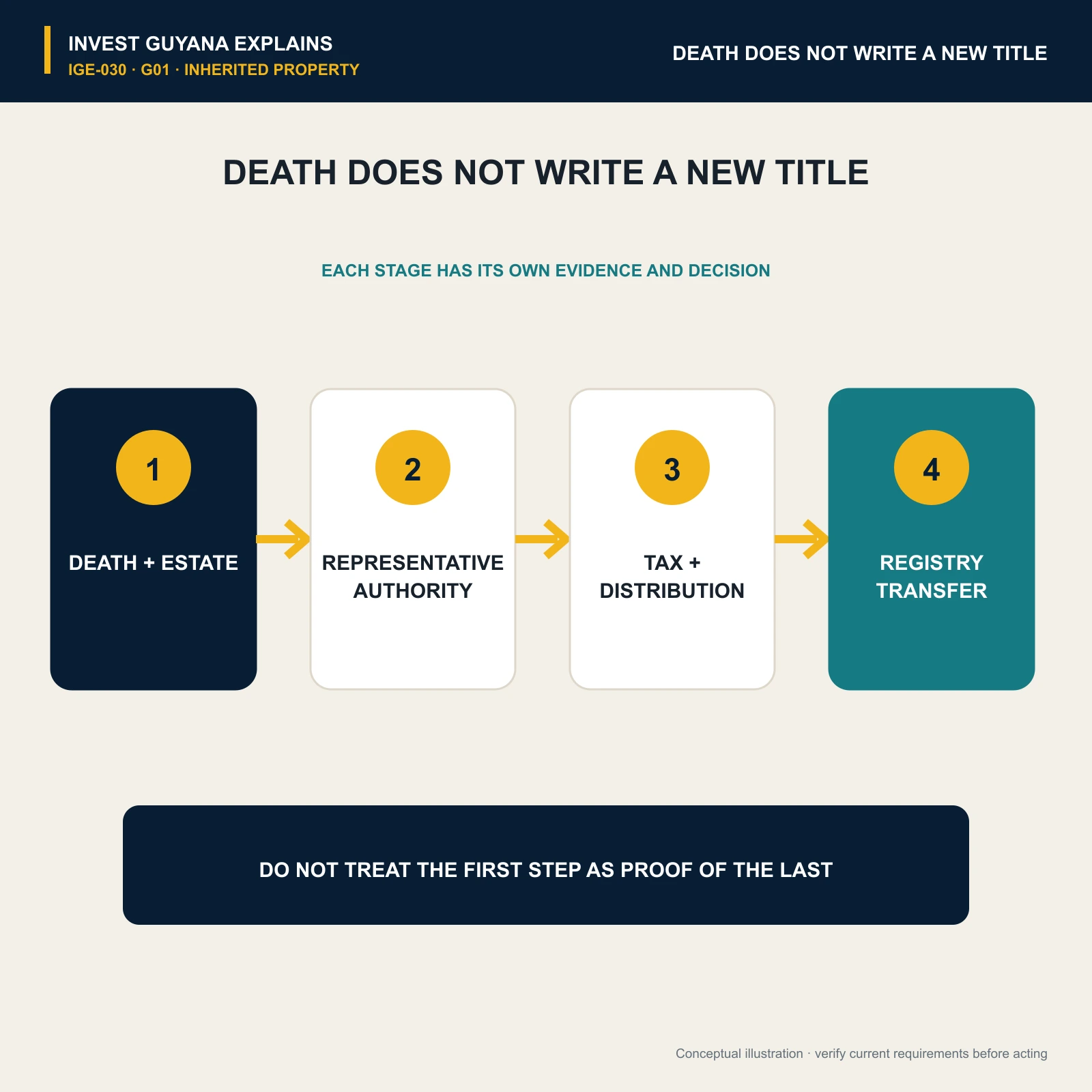
Death begins an estate process; it does not write a new title
When an owner dies, the property becomes part of the estate process subject to the applicable legal position.
The first questions include whether there is a valid will, whether the person died intestate, who has authority to administer the estate and which property interest is involved.
The registry does not simply substitute the relative who occupies the property or the person named informally by the family.
A will identifies intentions, but administration is still required
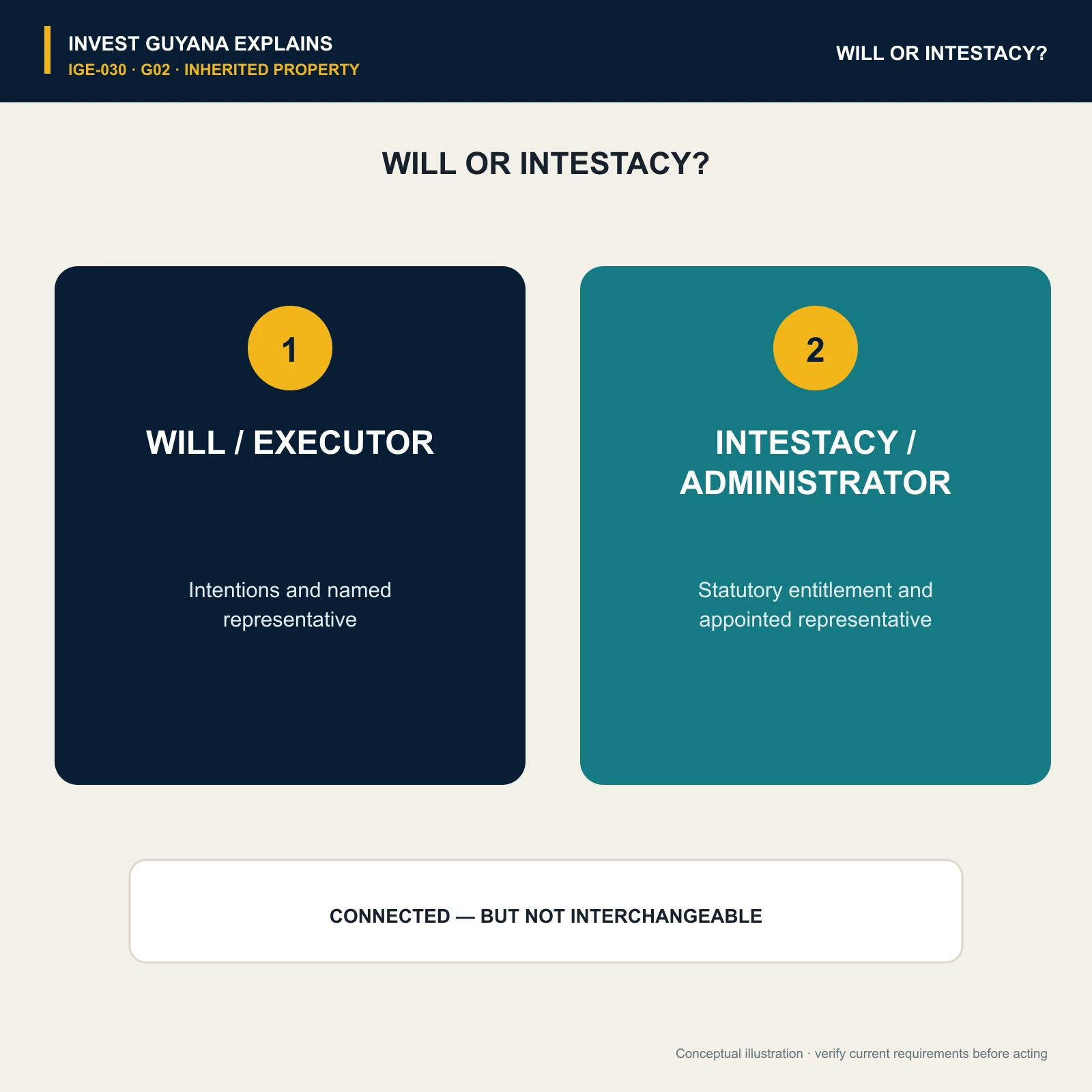
A will can state how the deceased intended the estate to be distributed and may name an executor.
The executor still needs the authority recognised through the applicable court process before acting for the estate in the required way. The will does not, by itself, update each parcel record on the date of death.
Where there is no will, intestate-succession rules determine entitlement. An administrator rather than an executor may be appointed to manage the estate.
The estate process keeps will or intestacy status, executor or administrator authority, court grant, tax process, distribution and registry transfer as separate stages.
Beneficiary, executor and administrator are different roles
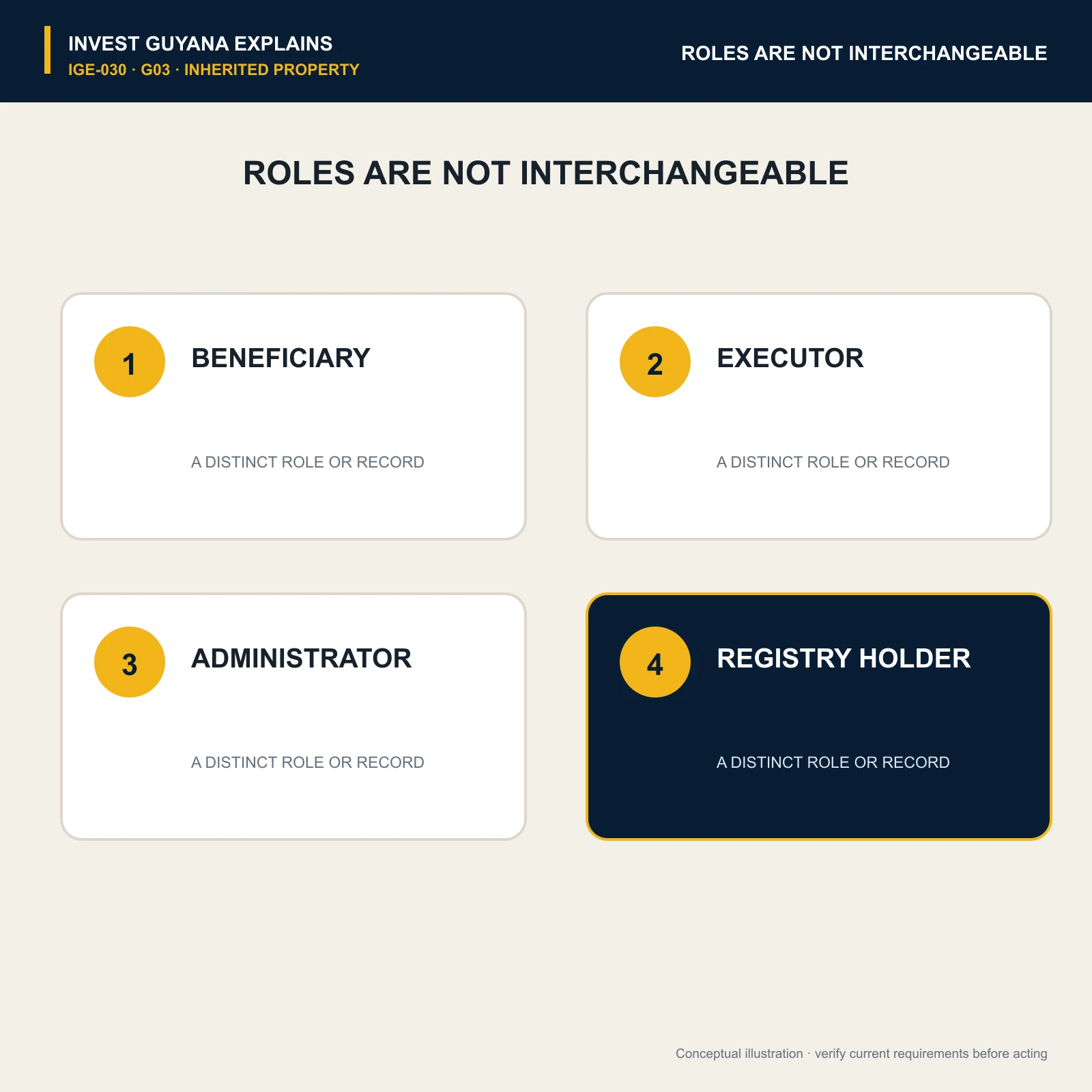
A beneficiary is a person entitled to receive an estate benefit under the applicable will or intestacy rules.
An executor or administrator is the authorised personal representative who manages the estate process. One person may hold both roles, but being a beneficiary does not automatically give that person authority to sell, mortgage or transfer every estate asset.
The Public Trustee may also have a role in applicable estates. That institutional possibility should not be confused with a universal rule that every estate is administered by the Public Trustee.
Tax-process compliance and distribution are not the same event
The estate may need to complete the applicable GRA filing and process-fee requirements before distribution and transfer.
Statutory and simplified operational descriptions of the estate process fee do not align cleanly enough to support one universal percentage for every case. Families and advisers should confirm the current formula and amount for the estate before relying on a calculation.
This Explainer carries that limitation forward. Families and advisers should obtain current authoritative instructions for the estate rather than rely on a simplified percentage.
Payment of an estate fee does not by itself decide who inherits. Beneficiary entitlement does not by itself prove that the fee and filings are complete.
The parcel still has to follow its registry pathway
Once the representative is authorised and the estate is ready to distribute property, the transfer must follow the pathway applicable to the parcel.
Transported property, a certificate of title, a public-land lease and another land interest do not necessarily use the same instrument or authority. Joint ownership can also create a specific annotation or survivorship question that differs from a sole-owner estate.
The final evidence is not simply the death certificate or court grant. It is the updated applicable property record together with the estate and transaction records that support it.
Five questions before dealing with estate property
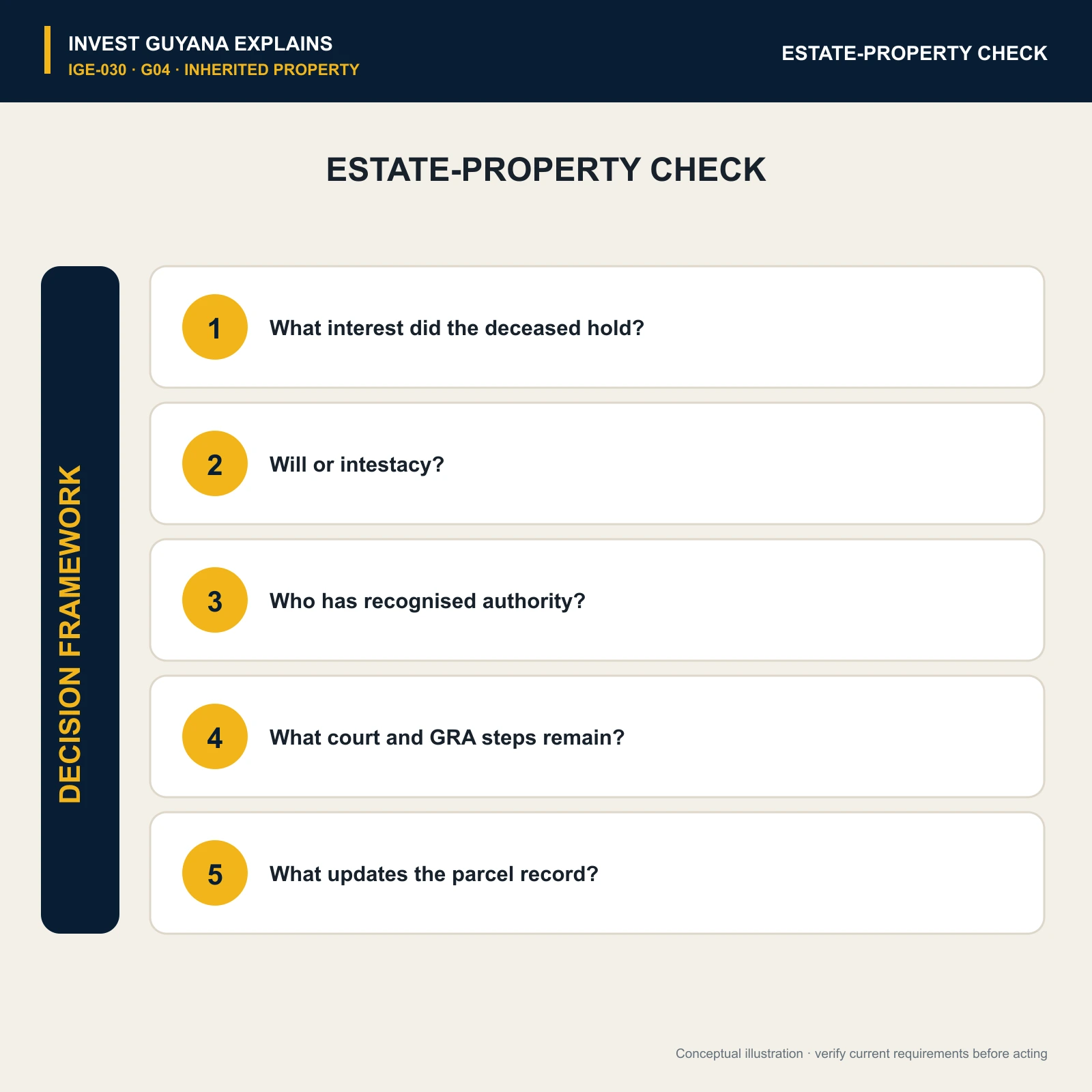
- What property interest did the deceased hold?
- Is there a will, or does intestate succession apply?
- Who has the recognised authority to administer the estate?
- What court and GRA process remains outstanding?
- What parcel-specific instrument will update the applicable registry or lease record?
The investor takeaway
Death does not automatically update a property registry.
A will, intestate entitlement, family agreement, occupation of the property and payment of expenses can all matter. None should be assumed to replace representative authority, estate compliance, distribution and the applicable parcel-specific transfer.
Families and investors protect the property by completing the chain, not by relying on the first document in it.
The next article in Invest Guyana Explains will continue the property series by examining why a state-land expression of interest is not an allocation, lease or title—and what an applicant must confirm before treating it as a property right.