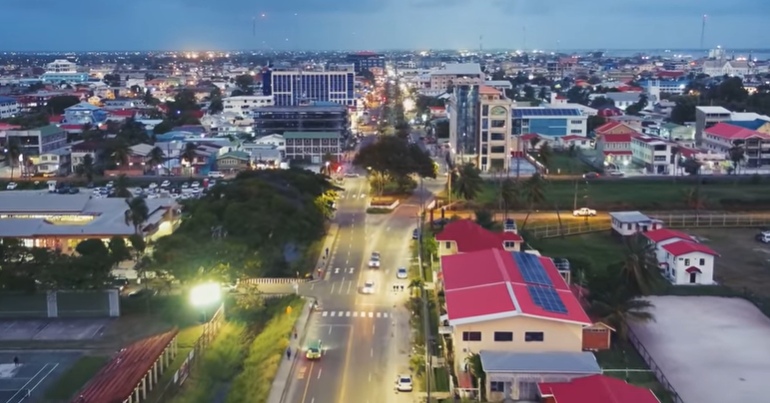
For decades, Guyana and Suriname were viewed as small, peripheral economies on the northern edge of South America. That perception is now rapidly changing.
With major offshore oil discoveries, expanding port infrastructure, and growing cross-border trade, the two neighbors are emerging as a new Atlantic-facing economic corridor linking South America, the Caribbean, Europe, and North America.
Together, Guyana and Suriname now sit atop some of the largest new hydrocarbon discoveries in the Western Hemisphere, while simultaneously investing in logistics, infrastructure, and regulatory reform. The result is a region that is quickly moving from overlooked to strategically important.
Energy Discoveries Are Driving Everything
Guyana’s Stabroek Block and Suriname’s offshore fields have transformed both countries’ economic outlooks.
Guyana is already producing more than 600,000 barrels of oil per day, with output projected to continue rising through the end of the decade. Suriname, following major discoveries by TotalEnergies and APA Corporation, is preparing for its own offshore production boom.
These discoveries are doing more than generate government revenue — they are catalyzing:
• Port expansion
• New air routes
• Housing and commercial real estate development
• Financial services growth
• Logistics and supply-chain investment
In effect, energy has become the anchor that is pulling in capital across multiple sectors.
Ports and Logistics Are Becoming the Real Story
Oil may have sparked the transformation, but trade and logistics are now becoming the bigger long-term opportunity.
Both countries are investing heavily in:
• Deep-water port facilities
• Container terminals
• Warehousing and cold storage
• Road and bridge networks
• Cross-border transport links
Guyana’s port and road projects are designed to connect its coast to Brazil, while Suriname is positioning itself as a gateway between the Caribbean and mainland South America.
This creates the foundation for a regional logistics hub that can handle:
• Energy equipment
• Agricultural exports
• Consumer imports
• Regional trans-shipment
For investors, this is the type of infrastructure that creates stable, recurring cash flows long after oil production peaks.
A Growing Market of Over Two Million People
While Guyana and Suriname individually have small populations, together they form a growing consumer market of more than two million people, with rising incomes and expanding middle classes.
This supports:
• Retail chains
• Banking and insurance
• Telecommunications
• Healthcare
• Education and training
As more expatriates return and more foreign professionals arrive, demand for quality housing, services, and lifestyle infrastructure continues to rise.

Why Regional Investors Are Paying Attention
International investors are increasingly viewing Guyana and Suriname not as isolated markets, but as part of a single emerging economic zone.
This zone offers:
• U.S.-dollar linked energy revenues
• English and Dutch legal systems
• Western-aligned regulatory structures
• Strategic Atlantic coastline
• Proximity to North and South America
That combination is rare — and highly attractive for global capital seeking growth outside traditional emerging markets.
What Comes Next
Over the next decade, the Guyana–Suriname corridor is expected to see:
• New offshore production platforms
• Expanded port capacity
• Logistics parks and industrial zones
• Cross-border trade agreements
• Regional airline and shipping routes
The biggest winners will not only be oil producers — but companies that control transport, storage, finance, real estate, and trade.
The Bottom Line
Guyana and Suriname are no longer fringe economies. They are becoming the northern gateway of South America, connecting energy, trade, and capital across the Atlantic world.
For regional and diaspora investors, this is not a story to watch — it is a story to position for.