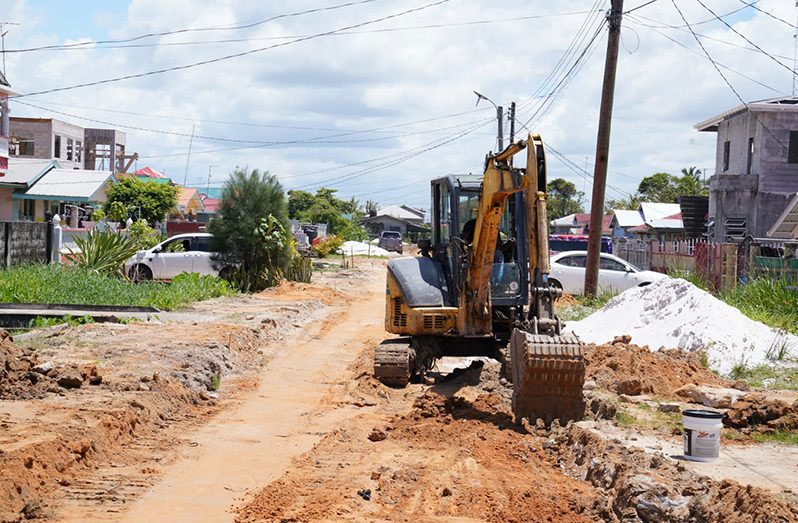
Guyana’s economy continues to defy regional trends, posting strong expansion and emerging as one of the world’s most dynamic markets.
According to the Government of Guyana’s mid-year report, the Gross Domestic Product (GDP) grew by an estimated 7.5 per cent in the first half of 2025, driven by broad-based performance across energy, non-oil sectors, and services.
Notably, the non-oil economy expanded by 13.8 per cent, underscoring a shift toward diversified growth rather than dependence solely on hydrocarbons.
ROBUST PERFORMANCE BEYOND OIL
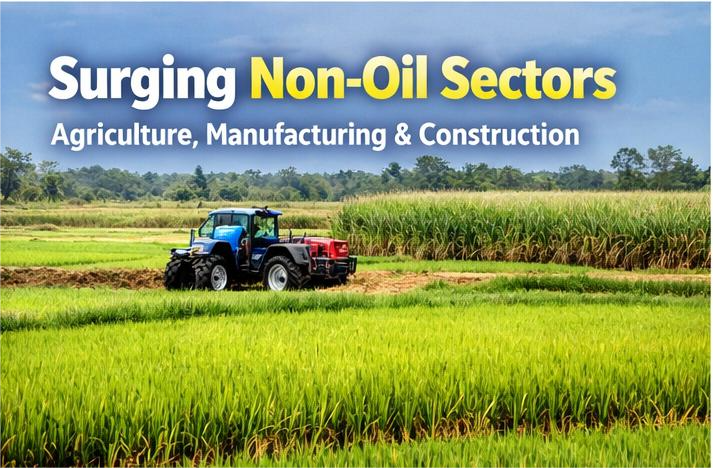
While offshore oil production remains a pillar of the national economy, data show that sectors outside of petroleum are rapidly gaining momentum, including agriculture and manufacturing, construction, and financial services.
According to the mid-year economic estimates:
- Agriculture, fishing, and forestry grew by an estimated 9 per cent, with large gains in sugar and rice production.
- Manufacturing expanded by nearly 27 per cent, reflecting growing domestic processing and industrial activity.
- Construction activity surged by almost 30 per cent, supported by both public infrastructure programs and private sector investment.
This pattern suggests that Guyana’s economic expansion is no longer narrowly concentrated in a single segment but now incorporates multiple engines of growth.
GROWTH PROJECTIONS POINT HIGHER
Looking ahead, international institutions project even stronger expansion. The UN Economic Commission for Latin America and the Caribbean (ECLAC) has forecast that GDP growth could reach around 24 per cent in 2026, outpacing most economies in the region.
Similarly, other forecasts suggest continued double-digit expansion as offshore oil activity scales up, supporting both export revenues and domestic spillovers into services, logistics, and construction.
WHAT’S DRIVING THE UPSWING?
Several factors underlie this sustained growth trajectory:
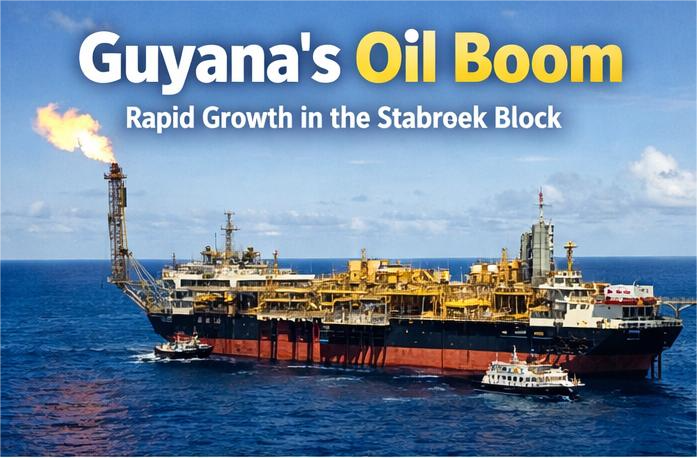
- Oil & Gas Development: Guyana’s offshore Stabroek Block remains one of the fastest-expanding oil basins globally, with multiple FPSOs online and production targeting continued growth through the latter half of the decade.
- Foreign Investment: Foreign direct investment continues to flow into energy, infrastructure, and services. UNCTAD data show FDI stocks rising sharply as companies seek to participate in Guyana’s expanding economy.
- Infrastructure Build-Out: The government’s public investment programme and private capital are financing roads, bridges, airports, and logistics hubs that will enhance connectivity and reduce business costs.
- Service Sector Growth: Retail, finance, insurance, and professional services are expanding with rising incomes and business formation.
WHAT THIS GROWTH MEANS FOR INVESTORS
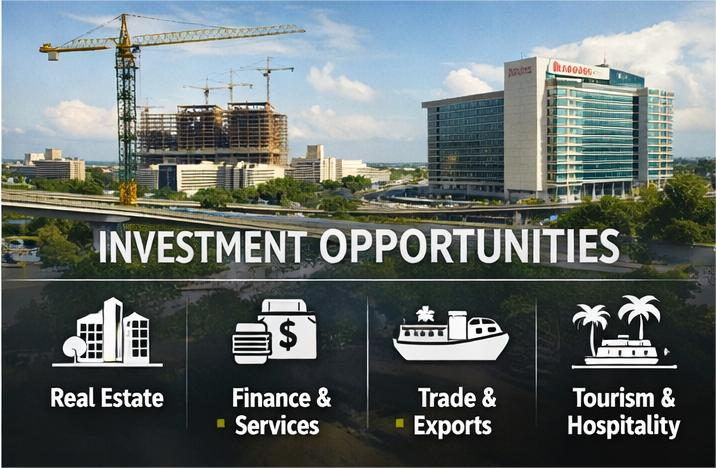
For international and domestic investors alike, Guyana’s evolving economy presents multiple compelling opportunities:
Real Estate and Construction
Strong demographic growth, rising incomes, and expanding business activity are driving demand for commercial space, residential housing, and logistics facilities.
Services and Financial Markets
As the economy diversifies, financial institutions and professional services are benefiting from increased lending, advisory needs, and corporate expansions.
Trade & Export Expansion
Improved infrastructure and increased production capacity open pathways for Guyanese exporters beyond oil, including agricultural and mineral commodities.
Tourism and Hospitality
New international hotel openings, such as the AC Marriott in Georgetown, reflect a strategic expansion of business and leisure travel, further supported by expanded airlift and tourism promotion efforts.
Technology and Innovation
Emerging sectors such as AI-driven data centres and digital services are beginning to take shape, adding future-oriented investment themes to the wider portfolio.
RISKS AND CONSIDERATIONS
As with any emerging market, investors should consider:
- Commodity price volatility, especially in oil markets.
- The need for ongoing institutional reforms to improve transparency and regulatory predictability.
- Infrastructure gaps in hinterland regions that require strategic planning and financing.
However, the overall outlook remains broadly favourable: Guyana is not only growing but also transforming structurally, integrating its natural resource wealth into a diversified, investment-ready economy.