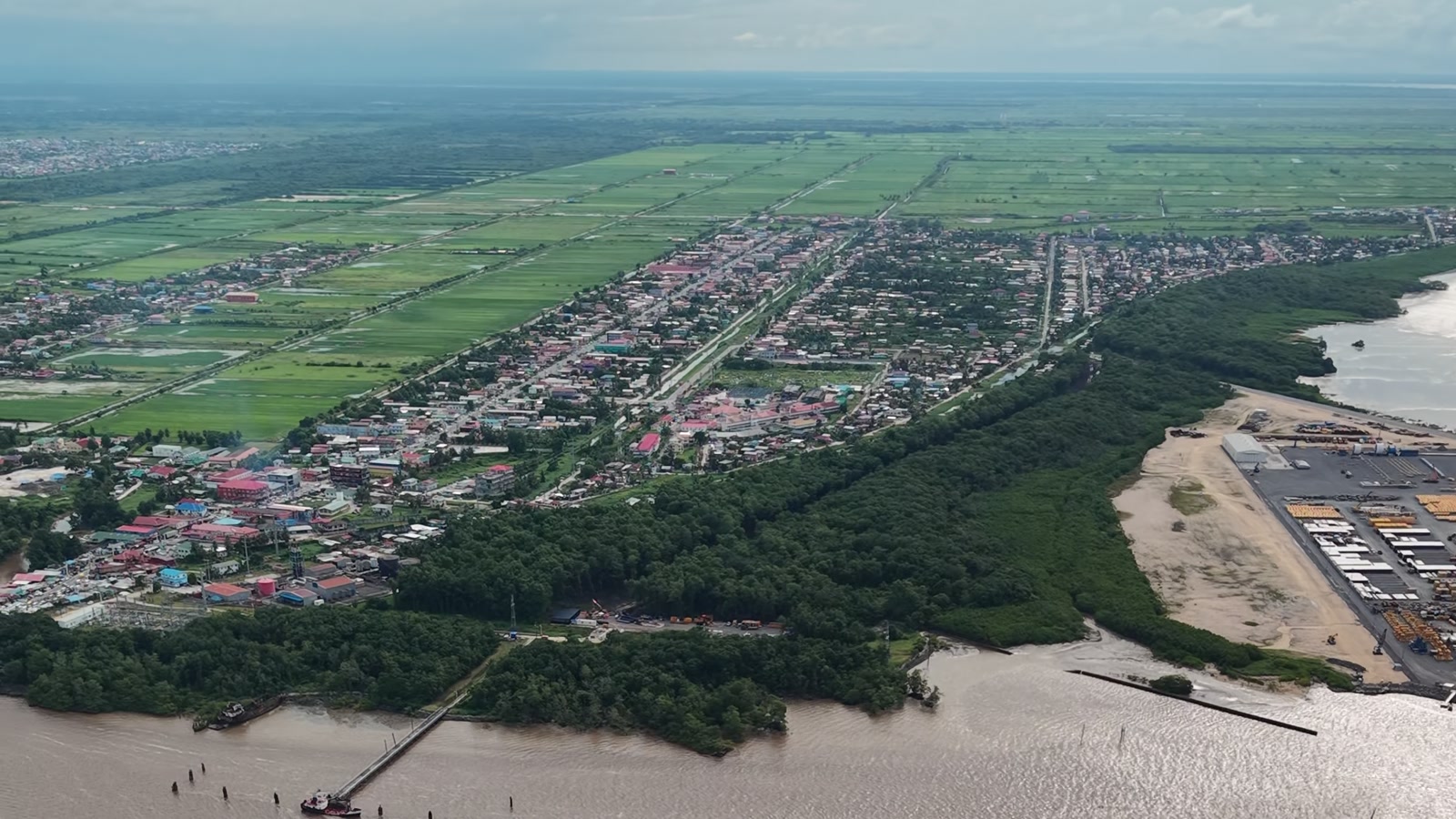
File image: West Bank Demerara farmland; GuySuCo estates and the funded NDIA works are not identified.
GuySuCo’s operating bills and the cost of keeping irrigation work moving account for roughly G$11 billion in supplementary agriculture funding considered by the Parliamentary Committee of Supply on Monday, 23 November.
According to DPI’s report of the proceedings, G$8.2 billion goes to the sugar corporation for wages, pensions, fuel, supplies and contractor payments at its four operating estates. A further G$2.7 billion is recurrent funding for the National Drainage and Irrigation Authority (NDIA), supporting ongoing work and the ministry’s response to El Niño conditions.
Agriculture Minister Zulfikar Mustapha said money would also be allocated to clear GuySuCo’s National Insurance Scheme arrears. He reported that almost 51 per cent of operations were mechanised and maintained the strategic plan’s aim of breakeven followed by profitability by 2030. The report gives no amount or settlement date for the NIS arrears.
The sugar bill extends beyond new machinery
The pressure on operating finances was already evident during the original budget debate. In its 10 February account, the Agriculture Ministry said 81 per cent of GuySuCo’s G$8.4 billion budget subvention was intended for wages and salaries. Mustapha put the corporation’s total wage bill at approximately G$20 billion, with sugar and molasses sales expected to provide part of the funding. Fuel, lubricants, materials and contractor payments made up the rest of that subvention.
At that stage, he said no part of the subvention was specifically earmarked for NIS contributions; those payments were expected to come from sugar sales. Monday’s undertaking brings the arrears back into the funding discussion. For workers and suppliers, the next useful detail is how much reaches outstanding obligations and when—not simply the size of the allocation.
The ministry’s separate February production briefing described the recovery programme as a combination of field mechanisation, factory recapitalisation and management accountability. It identified investment in billet cutters and planters, alongside replacement rollers, turbines and conveyor systems. The purpose was to lower costs and improve extraction and efficiency. The new operating provision does not supply a current production outturn or audited financial result against those ambitions.
Keeping water moving for the next crop
NDIA’s work reaches well beyond the sugar estates. In a 10 November irrigation review, the ministry described pumps drawing from the Pomeroon into the Dawa system in Region Two, while the Boerasirie Conservancy supplied Region Three. The East Demerara Water Conservancy served Region Four and the Abary system supported Region Five. In Region Six, water was being pumped from the Canje Creek, with the Sandaka pump providing additional support in the Upper Corentyne.
Mustapha said approximately 178,000 acres had been prepared across the regions whose acreage he reported. NDIA and the Guyana Rice Development Board were working with Water Users Associations, NDCs and farmers, supported by committees monitoring water levels and distribution. That was an assessment made on 10 November as the first crop of 2027 approached, rather than a guarantee of water availability throughout the crop.
There is new equipment to maintain as well. The ministry commissioned a G$948.9 million dredge and workboat package on 13 November, supplied by GAICO. NDIA chairman Lionel Wordsworth said it would help clear outfalls and rivers including the Abary, Pomeroon, Mahaica and Mahaicony. The ministry recorded the dredge’s arrival in February and the accompanying push boat’s arrival in October; three months of local training were also planned for operators and technical staff.
For paddy farmers, the value lies in water reaching fields when needed and drainage outlets remaining serviceable. Purchasing a dredge, operating pumps and paying for maintenance are connected tasks, but they are different costs. The latest provision is recurrent support; it is not another announcement of the dredge purchase or a new open construction tender.
The follow-through now runs along two tracks: payments and operating performance at GuySuCo, and delivery of water-management work across the farming regions. Expenditure records, crop results and progress on outstanding obligations will show how far this round of support carries each programme.