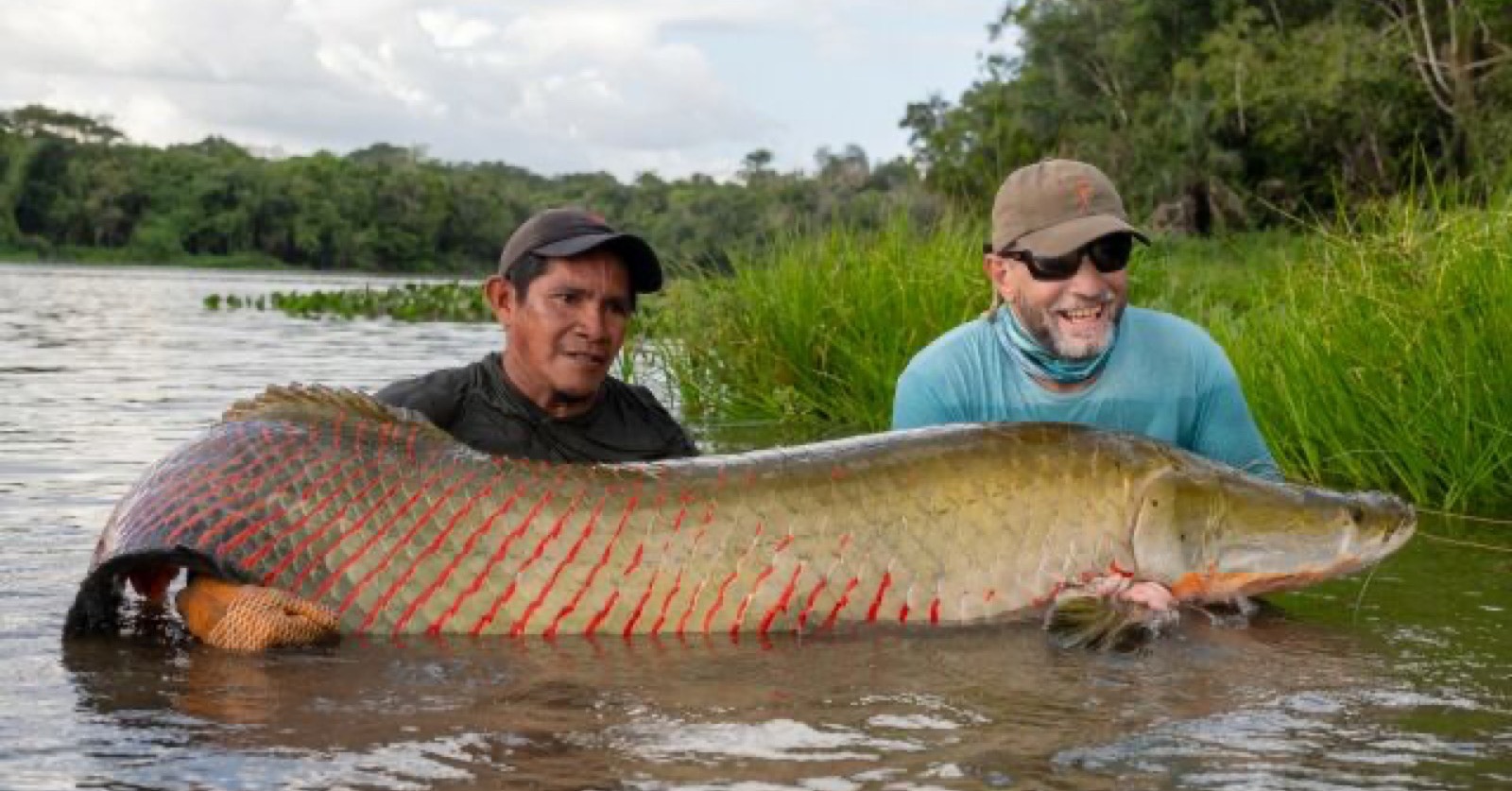
A Rewa Eco Lodge guide and guest during an arapaima conservation experience — source: Tourism Cares/Rewa Eco Lodge.
Five Guyana tourism businesses have been added to Tourism Cares’ global Meaningful Travel Map, giving the operators greater visibility among travel businesses and travellers seeking community and conservation-focused experiences.
The five are Iwokrama River Lodge, Karanambu Lodge, Caiman House Field Station, Rewa Eco Lodge and Wilderness Explorers, according to the September 1 announcement from the Ministry of Tourism, Industry and Commerce and the Guyana Tourism Authority.
The listing is a visibility and market-access development. It should not be described as evidence of confirmed bookings, revenue growth or visitor traffic to the individual businesses unless those outcomes are later reported by the operators or the platform.
Arrivals continue to increase
The same official release says Guyana recorded 271,592 visitor arrivals from January through July 2026, a 12% increase over the comparable period a year earlier.
July accounted for 45,127 visitors, which the government described as an 11.1% year-on-year increase and a record for the month.
For full-year context, Guyana recorded 453,489 visitors in 2025, an increase of 22%, according to the official tourism update. The release does not provide a complete monthly series or distinguish the contribution of leisure, business, diaspora and other travel segments to the 2026 growth figure.
The increase in arrivals can support accommodation, tours, transport, food services and retail activity. The distribution of that benefit depends on where visitors travel, how long they stay and how much they spend—measures not included in the current announcement.
Community and conservation link
The five selected businesses are associated with Guyana’s nature, wildlife and community-based tourism offer. Their inclusion on the map may make it easier for international tour operators and travellers to identify experiences with a stated social or environmental purpose.
The official release says tourism initiatives support 69 Indigenous communities, more than 6,000 people have received training, and 18 community-based tourism experiences have been launched.
Those figures describe the wider programme and should not be attributed solely to the five newly listed businesses.
For communities and operators, the commercial test will be whether increased visibility converts into suitable bookings while maintaining environmental, cultural and operating standards.
What to monitor next
The next useful indicators include referral or booking traffic generated by the map, visitor volumes at the listed properties, length of stay, visitor spending and the share of income retained locally. Future arrival updates will also need to distinguish monthly records from full-year performance.
The current evidence supports two separate conclusions: five Guyanese tourism businesses have gained a new international visibility channel, and national visitor arrivals increased through July. It does not yet establish a causal relationship between the two.